24 December, 2025

This Perspective outlines a staged road map for building a fault-tolerant quantum computer based on topologically protected Majorana-based qubits. The plan spans several device generations, from a single-qubit device used for qubit benchmarking, a two-qubit device for a measurement-based braiding operation, and an eight-qubit device for quantum error detection to extended qubit lattices that support universal logical operations at scale. Key design elements, operating protocols, and the advantages of this approach for scalable, utility-scale quantum computation are highlighted.

19 October, 2026

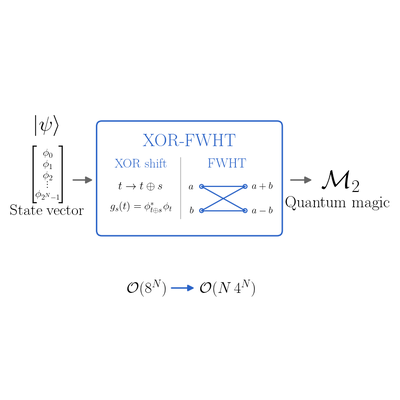
An XOR-FWHT algorithm is presented for the deterministic evaluation of the second-order stabilizer Rényi entropy of generic N-qubit pure states represented as full state vectors, reducing the computational cost from 𝒪(8N) to 𝒪(N4N). The method exploits XOR-shifted amplitude correlations and fast Walsh-Hadamard transforms, without relying on sampling or special structure of the input state.

19 October, 2026

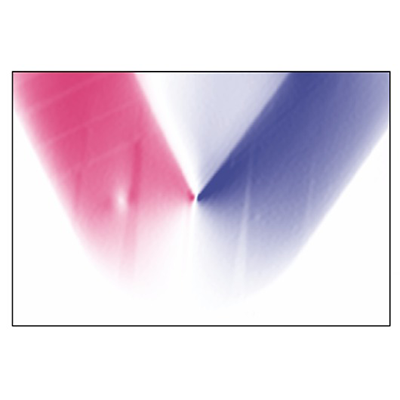
Scanning SQUID current imaging reveals domain-dependent charge transport anisotropy at the (111) LaAlO3/SrTiO3 interface and connects it to the nonlinear Hall response. The combined local and global measurements reveal how broken symmetries give rise to anisotropic orbital Rashba coupling and provide an electrical probe of orbital textures.

19 October, 2026

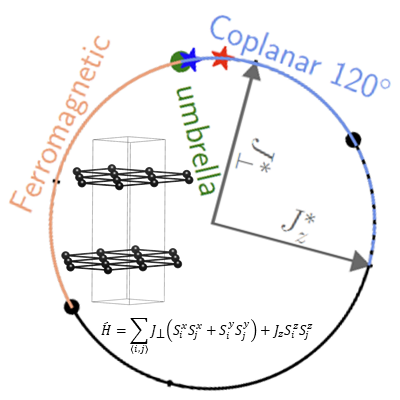
Single-crystal measurements and numerical calculations reveal a quantum-disordered magnetic ground state in the triangular-lattice magnet CeMgAl11O19, with no magnetic ordering observed down to 30 mK. Quantitative comparison with an anisotropic spin-1/2 model places the material further from the exactly solvable quantum critical point than previously estimated, suggesting that structural disorder may contribute to the suppression of magnetic order.

19 October, 2026

Universal continuous-variable gate sets are shown to enable fault-tolerant quantum memory. This is achieved via numerical simulation of the generation of Gottesman-Kitaev-Preskill (GKP) states and comparison with the fault-tolerant memory threshold of the GKP surface code.

16 October, 2026

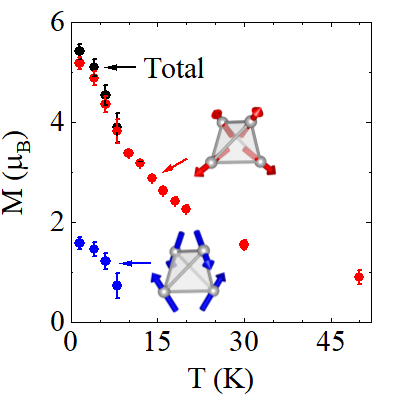
Rare-earth pyrochlore iridates offer a fertile ground for unconventional magnetic phenomena. In Tb2Ir2O7, the low-temperature magnetic order is particularly unusual, with an additional component orthogonal to the one favored by the predominant interactions. Combining numerical simulations, neutron scattering, and specific heat down to dilution temperatures, this work shows that the quantum nature of Tb3+ ions, subject to rare-earth interactions and to the Ir magnetic field, plays a key role in shaping the magnetic order.

14 October, 2026

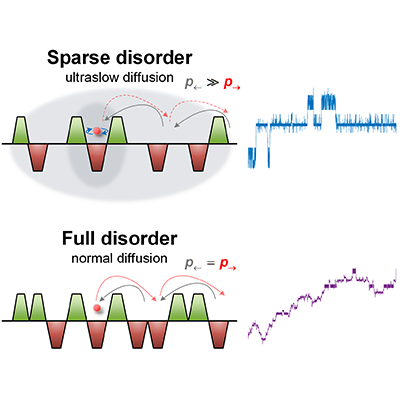
Sparse quenched disorder in finite-strength potential landscapes generates logarithmically ultraslow diffusion through directional channels formed by local symmetry breaking. These channels produce hierarchical capture, escape, and recapture, whereas normal diffusion is restored in the fully disordered limit.

14 October, 2026

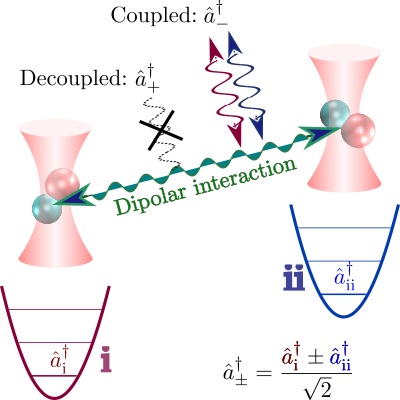
Although polar molecules are promising candidates for quantum computing, entangling gates built with them suffer from fluctuations in the dipole-dipole interaction (DDI). A high-fidelity molecular gate protocol is introduced that uses an exotic spin echo to suppress population in DDI-active states, alongside a theoretical framework revealing that DDI couples to only half of the motional modes during the gate.

13 October, 2026

A viscoelastic model is developed in which a biomolecular condensate is a composite of viscous and elastic mesoscopic elements connected in series and in parallel, unifying the Maxwell and Jeffreys descriptions as limiting cases. The model indicates that aging of PGL-3 condensates stems from the conversion of viscous elements into two types of elastic ones, leading to exponential or power-law growth of the viscosity with waiting time.

5 October, 2026

An exactly solvable multispecies spherical spin model is introduced to study the collective equilibrium states of swarmalators, mobile oscillators with coupled spatial and phase degrees of freedom. A unified description of the resulting hierarchy of states, their transitions, and their fundamental relationship to noisy Kuramoto dynamics is provided.

23 September, 2026

An optimal pathway to ultracold 86Sr2 is identified and implemented, enabling the production of stable samples of halo molecules. Their vibrational binding energies, which are exceptionally sensitive to internuclear forces at nanometer length scales, are measured using hertz-level precision spectroscopy.

16 September, 2026

First-principles, tight-binding, and k ⋅ p calculations are used to examine how strain and quantum confinement affect the electronic topology of wurtzite HgTe. The study relates bulk Dirac points along the wurtzite c axis to strain-dependent phases, orientation-dependent thin-film topology, and edge-localized states in nanowires.

16 September, 2026

The Doppler-residual line shape that limits the linewidth of a two-photon Rydberg electromagnetically induced transparency in a thermal vapor is derived. The Doppler-limited energy resolution of the Rydberg state is found to be 1.84 MHz in 85Rb, a linewidth of 2.04 MHz is experimentally measured, and the broadening mechanisms near this limit are characterized.

15 September, 2026

Correlations between consecutively emitted pulses in quantum key distribution transmitters violate the assumptions underlying many security proofs. This problem is addressed by showing that security proofs based on phase-error estimation developed for imperfect but uncorrelated sources can be directly extended to incorporate such correlations.

14 September, 2026

In a disorder-free non-Hermitian lattice with an entirely real spectrum and without any external force, a moving wave packet can exhibit sudden jumps or oscillations. Near a boundary, a wave packet can reflect with delay or advance in time, which is the temporal analogue of the Goos-Hänchen shift.

14 September, 2026

Optically addressed ensembles of qubits offer scalable control through global operations. Motivated by these platforms, robust composite pulse sequences are introduced that realize arbitrary site-dependent single-qubit unitaries in parallel using global pulses and requiring only minimal individual control.

Sign In to Your Journals Account

Filter

Filter

Article Lookup

Enter a citation