Recent Articles

Vibration-assisted multiphoton resonance and multi-ion excitation

Wenjun Shao, Xun-Li Feng, Jian Li, and Liang-Liang Wang

Phys. Rev. Research 5, 023005 (2023) - Published 4 April, 2023

Anisotropic enhancement of lower critical field in ultraclean crystals of spin-triplet superconductor candidate UTe2

K. Ishihara, M. Kobayashi, K. Imamura, M. Konczykowski, H. Sakai, P. Opletal, Y. Tokiwa, Y. Haga, K. Hashimoto, and T. Shibauchi

Phys. Rev. Research 5, L022002 (2023) - Published 3 April, 2023

The thermodynamic critical field, the lower critical field, and the upper critical field at low magnetic fields of ultraclean crystals of UTe2 are measured. An analysis based on the Ginzburg-Landau theory reveals that the lower critical field shows an unusual enhancement for the magnetic field only along the b- and c-axes.

Trimmed sampling algorithm for the noisy generalized eigenvalue problem

Caleb Hicks and Dean Lee

Phys. Rev. Research 5, L022001 (2023) - Published 3 April, 2023

The trimmed sampling algorithm uses physics-based constraints and Bayesian inference to reduce errors for the generalized eigenvalue problem.

Topological phase transitions at finite temperature

Paolo Molignini and Nigel R. Cooper

Phys. Rev. Research 5, 023004 (2023) - Published 3 April, 2023

Tradeoff between speed and reproductive number in pathogen evolution

Andreas Eilersen, Bjarke Frost Nielsen, and Kim Sneppen

Phys. Rev. Research 5, 023003 (2023) - Published 3 April, 2023

Theory of x-ray absorption spectroscopy: A microscopic Bloch equation approach for two-dimensional solid states

Dominik Christiansen, Malte Selig, Jens Biegert, and Andreas Knorr

Phys. Rev. Research 5, 023002 (2023) - Published 3 April, 2023

Long-range states and Feshbach resonances in collisions between ultracold alkali-metal diatomic molecules and atoms

Matthew D. Frye and Jeremy M. Hutson

Phys. Rev. Research 5, 023001 (2023) - Published 3 April, 2023

Experimentally accessible nonseparability criteria for multipartite-entanglement-structure detection

Guillermo García-Pérez, Oskari Kerppo, Matteo A. C. Rossi, and Sabrina Maniscalco

Phys. Rev. Research 5, 013226 (2023) - Published 31 March, 2023

Deterministic entanglement distribution on series-parallel quantum networks

Xiangyi Meng, Yulong Cui, Jianxi Gao, Shlomo Havlin, and Andrei E. Ruckenstein

Phys. Rev. Research 5, 013225 (2023) - Published 31 March, 2023

Mapping state transition susceptibility in quantum annealing

Elijah Pelofske

Phys. Rev. Research 5, 013224 (2023) - Published 31 March, 2023

Universal preference for low-energy core-shifted grain boundaries at the surfaces of fcc metals

Xiaopu Zhang and John J. Boland

Phys. Rev. Research 5, 013223 (2023) - Published 31 March, 2023

Enhancement of spin-charge conversion efficiency for Co3Sn2S2 across transition from paramagnetic to ferromagnetic phase

Takeshi Seki, Yong-Chang Lau, Junya Ikeda, Kohei Fujiwara, Akihiro Ozawa, Satoshi Iihama, Kentaro Nomura, and Atsushi Tsukazaki

Phys. Rev. Research 5, 013222 (2023) - Published 31 March, 2023

Optomechanical two-photon hopping

Enrico Russo, Alberto Mercurio, Fabio Mauceri, Rosario Lo Franco, Franco Nori, Salvatore Savasta, and Vincenzo Macrì

Phys. Rev. Research 5, 013221 (2023) - Published 31 March, 2023

Formation of intermittent covalent bonds at high contact pressure limits superlow friction on epitaxial graphene

Bartosz Szczefanowicz, Takuya Kuwahara, Tobin Filleter, Andreas Klemenz, Leonhard Mayrhofer, Roland Bennewitz, and Michael Moseler

Phys. Rev. Research 5, L012049 (2023) - Published 30 March, 2023

High mechanical load on bilayer graphene causes intermittent covalent bonds between the graphene layers. This transition from 2D to 3D bonding extends to a sliding silica tip and limits the extraordinary lubrication offered by the 2D material graphene.

Shifts in global network dynamics due to small changes at single nodes

Kalel L. Rossi, Roberto C. Budzinski, Bruno R. R. Boaretto, Lyle E. Muller, and Ulrike Feudel

Phys. Rev. Research 5, 013220 (2023) - Published 30 March, 2023

S01−P23 magnetic quadrupole transition in neutral strontium

J. Trautmann, D. Yankelev, V. Klüsener, A. J. Park, I. Bloch, and S. Blatt

Phys. Rev. Research 5, 013219 (2023) - Published 30 March, 2023

Decisive role of electron-phonon coupling for phonon and electron instabilities in transition metal dichalcogenides

Zishen Wang, Chuan Chen, Jinchao Mo, Jun Zhou, Kian Ping Loh, and Yuan Ping Feng

Phys. Rev. Research 5, 013218 (2023) - Published 30 March, 2023

Generalized speed limits for classical stochastic systems and their applications to relaxation, annealing, and pumping processes

Kazutaka Takahashi and Yasuhiro Utsumi

Phys. Rev. Research 5, 013217 (2023) - Published 29 March, 2023

Gauge-invariant and anyonic-symmetric autoregressive neural network for quantum lattice models

Di Luo, Zhuo Chen, Kaiwen Hu, Zhizhen Zhao, Vera Mikyoung Hur, and Bryan K. Clark

Phys. Rev. Research 5, 013216 (2023) - Published 29 March, 2023

Development of gauge-invariant and anyonic-symmetric autoregressive neural networks for quantum many-body physics simulations.

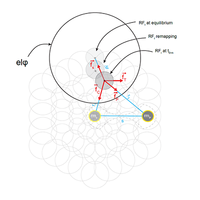
Fundamental law underlying predictive remapping

Ifedayo-EmmanuEL Adeyefa-Olasupo

Phys. Rev. Research 5, 013214 (2023) - Published 29 March, 2023

A simple, elegant, yet powerful mathematical framework—retinotopic mechanics—is introduced. It specifies a fundamental law and the neural architecture that allow cells to transiently exhibit spatiotemporal contortions within and beyond the spatial extent of their anatomical receptive fields.

Sign In to Your Journals Account

Filter

Recent Issues

Vol. 8, Iss. 4
October - December 2026
Vol. 8, Iss. 3
July - September 2026
Vol. 8, Iss. 2
April - June 2026
Vol. 8, Iss. 1
January - March 2026
Category
Article Type

Filter

Article Lookup

Enter a citation