Recent Articles

Enhancing spin squeezing using soft-core interactions

Jeremy T. Young, Sean R. Muleady, Michael A. Perlin, Adam M. Kaufman, and Ana Maria Rey

Phys. Rev. Research 5, L012033 (2023) - Published 10 March, 2023

Ising interactions in the form of a soft-core potential, such as the ones experienced by Rydberg dressed atoms, can be combined with a strong coherent drive to help preserve collective spin coherences even in systems much larger than the range of the soft-core interactions. As a result, they can lead to the robust generation of metrologically useful spin-squeezed states in optical tweezer clocks.

RIXS interferometry and the role of disorder in the quantum magnet Ba3Ti3−xIrxO9

M. Magnaterra, M. Moretti Sala, G. Monaco, P. Becker, M. Hermanns, P. Warzanowski, T. Lorenz, D. I. Khomskii, P. H. M. van Loosdrecht, J. van den Brink, and M. Grüninger

Phys. Rev. Research 5, 013167 (2023) - Published 10 March, 2023

Persistent modification of magnetotransport properties in LaAlO3/SrTiO3 by gate-induced modification of structural domains

Mithun S. Prasad and Georg Schmidt

Phys. Rev. Research 5, 013166 (2023) - Published 10 March, 2023

Emergence of non-Gaussian coherent states through nonlinear interactions

M. Uria, A. Maldonado-Trapp, C. Hermann-Avigliano, and P. Solano

Phys. Rev. Research 5, 013165 (2023) - Published 10 March, 2023

Coexistence of multiple stacking charge density waves in kagome superconductor CsV3Sb5

Qian Xiao, Yihao Lin, Qizhi Li, Xiquan Zheng, Sonia Francoual, Christian Plueckthun, Wei Xia, Qingzheng Qiu, Shilong Zhang, Yanfeng Guo, Ji Feng, and Yingying Peng

Phys. Rev. Research 5, L012032 (2023) - Published 9 March, 2023

An investigation combining x-ray scattering spectroscopy and density-functional-theory calculations reveals that multiple competing stacking charge-density-waves coexist in the Kagome superconductor CsV3Sb5.

Phenomenological model of superconducting optoelectronic loop neurons

Jeffrey M. Shainline, Bryce A. Primavera, and Saeed Khan

Phys. Rev. Research 5, 013164 (2023) - Published 9 March, 2023

Collective photon emission of two correlated atoms in free space

Stefan Richter, Sebastian Wolf, Joachim von Zanthier, and Ferdinand Schmidt-Kaler

Phys. Rev. Research 5, 013163 (2023) - Published 7 March, 2023

Transport and entanglement growth in long-range random Clifford circuits

Jonas Richter, Oliver Lunt, and Arijeet Pal

Phys. Rev. Research 5, L012031 (2023) - Published 3 March, 2023

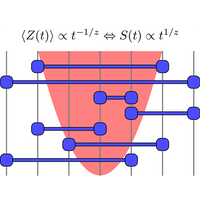
Efficiently simulable Clifford circuits are used to explore constrained entanglement dynamics in quantum systems with diffusive and superdiffusive transport. Evidence is presented that entanglement growth is set by the same dynamical exponent that describes the emerging hydrodynamics.

Topological Mott insulator at quarter filling in the interacting Haldane model

Peizhi Mai, Benjamin E. Feldman, and Philip W. Phillips

Phys. Rev. Research 5, 013162 (2023) - Published 3 March, 2023

Energy scaling of the product state distribution for three-body recombination of ultracold atoms

Shinsuke Haze, José P. D'Incao, Dominik Dorer, Jinglun Li, Markus Deiß, Eberhard Tiemann, Paul S. Julienne, and Johannes Hecker Denschlag

Phys. Rev. Research 5, 013161 (2023) - Published 3 March, 2023

Use of DFT+U+J with linear response parameters to predict non-magnetic oxide band gaps with hybrid-functional accuracy

D. S. Lambert and D. D. O’Regan

Phys. Rev. Research 5, 013160 (2023) - Published 3 March, 2023

Recrystallization in string-fluid complex plasmas

E. Joshi, M. Y. Pustylnik, M. H. Thoma, H. M. Thomas, and M. Schwabe

Phys. Rev. Research 5, L012030 (2023) - Published 2 March, 2023

The process of string-like cluster formation in complex plasmas is investigated. Excellent qualitative agreement between experiment and simulation showed that the reduced repulsion in the interparticle potential was enough to induce the formation of this structure

Analytical prediction of specific spatiotemporal patterns in nonlinear oscillator networks with distance-dependent time delays

Roberto C. Budzinski, Tung T. Nguyen, Gabriel B. Benigno, Jacqueline Đoàn, Ján Mináč, Terrence J. Sejnowski, and Lyle E. Muller

Phys. Rev. Research 5, 013159 (2023) - Published 2 March, 2023

Entanglement witnesses in the XY chain: Thermal equilibrium and postquench nonequilibrium states

Ferenc Iglói and Géza Tóth

Phys. Rev. Research 5, 013158 (2023) - Published 1 March, 2023

Quantum spin liquids of Rydberg excitations in a honeycomb lattice induced by density-dependent Peierls phases

Simon Ohler, Maximilian Kiefer-Emmanouilidis, and Michael Fleischhauer

Phys. Rev. Research 5, 013157 (2023) - Published 28 February, 2023

Arithmetic circuit tensor networks, multivariable function representation, and high-dimensional integration

Ruojing Peng, Johnnie Gray, and Garnet Kin-Lic Chan

Phys. Rev. Research 5, 013156 (2023) - Published 28 February, 2023

Quantum advantage in charging cavity and spin batteries by repeated interactions

Raffaele Salvia, Martí Perarnau-Llobet, Géraldine Haack, Nicolas Brunner, and Stefan Nimmrichter

Phys. Rev. Research 5, 013155 (2023) - Published 28 February, 2023

Deterministic and stochastic sampling of two coupled Kerr parametric oscillators

Gabriel Margiani, Javier del Pino, Toni L. Heugel, Nicholas E. Bousse, Sebastián Guerrero, Thomas W. Kenny, Oded Zilberberg, Deividas Sabonis, and Alexander Eichler

Phys. Rev. Research 5, L012029 (2023) - Published 27 February, 2023

Researchers experimentally test various protocols for finding the most stable state of two coupled Kerr parametric oscillators. The result can help in the endeavor to use such networks as simulation hardware for solving complex optimization problems.

Anisotropic van der Waals dispersion forces in polymers: Structural symmetry breaking leads to enhanced conformational search

Mario Galante and Alexandre Tkatchenko

Phys. Rev. Research 5, L012028 (2023) - Published 27 February, 2023

Both structure and dynamics of (bio)polymers are profoundly affected by van der Waals interactions. Many-body van der Waals forces are shown to depend on the global conformation of polymers, in contrast with the limited distance range of widely used pairwise van der Waals models. This is shown to produce an increased smoothness of the potential energy surface and qualitatively different steady-state geometries.

Field-induced chiral soliton phase in the Kitaev spin chain

Erik S. Sørensen, Jacob Gordon, Jonathon Riddell, Tianyi Wang, and Hae-Young Kee

Phys. Rev. Research 5, L012027 (2023) - Published 27 February, 2023

A chiral phase of topological solitons is identified at finite intermediate fields in the Kitaev spin chain. The excitation spectrum in the soliton phase is strongly dependent on the boundary conditions.

Sign In to Your Journals Account

Filter

Recent Issues

Vol. 8, Iss. 4
October - December 2026
Vol. 8, Iss. 3
July - September 2026
Vol. 8, Iss. 2
April - June 2026
Vol. 8, Iss. 1
January - March 2026
Category
Article Type

Filter

Article Lookup

Enter a citation