Highlights

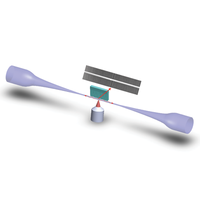
Cavity Quantum Electrodynamics on a Nanofiber Using a Composite Photonic Crystal Cavity

Ramachandrarao Yalla, Mark Sadgrove, Kali P. Nayak, and Kohzo Hakuta

Phys. Rev. Lett. 113, 143601 (2014) - Published 29 September, 2014

Spontaneous emission from a cavity made of an optical nanofiber and a nanostructured grating is demonstrated, which would allow single quantum emitters to be easily integrated into an optical network.

Observation of Suppression of Light Scattering Induced by Dipole-Dipole Interactions in a Cold-Atom Ensemble

J. Pellegrino, R. Bourgain, S. Jennewein, Y. R. P. Sortais, A. Browaeys, S. D. Jenkins, and J. Ruostekoski

Phys. Rev. Lett. 113, 133602 (2014) - Published 26 September, 2014

Light scattering by a cold atom cloud is reduced by exposing the cloud to near resonant laser light, where the size of the cloud is comparable to the wavelength of the light.

Single Molecule as a Local Acoustic Detector for Mechanical Oscillators

Yuxi Tian, Pedro Navarro, and Michel Orrit

Phys. Rev. Lett. 113, 135505 (2014) - Published 26 September, 2014

A single molecule can work as a vibration sensor that can detect displacements nearly as small as a proton.

Easily Repairable Networks: Reconnecting Nodes after Damage

Robert S. Farr, John L. Harer, and Thomas M. A. Fink

Phys. Rev. Lett. 113, 138701 (2014) - Published 26 September, 2014

A new class of network models are introduced, which are easily repairable and able to withstand multiple attacks. Optimization rules are given for the design of square and triangular lattice repairable networks.

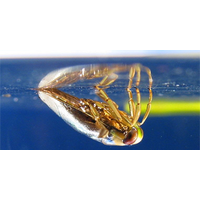
Infinite Lifetime of Underwater Superhydrophobic States

Muchen Xu, Guangyi Sun, and Chang-Jin Kim

Phys. Rev. Lett. 113, 136103 (2014) - Published 25 September, 2014

The water-repelling properties of superhydrophobic surfaces may last longer when they’re used at shallower depths.

Single-Atom Source in the Picokelvin Regime

A. G. Manning, R. Khakimov, R. G. Dall, and A. G. Truscott

Phys. Rev. Lett. 113, 130403 (2014) - Published 24 September, 2014

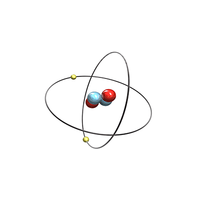
Researchers have demonstrated a new source of individual helium atoms at picokelvin temperatures, paving the way for testing the entanglement of particles with mass.

Efficiently Loading a Single Photon into a Single-Sided Fabry-Perot Cavity

Chang Liu, Yuan Sun, Luwei Zhao, Shanchao Zhang, M. M. T. Loy, and Shengwang Du

Phys. Rev. Lett. 113, 133601 (2014) - Published 23 September, 2014

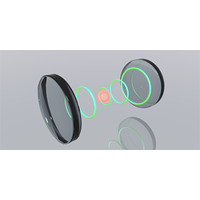
A single photon with an optimally shaped waveform can be loaded into a cavity with near-unity efficiency.

Slippage and Boundary Layer Probed in an Almost Ideal Gas by a Nanomechanical Oscillator

M. Defoort, K. J. Lulla, T. Crozes, O. Maillet, O. Bourgeois, and E. Collin

Phys. Rev. Lett. 113, 136101 (2014) - Published 23 September, 2014

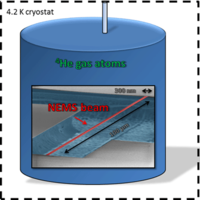
The friction experienced by an oscillating wire immersed in a flowing rarefied gas is measured experimentally for pressures ranging over six orders of magnitude.

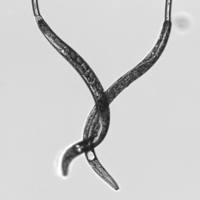
Tangling of Tethered Swimmers: Interactions between Two Nematodes

Matilda Backholm, Rafael D. Schulman, William S. Ryu, and Kari Dalnoki-Veress

Phys. Rev. Lett. 113, 138101 (2014) - Published 23 September, 2014

Two worms, fixed at one end but free to move randomly at the other, tangle together in a predictable way, depending on the relative motion of the two free ends.

Evidence of b-Jet Quenching in PbPb Collisions at sNN=2.76  TeV

S. Chatrchyan et al. (CMS Collaboration)

Phys. Rev. Lett. 113, 132301 (2014) - Published 22 September, 2014

LHC experiments show that the quark-gluon plasma stops jets made of light and heavy quarks equally well, offering insights into a state of matter thought to have existed in the early Universe.

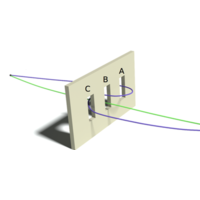
Nonclassical Paths in Quantum Interference Experiments

Rahul Sawant, Joseph Samuel, Aninda Sinha, Supurna Sinha, and Urbasi Sinha

Phys. Rev. Lett. 113, 120406 (2014) - Published 19 September, 2014

Quantum mechanics permits particles to follow bizarre, looping and curving trajectories, usually with very low probability. But a calculation shows that in some cases, these paths can have significant and possibly measurable effects.

How the Result of a Single Coin Toss Can Turn Out to be 100 Heads

Christopher Ferrie and Joshua Combes

Phys. Rev. Lett. 113, 120404 (2014) - Published 18 September, 2014

A classical model is proposed that exhibits the same anomalous weak values as a quantum system, suggesting that weak values are not inherently quantum.

High Statistics Measurement of the Positron Fraction in Primary Cosmic Rays of 0.5–500 GeV with the Alpha Magnetic Spectrometer on the International Space Station

L. Accardo et al. (AMS Collaboration)

Phys. Rev. Lett. 113, 121101 (2014) - Published 18 September, 2014

Measurements of the positron fraction in high energy cosmic rays using the space-borne Alpha Magnetic Spectrometer have been extended to energies of 500 GeV. The new results show that the positron fraction stops increasing with energy at around 200 GeV.

Electron and Positron Fluxes in Primary Cosmic Rays Measured with the Alpha Magnetic Spectrometer on the International Space Station

M. Aguilar et al. (AMS Collaboration)

Phys. Rev. Lett. 113, 121102 (2014) - Published 18 September, 2014

A particle detector onboard the International Space Station has revealed differences between the spectrum of cosmic-ray positrons and electrons, which might be a hint of dark matter annihilation processes.

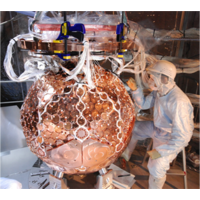
Search for Bosonic Superweakly Interacting Massive Dark Matter Particles with the XMASS-I Detector

K. Abe et al. (XMASS Collaboration)

Phys. Rev. Lett. 113, 121301 (2014) - Published 18 September, 2014

The XMASS-I liquid xenon detector has ruled out the possibility that superweakly interacting massive bosonic particles (a.k.a. super-WIMPs) consititute all of dark matter.

Mobile Linkers on DNA-Coated Colloids: Valency without Patches

Stefano Angioletti-Uberti, Patrick Varilly, Bortolo M. Mognetti, and Daan Frenkel

Phys. Rev. Lett. 113, 128303 (2014) - Published 17 September, 2014

Mobile DNA strands could provide a different way to patch together DNA-coated particles to form colloidal structures whose structure and function can be tailored.

Test of Time Dilation Using Stored Li+ Ions as Clocks at Relativistic Speed

Benjamin Botermann, Dennis Bing, Christopher Geppert, Gerald Gwinner, Theodor W. Hänsch, Gerhard Huber, Sergei Karpuk, Andreas Krieger, Thomas Kühl, Wilfried Nörtershäuser, Christian Novotny, Sascha Reinhardt, Rodolfo Sánchez, Dirk Schwalm, Thomas Stöhlker, Andreas Wolf, and Guido Saathoff

Phys. Rev. Lett. 113, 120405 (2014) - Published 16 September, 2014

An experiment with fast-moving ions verifies relativistic time dilation to a new level of precision, placing constraints on certain quantum gravity theories.

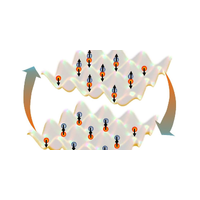
Direct Observation of Coherent Interorbital Spin-Exchange Dynamics

G. Cappellini, M. Mancini, G. Pagano, P. Lombardi, L. Livi, M. Siciliani de Cumis, P. Cancio, M. Pizzocaro, D. Calonico, F. Levi, C. Sias, J. Catani, M. Inguscio, and L. Fallani

Phys. Rev. Lett. 113, 120402 (2014) - Published 15 September, 2014

The experimental observation of spin-orbital exchange interactions in ultracold atoms opens a window for the exploration of poorly understood magnetic behaviors.

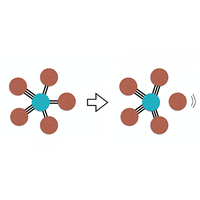
Chirally Sensitive Electron-Induced Molecular Breakup and the Vester-Ulbricht Hypothesis

J. M. Dreiling and T. J. Gay

Phys. Rev. Lett. 113, 118103 (2014) - Published 12 September, 2014

Experiments show that beams of left- or right-handed electrons are not equal-opportunity destroyers of molecules having two mirror-image forms, which supports the idea that primordial cosmic rays generated the asymmetry in biological molecules.

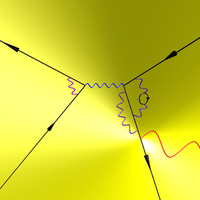
Low’s Subleading Soft Theorem as a Symmetry of QED

Vyacheslav Lysov, Sabrina Pasterski, and Andrew Strominger

Phys. Rev. Lett. 113, 111601 (2014) - Published 11 September, 2014
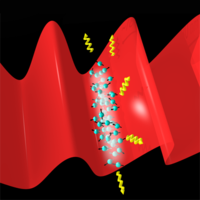
An old identity from Francis Low in the 1950s regarding soft photon production in QED has been shown to be due to a new hidden symmetry of the S-matrix.

Sign In to Your Journals Account

Filter

Section

Filter

Article Lookup

Enter a citation