Highlights

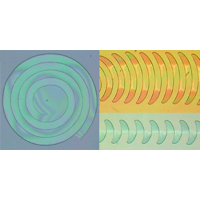
Self-Replicating Cracks: A Collaborative Fracture Mode in Thin Films

Joël Marthelot, Benoît Roman, José Bico, Jérémie Teisseire, Davy Dalmas, and Francisco Melo

Phys. Rev. Lett. 113, 085502 (2014) - Published 20 August, 2014

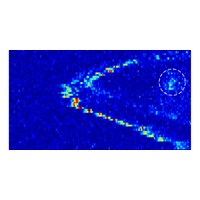
New experiments explain why thin coatings sometimes develop cracks in highly ordered patterns, such as spirals or crescents.

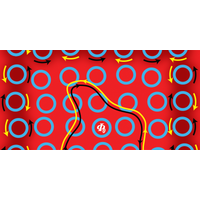
Topologically Robust Transport of Photons in a Synthetic Gauge Field

S. Mittal, J. Fan, S. Faez, A. Migdall, J. M. Taylor, and M. Hafezi

Phys. Rev. Lett. 113, 087403 (2014) - Published 20 August, 2014

A flat optical device is designed to allow light to travel unimpeded along its edges, even in the presence of defects.

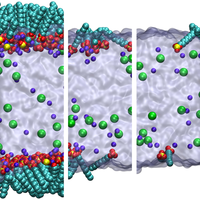
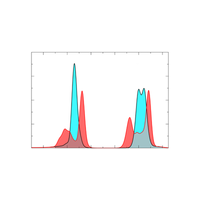
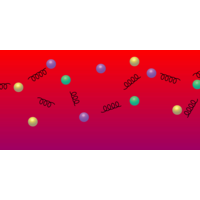
Anomalous ζ Potential in Foam Films

Laurent Joly, François Detcheverry, and Anne-Laure Biance

Phys. Rev. Lett. 113, 088301 (2014) - Published 20 August, 2014

Electro-osmosis in liquid films or soap bubbles is highly efficient, even when the number of charged surfactant molecules is small, due to an exact compensation between flow reduction from decreasing surface charge and flow enhancement from increased slip between the liquid and surfactant.

Braiding Statistics of Loop Excitations in Three Dimensions

Chenjie Wang and Michael Levin

Phys. Rev. Lett. 113, 080403 (2014) - Published 19 August, 2014

Symmetry protected 3D topological phases can be distinguished by their three-loop braiding statistics.

Zeeman Effect Induced by Intense Laser Light

E. Stambulchik and Y. Maron

Phys. Rev. Lett. 113, 083002 (2014) - Published 19 August, 2014

The magnetic field of intense visible light should have a major effect on the spectra of plasmas made from a wide range of elements.

QCD Phase Transition with Chiral Quarks and Physical Quark Masses

Tanmoy Bhattacharya, Michael I. Buchoff, Norman H. Christ, H.-T. Ding, Rajan Gupta, Chulwoo Jung, F. Karsch, Zhongjie Lin, R. D. Mawhinney, Greg McGlynn, Swagato Mukherjee, David Murphy, P. Petreczky, Dwight Renfrew, Chris Schroeder, R. A. Soltz, P. M. Vranas, and Hantao Yin (HotQCD Collaboration)

Phys. Rev. Lett. 113, 082001 (2014) - Published 18 August, 2014

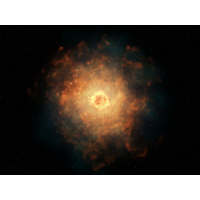
More realistic versions of lattice QCD may lead to a better understanding of how quarks formed hadrons in the early Universe.

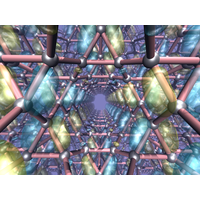
Carbon Kagome Lattice and Orbital-Frustration-Induced Metal-Insulator Transition for Optoelectronics

Yuanping Chen, Y. Y. Sun, H. Wang, D. West, Yuee Xie, J. Zhong, V. Meunier, Marvin L. Cohen, and S. B. Zhang

Phys. Rev. Lett. 113, 085501 (2014) - Published 18 August, 2014

First-principle density functional theory calculations predict the existence of an elemental 3D carbon kagome lattice and provide concrete fabrication techniques for this new material.

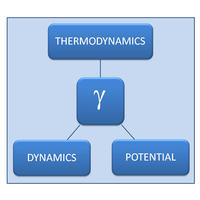
Determination of the Thermodynamic Scaling Exponent for Relaxation in Liquids from Static Ambient-Pressure Quantities

R. Casalini and C. M. Roland

Phys. Rev. Lett. 113, 085701 (2014) - Published 18 August, 2014

Thermodynamic scaling analysis links static physical quantities to the intermolecular forces and mobility between molecules.

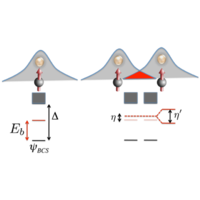
Enhanced Antiferromagnetic Exchange between Magnetic Impurities in a Superconducting Host

N. Y. Yao, L. I. Glazman, E. A. Demler, M. D. Lukin, and J. D. Sau

Phys. Rev. Lett. 113, 087202 (2014) - Published 18 August, 2014

Nonperturbative analysis of magnetic impurities embedded in a superconducting host demonstrates that the RKKY theory for simple metals - coupling between the magnetic moments and conduction elections - is insufficient to describe exchange interactions, and localized electronic bound states near the impurity must also be taken into account.

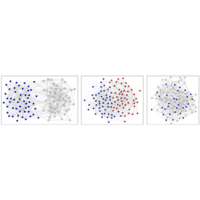
Optimal Network Modularity for Information Diffusion

Azadeh Nematzadeh, Emilio Ferrara, Alessandro Flammini, and Yong-Yeol Ahn

Phys. Rev. Lett. 113, 088701 (2014) - Published 18 August, 2014

Clustering can enhance the spread of information in networks, via intra-community interactions.

Radiative Bistability and Thermal Memory

Viacheslav Kubytskyi, Svend-Age Biehs, and Philippe Ben-Abdallah

Phys. Rev. Lett. 113, 074301 (2014) - Published 15 August, 2014

Theorists propose a “thermal” memory—one based on temperature, rather than voltage—that could switch from zero to one faster than other designs.

Cooling a Magnetic Nanoisland by Spin-Polarized Currents

J. Brüggemann, S. Weiss, P. Nalbach, and M. Thorwart

Phys. Rev. Lett. 113, 076602 (2014) - Published 14 August, 2014

Spin currents could be used to carry away waste heat in nanoscale magnetic devices.

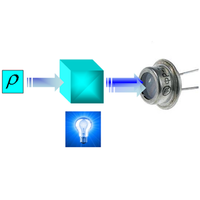
Tomography by Noise

G. Harder, D. Mogilevtsev, N. Korolkova, and Ch. Silberhorn

Phys. Rev. Lett. 113, 070403 (2014) - Published 13 August, 2014

A new method for measuring the photon number distribution of an optical field is demonstrated; the unknown photon signal is mixed with incoherent noise and then measured with a simple on/off detector.

Inflation with Whip-Shaped Suppressed Scalar Power Spectra

Dhiraj Kumar Hazra, Arman Shafieloo, George F. Smoot, and Alexei A. Starobinsky

Phys. Rev. Lett. 113, 071301 (2014) - Published 13 August, 2014

An inflationary scenario that satisfies all observational constraints from BICEP2 and Planck, two independent cosmological surveys of the early Universe, uses a combination of both rapid and slowly varying potentials.

Steering Matter Wave Superradiance with an Ultranarrow-Band Optical Cavity

H. Keßler, J. Klinder, M. Wolke, and A. Hemmerich

Phys. Rev. Lett. 113, 070404 (2014) - Published 12 August, 2014

Precise control of coherent states of both light and matter is achieved by placing a Bose-Einstein condensate in a narrow-band optical cavity.

Additional Strange Hadrons from QCD Thermodynamics and Strangeness Freezeout in Heavy Ion Collisions

A. Bazavov, H.-T. Ding, P. Hegde, O. Kaczmarek, F. Karsch, E. Laermann, Y. Maezawa, Swagato Mukherjee, H. Ohno, P. Petreczky, C. Schmidt, S. Sharma, W. Soeldner, and M. Wagner

Phys. Rev. Lett. 113, 072001 (2014) - Published 11 August, 2014

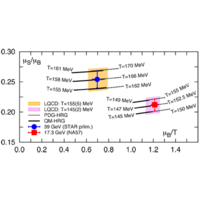
Unobserved hadrons - specifically those made of strange quarks - provide insight into lattice QCD calculations near the Quark Gluon Plasma phase transition.

Microwave Control of Trapped-Ion Motion Assisted by a Running Optical Lattice

Shiqian Ding, Huanqian Loh, Roland Hablutzel, Meng Gao, Gleb Maslennikov, and Dzmitry Matsukevich

Phys. Rev. Lett. 113, 073002 (2014) - Published 11 August, 2014

A scheme is proposed for motion control of trapped ions that allows ground-state cooling of the ions via coupled microwaves and a running optical lattice.

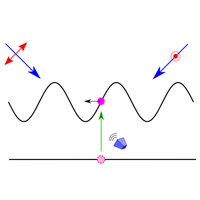
Breaking the Theoretical Scaling Limit for Predicting Quasiparticle Energies: The Stochastic GW Approach

Daniel Neuhauser, Yi Gao, Christopher Arntsen, Cyrus Karshenas, Eran Rabani, and Roi Baer

Phys. Rev. Lett. 113, 076402 (2014) - Published 11 August, 2014

A stochastic implementation of an often used approximation to many-body perturbation theory promises more accurate, quicker electronic structure calculations of large systems.

Free-Space Quantum Key Distribution by Rotation-Invariant Twisted Photons

Giuseppe Vallone, Vincenzo D’Ambrosio, Anna Sponselli, Sergei Slussarenko, Lorenzo Marrucci, Fabio Sciarrino, and Paolo Villoresi

Phys. Rev. Lett. 113, 060503 (2014) - Published 8 August, 2014

Free-space quantum communication over a distance of 210 meters is demonstrated using orbital angular momentum of light.

Microwave Down-Conversion with an Impedance-Matched Λ System in Driven Circuit QED

K. Inomata, K. Koshino, Z. R. Lin, W. D. Oliver, J. S. Tsai, Y. Nakamura, and T. Yamamoto

Phys. Rev. Lett. 113, 063604 (2014) - Published 8 August, 2014
Impedance matching between a microwave photon pulse and an artificial atom coupled to a waveguide is experimentally demonstrated - the incident photons are completely absorbed by the cavity.

Sign In to Your Journals Account

Filter

Section

Filter

Article Lookup

Enter a citation