Highlights

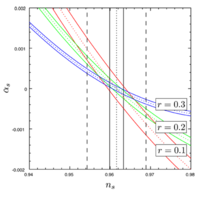
No New Cosmological Concordance with Massive Sterile Neutrinos

Boris Leistedt, Hiranya V. Peiris, and Licia Verde

Phys. Rev. Lett. 113, 041301 (2014) - Published 21 July, 2014

Contrary to earlier claims, the existence of massive sterile neutrinos does not reduce the discrepancy between cosmological data sets from the early and late time universe.

Characterization of Spin-Orbit Interactions of GaAs Heavy Holes Using a Quantum Point Contact

Fabrizio Nichele, Stefano Chesi, Szymon Hennel, Angela Wittmann, Christian Gerl, Werner Wegscheider, Daniel Loss, Thomas Ihn, and Klaus Ensslin

Phys. Rev. Lett. 113, 046801 (2014) - Published 21 July, 2014

Transport measurements confirm the presence of a quadratic spin orbit interaction in a 2D GaAs hole gas.

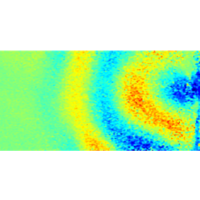
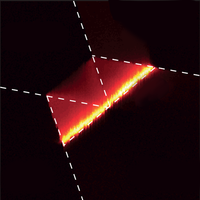
Imaging of Shear Waves Induced by Lorentz Force in Soft Tissues

P. Grasland-Mongrain, R. Souchon, F. Cartellier, A. Zorgani, J. Y. Chapelon, C. Lafon, and S. Catheline

Phys. Rev. Lett. 113, 038101 (2014) - Published 18 July, 2014

A medical imaging technique uses electric and magnetic fields to generate vibrations in tissues and measure their mechanical stiffness in a new way.

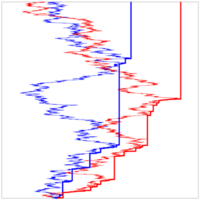
Slow Kinetics of Brownian Maxima

E. Ben-Naim and P. L. Krapivsky

Phys. Rev. Lett. 113, 030604 (2014) - Published 17 July, 2014

The probability that the maximum trajectory of two independent Brownian particles remains ordered decays as a power law with time.

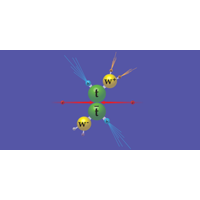
Precision Measurement of the Top Quark Mass in Lepton+Jets Final States

V. M. Abazov et al. (D0 Collaboration)

Phys. Rev. Lett. 113, 032002 (2014) - Published 17 July, 2014

A new analysis of data from the Tevatron delivers the most precise value of the top quark mass based on a single measurement.

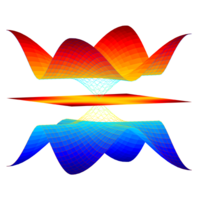
Probe of Three-Dimensional Chiral Topological Insulators in an Optical Lattice

S.-T. Wang, D.-L. Deng, and L.-M. Duan

Phys. Rev. Lett. 113, 033002 (2014) - Published 16 July, 2014

An experimental scheme is proposed allowing the properties of topological insulators to be studied using cold fermionic atoms in an optical lattice.

Photon Emission from a Cavity-Coupled Double Quantum Dot

Y.-Y. Liu, K. D. Petersson, J. Stehlik, J. M. Taylor, and J. R. Petta

Phys. Rev. Lett. 113, 036801 (2014) - Published 16 July, 2014

Driving a direct current through a double quantum dot in a semiconducting nanowire coupled to an optical cavity results in the emission of photons.

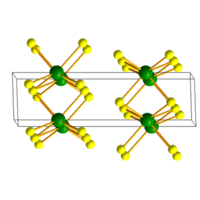
Pressure-Induced Metallization of Molybdenum Disulfide

Zhen-Hua Chi, Xiao-Miao Zhao, Haidong Zhang, Alexander F. Goncharov, Sergey S. Lobanov, Tomoko Kagayama, Masafumi Sakata, and Xiao-Jia Chen

Phys. Rev. Lett. 113, 036802 (2014) - Published 16 July, 2014

A reversible first-order transition in the crystal structure of molybdenum disulfide is induced at pressures greater than 20 GPa, without doping, changing the material from semiconducting to metallic.

Electric-Field Coupling to Spin Waves in a Centrosymmetric Ferrite

Xufeng Zhang, Tianyu Liu, Michael E. Flatté, and Hong X. Tang

Phys. Rev. Lett. 113, 037202 (2014) - Published 16 July, 2014

In a magnetic material with strong spin-orbit coupling, the phase of spin waves can be controlled with an electric field.

Mode Competition and Anomalous Cooling in a Multimode Phonon Laser

Utku Kemiktarak, Mathieu Durand, Michael Metcalfe, and John Lawall

Phys. Rev. Lett. 113, 030802 (2014) - Published 15 July, 2014

Mode competition—a well-known phenomenon in photon lasers—has now been studied and controlled in phonon lasers.

Quantifying the BICEP2-Planck Tension over Gravitational Waves

Kendrick M. Smith, Cora Dvorkin, Latham Boyle, Neil Turok, Mark Halpern, Gary Hinshaw, and Ben Gold

Phys. Rev. Lett. 113, 031301 (2014) - Published 14 July, 2014

The discrepancy between the BICEP2 measurement of B-mode polarization, a possible indication of primordial gravity waves, and earlier limits set from Planck and WMAP is quantified. Future measurements to resolve the tension are discussed.

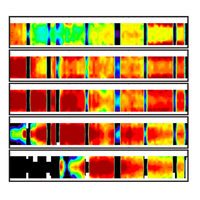
Determining the rp-Process Flow through Ni56: Resonances in Cu57(p,γ)Zn58 Identified with GRETINA

C. Langer et al.

Phys. Rev. Lett. 113, 032502 (2014) - Published 14 July, 2014

Updated measurements of the 57Cu(p,γ)58Zn reaction rate provide a crucial input to x-ray burst modeling reducing the uncertainty in Nickel production by a factor of ten. This reduction in uncertainty will allow for an improved modeling of x-ray burst observables, such as light curves and x-ray spectra of nearby interstellar medium.

Anomalous Hydrodynamics of Two-Dimensional Vortex Fluids

Paul Wiegmann and Alexander G. Abanov

Phys. Rev. Lett. 113, 034501 (2014) - Published 14 July, 2014

A hydrodynamic description of a dense system of vortices is developed and features an anomalous stress responsible for a number of interesting macroscopic phenomena.

Direct Observation of Radiation-Belt Electron Acceleration from Electron-Volt Energies to Megavolts by Nonlinear Whistlers

F. S. Mozer, O. Agapitov, V. Krasnoselskikh, S. Lejosne, G. D. Reeves, and I. Roth

Phys. Rev. Lett. 113, 035001 (2014) - Published 14 July, 2014

The acceleration of electrons in the Earth’s outer radiation belt from thermal to relativistic energies is observed for the first time and may help scientists better understand the weather in Space.

Experiments of Drops Impacting a Smooth Solid Surface: A Model of the Critical Impact Speed for Drop Splashing

Guillaume Riboux and José Manuel Gordillo

Phys. Rev. Lett. 113, 024507 (2014) - Published 11 July, 2014

Whether a droplet hitting a solid surface flattens smoothly or forms a ragged splash depends on the gas surrounding it.

Optomechanical Sensing of Spontaneous Wave-Function Collapse

Stefan Nimmrichter, Klaus Hornberger, and Klemens Hammerer

Phys. Rev. Lett. 113, 020405 (2014) - Published 10 July, 2014

A method, using optomechanical sensors, for testing modifications to the Schrödinger equation is proposed.

Self-Amplified Gamma-Ray Laser on Positronium Atoms from a Bose-Einstein Condensate

H. K. Avetissian, A. K. Avetissian, and G. F. Mkrtchian

Phys. Rev. Lett. 113, 023904 (2014) - Published 10 July, 2014

A theoretical study suggests a new way to build a gamma-ray laser from a Bose-Einstein condensate of electron-positron pairs.

Measurement of the Cosmic Microwave Background Polarization Lensing Power Spectrum with the POLARBEAR Experiment

P. A. R. Ade et al. (POLARBEAR Collaboration)

Phys. Rev. Lett. 113, 021301 (2014) - Published 9 July, 2014

Distortion of the cosmic microwave background by matter in the universe, known as gravitational lensing, is observed by the POLARBEAR collaboration. The technique used here would allow for all gravitating matter to be mapped, and provide important corrections for the detection of primordial gravitational waves in the cosmic microwave background.

Tying Dark Matter to Baryons with Self-Interactions

Manoj Kaplinghat, Ryan E. Keeley, Tim Linden, and Hai-Bo Yu

Phys. Rev. Lett. 113, 021302 (2014) - Published 9 July, 2014

The spatial configuration of stars modifies the core size and shape of dark matter galactic halos in self-interacting dark matter models.

Superheating and Homogeneous Single Bubble Nucleation in a Solid-State Nanopore

Gaku Nagashima, Edlyn V. Levine, David P. Hoogerheide, Michael M. Burns, and Jene A. Golovchenko

Phys. Rev. Lett. 113, 024506 (2014) - Published 9 July, 2014

Scientists have now developed a controlled method to superheat liquids and induce the formation of bubbles in a nanoscale container.

Sign In to Your Journals Account

Filter

Section

Filter

Article Lookup

Enter a citation