Highlights

Regular-Orbit-Engineered Chaotic Photon Transport in Mixed Phase Space

Li-Kun Chen, Yu-Zhong Gu, Qi-Tao Cao, Qihuang Gong, Jan Wiersig, and Yun-Feng Xiao

Phys. Rev. Lett. 123, 173903 (2019) - Published 24 October, 2019

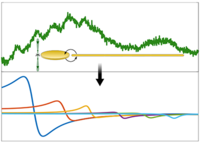
A novel nanofiber technique shows that the evolution of light inside an asymmetric microcavity is engineered by regular orbits and two distinct evolution pathways emerge: regular-chaotic and pure-chaotic channels.

Topological Stabilization and Dynamics of Self-Propelling Nematic Shells

Babak Vajdi Hokmabad, Kyle A. Baldwin, Carsten Krüger, Christian Bahr, and Corinna C. Maass

Phys. Rev. Lett. 123, 178003 (2019) - Published 23 October, 2019

Encapsulating emulsion-based microcapsules with a liquid-crystal layer helps stop the capsules from bursting—it also allows them to self-propel.

Parallel Implementation of High-Fidelity Multiqubit Gates with Neutral Atoms

Harry Levine, Alexander Keesling, Giulia Semeghini, Ahmed Omran, Tout T. Wang, Sepehr Ebadi, Hannes Bernien, Markus Greiner, Vladan Vuletić, Hannes Pichler, and Mikhail D. Lukin

Phys. Rev. Lett. 123, 170503 (2019) - Published 22 October, 2019

Fidelity in multiqubit gates based on trapped rubidium atoms is now competitive with other approaches and can be maintained as the device is scaled up.

Networks and Hierarchies: How Amorphous Materials Learn to Remember

Muhittin Mungan, Srikanth Sastry, Karin Dahmen, and Ido Regev

Phys. Rev. Lett. 123, 178002 (2019) - Published 22 October, 2019

By mapping plastic rearrangements onto a directed network model, topology is linked to dynamics to show that plastically deformed amorphous solids feature return-point-memory, a strong form of memory which was not expected to occur in these materials.

Demonstration of a Timescale Based on a Stable Optical Carrier

William R. Milner, John M. Robinson, Colin J. Kennedy, Tobias Bothwell, Dhruv Kedar, Dan G. Matei, Thomas Legero, Uwe Sterr, Fritz Riehle, Holly Leopardi, Tara M. Fortier, Jeffrey A. Sherman, Judah Levine, Jian Yao, Jun Ye, and Eric Oelker

Phys. Rev. Lett. 123, 173201 (2019) - Published 21 October, 2019

An all-optical clock scheme could improve time metrology standards, taking an important step toward the redefinition of the second.

Direct Observation of Infrared Plasmonic Fano Antiresonances by a Nanoscale Electron Probe

Kevin C. Smith, Agust Olafsson, Xuan Hu, Amber M. Nelson-Quillin, Juan Carlos Idrobo, Robyn Collette, Philip D. Rack, Jon P. Camden, and David J. Masiello

Phys. Rev. Lett. 123, 177401 (2019) - Published 21 October, 2019

First direct detection of Fano resonances in small gold disks that are proximity-coupled to long gold rods using a high-resolution transmission electron microscope.

Constraining the Mass of the Graviton with the Planetary Ephemeris INPOP

L. Bernus, O. Minazzoli, A. Fienga, M. Gastineau, J. Laskar, and P. Deram

Phys. Rev. Lett. 123, 161103 (2019) - Published 18 October, 2019

Precision data on planetary motions are used to constrain deviations from general relativity, complementing results obtained from gravitational wave measurements.

Search for Neutrinoless Double-β Decay with the Complete EXO-200 Dataset

G. Anton et al. (EXO-200 Collaboration)

Phys. Rev. Lett. 123, 161802 (2019) - Published 18 October, 2019

A new lower limit on the neutrinoless double-β decay of 136Xe has been set by the full EXO-200 dataset.

Determination of the Interval between the Ground States of Para- and Ortho-H2

M. Beyer, N. Hölsch, J. Hussels, C.-F. Cheng, E. J. Salumbides, K. S. E. Eikema, W. Ubachs, Ch. Jungen, and F. Merkt

Phys. Rev. Lett. 123, 163002 (2019) - Published 16 October, 2019

High-precision measurement of the energy shift between the ground states of ortho- and para-hydrogen yields a new fundamental physical quantity for ultraprecise quantum chemistry.

Decay of a Quantum Knot

T. Ollikainen, A. Blinova, M. Möttönen, and D. S. Hall

Phys. Rev. Lett. 123, 163003 (2019) - Published 16 October, 2019

Researchers have observed the decay of a topological knot defect in a quantum gas.

Measuring the Hydrodynamic Linear Response of a Unitary Fermi Gas

Lorin Baird, Xin Wang, Stetson Roof, and J. E. Thomas

Phys. Rev. Lett. 123, 160402 (2019) - Published 15 October, 2019

Measurement of the hydrodynamic linear response of a unitary Fermi gas provides the first experimental estimation of the thermal conductivity of a normal fluid.

Strong-Field Extreme-Ultraviolet Dressing of Atomic Double Excitation

Christian Ott, Lennart Aufleger, Thomas Ding, Marc Rebholz, Alexander Magunia, Maximilian Hartmann, Veit Stooß, David Wachs, Paul Birk, Gergana D. Borisova, Kristina Meyer, Patrick Rupprecht, Carina da Costa Castanheira, Robert Moshammer, Andrew R. Attar, Thomas Gaumnitz, Zhi-Heng Loh, Stefan Düsterer, Rolf Treusch, Joachim Ullrich, Yuhai Jiang, Michael Meyer, Peter Lambropoulos, and Thomas Pfeifer

Phys. Rev. Lett. 123, 163201 (2019) - Published 15 October, 2019

An extreme-UV (XUV) laser alters the structure of doubly excited helium in experiments that pave the way for improved understanding and control of fundamental light-matter interactions.

Anomaly of the Electromagnetic Duality of Maxwell Theory

Chang-Tse Hsieh, Yuji Tachikawa, and Kazuya Yonekura

Phys. Rev. Lett. 123, 161601 (2019) - Published 14 October, 2019

The well known electric-magnetic duality of classical electromagnetism is violated upon quantization of the theory in the presence of general background fields.

Highly Charged Droplets of Superfluid Helium

Felix Laimer, Lorenz Kranabetter, Lukas Tiefenthaler, Simon Albertini, Fabio Zappa, Andrew M. Ellis, Michael Gatchell, and Paul Scheier

Phys. Rev. Lett. 123, 165301 (2019) - Published 14 October, 2019

Tiny droplets of superfluid helium can contain more than fifty charges, which could act as nucleation sites for growing nanostructures.

Breakup and Recovery of Topological Zero Modes in Finite Non-Hermitian Optical Lattices

Wange Song, Wenzhao Sun, Chen Chen, Qinghai Song, Shumin Xiao, Shining Zhu, and Tao Li

Phys. Rev. Lett. 123, 165701 (2019) - Published 14 October, 2019

The introduction of non-Hermitian degeneracy through loss modulation in silicon waveguides makes it possible to observe the recovery of the exact-zero mode of optical topological edge states.

Ferromagnetic Resonance with Magnetic Phase Selectivity by Means of Resonant Elastic X-Ray Scattering on a Chiral Magnet

S. Pöllath, A. Aqeel, A. Bauer, C. Luo, H. Ryll, F. Radu, C. Pfleiderer, G. Woltersdorf, and C. H. Back

Phys. Rev. Lett. 123, 167201 (2019) - Published 14 October, 2019

Ferromagnetic resonance experiments performed in reciprocal space allow unambiguous identification of magnetic modes in complex magnetic systems.

Surface-Bulk Interplay in Vapor-Deposited Glasses: Crossover Length and the Origin of Front Transformation

Cristian Rodríguez-Tinoco, Marta Gonzalez-Silveira, Joan Ràfols-Ribé, Ana Vila-Costa, Julio Cesar Martinez-Garcia, and Javier Rodríguez-Viejo

Phys. Rev. Lett. 123, 155501 (2019) - Published 11 October, 2019

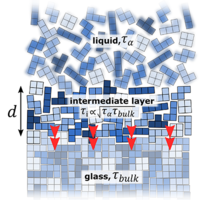
Both ultrastable and ordinary glasses show front propagation on melting, with an intermediate liquid layer between the glass and the liquid.

Direct Measurement of a Nonlocal Entangled Quantum State

Wei-Wei Pan, Xiao-Ye Xu, Yaron Kedem, Qin-Qin Wang, Zhe Chen, Munsif Jan, Kai Sun, Jin-Shi Xu, Yong-Jian Han, Chuan-Feng Li, and Guang-Can Guo

Phys. Rev. Lett. 123, 150402 (2019) - Published 9 October, 2019

Researchers have directly measured the components of a nonlocal, entangled wave function, rather than relying on indirect tomographic or reconstructive techniques.

Period-n Discrete Time Crystals and Quasicrystals with Ultracold Bosons

Andrea Pizzi, Johannes Knolle, and Andreas Nunnenkamp

Phys. Rev. Lett. 123, 150601 (2019) - Published 9 October, 2019

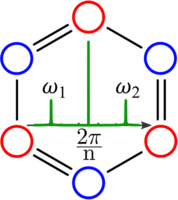
A realistic and experimentally realizable model of a driven quantum system displays discrete time-crystal dynamics due to the nonlinearity induced by the many-body interaction.

Transmission Electron Microscope Using a Linear Accelerator

Takumi Sannomiya, Yoshihiro Arai, Kuniaki Nagayama, and Yukinori Nagatani

Phys. Rev. Lett. 123, 150801 (2019) - Published 8 October, 2019

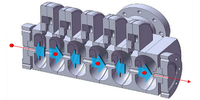
A linear accelerator delivers high-energy electrons that can be used to image samples too thick for conventional transmission electron microscopes.

Sign In to Your Journals Account

Filter

Section

Filter

Article Lookup

Enter a citation