Highlights

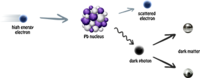
Dark Matter Search in Missing Energy Events with NA64

D. Banerjee et al. (NA64 Collaboration)

Phys. Rev. Lett. 123, 121801 (2019) - Published 18 September, 2019

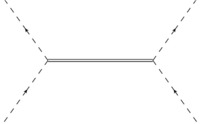
Using a beam-dump experiment at CERN, the most stringent constraints are placed on hypothetical dark photons with mass below 200 MeV.

Nonreciprocity and Unidirectional Invisibility in Cavity Magnonics

Yi-Pu Wang, J. W. Rao, Y. Yang, Peng-Chao Xu, Y. S. Gui, B. M. Yao, J. Q. You, and C.-M. Hu

Phys. Rev. Lett. 123, 127202 (2019) - Published 18 September, 2019

A simple device controls which direction microwaves travel in a circuit, a critical ingredient for quantum technologies that demand sensitive signal detection.

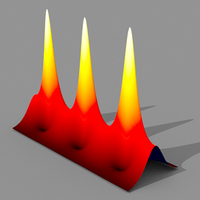
Excitation Modes of Bright Matter-Wave Solitons

Andrea Di Carli, Craig D. Colquhoun, Grant Henderson, Stuart Flannigan, Gian-Luca Oppo, Andrew J. Daley, Stefan Kuhr, and Elmar Haller

Phys. Rev. Lett. 123, 123602 (2019) - Published 17 September, 2019

This first experimental study of the breathing modes of a single bright soliton and of higher-order solitons in a quasi-1D geometry reveals second order solitons and the dynamics of the wavefunction.

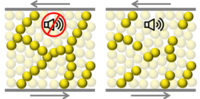
Using Acoustic Perturbations to Dynamically Tune Shear Thickening in Colloidal Suspensions

Prateek Sehgal, Meera Ramaswamy, Itai Cohen, and Brian J. Kirby

Phys. Rev. Lett. 123, 128001 (2019) - Published 17 September, 2019

An acoustic signal can control the viscosity in shear-thickening materials, which have potential uses as impact absorbers.

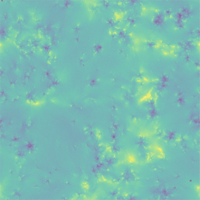
Testing the No-Hair Theorem with GW150914

Maximiliano Isi, Matthew Giesler, Will M. Farr, Mark A. Scheel, and Saul A. Teukolsky

Phys. Rev. Lett. 123, 111102 (2019) - Published 12 September, 2019

A fresh look at data from the first detected black-hole merger supports the “no hair” theorem and proves the potential of black-hole spectroscopy.

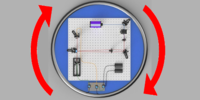
Photon Bunching in a Rotating Reference Frame

Sara Restuccia, Marko Toroš, Graham M. Gibson, Hendrik Ulbricht, Daniele Faccio, and Miles J. Padgett

Phys. Rev. Lett. 123, 110401 (2019) - Published 10 September, 2019

A well-known quantum experiment is performed on a rotating lab table—offering a probe of quantum physics in a noninertial reference frame.

Absence of Interlayer Tunnel Coupling of K-Valley Electrons in Bilayer MoS2

Riccardo Pisoni, Tim Davatz, Kenji Watanabe, Takashi Taniguchi, Thomas Ihn, and Klaus Ensslin

Phys. Rev. Lett. 123, 117702 (2019) - Published 10 September, 2019

Detailed low temperature magnetotransport measurements of encapsulated bilayer MoS2 reveal that, in contrast to bilayer graphene, in this system the two layers behave as independent electronic systems with no tunnel coupling.

State Preparation and Tomography of a Nanomechanical Resonator with Fast Light Pulses

Juha T. Muhonen, Giada R. La Gala, Rick Leijssen, and Ewold Verhagen

Phys. Rev. Lett. 123, 113601 (2019) - Published 9 September, 2019

Quantum nondemolition measurements with fast pulses present the best method to the date for achieving a motional ground state of a nanomechanical resonator.

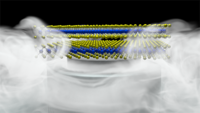
Bending of Multilayer van der Waals Materials

Guorui Wang, Zhaohe Dai, Junkai Xiao, ShiZhe Feng, Chuanxin Weng, Luqi Liu, Zhiping Xu, Rui Huang, and Zhong Zhang

Phys. Rev. Lett. 123, 116101 (2019) - Published 9 September, 2019

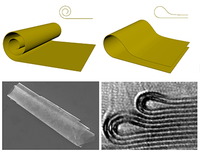
Direct measurement of the bending rigidity of multilayer graphene, molybdenum disulfide, and hexagonal boron nitride, shows a response of the multilayers consistent with nonlinear plate theory.

Experimental Realization of a Quantum Dot Energy Harvester

G. Jaliel, R. K. Puddy, R. Sánchez, A. N. Jordan, B. Sothmann, I. Farrer, J. P. Griffiths, D. A. Ritchie, and C. G. Smith

Phys. Rev. Lett. 123, 117701 (2019) - Published 9 September, 2019

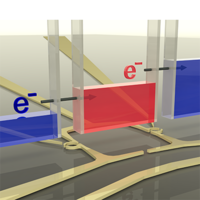
It’s now possible to harvest energy at the mesoscopic scale by exploiting the resonant tunneling in a nanoscale thermoelectric device consisting of two quantum dots.

Harmonically Confined Particles with Long-Range Repulsive Interactions

S. Agarwal, A. Dhar, M. Kulkarni, A. Kundu, S. N. Majumdar, D. Mukamel, and G. Schehr

Phys. Rev. Lett. 123, 100603 (2019) - Published 6 September, 2019

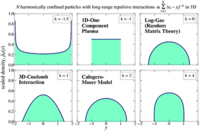
The average density profile of a one-dimensional interacting gas shows rich physical phenomenology as a function of the interaction range and temperature.

Laser-Assisted Evaporative Cooling of Anions

G. Cerchiari, P. Yzombard, and A. Kellerbauer

Phys. Rev. Lett. 123, 103201 (2019) - Published 6 September, 2019

A new cooling technique targets negative ions, which are typically resistant to cooling methods that work with atoms and positive ions.

Background-Free Measurement of Ring Currents by Symmetry-Breaking High-Harmonic Spectroscopy

Ofer Neufeld and Oren Cohen

Phys. Rev. Lett. 123, 103202 (2019) - Published 6 September, 2019

A technique based on high harmonic generation is proposed to probe and characterize electric currents in excited atomic and molecular media.

Experimental Twin-Field Quantum Key Distribution through Sending or Not Sending

Yang Liu, Zong-Wen Yu, Weijun Zhang, Jian-Yu Guan, Jiu-Peng Chen, Chi Zhang, Xiao-Long Hu, Hao Li, Cong Jiang, Jin Lin, Teng-Yun Chen, Lixing You, Zhen Wang, Xiang-Bin Wang, Qiang Zhang, and Jian-Wei Pan

Phys. Rev. Lett. 123, 100505 (2019) - Published 5 September, 2019

Two independent studies demonstrate the practicality of twin-field quantum key distribution—a promising approach to perform quantum cryptography over long distances.

Proof-of-Principle Experimental Demonstration of Twin-Field Type Quantum Key Distribution

Xiaoqing Zhong, Jianyong Hu, Marcos Curty, Li Qian, and Hoi-Kwong Lo

Phys. Rev. Lett. 123, 100506 (2019) - Published 5 September, 2019

Two independent studies demonstrate the practicality of twin-field quantum key distribution—a promising approach to perform quantum cryptography over long distances.

Resolving Spacetime Singularities within Asymptotic Safety

Lando Bosma, Benjamin Knorr, and Frank Saueressig

Phys. Rev. Lett. 123, 101301 (2019) - Published 5 September, 2019

Asymptotic Safety, a renormalization group based approach to quantum gravity, suggests a possible path towards resolving spacetime singularities.

Deterministic Single-Ion Implantation of Rare-Earth Ions for Nanometer-Resolution Color-Center Generation

Karin Groot-Berning, Thomas Kornher, Georg Jacob, Felix Stopp, Samuel T. Dawkins, Roman Kolesov, Jörg Wrachtrup, Kilian Singer, and Ferdinand Schmidt-Kaler

Phys. Rev. Lett. 123, 106802 (2019) - Published 4 September, 2019

A new technique inserts single-ion impurities into a crystal reliably and with a precision of tens of nanometers.

Slow Coarsening in Jammed Athermal Soft Particle Suspensions

R. N. Chacko, P. Sollich, and S. M. Fielding

Phys. Rev. Lett. 123, 108001 (2019) - Published 4 September, 2019

Instead of gradually dispersing after release, a densely jammed athermal system of particles forms clusters that disappear and reform.

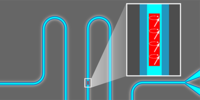
Strong Coupling between Magnons and Microwave Photons in On-Chip Ferromagnet-Superconductor Thin-Film Devices

Yi Li, Tomas Polakovic, Yong-Lei Wang, Jing Xu, Sergi Lendinez, Zhizhi Zhang, Junjia Ding, Trupti Khaire, Hilal Saglam, Ralu Divan, John Pearson, Wai-Kwong Kwok, Zhili Xiao, Valentine Novosad, Axel Hoffmann, and Wei Zhang

Phys. Rev. Lett. 123, 107701 (2019) - Published 3 September, 2019

A new design for a cavity spintronic device obtains a strong photon-magnon coupling with a magnet that is over 1000 times smaller than previously used magnets.

Strong Coupling between Microwave Photons and Nanomagnet Magnons

Justin T. Hou and Luqiao Liu

Phys. Rev. Lett. 123, 107702 (2019) - Published 3 September, 2019

A new design for a cavity spintronic device obtains a strong photon-magnon coupling with a magnet that is over 1000 times smaller than previously used magnets.

Sign In to Your Journals Account

Filter

Section

Filter

Article Lookup

Enter a citation