Highlights

Candidate for Laser Cooling of a Negative Ion: High-Resolution Photoelectron Imaging of Th−

Rulin Tang, Ran Si, Zejie Fei, Xiaoxi Fu, Yuzhu Lu, Tomas Brage, Hongtao Liu, Chongyang Chen, and Chuangang Ning

Phys. Rev. Lett. 123, 203002 (2019) - Published 12 November, 2019

Measurements of the electron binding energy in the negative thorium ion suggest that it may be a good candidate for laser cooling.

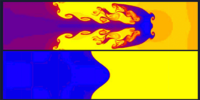
Extreme Hardening of Pb at High Pressure and Strain Rate

A. Krygier, P. D. Powell, J. M. McNaney, C. M. Huntington, S. T. Prisbrey, B. A. Remington, R. E. Rudd, D. C. Swift, C. E. Wehrenberg, A. Arsenlis, H.-S. Park, P. Graham, E. Gumbrell, M. P. Hill, A. J. Comley, and S. D. Rothman

Phys. Rev. Lett. 123, 205701 (2019) - Published 11 November, 2019

When rapidly compressed to planetary-core pressures, lead—a soft metal—becomes 10 times stronger than high-grade steel.

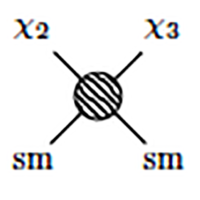
Superheavy Thermal Dark Matter

Hyungjin Kim and Eric Kuflik

Phys. Rev. Lett. 123, 191801 (2019) - Published 8 November, 2019

A new thermal freezeout mechanism for dark matter produces the correct relic abundance for elementary dark matter having mass up to 1014 GeV, well above a prior unitary bound.

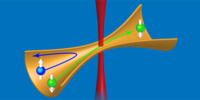
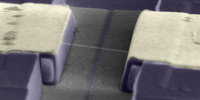
Quantized Conductance through a Spin-Selective Atomic Point Contact

Martin Lebrat, Samuel Häusler, Philipp Fabritius, Dominik Husmann, Laura Corman, and Tilman Esslinger

Phys. Rev. Lett. 123, 193605 (2019) - Published 8 November, 2019

A spin filter for cold atoms might be used as a testbed for spintronic devices and for searches for Majorana fermions.

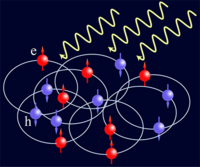
Light-Driven Electron-Hole Bardeen-Cooper-Schrieffer-Like State in Bulk GaAs

Yuta Murotani, Changsu Kim, Hidefumi Akiyama, Loren N. Pfeiffer, Ken W. West, and Ryo Shimano

Phys. Rev. Lett. 123, 197401 (2019) - Published 8 November, 2019

An electron-hole pairing state can be induced in a regular GaAs semiconductor crystal with laser light.

Band-Gap-Dependent Electronic Compressibility of Carbon Nanotubes in the Wigner Crystal Regime

Neda Lotfizadeh, Daniel R. McCulley, Mitchell J. Senger, Han Fu, Ethan D. Minot, Brian Skinner, and Vikram V. Deshpande

Phys. Rev. Lett. 123, 197701 (2019) - Published 7 November, 2019

Researchers have determined the energy required to add an electron to a Wigner crystal—an ordered crystalline state made of electrons rather than atoms.

Demonstration of Machine Learning-Based Model-Independent Stabilization of Source Properties in Synchrotron Light Sources

S. C. Leemann, S. Liu, A. Hexemer, M. A. Marcus, C. N. Melton, H. Nishimura, and C. Sun

Phys. Rev. Lett. 123, 194801 (2019) - Published 6 November, 2019

Machine-learning algorithms could allow researchers to substantially reduce unwanted fluctuations in the widths of the electron beams produced at synchrotrons.

Physical Limit to Concentration Sensing in a Changing Environment

Thierry Mora and Ilya Nemenman

Phys. Rev. Lett. 123, 198101 (2019) - Published 5 November, 2019

A new theoretical model predicts a fundamental limit to how finely attuned a cell can be to its biochemical surroundings.

Hierarchical Black Hole Mergers in Active Galactic Nuclei

Y. Yang, I. Bartos, V. Gayathri, K. E. S. Ford, Z. Haiman, S. Klimenko, B. Kocsis, S. Márka, Z. Márka, B. McKernan, and R. O’Shaughnessy

Phys. Rev. Lett. 123, 181101 (2019) - Published 1 November, 2019

A multiple merger scenario occurring in the centers of galaxies might explain some surprisingly large merger events recorded by gravitational-wave detectors.

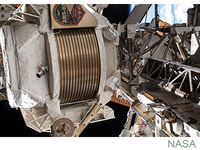
Properties of Cosmic Helium Isotopes Measured by the Alpha Magnetic Spectrometer

M. Aguilar et al. (AMS Collaboration)

Phys. Rev. Lett. 123, 181102 (2019) - Published 1 November, 2019

The AMS collaboration’s measurement of 3He and 4He fluxes over the course of six years will help understand the composition, sources, and propagation of cosmic rays.

Fractional Hydrodynamic Memory and Superdiffusion in Tilted Washboard Potentials

Igor Goychuk

Phys. Rev. Lett. 123, 180603 (2019) - Published 31 October, 2019

Hydrodynamic memory effects can lead to a giant inertial enhancement of nonlinear diffusion.

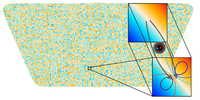
Detection of CMB-Cluster Lensing using Polarization Data from SPTpol

S. Raghunathan et al. (SPTpol and DES Collaboration)

Phys. Rev. Lett. 123, 181301 (2019) - Published 31 October, 2019

The first detection of gravitational lensing in the polarization pattern of the cosmic microwave background offers a more precise way to measure the mass of galaxy clusters.

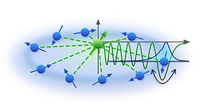
Quantum Rydberg Central Spin Model

Yuto Ashida, Tao Shi, Richard Schmidt, H. R. Sadeghpour, J. Ignacio Cirac, and Eugene Demler

Phys. Rev. Lett. 123, 183001 (2019) - Published 31 October, 2019

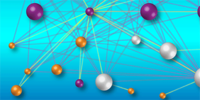
Rydberg excitations in ultracold atoms provide a new type of quantum impurity system unifying key features of three fundamental models: the Kondo model, the Bose polaron model, and the central spin model.

Quantum Network Nodes Based on Diamond Qubits with an Efficient Nanophotonic Interface

C. T. Nguyen, D. D. Sukachev, M. K. Bhaskar, B. Machielse, D. S. Levonian, E. N. Knall, P. Stroganov, R. Riedinger, H. Park, M. Lončar, and M. D. Lukin

Phys. Rev. Lett. 123, 183602 (2019) - Published 30 October, 2019

A solid-state qubit satisfies three key requirements of a building block for a quantum network.

Measurement of Motion beyond the Quantum Limit by Transient Amplification

R. D. Delaney, A. P. Reed, R. W. Andrews, and K. W. Lehnert

Phys. Rev. Lett. 123, 183603 (2019) - Published 30 October, 2019

A new technique allows for more precise measurements of a quantum oscillator’s time-varying displacement, with potential applications in quantum information.

Superhigh-Resolution Recognition of Optical Vortex Modes Assisted by a Deep-Learning Method

Zhanwei Liu, Shuo Yan, Haigang Liu, and Xianfeng Chen

Phys. Rev. Lett. 123, 183902 (2019) - Published 29 October, 2019

Separation of angular momentum modes of light, combined with machine learning technology enables high-resolution image transfer through an optical communication system.

Polyelectrolyte Conformation Controlled by a Trivalent-Rich Ion Jacket

Sarah N. Innes-Gold, Philip A. Pincus, Mark J. Stevens, and Omar A. Saleh

Phys. Rev. Lett. 123, 187801 (2019) - Published 29 October, 2019

A new model explains the deformation of polymers in an ionic solution in terms of the concentration and distribution of ions.

Relating Rheotaxis and Hydrodynamic Actuation using Asymmetric Gold-Platinum Phoretic Rods

Quentin Brosseau, Florencio Balboa Usabiaga, Enkeleida Lushi, Yang Wu, Leif Ristroph, Jun Zhang, Michael Ward, and Michael J. Shelley

Phys. Rev. Lett. 123, 178004 (2019) - Published 25 October, 2019

Changing the length ratio of the two segments of a microswimmer affects its ability to automatically swim against the current.

Arrow of Causality and Quantum Gravity

John F. Donoghue and Gabriel Menezes

Phys. Rev. Lett. 123, 171601 (2019) - Published 24 October, 2019

Causality, rather than the arrow of time, may be a more natural discriminant between the past and the future in quantum theories. 

Microcavity Nonlinear Optics with an Organically Functionalized Surface

Jin-hui Chen, Xiaoqin Shen, Shui-Jing Tang, Qi-Tao Cao, Qihuang Gong, and Yun-Feng Xiao

Phys. Rev. Lett. 123, 173902 (2019) - Published 24 October, 2019

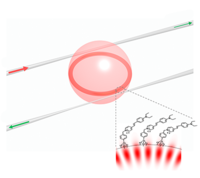
The efficiency of a third-order nonlinear process is improved by four orders of magnitude in ultrahigh-Q silica cavity, opening a new regime of nonlinear optics.

Sign In to Your Journals Account

Filter

Section

Filter

Article Lookup

Enter a citation