Highlights

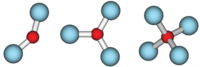
Light Dark Matter Search with Ionization Signals in XENON1T

E. Aprile et al. (XENON Collaboration)

Phys. Rev. Lett. 123, 251801 (2019) - Published 17 December, 2019

By reanalyzing experimental data from 2017 and 2018, the XENON Collaboration rules out several varieties of low-mass dark matter, including a range of axion-like particles and dark photons.

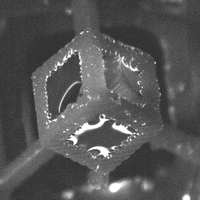
Acoustics of Cubic Bubbles: Six Coupled Oscillators

Maxime Harazi, Matthieu Rupin, Olivier Stephan, Emmanuel Bossy, and Philippe Marmottant

Phys. Rev. Lett. 123, 254501 (2019) - Published 16 December, 2019

Artificial cubic bubbles are excellent coupled resonators that may be assembled into acoustic metamaterials.

Experimental Verification of a Bigrating Beam Rider

Ying-Ju Lucy Chu, Nelson V. Tabiryan, and Grover A. Swartzlander, Jr.

Phys. Rev. Lett. 123, 244302 (2019) - Published 13 December, 2019

A technology for propelling spacecraft using a “sail” pushed by light has passed an initial test, with the prototype device staying centered in a laser beam.

Infrared Interlayer Exciton Emission in MoS2/WSe2 Heterostructures

Ouri Karni, Elyse Barré, Sze Cheung Lau, Roland Gillen, Eric Yue Ma, Bumho Kim, Kenji Watanabe, Takashi Taniguchi, Janina Maultzsch, Katayun Barmak, Ralph H. Page, and Tony F. Heinz

Phys. Rev. Lett. 123, 247402 (2019) - Published 13 December, 2019

The light emitted around 1200 nm from a heterostructure composed of monolayers of certain transition metal dichalcogenides is shown to be an interlayer exciton, an observation relevant to silicon photonics and fiber optics.

Quasisimultons in Thermal Atomic Vapors

Thomas P. Ogden, K. A. Whittaker, J. Keaveney, S. A. Wrathmall, C. S. Adams, and R. M. Potvliege

Phys. Rev. Lett. 123, 243604 (2019) - Published 12 December, 2019

By combining two frequencies of light into a pulse called a simulton, a weak signal can travel through a dense atomic vapor as though the medium were nearly transparent.

Revival of the Dark Matter Hypothesis for the Galactic Center Gamma-Ray Excess

Rebecca K. Leane and Tracy R. Slatyer

Phys. Rev. Lett. 123, 241101 (2019) - Published 11 December, 2019

The so-called gamma-ray excess that radiates from the core of our Galaxy might be from dark matter after all.

Wave Turbulence on the Surface of a Fluid in a High-Gravity Environment

A. Cazaubiel, S. Mawet, A. Darras, G. Grosjean, J. J. W. A. van Loon, S. Dorbolo, and E. Falcon

Phys. Rev. Lett. 123, 244501 (2019) - Published 10 December, 2019

A wave experiment in a centrifuge reveals how the size of the fluid container strongly influences turbulent behavior.

Absence of Magnetic Thermal Conductivity in the Quantum Spin Liquid Candidate EtMe3Sb[Pd(dmit)2]2

J. M. Ni, B. L. Pan, B. Q. Song, Y. Y. Huang, J. Y. Zeng, Y. J. Yu, E. J. Cheng, L. S. Wang, D. Z. Dai, R. Kato, and S. Y. Li

Phys. Rev. Lett. 123, 247204 (2019) - Published 10 December, 2019

New measurements show the huge residual linear term 𝜅0/T in the thermal conductivity of EtMe3Sb[Pd(dmit)2]2 is due entirely to phonons, calling into question the view that the compound is a gapless quantum spin liquid.

Experimental Characterization of a Spin Quantum Heat Engine

John P. S. Peterson, Tiago B. Batalhão, Marcela Herrera, Alexandre M. Souza, Roberto S. Sarthour, Ivan S. Oliveira, and Roberto M. Serra

Phys. Rev. Lett. 123, 240601 (2019) - Published 9 December, 2019

An experimental proof-of-concept quantum Otto cycle, based on a nuclear spin, has an efficiency close to its thermodynamic limit.

Non-Hermitian Topological Invariants in Real Space

Fei Song, Shunyu Yao, and Zhong Wang

Phys. Rev. Lett. 123, 246801 (2019) - Published 9 December, 2019

Some quantities in real, as opposed to momentum, space can act as robust topological invariants for systems with non-Hermitian Hamiltonians.

Integrating Neural Networks with a Quantum Simulator for State Reconstruction

Giacomo Torlai, Brian Timar, Evert P. L. van Nieuwenburg, Harry Levine, Ahmed Omran, Alexander Keesling, Hannes Bernien, Markus Greiner, Vladan Vuletić, Mikhail D. Lukin, Roger G. Melko, and Manuel Endres

Phys. Rev. Lett. 123, 230504 (2019) - Published 6 December, 2019

An array of nine strongly interacting Rydberg atoms is used for a proof-of-principle demonstration of neural-network quantum state reconstruction.

Quantum-Enhanced Advanced LIGO Detectors in the Era of Gravitational-Wave Astronomy

M. Tse et al.

Phys. Rev. Lett. 123, 231107 (2019) - Published 5 December, 2019

New hardware installed in current gravitational-wave detectors uses quantum effects to boost sensitivity and increase the event detection rate by as much as 50%.

Increasing the Astrophysical Reach of the Advanced Virgo Detector via the Application of Squeezed Vacuum States of Light

F. Acernese et al. (Virgo Collaboration)

Phys. Rev. Lett. 123, 231108 (2019) - Published 5 December, 2019

New hardware installed in current gravitational-wave detectors uses quantum effects to boost sensitivity and increase the event detection rate by as much as 50%.

Oxygen Quadclusters in SiO2 Glass above Megabar Pressures up to 160 GPa Revealed by X-Ray Raman Scattering

Sung Keun Lee, Yong-Hyun Kim, Yoo Soo Yi, Paul Chow, Yuming Xiao, Cheng Ji, and Guoyin Shen

Phys. Rev. Lett. 123, 235701 (2019) - Published 5 December, 2019

X-ray Raman scattering reveals the structure of matter at extreme pressures, and so could be a useful tool for the study of planetary interiors.

Geometric and Conventional Contribution to the Superfluid Weight in Twisted Bilayer Graphene

Xiang Hu, Timo Hyart, Dmitry I. Pikulin, and Enrico Rossi

Phys. Rev. Lett. 123, 237002 (2019) - Published 5 December, 2019

Three papers connect the superconducting transition temperature of a graphene-based material to the geometry of its electronic wave functions.

Experimental Observation of an Exceptional Surface in Synthetic Dimensions with Magnon Polaritons

Xufeng Zhang, Kun Ding, Xianjing Zhou, Jing Xu, and Dafei Jin

Phys. Rev. Lett. 123, 237202 (2019) - Published 4 December, 2019

Researchers fabricated a cavity device with a large number of “exceptional points,” which are modes that exhibit exotic phenomena, such as extreme sensitivity to external parameters.

Electric Polarization of Soft Biological Tissues Induced by Ultrasound Waves

Kenji Ikushima, Takashi Kumamoto, Kenshiro Ito, and Yamato Anzai

Phys. Rev. Lett. 123, 238101 (2019) - Published 3 December, 2019

Artery walls, tendons, and heart valves can generate an electric voltage when squeezed—an effect that could be harnessed to diagnose important diseases.

Precision Test of the Limits to Universality in Few-Body Physics

Roman Chapurin, Xin Xie, Michael J. Van de Graaff, Jared S. Popowski, José P. D’Incao, Paul S. Julienne, Jun Ye, and Eric A. Cornell

Phys. Rev. Lett. 123, 233402 (2019) - Published 2 December, 2019

Precision measurements with ultracold gases provide evidence that three-body bound states depend on atom-specific two-body interactions.

Phonon Lifetimes throughout the Brillouin Zone at Elevated Temperatures from Experiment and Ab Initio

Albert Glensk, Blazej Grabowski, Tilmann Hickel, Jörg Neugebauer, Jürgen Neuhaus, Klaudia Hradil, Winfried Petry, and Michael Leitner

Phys. Rev. Lett. 123, 235501 (2019) - Published 2 December, 2019

Molecular dynamics simulations can fully describe phonon propagation in aluminum, which could enable accurate predictions of phonon thermal conductivity.

Electronic Properties of α−RuCl3 in Proximity to Graphene

Sananda Biswas, Ying Li, Stephen M. Winter, Johannes Knolle, and Roser Valentí

Phys. Rev. Lett. 123, 237201 (2019) - Published 2 December, 2019
Strain and charge-transfer between ⍺-RuCl3 and graphene play crucial roles in inducing metallicity, or even exotic superconductivity, in this system, and in enhancing the Kitaev interaction.

Sign In to Your Journals Account

Filter

Section

Filter

Article Lookup

Enter a citation