Highlights

Helical Edge States and Quantum Phase Transitions in Tetralayer Graphene

Shi Che, Yanmeng Shi, Jiawei Yang, Haidong Tian, Ruoyu Chen, Takashi Taniguchi, Kenji Watanabe, Dmitry Smirnov, Chun Ning Lau, Efrat Shimshoni, Ganpathy Murthy, and Herbert A. Fertig

Phys. Rev. Lett. 125, 036803 (2020) - Published 13 July, 2020

Tetralayer graphene tuned via a gate voltage displays a striking phase diagram consisting of one insulating and two metallic phases.

Detection of Quantum Interference without an Interference Pattern

Iliya Esin, Alessandro Romito, and Yuval Gefen

Phys. Rev. Lett. 125, 020405 (2020) - Published 10 July, 2020

A new measurement protocol is defined for a Mach-Zehnder geometry with a finite signal when quantum interference is concerned, but vanishes for classical waves or particles.

Laser Resonance Chromatography of Superheavy Elements

Mustapha Laatiaoui, Alexei A. Buchachenko, and Larry A. Viehland

Phys. Rev. Lett. 125, 023002 (2020) - Published 10 July, 2020

A proposed technique could allow researchers to measure spectra of elements above atomic number 102, despite the tiny quantities in which they are produced.

Bounds on Lorentz Invariance Violation from MAGIC Observation of GRB 190114C

V. A. Acciari et al. (MAGIC Collaboration)

Phys. Rev. Lett. 125, 021301 (2020) - Published 9 July, 2020

An analysis of the speed of the most energetic photons ever observed from a gamma-ray burst sets new constraints on certain theories of quantum gravity.

Characterization of a Microscale Superlubric Graphite Interface

Kunqi Wang, Cangyu Qu, Jin Wang, Baogang Quan, and Quanshui Zheng

Phys. Rev. Lett. 125, 026101 (2020) - Published 9 July, 2020

A new technique allows the separation of a microscale contact pair for the characterization of its two component surfaces for van der Waals materials.

Ribosome Composition Maximizes Cellular Growth Rates in E. coli

Sarah Kostinski and Shlomi Reuveni

Phys. Rev. Lett. 125, 028103 (2020) - Published 8 July, 2020

The composition of a cell‘s protein-synthesis machinery is tuned to optimize the cell‘s reproduction rate.

Observation of Bistable Turbulence in Quasi-Two-Dimensional Superflow

E. Varga, V. Vadakkumbatt, A. J. Shook, P. H. Kim, and J. P. Davis

Phys. Rev. Lett. 125, 025301 (2020) - Published 7 July, 2020

Experiments find long-lived bistable turbulent behavior in the steady-state flow of superfluid 4He restricted to a quasi-two-dimensional channel.

Observation of Magnon Polarization

Y. Nambu, J. Barker, Y. Okino, T. Kikkawa, Y. Shiomi, M. Enderle, T. Weber, B. Winn, M. Graves-Brook, J. M. Tranquada, T. Ziman, M. Fujita, G. E. W. Bauer, E. Saitoh, and K. Kakurai

Phys. Rev. Lett. 125, 027201 (2020) - Published 6 July, 2020

The mode-resolved direction of the precessional motion of the magnetic order – magnon polarization – has been observed through analysis of the chiral term of inelastic polarized neutron scattering spectra.

Stress-Induced Dinoflagellate Bioluminescence at the Single Cell Level

Maziyar Jalaal, Nico Schramma, Antoine Dode, Hélène de Maleprade, Christophe Raufaste, and Raymond E. Goldstein

Phys. Rev. Lett. 125, 028102 (2020) - Published 6 July, 2020

Experiments detail how mechanical stress triggers marine microbes to light up.

Measurement of CP-Averaged Observables in the B0→K*0μ+μ− Decay

R. Aaij et al. (LHCb Collaboration)

Phys. Rev. Lett. 125, 011802 (2020) - Published 2 July, 2020

The LHCb Collaboration increases the statistical significance of a result relating to the decay rate of B0 mesons that diverges from standard model predictions.

Observation of Quantum Phase Synchronization in Spin-1 Atoms

Arif Warsi Laskar, Pratik Adhikary, Suprodip Mondal, Parag Katiyar, Sai Vinjanampathy, and Saikat Ghosh

Phys. Rev. Lett. 125, 013601 (2020) - Published 1 July, 2020

Using a light pulse, researchers sync up phases in quantum states of roughly a million rubidium atoms, thus demonstrating quantum synchronization for the first time.

Spin-Momentum-Locked Edge Mode for Topological Vortex Lasing

Zhen-Qian Yang, Zeng-Kai Shao, Hua-Zhou Chen, Xin-Rui Mao, and Ren-Min Ma

Phys. Rev. Lett. 125, 013903 (2020) - Published 1 July, 2020

A topological vortex laser that relies on a novel feature in non-Hermitian topological photonic systems is demonstrated.

Evidence of Spin-Orbital Angular Momentum Interactions in Relativistic Heavy-Ion Collisions

S. Acharya et al. (The ALICE Collaboration)

Phys. Rev. Lett. 125, 012301 (2020) - Published 30 June, 2020

The measured spin alignment of vector mesons in heavy-ion collisions is consistent with that expected from the spin-orbit coupling of quarks with the large angular momentum of the collision.

Pentadiamond: A Hard Carbon Allotrope of a Pentagonal Network of sp2 and sp3 C Atoms

Yasumaru Fujii, Mina Maruyama, Nguyen Thanh Cuong, and Susumu Okada

Phys. Rev. Lett. 125, 016001 (2020) - Published 30 June, 2020

Calculations indicate that a form of carbon synthesized from pentagonal hydrocarbon molecules could have unusual electrical and mechanical properties.

Magnetic-Field-Independent Subgap States in Hybrid Rashba Nanowires

Christian Jünger, Raphaëlle Delagrange, Denis Chevallier, Sebastian Lehmann, Kimberly A. Dick, Claes Thelander, Jelena Klinovaja, Daniel Loss, Andreas Baumgartner, and Christian Schönenberger

Phys. Rev. Lett. 125, 017701 (2020) - Published 30 June, 2020

Topologically trivial subgap states that are independent of the external magnetic field are found using quantum dots directly integrated into nanowires during the growth process.

Liquid-Solid Slip on Charged Walls: The Dramatic Impact of Charge Distribution

Yanbo Xie, Li Fu, Thomas Niehaus, and Laurent Joly

Phys. Rev. Lett. 125, 014501 (2020) - Published 29 June, 2020

Molecular dynamics simulations show a significant reduction of liquid-solid slip lengths for sodium chloride solutions in contact with charged graphene wall surfaces.

Candidate Electromagnetic Counterpart to the Binary Black Hole Merger Gravitational-Wave Event S190521g

M. J. Graham et al.

Phys. Rev. Lett. 124, 251102 (2020) - Published 25 June, 2020

Astronomers have detected a brightening of a distant quasar that coincided with a potential gravitational-wave signature of a pair of merging black holes.

Forming a Single Molecule by Magnetoassociation in an Optical Tweezer

Jessie T. Zhang, Yichao Yu, William B. Cairncross, Kenneth Wang, Lewis R. B. Picard, Jonathan D. Hood, Yen-Wei Lin, Jeremy M. Hutson, and Kang-Kuen Ni

Phys. Rev. Lett. 124, 253401 (2020) - Published 25 June, 2020

Researchers merge two atoms into a molecule that has a precise, reversible quantum state and that lives long enough to measure.

Signals of a Quantum Universe

Daniel Green and Rafael A. Porto

Phys. Rev. Lett. 124, 251302 (2020) - Published 24 June, 2020

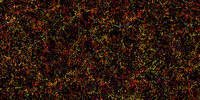
Certain galaxy patterns might encode whether the Universe’s primordial density fluctuations were quantum or classical in nature.

Identification of the New Isotope Md244

J. L. Pore, J. M. Gates, R. Orford, C. M. Campbell, R. M. Clark, H. L. Crawford, N. E. Esker, P. Fallon, J. A. Gooding, J. T. Kwarsick, A. O. Macchiavelli, C. Morse, D. Rudolph, A. Såmark-Roth, C. Santamaria, R. S. Shah, and M. A. Stoyer

Phys. Rev. Lett. 124, 252502 (2020) - Published 23 June, 2020

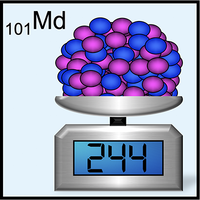
A new isotope of an element with Z=101, mendelevium has been identified. Because it is very neutron deficient, it is difficult to produce.

Sign In to Your Journals Account

Filter

Section

Filter

Article Lookup

Enter a citation