Highlights

Giant Enhancement of Air Lasing by Complete Population Inversion in N2+

Hanxiao Li, Erik Lötstedt, Helong Li, Yan Zhou, Nana Dong, Lunhua Deng, Peifen Lu, Toshiaki Ando, Atsushi Iwasaki, Yao Fu, Siqi Wang, Jian Wu, Kaoru Yamanouchi, and Huailiang Xu

Phys. Rev. Lett. 125, 053201 (2020) - Published 28 July, 2020

Enhancement by five to six orders of magnitude of the nitrogen lasing line is demonstrated experimentally through efficient population inversion using stimulated Raman adiabatic passage.

Glassy Dynamics and Memory Effects in an Intrinsically Disordered Protein Construct

Ian L. Morgan, Ram Avinery, Gil Rahamim, Roy Beck, and Omar A. Saleh

Phys. Rev. Lett. 125, 058001 (2020) - Published 28 July, 2020

The relaxation of stretched intrinsically disordered proteins reveals glassy dynamics and memory effects at the single-molecule level.

Search for Heavy Higgs Bosons Decaying into Two Tau Leptons with the ATLAS Detector Using pp Collisions at s=13  TeV

G. Aad et al. (ATLAS Collaboration)

Phys. Rev. Lett. 125, 051801 (2020) - Published 27 July, 2020

A search for heavy neutral Higgs bosons at the LHC agrees with the Standard Model and results in a significant reduction in parameter space for two-Higgs-doublet models.

Combining Eliashberg Theory with Density Functional Theory for the Accurate Prediction of Superconducting Transition Temperatures and Gap Functions

A. Sanna, C. Pellegrini, and E. K. U. Gross

Phys. Rev. Lett. 125, 057001 (2020) - Published 27 July, 2020

A refinement of the density-functional theory used to describe conventional superconductors dramatically increases the accuracy of the theory’s predictions.

Thermal Habitat for RNA Amplification and Accumulation

Annalena Salditt, Lorenz M. R. Keil, David P. Horning, Christof B. Mast, Gerald F. Joyce, and Dieter Braun

Phys. Rev. Lett. 125, 048104 (2020) - Published 24 July, 2020

RNA can replicate in conditions that could be found on the early Earth, suggesting a possible step in the origin of life.

CBETA: First Multipass Superconducting Linear Accelerator with Energy Recovery

A. Bartnik, N. Banerjee, D. Burke, J. Crittenden, K. Deitrick, J. Dobbins, C. Gulliford, G. H. Hoffstaetter, Y. Li, W. Lou, P. Quigley, D. Sagan, K. Smolenski, J. S. Berg, S. Brooks, R. Hulsart, G. Mahler, F. Meot, R. Michnoff, S. Peggs, T. Roser, D. Trbojevic, N. Tsoupas, and T. Miyajima

Phys. Rev. Lett. 125, 044803 (2020) - Published 23 July, 2020

A test electron accelerator reuses the energy of the particles in order to achieve a brighter beam without drawing more power from the grid.

Contact in the Unitary Fermi Gas across the Superfluid Phase Transition

S. Jensen, C. N. Gilbreth, and Y. Alhassid

Phys. Rev. Lett. 125, 043402 (2020) - Published 22 July, 2020

The temperature dependence of the contact in the unitary Fermi gas is calculated across the superfluid phase transition, giving results in excellent agreement with the most recent precision ultracold atomic gas experiments.

Gate-Tuned Interlayer Coupling in van der Waals Ferromagnet Fe3GeTe2 Nanoflakes

Guolin Zheng, Wen-Qiang Xie, Sultan Albarakati, Meri Algarni, Cheng Tan, Yihao Wang, Jingyang Peng, James Partridge, Lawrence Farrar, Jiabao Yi, Yimin Xiong, Mingliang Tian, Yu-Jun Zhao, and Lan Wang

Phys. Rev. Lett. 125, 047202 (2020) - Published 22 July, 2020

Increasing the proton numbers in a van der Waals magnet leads to increased interlayer coupling, opening the possibility of controlling the coupling for applications.

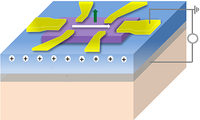
Effect of Resource Dynamics on Species Packing in Diverse Ecosystems

Wenping Cui, Robert Marsland, III, and Pankaj Mehta

Phys. Rev. Lett. 125, 048101 (2020) - Published 21 July, 2020

A model that treats species and food sources as spins in a spin glass finds a surprising limit on species diversity for some types of ecosystems.

Observation of Collisions between Two Ultracold Ground-State CaF Molecules

Lawrence W. Cheuk, Loïc Anderegg, Yicheng Bao, Sean Burchesky, Scarlett S. Yu, Wolfgang Ketterle, Kang-Kuen Ni, and John M. Doyle

Phys. Rev. Lett. 125, 043401 (2020) - Published 20 July, 2020

Two single molecules trapped in separate optical tweezers are prepared in desired initial states and subsequently made to interact in a controlled fashion.

Ultralong Spin-Coherence Times for Rubidium Atoms in Solid Parahydrogen via Dynamical Decoupling

Sunil Upadhyay, Ugne Dargyte, David Patterson, and Jonathan D. Weinstein

Phys. Rev. Lett. 125, 043601 (2020) - Published 20 July, 2020

Electron spin coherence times of 100 ms are experimentally demonstrated for an ensemble of rubidium atoms trapped in a solid parahydrogen matrix.

Precise Experimental Test of the Luttinger Theorem and Particle-Hole Symmetry for a Strongly Correlated Fermionic System

Md. Shafayat Hossain, M. A. Mueed, M. K. Ma, K. A. Villegas Rosales, Y. J. Chung, L. N. Pfeiffer, K. W. West, K. W. Baldwin, and M. Shayegan

Phys. Rev. Lett. 125, 046601 (2020) - Published 20 July, 2020

The verification of the applicability of the Luttinger theorem and particle-hole symmetry to describe the composite fermion Fermi sea also reveals a deviation from the predictions of existing (Dirac and Halperin-Lee-Read) theories.

Reconstruction of the Instantaneous Earth Rotation Vector with Sub-Arcsecond Resolution Using a Large Scale Ring Laser Array

André Gebauer, Monika Tercjak, Karl Ulrich Schreiber, Heiner Igel, Jan Kodet, Urs Hugentobler, Joachim Wassermann, Felix Bernauer, Chin-Jen Lin, Stefanie Donner, Sven Egdorf, Andrea Simonelli, and Jon-Paul R. Wells

Phys. Rev. Lett. 125, 033605 (2020) - Published 17 July, 2020

An array of ring lasers provides the first continuous measurement of Earth’s motion from a single location.

Bragg Diffraction of Large Organic Molecules

Christian Brand, Filip Kiałka, Stephan Troyer, Christian Knobloch, Ksenija Simonović, Benjamin A. Stickler, Klaus Hornberger, and Markus Arndt

Phys. Rev. Lett. 125, 033604 (2020) - Published 16 July, 2020

Researchers create diffraction patterns using beams made of large organic molecules, a first step toward creating an interferometer for these systems.

Observation of Magnetic Solitons in Two-Component Bose-Einstein Condensates

A. Farolfi, D. Trypogeorgos, C. Mordini, G. Lamporesi, and G. Ferrari

Phys. Rev. Lett. 125, 030401 (2020) - Published 15 July, 2020

Experiments generate self-reinforcing magnetic waves in a condensate containing both spin-up and spin-down atoms.

Magnetic Solitons in a Spin-1 Bose-Einstein Condensate

X. Chai, D. Lao, Kazuya Fujimoto, Ryusuke Hamazaki, Masahito Ueda, and C. Raman

Phys. Rev. Lett. 125, 030402 (2020) - Published 15 July, 2020

Experiments generate self-reinforcing magnetic waves in a condensate containing both spin-up and spin-down atoms.

Cutting and Slicing Weak Solids

Serge Mora and Yves Pomeau

Phys. Rev. Lett. 125, 038002 (2020) - Published 15 July, 2020

Tangential sliding motion sets the maximum speed at which a blade can slice a soft solid.

Solid-Liquid Transition of Deformable and Overlapping Active Particles

Benjamin Loewe, Michael Chiang, Davide Marenduzzo, and M. Cristina Marchetti

Phys. Rev. Lett. 125, 038003 (2020) - Published 15 July, 2020

The solid-liquid transition in cellular monolayers changes from continuous to first-order-like when deformable cells are allowed to overlap.

Shape Deformation and Drag Variation of a Coupled Rigid-Flexible System in a Flowing Soap Film

Song Gao (高颂), Song Pan (潘松), Huaicheng Wang (王怀成), and Xinliang Tian (田新亮)

Phys. Rev. Lett. 125, 034502 (2020) - Published 14 July, 2020

A wire loop attached to a flat bar perpendicular to water flow inside a soap film adjusts its shape to reduce drag by as much as 10%.

Nature of Magnetic Excitations in the High-Field Phase of α−RuCl3

A. N. Ponomaryov, L. Zviagina, J. Wosnitza, P. Lampen-Kelley, A. Banerjee, J.-Q. Yan, C. A. Bridges, D. G. Mandrus, S. E. Nagler, and S. A. Zvyagin

Phys. Rev. Lett. 125, 037202 (2020) - Published 14 July, 2020

Low-temperature electron spin resonance measurements reveal that the spectrum of elementary excitations in the field-induced magnetically disordered phase in α-RuCl3 is dominated by single- and two-particle processes with magnons.

Sign In to Your Journals Account

Filter

Section

Filter

Article Lookup

Enter a citation