Highlights

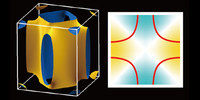
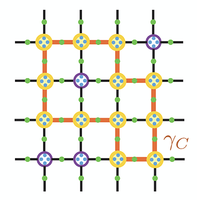
Model Construction and a Possibility of Cupratelike Pairing in a New d9 Nickelate Superconductor (Nd,Sr)NiO2

Hirofumi Sakakibara, Hidetomo Usui, Katsuhiro Suzuki, Takao Kotani, Hideo Aoki, and Kazuhiko Kuroki

Phys. Rev. Lett. 125, 077003 (2020) - Published 13 August, 2020

A newly discovered superconductor has a surprisingly low transition temperature, but its electronic structure points the way to materials that superconduct at higher temperatures.

Precision Microwave Spectroscopy of the Positronium n=2 Fine Structure

L. Gurung, T. J. Babij, S. D. Hogan, and D. B. Cassidy

Phys. Rev. Lett. 125, 073002 (2020) - Published 12 August, 2020

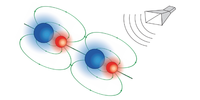
A high-precision measurement of positronium’s fine structure delivers a puzzling discrepancy with predictions from quantum electrodynamics.

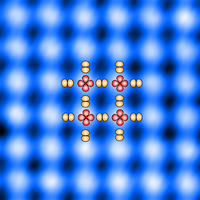
Direct Visualization of Ambipolar Mott Transition in Cuprate CuO2 Planes

Yong Zhong, Jia-Qi Fan, Rui-Feng Wang, ShuZe Wang, Xuefeng Zhang, Yuying Zhu, Ziyuan Dou, Xue-Qing Yu, Yang Wang, Ding Zhang, Jing Zhu, Can-Li Song, Xu-Cun Ma, and Qi-Kun Xue

Phys. Rev. Lett. 125, 077002 (2020) - Published 12 August, 2020

Doping-dependent scanning tunneling measurements uncover a metal to Mott insulator transition in infinite-layer cuprate thin films.

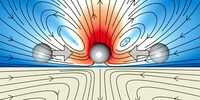
Energy Harvesting from Drops Impacting onto Charged Surfaces

Hao Wu, Niels Mendel, Dirk van den Ende, Guofu Zhou, and Frieder Mugele

Phys. Rev. Lett. 125, 078301 (2020) - Published 12 August, 2020

A clever coupling of triboelectric charging and the hydrophobic effect leads to a remarkably efficient electrical nanogenerator.

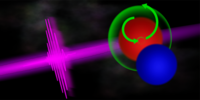
Electronic Population Transfer via Impulsive Stimulated X-Ray Raman Scattering with Attosecond Soft-X-Ray Pulses

Jordan T. O’Neal et al.

Phys. Rev. Lett. 125, 073203 (2020) - Published 11 August, 2020

Ultrashort pulses of x rays swap electrons around in molecules of nitric oxide, an important first step to tracking charge motion in molecules.

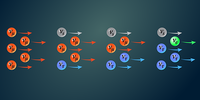
Improved Constraints on Sterile Neutrino Mixing from Disappearance Searches in the MINOS, MINOS+, Daya Bay, and Bugey-3 Experiments

P. Adamson et al. (Daya Bay Collaboration, MINOS+ Collaboration)

Phys. Rev. Lett. 125, 071801 (2020) - Published 10 August, 2020

Neutrino experiments place the most stringent limits to date on a hypothetical fourth neutrino, but the possibility that such a particle exists remains open.

Quantum Metamaterials with Magnetic Response at Optical Frequencies

Rasoul Alaee, Burak Gurlek, Mohammad Albooyeh, Diego Martín-Cano, and Vahid Sandoghdar

Phys. Rev. Lett. 125, 063601 (2020) - Published 7 August, 2020

A metamaterial made of quantum emitters with only electric dipole transition moments is expected to have a strong magnetic response at optical frequencies.

Constructing Quantum Spin Liquids Using Combinatorial Gauge Symmetry

Claudio Chamon, Dmitry Green, and Zhi-Cheng Yang

Phys. Rev. Lett. 125, 067203 (2020) - Published 7 August, 2020

Quantum spin liquids may be constructed from two-body and single-body terms via rotations, permutations, and swapping of spins satisfying certain commutation and anticommutation relations.

No-Go Theorems for Quantum Resource Purification

Kun Fang and Zi-Wen Liu

Phys. Rev. Lett. 125, 060405 (2020) - Published 6 August, 2020

A new theoretical study identifies fundamental tradeoffs that limit the amount of noise reduction in quantum information systems.

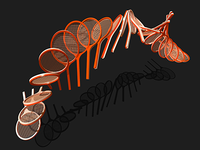
Geometric Origin of the Tennis Racket Effect

P. Mardešić, G. J. Gutierrez Guillen, L. Van Damme, and D. Sugny

Phys. Rev. Lett. 125, 064301 (2020) - Published 6 August, 2020

An explanation for why a tennis racket rotating in its plane does a half turn around its long axis is also relevant to a difficult skateboard trick.

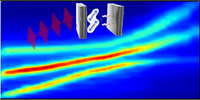
Excitation Ladder of Cavity Polaritons

Travis M. Autry, Gaël Nardin, Christopher L. Smallwood, Kevin Silverman, Daniele Bajoni, Aristide Lemaître, Sophie Bouchoule, Jacqueline Bloch, and Steven Cundiff

Phys. Rev. Lett. 125, 067403 (2020) - Published 5 August, 2020

Higher-order dressed states and their associated avoided crossings in a semiconductor microcavity are demonstrated by an innovative four-wave mixing technique.

Controlled Optofluidic Crystallization of Colloids Tethered at Interfaces

Alessio Caciagli, Rajesh Singh, Darshana Joshi, R. Adhikari, and Erika Eiser

Phys. Rev. Lett. 125, 068001 (2020) - Published 5 August, 2020

An optofluidic effect causes a group of fluid-suspended particles to “freeze” when one of them is heated, potentially allowing greater control over these systems.

Resonant Dipolar Collisions of Ultracold Molecules Induced by Microwave Dressing

Zoe Z. Yan, Jee Woo Park, Yiqi Ni, Huanqian Loh, Sebastian Will, Tijs Karman, and Martin Zwierlein

Phys. Rev. Lett. 125, 063401 (2020) - Published 4 August, 2020

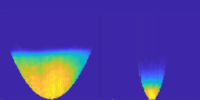
Interactions between molecules can be tuned using microwaves, a finding that could be leveraged for studying quantum systems.

Emergence of Scale-Free Blackout Sizes in Power Grids

Tommaso Nesti, Fiona Sloothaak, and Bert Zwart

Phys. Rev. Lett. 125, 058301 (2020) - Published 31 July, 2020

The probabilities of electricity blackouts may be influenced by the sizes of cities more than by the details of power grids.

Ultracold Electrons via Near-Threshold Photoemission from Single-Crystal Cu(100)

Siddharth Karkare, Gowri Adhikari, W. Andreas Schroeder, J. Kevin Nangoi, Tomas Arias, Jared Maxson, and Howard Padmore

Phys. Rev. Lett. 125, 054801 (2020) - Published 30 July, 2020

Researchers have generated the coldest electrons to date from solid-state photocathodes, an achievement that could improve electron sources for particle accelerators and ultrafast electron microscopy applications.

Gravitational-Wave Signature of a First-Order Quantum Chromodynamics Phase Transition in Core-Collapse Supernovae

Shuai Zha, Evan P. O’Connor, Ming-chung Chu, Lap-Ming Lin, and Sean M. Couch

Phys. Rev. Lett. 125, 051102 (2020) - Published 29 July, 2020

Hydrodynamic simulations demonstrate the influence of a first-order QCD phase transition on the gravitational wave signal produced by core-collapse supernovae.

What If Planet 9 Is a Primordial Black Hole?

Jakub Scholtz and James Unwin

Phys. Rev. Lett. 125, 051103 (2020) - Published 29 July, 2020

While astronomers look for a ninth planet to explain orbits in the outer Solar System, a duo explores the possibility that the mystery object is a primordial black hole.

Inferring the Dynamics of Underdamped Stochastic Systems

David B. Brückner, Pierre Ronceray, and Chase P. Broedersz

Phys. Rev. Lett. 125, 058103 (2020) - Published 29 July, 2020

Unbiased estimators accurately infer underlying equations of motion from discrete, imperfect observables in underdamped stochastic systems.

Fourth- and Fifth-Order Virial Coefficients from Weak Coupling to Unitarity

Y. Hou and J. E. Drut

Phys. Rev. Lett. 125, 050403 (2020) - Published 28 July, 2020

Fourth- and fifth-order virial expansion coefficients of a spin-1/2 Fermi gas are theoretically determined from weak coupling to the unitary point.

Optimization in First-Passage Resetting

B. De Bruyne, J Randon-Furling, and S. Redner

Phys. Rev. Lett. 125, 050602 (2020) - Published 28 July, 2020

A new statistical model that optimizes a system’s output could help to maximize the efficiency of mechanical systems.

Sign In to Your Journals Account

Filter

Section

Filter

Article Lookup

Enter a citation