Highlights

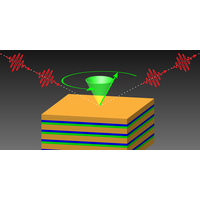
Depth-Resolved Magnetization Dynamics Revealed by X-Ray Reflectometry Ferromagnetic Resonance

D. M. Burn, S. L. Zhang, G. Q. Yu, Y. Guang, H. J. Chen, X. P. Qiu, G. van der Laan, and T. Hesjedal

Phys. Rev. Lett. 125, 137201 (2020) - Published 24 September, 2020

Researchers combine ferromagnetic resonance with x-ray reflectivity to map out the complex spin behavior of a magnetic multilayer.

First Precision Measurement of the Parity Violating Asymmetry in Cold Neutron Capture on He3

M. T. Gericke et al. (nHe3 Collaboration)

Phys. Rev. Lett. 125, 131803 (2020) - Published 23 September, 2020

A new measurement from the n3He Collaboration advances understanding of parity violation in few-nucleon systems.

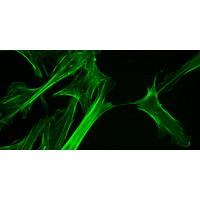
Crowding-Enhanced Diffusion: An Exact Theory for Highly Entangled Self-Propelled Stiff Filaments

Suvendu Mandal, Christina Kurzthaler, Thomas Franosch, and Hartmut Löwen

Phys. Rev. Lett. 125, 138002 (2020) - Published 23 September, 2020

A dense network inhibits the rotation of self-propelled protein filaments but unexpectedly promotes their overall diffusivity.

Computing the Heat Conductivity of Fluids from Density Fluctuations

Bingqing Cheng and Daan Frenkel

Phys. Rev. Lett. 125, 130602 (2020) - Published 22 September, 2020

Analyzing particle density fluctuations in space and time provides an alternative method for computing thermal conductivity of liquids.

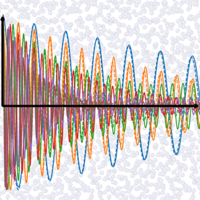
Quantum Backaction on kg-Scale Mirrors: Observation of Radiation Pressure Noise in the Advanced Virgo Detector

F. Acernese et al. (The Virgo Collaboration)

Phys. Rev. Lett. 125, 131101 (2020) - Published 22 September, 2020

The Virgo experiment measures a previously unobserved quantum effect acting at the macroscopic scale.

Mechanical Control of Cell Proliferation Increases Resistance to Chemotherapeutic Agents

Ilaria Francesca Rizzuti, Pietro Mascheroni, Silvia Arcucci, Zacchari Ben-Mériem, Audrey Prunet, Catherine Barentin, Charlotte Rivière, Hélène Delanoë-Ayari, Haralampos Hatzikirou, Julie Guillermet-Guibert, and Morgan Delarue

Phys. Rev. Lett. 125, 128103 (2020) - Published 18 September, 2020

Pressure that develops as a tumor grows can limit the effectiveness of chemotherapy treatments.

Dissipation-Time Uncertainty Relation

Gianmaria Falasco and Massimiliano Esposito

Phys. Rev. Lett. 125, 120604 (2020) - Published 16 September, 2020

Features of the Energy Spectrum of Cosmic Rays above 2.5×10¹⁸  eV Using the Pierre Auger Observatory

A. Aab et al. (The Pierre Auger Collaboration)

Phys. Rev. Lett. 125, 121106 (2020) - Published 16 September, 2020

New results from the Pierre Auger Observatory could narrow down the search for the origin of ultrahigh-energy cosmic rays.

Boundary Criticality of PT-Invariant Topology and Second-Order Nodal-Line Semimetals

Kai Wang, Jia-Xiao Dai, L. B. Shao, Shengyuan A. Yang, and Y. X. Zhao

Phys. Rev. Lett. 125, 126403 (2020) - Published 16 September, 2020

New theoretical predictions overthrow the assumption that a material’s bulk topological properties are linked to the same properties at its surface.

Demonstrating a Continuous Set of Two-Qubit Gates for Near-Term Quantum Algorithms

B. Foxen et al. (Google AI Quantum)

Phys. Rev. Lett. 125, 120504 (2020) - Published 15 September, 2020

A family of two-qubit gate combinations that can decrease the circuit depth for NISQ processors is demonstrated using gmon superconducting qubits.

Detecting Acoustic Blackbody Radiation with an Optomechanical Antenna

Robinjeet Singh and Thomas P. Purdy

Phys. Rev. Lett. 125, 120603 (2020) - Published 15 September, 2020

A nanomechanical resonator detects and isolates acoustic waves from a remote thermal source.

Evidence for Nonlinear Isotope Shift in Yb+ Search for New Boson

Ian Counts, Joonseok Hur, Diana P. L. Aude Craik, Honggi Jeon, Calvin Leung, Julian C. Berengut, Amy Geddes, Akio Kawasaki, Wonho Jhe, and Vladan Vuletić

Phys. Rev. Lett. 125, 123002 (2020) - Published 15 September, 2020

A signal predicted for a type of dark matter appears in the spectra of ytterbium isotopes.

Improved Isotope-Shift-Based Bounds on Bosons beyond the Standard Model through Measurements of the D23/2−D25/2 Interval in Ca+

Cyrille Solaro, Steffen Meyer, Karin Fisher, Julian C. Berengut, Elina Fuchs, and Michael Drewsen

Phys. Rev. Lett. 125, 123003 (2020) - Published 15 September, 2020

A signal predicted for a type of dark matter appears in the spectra of ytterbium isotopes.

Correspondence between Winding Numbers and Skin Modes in Non-Hermitian Systems

Kai Zhang, Zhesen Yang, and Chen Fang

Phys. Rev. Lett. 125, 126402 (2020) - Published 15 September, 2020

An exact bulk-edge correspondence between winding (in the bulk) and skin modes (on the surface) in non-Hermitian systems establishes that a nonzero winding number in the bulk leads to skin effect on the edge, and vice versa.

Faster Uphill Relaxation in Thermodynamically Equidistant Temperature Quenches

Alessio Lapolla and Aljaž Godec

Phys. Rev. Lett. 125, 110602 (2020) - Published 11 September, 2020

Contrary to conventional wisdom, a sufficiently small, cold object warms to the temperature of its surroundings faster than a warm object cools, according to a new theory.

High Temperature Virial Expansion to Universal Quench Dynamics

Mingyuan Sun, Peng Zhang, and Hui Zhai

Phys. Rev. Lett. 125, 110404 (2020) - Published 10 September, 2020

A new method to study the evolution of a nondegenerate quantum system out of equilibrium explains the results of a recent experiment reporting universal quench dynamics of a Bose gas.

Origins of Slow Magnetic Relaxation in Single-Molecule Magnets

Lei Gu and Ruqian Wu

Phys. Rev. Lett. 125, 117203 (2020) - Published 10 September, 2020

A new theoretical study shows that the tunneling in the ground state doublet in single-molecule magnets has a much more significant effect on coherence than previously believed.

Orbital Magnetic Moment of Magnons

Robin R. Neumann, Alexander Mook, Jürgen Henk, and Ingrid Mertig

Phys. Rev. Lett. 125, 117209 (2020) - Published 10 September, 2020

Magnetic quasiparticles called magnons are predicted to exhibit a measurable “orbital magnetic moment” in addition to their spin magnetic moment.

First Results on Dark Matter Substructure from Astrometric Weak Lensing

Cristina Mondino, Anna-Maria Taki, Ken Van Tilburg, and Neal Weiner

Phys. Rev. Lett. 125, 111101 (2020) - Published 9 September, 2020

Time-domain astrometric weak gravitational lensing puts constraints on galactic dark matter substructure.

Self-Interacting Dark Matter and the Origin of Ultradiffuse Galaxies NGC1052-DF2 and -DF4

Daneng Yang, Hai-Bo Yu, and Haipeng An

Phys. Rev. Lett. 125, 111105 (2020) - Published 9 September, 2020

The dark-matter-deficient galaxies NGC1052-DF2 and -DF4 may have lost their dark matter content due to tidal stripping by their host galaxy.

Sign In to Your Journals Account

Filter

Section

Filter

Article Lookup

Enter a citation