Highlights

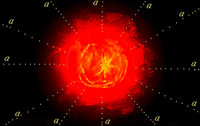
Double Core-Hole Generation in O2 Molecules Using an X-Ray Free-Electron Laser: Molecular-Frame Photoelectron Angular Distributions

Gregor Kastirke et al.

Phys. Rev. Lett. 125, 163201 (2020) - Published 14 October, 2020

The angular distribution of the photoelectrons emitted in double core-hole ionization of molecular oxygen is revealed by the coincidence measurement of molecular fragments.

XENON1T Excess from Anomaly-Free Axionlike Dark Matter and Its Implications for Stellar Cooling Anomaly

Fuminobu Takahashi, Masaki Yamada, and Wen Yin

Phys. Rev. Lett. 125, 161801 (2020) - Published 12 October, 2020

A tantalizing signal reported by the XENON1T dark matter experiment has sparked theorists to investigate explanations involving new physics.

Neutrino Self-Interactions and XENON1T Electron Recoil Excess

Andreas Bally, Sudip Jana, and Andreas Trautner

Phys. Rev. Lett. 125, 161802 (2020) - Published 12 October, 2020

A tantalizing signal reported by the XENON1T dark matter experiment has sparked theorists to investigate explanations involving new physics.

Explaining the XENON1T Excess with Luminous Dark Matter

Nicole F. Bell, James B. Dent, Bhaskar Dutta, Sumit Ghosh, Jason Kumar, and Jayden L. Newstead

Phys. Rev. Lett. 125, 161803 (2020) - Published 12 October, 2020

A tantalizing signal reported by the XENON1T dark matter experiment has sparked theorists to investigate explanations involving new physics.

Boosted Dark Matter Interpretation of the XENON1T Excess

Bartosz Fornal, Pearl Sandick, Jing Shu, Meng Su, and Yue Zhao

Phys. Rev. Lett. 125, 161804 (2020) - Published 12 October, 2020

A tantalizing signal reported by the XENON1T dark matter experiment has sparked theorists to investigate explanations involving new physics.

Electric But Not Eclectic: Thermal Relic Dark Matter for the XENON1T Excess

Joseph Bramante and Ningqiang Song

Phys. Rev. Lett. 125, 161805 (2020) - Published 12 October, 2020

A tantalizing signal reported by the XENON1T dark matter experiment has sparked theorists to investigate explanations involving new physics.

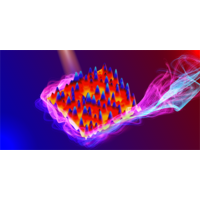
Observation of Intensity Squeezing in Resonance Fluorescence from a Solid-State Device

Hui Wang, Jian Qin, Si Chen, Ming-Cheng Chen, Xiang You, Xing Ding, Y.-H. Huo, Ying Yu, C. Schneider, Sven Höfling, Marlan Scully, Chao-Yang Lu, and Jian-Wei Pan

Phys. Rev. Lett. 125, 153601 (2020) - Published 7 October, 2020

Semiconductor quantum dot emits photons that are squeezed below the fundamental noise limit.

Exact Traveling Wave Solutions in Viscoelastic Channel Flow

Jacob Page, Yves Dubief, and Rich R. Kerswell

Phys. Rev. Lett. 125, 154501 (2020) - Published 6 October, 2020

By establishing exact traveling wave solutions in a channel, the origins of elasto-inertial turbulence are shown to be purely elastic in nature with chaos arising in a sequence of elasto-inertial bifurcations.

Flow-Driven Branching in a Frangible Porous Medium

Nicholas J. Derr, David C. Fronk, Christoph A. Weber, Amala Mahadevan, Chris H. Rycroft, and L. Mahadevan

Phys. Rev. Lett. 125, 158002 (2020) - Published 6 October, 2020

Numerical simulations of flow patterns in porous media show the emergence of branched networks whose topology is determined by the geometry of external flow forcing.

Observation of the Production of Three Massive Gauge Bosons at s=13  TeV

A. M. Sirunyan et al. (CMS Collaboration)

Phys. Rev. Lett. 125, 151802 (2020) - Published 5 October, 2020

The CMS Collaboration confirms that certain particle-smashing events produce three massive bosons.

Gravitational Test beyond the First Post-Newtonian Order with the Shadow of the M87 Black Hole

Dimitrios Psaltis et al. (EHT Collaboration)

Phys. Rev. Lett. 125, 141104 (2020) - Published 1 October, 2020

Analyzing the first image of a black hole in a nearby galaxy, researchers have provided quantitative tests of general relativity in the strongest gravitational fields yet.

Photonic Flywheel in a Monolithic Fiber Resonator

Kunpeng Jia, Xiaohan Wang, Dohyeon Kwon, Jiarong Wang, Eugene Tsao, Huaying Liu, Xin Ni, Jian Guo, Mufan Yang, Xiaoshun Jiang, Jungwon Kim, Shi-ning Zhu, Zhenda Xie, and Shu-Wei Huang

Phys. Rev. Lett. 125, 143902 (2020) - Published 1 October, 2020

A novel two-step pumping scheme to generate dissipative Kerr solitons is employed to demonstrate the first compact photonic flywheel with sub-femtosecond time jitter.

Multisynchrony in Active Microfilaments

Yi Man and Eva Kanso

Phys. Rev. Lett. 125, 148101 (2020) - Published 1 October, 2020

Multiple synchronization states are achieved in simulations of active microfilaments by varying intrinsic activity and hydrodynamic coupling strength.

eV-Scale Sterile Neutrino Search Using Eight Years of Atmospheric Muon Neutrino Data from the IceCube Neutrino Observatory

M. G. Aartsen et al. (IceCube Collaboration)

Phys. Rev. Lett. 125, 141801 (2020) - Published 30 September, 2020

An analysis of more than 300,000 muon neutrino detections provides no evidence of sterile neutrinos—a finding at odds with other experiments.

Superconductivity in Uniquely Strained RuO2 Films

Masaki Uchida, Takuya Nomoto, Maki Musashi, Ryotaro Arita, and Masashi Kawasaki

Phys. Rev. Lett. 125, 147001 (2020) - Published 29 September, 2020

Substrate-induced strain in RuO2 thin films generates the kind of phonons that promote superconductivity.

Measurement of the Th229 Isomer Energy with a Magnetic Microcalorimeter

Tomas Sikorsky, Jeschua Geist, Daniel Hengstler, Sebastian Kempf, Loredana Gastaldo, Christian Enss, Christoph Mokry, Jörg Runke, Christoph E. Düllmann, Peter Wobrauschek, Kjeld Beeks, Veronika Rosecker, Johannes H. Sterba, Georgy Kazakov, Thorsten Schumm, and Andreas Fleischmann

Phys. Rev. Lett. 125, 142503 (2020) - Published 28 September, 2020

The high-precision measurement of a nuclear transition of a thorium isotope is a key step towards the development of a nuclear optical clock.

Ideal Unconventional Weyl Point in a Chiral Photonic Metamaterial

Yihao Yang, Zhen Gao, Xiaolong Feng, Yue-Xin Huang, Peiheng Zhou, Shengyuan A. Yang, Yidong Chong, and Baile Zhang

Phys. Rev. Lett. 125, 143001 (2020) - Published 28 September, 2020

A photonic unconventional Weyl point has been observed in a 3D topological chiral metamaterial, with two long surface arcs stretching over a large portion of the Brillouin zone, showing surface states are self-collimated and robust against disorder.

Weakly Magnetized, Hall Dominated Plasma Couette Flow

K. Flanagan, J. Milhone, J. Egedal, D. Endrizzi, J. Olson, E. E. Peterson, R. Sassella, and C. B. Forest

Phys. Rev. Lett. 125, 135001 (2020) - Published 25 September, 2020

Electromagnetic fields rotate a plasma and produce conditions that resemble the region around a newly forming star.

Solar Axions Cannot Explain the XENON1T Excess

Luca Di Luzio, Marco Fedele, Maurizio Giannotti, Federico Mescia, and Enrico Nardi

Phys. Rev. Lett. 125, 131804 (2020) - Published 24 September, 2020

Solar-axion explanations for the excess of electron recoil events reported by the XENON1T experiment are in severe tension with astrophysical data.

Topological Anderson Insulator in Disordered Photonic Crystals

Gui-Geng Liu, Yihao Yang, Xin Ren, Haoran Xue, Xiao Lin, Yuan-Hang Hu, Hong-xiang Sun, Bo Peng, Peiheng Zhou, Yidong Chong, and Baile Zhang

Phys. Rev. Lett. 125, 133603 (2020) - Published 24 September, 2020

By varying the amount of disorder in a photonic crystal, researchers can control several topological features of the crystal.

Sign In to Your Journals Account

Filter

Section

Filter

Article Lookup

Enter a citation