Highlights

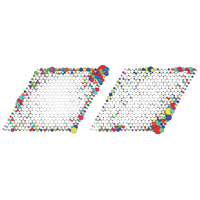
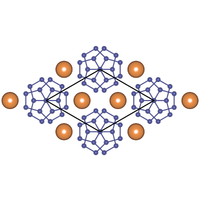
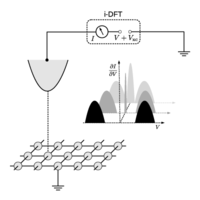
Mott Metal-Insulator Transition from Steady-State Density Functional Theory

David Jacob, Gianluca Stefanucci, and Stefan Kurth

Phys. Rev. Lett. 125, 216401 (2020) - Published 19 November, 2020

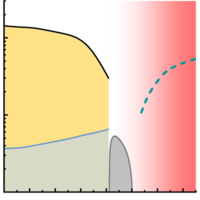
A formally rigorous and computationally efficient DFT-method to compute band structures and spectral functions of solids leads to a viable approximation to deal with strong correlation effects and a description of the Mott metal-insulator transition.

Topology-Controlled Photonic Cavity Based on the Near-Conservation of the Valley Degree of Freedom

Yandong Li, Yang Yu, Fengyu Liu, Baile Zhang, and Gennady Shvets

Phys. Rev. Lett. 125, 213902 (2020) - Published 18 November, 2020

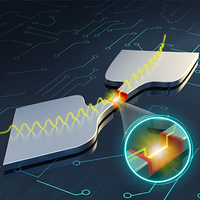
A new topological photonic cavity design based on delaying the reflection at the cavity termination represents a new fundamental concept for optical energy confinement.

Bosonic Bott Index and Disorder-Induced Topological Transitions of Magnons

X. S. Wang, Arne Brataas, and Roberto E. Troncoso

Phys. Rev. Lett. 125, 217202 (2020) - Published 18 November, 2020

A useful metric for characterizing the topological behavior of fermions can be extended to bosonic systems as well.

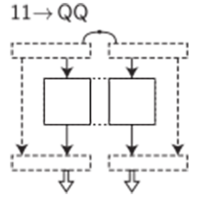
Type-Independent Characterization of Spacelike Separated Resources

Denis Rosset, David Schmid, and Francesco Buscemi

Phys. Rev. Lett. 125, 210402 (2020) - Published 17 November, 2020

Quantum resources shared by spacelike separated parties are subsumed into a unified framework.

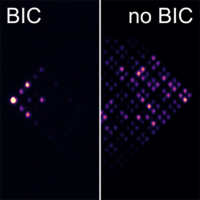
Observation of a Higher-Order Topological Bound State in the Continuum

Alexander Cerjan, Marius Jürgensen, Wladimir A. Benalcazar, Sebabrata Mukherjee, and Mikael C. Rechtsman

Phys. Rev. Lett. 125, 213901 (2020) - Published 17 November, 2020

Boundary-localized topological states can still exist even if they are not in a bandgap, dramatically expanding the space of systems which can exhibit such topological states.

Anomalous Cyclotron Motion in Graphene Superlattice Cavities

Rainer Kraft, Ming-Hao Liu (劉明豪), Pranauv Balaji Selvasundaram, Szu-Chao Chen (陳思超), Ralph Krupke, Klaus Richter, and Romain Danneau

Phys. Rev. Lett. 125, 217701 (2020) - Published 17 November, 2020

Electronic interferometry shows that the moiré quasiparticles in graphene do not follow the expected cyclotron motions at low magnetic field but instead trajectories that are based on the band structure.

Optimal Universal Programming of Unitary Gates

Yuxiang Yang, Renato Renner, and Giulio Chiribella

Phys. Rev. Lett. 125, 210501 (2020) - Published 16 November, 2020

Using a gate-learning protocol, it is shown how the number of qubits required to store an optimal quantum program scales with the desired accuracy of the implementation.

Hydrogen Pentagraphenelike Structure Stabilized by Hafnium: A High-Temperature Conventional Superconductor

Hui Xie, Yansun Yao, Xiaolei Feng, Defang Duan, Hao Song, Zihan Zhang, Shuqing Jiang, Simon A. T. Redfern, Vladimir Z. Kresin, Chris J. Pickard, and Tian Cui

Phys. Rev. Lett. 125, 217001 (2020) - Published 16 November, 2020

First-principles density-functional models predict a new family of hydrogenated compounds that become near-room-temperature superconductors under high pressures.

Heterogeneity Improves Speed and Accuracy in Social Networks

Bhargav Karamched, Megan Stickler, William Ott, Benjamin Lindner, Zachary P. Kilpatrick, and Krešimir Josić

Phys. Rev. Lett. 125, 218302 (2020) - Published 16 November, 2020

Collective decision-making in a social network is better when there are both early adopters and laggards.

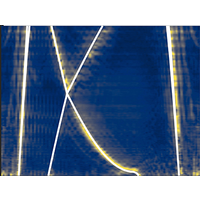
Moiré Fringe Induced Gauge Field in Photonics

Wenhui Wang, Wenlong Gao, Xiaodong Chen, Fulong Shi, Guixin Li, Jianwen Dong, Yuanjiang Xiang, and Shuang Zhang

Phys. Rev. Lett. 125, 203901 (2020) - Published 13 November, 2020

The first observation of moiré-fringe-induced gauge fields in a photonic honeycomb lattice, and the correlation between the momentum and orbital position of the Landau modes, serves as evidence of the noncommuteness between the orthogonal components of the momentum.

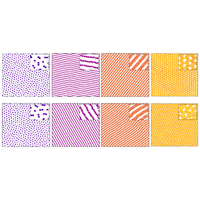
Lamellar to Micellar Phases and Beyond: When Tactic Active Systems Admit Free Energy Functionals

J. O’Byrne and J. Tailleur

Phys. Rev. Lett. 125, 208003 (2020) - Published 13 November, 2020

Researchers make systems of self-propelled particles produce the same large-scale dynamics as passive-particle systems.

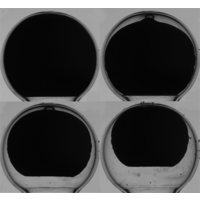
Syneresis of Colloidal Gels: Endogenous Stress and Interfacial Mobility Drive Compaction

Q. Wu, J. van der Gucht, and T. E. Kodger

Phys. Rev. Lett. 125, 208004 (2020) - Published 13 November, 2020

Particle deformability strongly affects the expulsion of a liquid in colloidal gels.

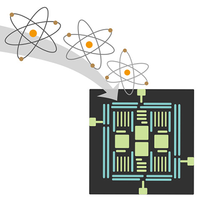
Precision Metrology Meets Cosmology: Improved Constraints on Ultralight Dark Matter from Atom-Cavity Frequency Comparisons

Colin J. Kennedy, Eric Oelker, John M. Robinson, Tobias Bothwell, Dhruv Kedar, William R. Milner, G. Edward Marti, Andrei Derevianko, and Jun Ye

Phys. Rev. Lett. 125, 201302 (2020) - Published 12 November, 2020

Researchers use precise clocks and an extremely stable optical cavity to find new constraints on how the dilaton, a hypothesized dark matter particle, interacts with ordinary matter.

IrO2 Surface Complexions Identified through Machine Learning and Surface Investigations

Jakob Timmermann, Florian Kraushofer, Nikolaus Resch, Peigang Li, Yu Wang, Zhiqiang Mao, Michele Riva, Yonghyuk Lee, Carsten Staacke, Michael Schmid, Christoph Scheurer, Gareth S. Parkinson, Ulrike Diebold, and Karsten Reuter

Phys. Rev. Lett. 125, 206101 (2020) - Published 10 November, 2020

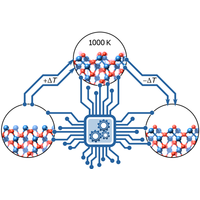
A novel machine learning methodology is combined with experimental verification to identify new terminations of rutile (101) and (111) surfaces that make these facets highly stable in reducing conditions.

Electron Doping of the Iron-Arsenide Superconductor CeFeAsO Controlled by Hydrostatic Pressure

K. Mydeen, A. Jesche, K. Meier-Kirchner, U. Schwarz, C. Geibel, H. Rosner, and M. Nicklas

Phys. Rev. Lett. 125, 207001 (2020) - Published 10 November, 2020

Upon applying pressure to CeFeAsO, the material’s characteristics change from that of an iron-pnictide superconductor to a heavy-fermion metal.

Broadband Electromagnetic Wave Tunneling with Transmuted Material Singularity

Yichao Liu, Fei Sun, Yibiao Yang, Zhihui Chen, Jianzhong Zhang, Sailing He, and Yungui Ma

Phys. Rev. Lett. 125, 207401 (2020) - Published 10 November, 2020

The new concept of a near-zero-index-featured medium can realize the same functions of near-zero-index media but using normal dielectrics.

Theory for the Charge-Density-Wave Mechanism of 3D Quantum Hall Effect

Fang Qin (覃昉), Shuai Li, Z. Z. Du, C. M. Wang, Wenqing Zhang, Dapeng Yu, Hai-Zhou Lu, and X. C. Xie

Phys. Rev. Lett. 125, 206601 (2020) - Published 9 November, 2020

Theorists invoke electron-phonon interactions to explain the recent observation of the quantum Hall effect in a 3D electronic system.

Streamwise Dissolution Patterns Created by a Flowing Water Film

Adrien Guérin, Julien Derr, Sylvain Courrech du Pont, and Michael Berhanu

Phys. Rev. Lett. 125, 194502 (2020) - Published 6 November, 2020

Rainwater runoff can erode the surface of a water-soluble rock, scarring it with hundreds of parallel channels.

Wrapping of Microparticles by Floppy Lipid Vesicles

Hendrik T. Spanke, Robert W. Style, Claire François-Martin, Maria Feofilova, Manuel Eisentraut, Holger Kress, Jaime Agudo-Canalejo, and Eric R. Dufresne

Phys. Rev. Lett. 125, 198102 (2020) - Published 5 November, 2020

Researchers find the conditions for when a cell membrane will wrap around a plastic bead, providing insight into how living things interact with viruses, microplastics, and other objects.

Orbital and Spin Dynamics of Single Neutrally-Charged Nitrogen-Vacancy Centers in Diamond

S. Baier, C. E. Bradley, T. Middelburg, V. V. Dobrovitski, T. H. Taminiau, and R. Hanson

Phys. Rev. Lett. 125, 193601 (2020) - Published 4 November, 2020

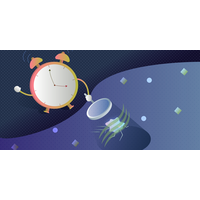
New experiments characterize the excitation levels of electrically neutral nitrogen-vacancy centers, information needed for quantum information applications.

Sign In to Your Journals Account

Filter

Section

Filter

Article Lookup

Enter a citation