Recent Articles

Spreading and engulfment of a viscoelastic film onto a Newtonian droplet

Chunheng Zhao, Taehun Lee, and Andreas Carlson

Phys. Rev. Fluids 9, 094003 (2024) - Published 12 September, 2024

Through numerical simulations we reveal the three phase flow as a newtonian droplet comes in contact with an immiscible viscoelastic liquid film. The droplet dynamics becomes insensitive to the film height when the viscoelastic effects dominate. A viscoelastic ridge forms at the moving contact line, which evolves with a power-law dependence on time.

Modulational instability of nonuniformly damped, broad-banded waves: Applications to waves in sea ice

Raphael Stuhlmeier, Conor Heffernan, Alberto Alberello, and Emilian Părău

Phys. Rev. Fluids 9, 094802 (2024) - Published 12 September, 2024

Modulational instability is the major energy transfer mechanism between ocean surface waves in deep water. In this work we explore the effects of nonuniform damping, such as that encountered by waves propagating through sea ice, on this important instability. We relax common assumptions about narrow spectral width but are nevertheless able to capture the dynamics of the unstable triad of waves using dynamical systems techniques. We elucidate the differences between uniform and nonuniform damping and explore the consequences for subsequent spectral broadening.

Stability of gravity-driven viscous films flowing down a soft cylinder

Youchuang Chao, Lailai Zhu, Zijing Ding, Tiantian Kong, Juntao Chang, and Ziao Wang

Phys. Rev. Fluids 9, 094001 (2024) - Published 9 September, 2024

The Rayleigh-Plateau instability occurs when a liquid film flows down a cylindrical surface. Using long-wave theory and stability analysis, we show that this instability can be modulated by coating the cylindrical surface with a thin layer of soft solids. In particular, we find that the elasticity of the soft layer can cause the film flow from being absolutely to convectively unstable. Our findings are also verified by transient numerical solutions of the full asymptotic model.

Laser-induced cavitation in liquid He4 near the liquid-vapor critical point

Kenneth R. Langley, Tariq Alghamdi, Andres A. Aguirre-Pablo, Nathan B. Speirs, S. T. Thoroddsen, and Peter Taborek

Phys. Rev. Fluids 9, L091601 (2024) - Published 9 September, 2024

Cavitation near the critical point is unusual because the compressibility becomes very high and the density difference between liquid and vapor becomes small and vanishes completely in the single phase supercritical region. We have investigated laser-induced cavitation in this unusual regime with high speed video at up to 5 million frames per second using liquid helium as the working fluid. Our theoretical analysis shows that the pressure in the liquid outside a bubble can be much lower than the ambient pressure. Near the critical point, the low pressure liquid becomes unstable and generates a cloud of microbubbles, which is consistent with predictions of nucleation theory near the spinodal.

Instability of stratified air-water flows in circular pipes

Ilya Barmak, Alexander Gelfgat, and Neima Brauner

Phys. Rev. Fluids 9, 093901 (2024) - Published 5 September, 2024

In this work, the results of a linear stability analysis of air-water stratified flows in horizontal circular pipes are presented. The computed stability boundaries are found to compare well with available experimental data. The stability analysis considered three-dimensional infinitesimal perturbations of all possible wavelengths and took into account deformations of the air-water interface. Comparing stability boundaries obtained in pipe, square duct, and two-plate geometries, it is shown that there are cases where the simplified geometry of two parallel plates can be useful to model the stability boundary in a realistic geometry reasonably well.

Anti-plane segregation and diffusion in dense, bidisperse granular shear flow

Harkirat Singh and David L. Henann

Phys. Rev. Fluids 9, 094301 (2024) - Published 5 September, 2024

Dense granular mixtures consisting of particles of different sizes tend to segregate based on size during shear flow, yet predicting the evolution of the composition of a granular mixture in general geometries remains a challenge. This paper systematically studies a key aspect of the three-dimensional nature of segregation and diffusion in dense, bidisperse granular mixtures: segregation and diffusion acting along the direction perpendicular to the plane of shearing, referred to as the anti-plane mode. We utilize discrete-element method simulations to inform, calibrate, and test constitutive equations for the segregation and diffusion fluxes in their anti-plane modes.

Evidence of a finite-time pointlike singularity solution for the Euler equations for perfect fluids

Diego Martínez-Argüello and Sergio Rica

Phys. Rev. Fluids 9, 094401 (2024) - Published 5 September, 2024

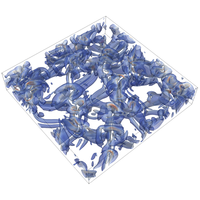
To find a blow-up solution to the Euler equations in an infinite domain is related to the zero viscosity limit of the Clay Institute’s sixth Millennium Problem. Evidence of a point-like, self-similar, blow-up solution occurring in an axisymmetric flow with infinite domain is provided by solving a nonlinear eigenvalue problem for a self-similar velocity with an unknown exponent. An angular expansion is used to map the problem into an infinite hierarchy of ODEs, which shows a convergent scenario of solutions for different truncations. This approach suggests an exponent of approximately 2. This solution contrasts with the previously found annular blow-up at a cylindrical domain boundary, which exhibited an exponent of 2.91.

Helicity transfer in compressible turbulent flows

Zheng Yan, Junfeng Wu, Zhu Lei, Jianchun Wang, Lifeng Wang, Xinliang Li, and Changping Yu

Phys. Rev. Fluids 9, 094603 (2024) - Published 4 September, 2024

To study the evolution of large-scale helical structures in natural and engineering flows, we investigate the dual-channel characteristics of large- scale helicity transfer in compressible turbulent flows theoretically and numerically. Theoretical analysis and well-resolved direct numerical simulations indicate an alternative route to sustain the large-scale helical structures, through the cross-scale interaction at inertial scales and inverse dissipation at small scales under the expansion conditions.

Hydrodynamic interaction between coaxially rising bubbles in elasto-visco-plastic materials: Bubbles with a wide range of relative sizes

A. Kordalis, Y. Dimakopoulos, and J. Tsamopoulos

Phys. Rev. Fluids 9, 093301 (2024) - Published 3 September, 2024

The interaction of a pair of tandem bubbles is investigated rising in elastic yield stress fluids. The bubble radii have a wide range of relative sizes in 3.6𝑚𝑚 ≤ 𝑅 ≤ 16𝑚𝑚. Three distinct patterns are predicted: bubble approach, bubble separation and formation of an equilibrium distance. The latter appears when material elasticity comes into play. A distorted negative wake is formed and sustained behind the leading bubble, with two stagnation points, repelling the trailing bubble and maintaining the bubble distance. Maps of the trailing bubble radius versus bubble radii ratio are presented showing the three patterns for various initial separation distances and material properties.

Rebound dynamics of inverse Leidenfrost droplets on dry ice surfaces

Yao-Jun Li, Yi-Zhou Liu, Yi-Bo Wang, and Min Chen

Phys. Rev. Fluids 9, 093601 (2024) - Published 3 September, 2024

The rebound of liquid droplets falling on a hot substrate, known as the Leidenfrost phenomenon, is a well-documented and widely studied topic. However, research on the rebound of droplets on cold surfaces, particularly regarding the inverse Leidenfrost phenomenon, remains relatively limited. In this paper, we experimentally investigate the rebound dynamics of droplets on dry ice surfaces, explore the influencing factors of the inverse Leidenfrost phenomenon, and develop a theoretical model to predict its occurrence.

Slip-induced odd viscous flow past a cylinder

Ruben Lier

Phys. Rev. Fluids 9, 094101 (2024) - Published 3 September, 2024

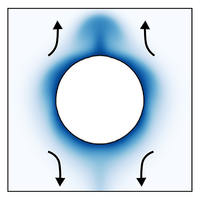
In fluids with broken parity and time-reversal symmetry, odd viscosity introduces the possibility of unique behaviors such as lift force on an obstacle in a symmetric geometry. As incompressible odd viscous fluids are known to not show lift on cylinders under no-slip boundary conditions, this study examines the effect of a finite slip length. While it follows from the Lorentz reciprocal theorem that lift does not arise at first order in slip length, we find that lift does arise at second order upon solving for the fluid profile explicitly. Extending to Oseen flow, we derive a fluid profile that offers new insights into lift force on a cylinder at low Reynolds numbers.

Nonequilibrium fluctuations of the direct cascade in surface quasi-geostrophic turbulence

V. J. Valadão, T. Ceccotti, G. Boffetta, and S. Musacchio

Phys. Rev. Fluids 9, 094601 (2024) - Published 3 September, 2024

Turbulence is by definition an out-of-equilibrium phenomenon, with energy flowing continuously from the large, input scales, to the small, dissipative ones. Temporal fluctuations in this energy flux produce corrections to the Kolmogorov energy spectrum which can be predicted using a multiscale perturbative approach. Here we investigate this problem in the Surface Quasi-Geostrophic model of turbulence, comparing the theoretical predictions with the outcome of high-resolution direct numerical simulations.

Scaling laws of velocity gradient moments of attached eddies

X. X. Li, R. F. Hu, and L. Fang

Phys. Rev. Fluids 9, 094602 (2024) - Published 3 September, 2024

From Townsend’s attached-eddy model (AEM), the scalings of velocity moments of attached eddies have been widely investigated in literature. We derive analytically the scalings of the moments of velocity gradients of attached eddies by using the AEM, indicating -2 and -3 scalings for second- and third-order moments respectively, which are in agreement with direct numerical simulation (DNS) data. In addition, non-negligible influences of the small-scale eddies on the velocity gradients in the logarithmic region are discussed.

Steady-state interfacial gravity waves with one-dimensional class-III triad resonance

Jiyang Li, Zeng Liu, Alistair G. L. Borthwick, Jie Cui, and Shijun Liao

Phys. Rev. Fluids 9, 094801 (2024) - Published 3 September, 2024

Based on the analytic homotopy analysis method, steady-state interfacial waves exhibiting class-III triad resonance are obtained for the first time in a two-layer liquid with a free surface. A parameter study examines the influences of nonlinearity (wave steepness) and upper layer thickness (vertical distance from sea surface to density transition layer) on the amplitudes of wave components, wave spatial profiles, and energy distributions of interfacial waves with multiple resonances.

Efficient dynamic mixed subgrid-scale model

Prahladh S. Iyer and Mujeeb R. Malik

Phys. Rev. Fluids 9, L092601 (2024) - Published 3 September, 2024

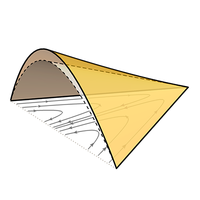
Dynamic mixed scale-similarity/Smagorinsky type models (DMM) are promising as they typically have a high a priori correlation with subgrid stresses, and provide sufficient subgrid dissipation to be robust for practical applications. However, past DMMs require two or more levels of test filtering, making them unattractive for production codes. We propose an efficient DMM with a single level of test filtering, and through a posteriori LES tests of turbulent channel flow and wall-modeled LES of turbulent smooth-body separation (see figure, for a Gaussian bump), demonstrate their robustness and improved accuracy with under 5% additional cost compared to the standard Dynamic Smagorinsky Model.

Circular objects do not melt the slowest in water

Rui Yang, Thijs van den Ham, Roberto Verzicco, Detlef Lohse, and Sander G. Huisman

Phys. Rev. Fluids 9, 083501 (2024) - Published 28 August, 2024

We investigate an ice block melting in a box and reveal that the aspect ratio and ambient temperature play a crucial role in the melting process, leading to substantial variations in melt rates and shape evolution. In general, the shape which melts the slowest is quite distinct from that of a disk, due to the symmetry breaking by buoyancy-driven thermal convection. Predicting their melting rates is crucial for understanding the interplay between melting icebergs with the climate.

Application of large eddy simulation models to electroconvection turbulence study with lattice Boltzmann method

Yu Zhang, Kang Luo, Hongliang Yi, Anjun Liu, and Jian Wu

Phys. Rev. Fluids 9, 083703 (2024) - Published 28 August, 2024

Electroconvection (EC) turbulence is an important branch of electrohydrodynamics (EHD). This work applies large-eddy simulation (LES) to EHD turbulence based on the lattice Boltzmann method. The Smagorinsky and WALE models are used for the momentum equation, and the turbulent Schmidt number models the charge transport equation. The results are compared with those computed through different numerical models. Both two-dimensional and three-dimensional numerical tests show that the LES models applied in EHD turbulence simulation perform reliable results at high computational speed, making them suitable for further simulations of EHD turbulence.

Weak-inertial effects on destabilized receding contact lines

Akhil Varma

Phys. Rev. Fluids 9, 084006 (2024) - Published 28 August, 2024

Beyond a threshold speed, the receding contact line of a partially wetting liquid on a solid substrate becomes unstable, forming a corner. At these speeds, one expects the inertial effects near the contact line to be significant for many liquids commonly used in industrial processes. To account for it, we provide the self-similar leading-order inertial correction to the well-known Stokes solution for the interface shape and flow field near the moving contact line. Furthermore, inspired by recent experiments, we make quantitative predictions for water and liquid mercury and argue that it is essential to consider inertial contributions when modeling fast-moving contact lines.

Vortex dynamics in healthy and pro-atherogenic carotid artery bifurcation models

Nora Caroline Wild, Kartik V. Bulusu, and Michael W. Plesniak

Phys. Rev. Fluids 9, 083102 (2024) - Published 27 August, 2024

Carotid artery disease is a significant contributor to mortality in the United States. The role of internal vortical structures in enhancing pro-atherosclerotic wall shear stresses and how they differ between healthy and disease-prone patient cohorts has not been studied. This study revealed an important vortex which forms in the cardiac cycle at a time primarily dictated by bifurcation geometry, whereas its lifespan is determined by flow conditions, such as pressure drop and flow rate. We found that high internal carotid artery mass flow rate and a high favorable pressure gradient maximum occurring near peak systole are strong indicators of a greater pre-disposition towards atherogenesis.

Edge-wave phase shifts versus normal-mode phase tilts in an Eady problem with a sloping boundary

J. Mak, N. Harnik, E. Heifetz, G. Kumar, and E. Q. Y. Ong

Phys. Rev. Fluids 9, 083905 (2024) - Published 26 August, 2024

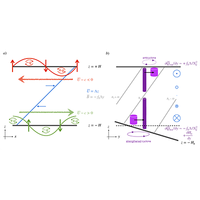
Baroclinic instability plays an important role in rotating stratified fluid systems, such as Earth’s atmosphere and ocean, and can be modeled as a pair of constructively interfering edge-waves. We provide a self-consistent explanation of how the edge-wave interaction mechanism is modified in the presence of slopes, extending existing simple but incomplete explanations. We also put forth speculations on using linear instability theory to inform eddy parameterizations, and highlight parity-time symmetry in the governing equations, finding links between shear instabilities, interacting edge-waves, eddy-mean interactions, and concepts from quantum field theory.

Sign In to Your Journals Account

Filter

Recent Issues

Vol. 11, Iss. 10
October 2026
Vol. 11, Iss. 9
September 2026
Vol. 11, Iss. 8
August 2026
Vol. 11, Iss. 7
July 2026
Category
Article Type
Section

Filter

Article Lookup

Enter a citation