Recent Articles

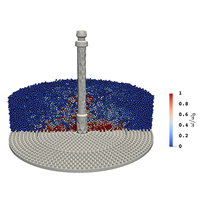
Pressure sensitivity in nonlocal flow behavior of dense hydrogel particle suspensions

Zohreh Farmani, Nazanin Ghods, Harkirat Singh, Jing Wang, Ralf Stannarius, Stefan Radl, David L. Henann, and Joshua A. Dijksman

Phys. Rev. Fluids 11, 094306 (2026) - Published 24 September, 2026

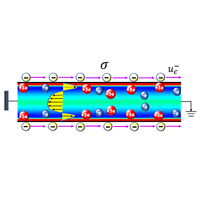
Sand flows through your fingers like a liquid yet carries your weight like a solid. Where such particulate media yield, they do so in shear bands whose width no local flow law can explain. We probe this with a suspension of soft, slippery hydrogel spheres in water, in which the confining stress can be tuned, and follow the flow with Magnetic Resonance Imaging, discrete element simulations and continuum modeling. We find that a confinement pressure of several tens of pascals collapses an extremely wide shear zone into a narrow zone in experiments, numerical simulations, and continuum modeling, showing that pressure sensitivity is an essential component of slow granular flow.

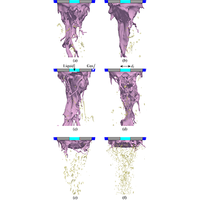
Numerical study of primary breakup in close-coupled gas atomization

Tiansong Cheng, René van Hout, and Bo Kong

Phys. Rev. Fluids 11, 094307 (2026) - Published 23 September, 2026

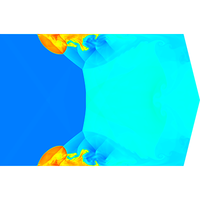
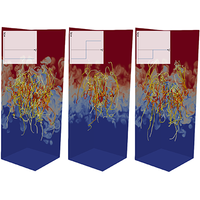
This work presents a high-fidelity three-dimensional numerical investigation of primary liquid breakup in close-coupled gas atomization (CCGA) — a configuration widely used in industrial applications but poorly understood due to strong gas recirculation and complex interfacial dynamics. Our results reveal a fundamental shift in fragmentation physics: at low-to-intermediate Weber numbers, breakup is scale-invariant and follows a power-law droplet size distribution; at high Weber number (We=360), filming dominates, leading to complete jet disintegration and a log-normal droplet size distribution indicative of characteristic-scale breakup.

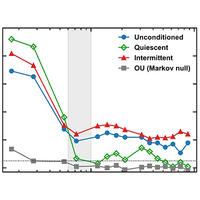
State-dependent Markov memory in the turbulent energy cascade

Y. Sungtaek Ju

Phys. Rev. Fluids 11, 094605 (2026) - Published 23 September, 2026

The turbulent energy cascade is widely modeled as a Markov process in scale, valid above a coherence length of about one Taylor microscale. Using direct numerical simulation results and null surrogates that are Markov by construction, the present work shows that this coherence length is state dependent: quiescent regions of the inertial range recover the canonical value, while intermittent regions require 3 to 4 times the scale separation, and the ordering reverses near the dissipation range. The Markov approximation underlying cascade Fokker-Planck and fluctuation-theorem analyses is therefore more restrictive for the intermittent component of the cascade than has generally been assumed.

Optimal surfaces for turbulent circulation statistics

L. Moriconi and R. M. Pereira

Phys. Rev. Fluids 11, 094604 (2026) - Published 22 September, 2026

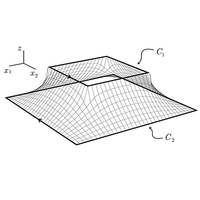
Small-sized vortices abound in turbulent flows. Their elementary circulations and density correlations work together in a capricious way to make minimal surfaces the optimal geometries for describing the statistics of turbulent circulation. The figure shows a non-simply connected minimal surface associated with the turbulent circulation fluctuations around the combined contours C1 and C2.

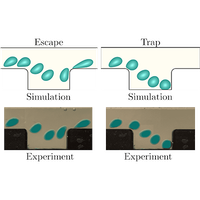
Getting a viscous drop into and out of a well

Souradeep Roychowdhury, Henry Lutz, Rajarshi Chattopadhyay, Alexander Z. Zinchenko, and Robert H. Davis

Phys. Rev. Fluids 11, 090501 (2026) - Published 21 September, 2026

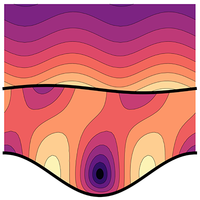
Trapping and releasing deformable drops in confined chambers are central to many microfluidic applications, from single-cell assays to droplet microreactors. Combining three-dimensional boundary-integral simulations with flow-cell experiments, we show how gravity, viscous forcing, drop deformability, and chamber geometry determine whether a drop escapes, becomes trapped, or breaks up near a well corner. The results also identify practical strategies for controlled drop removal after trapping.

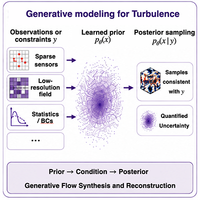
Generative priors for spatiotemporal turbulence: Toward conditionable and scalable flow foundation models

Jian-Xun Wang

Phys. Rev. Fluids 11, 090502 (2026) - Published 21 September, 2026

Turbulence modeling increasingly requires probabilistic tools that can generate, condition, and complete instantaneous flow fields under sparse data and high simulation cost. This Perspective presents transport-based generative models, including diffusion and flow matching, as reusable probabilistic priors for spatiotemporal turbulence. Through training-free conditional sampling, a single learned prior can unify forward generation, reconstruction, data assimilation, restoration, and solver-constrained inference. This framework offers a path toward conditionable, uncertainty-aware statistical backbones for future turbulence foundation models.

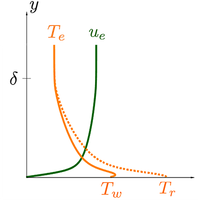
Modeling and prediction of high-speed turbulent boundary layers

Johan Larsson

Phys. Rev. Fluids 11, 090503 (2026) - Published 21 September, 2026

The conversion of kinetic energy into internal energy in high-speed boundary layers creates non-uniform density and viscosity fields, which invalidate many foundational theoretical models of wall-bounded turbulence flow, most notably the incompressible log-law for the mean velocity profile. The paper sets up the general problem and describes the author’s personal perspective on our current theoretical understanding of it, along with what has worked and what remains to be solved in this research area.

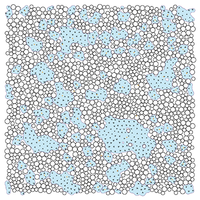
Contact-network organization and motion statistics in shear-thickening suspensions

Michel Orsi, Rahul Pandare, Brolin Adu-Poku, Bulbul Chakraborty, and Jeffrey F. Morris

Phys. Rev. Fluids 11, 090504 (2026) - Published 21 September, 2026

Shear thickening in dense suspensions is associated with the growth of frictional contact networks, but how those networks organize particle motion has remained unclear. Using large-scale discrete-elements simulations, we show that contact number, percolation, and rigidity all strengthen in the same region where translational velocity correlations grow and neighboring non-affine rotations become increasingly anticorrelated. These observables provide complementary signatures of the collective organization that precedes shear jamming.

Effects of reflected shock-boundary layer interactions on detonation initiation in shock-focusing systems

Jie Sun, Pengfei Yang, Dehai Yu, Yiqing Wang, and Zheng Chen

Phys. Rev. Fluids 11, 093201 (2026) - Published 21 September, 2026

Shock focusing is a promising route to detonation initiation, but most prior studies used inviscid models, leaving boundary-layer effects poorly understood. Using two-dimensional viscous simulations with detailed hydrogen-air chemistry, this work shows that reflected shock-boundary layer interactions can decisively trigger ignition and detonation by driving boundary-layer separation and localized viscous heating. Neglecting these effects gives qualitatively skewed predictions of initiation mode and critical Mach number, revealing shock-boundary layer interaction as an essential, previously overlooked driver of detonation initiation in shock-focusing systems.

Effects of the Coriolis force on the coherent structures in conventionally neutral atmospheric boundary layers

Changlong Wang, Luoqin Liu, Xiang I. A. Yang, and Ruifeng Hu

Phys. Rev. Fluids 11, 093801 (2026) - Published 21 September, 2026

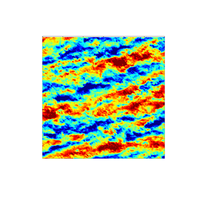
While the Coriolis force due to Earth’s rotation is well known to induce wind veer in the mean velocity of atmospheric boundary layers (ABLs), its effects on turbulent coherent structures remain poorly understood. Using large-eddy simulation of conventionally neutral ABLs, we show that the Coriolis force causes distinct deflection of coherent velocity structures away from both the mean wind and mean shear directions. A universal relationship between relative structure deflection and relative wind veer angles is established, independent of latitude or geostrophic wind speed. The Coriolis force also modifies the inclination of large-scale structures, likely due to the Coriolis-induced deflection.

Axisymmetric radiation and decay of gravity-capillary waves

Yukun Sun, Benjamin Weiss, Sungyon Lee, Sunghwan Jung, Chris Roh, and Daisuke Takagi

Phys. Rev. Fluids 11, 094004 (2026) - Published 21 September, 2026

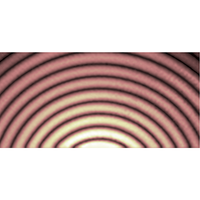
The water surface is naturally contaminated with biological and chemical impurities. Even a trace amount of contaminants can introduce elasticity and impact wave damping that is not fully appreciated. By accounting for water viscosity and surface elasticity, this study predicts the radial propagation and decay of linear waves in good agreement with experiments. The results offer insight into the possible range of interactions between surface-dwelling organisms in nature.

Motility and interfacial instability of confined chemically active droplets

Pawan Kumar, Sobiya Ashraf, Naveen Tiwari, Dipin Pillai, and Rahul Mangal

Phys. Rev. Fluids 11, 094005 (2026) - Published 21 September, 2026

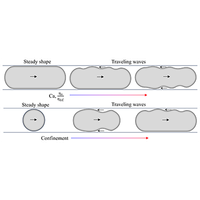
This work investigates how confinement and the physicochemical properties of the surrounding medium influence the dynamics of chemically active droplets in a capillary channel. We demonstrate that the Yeh-Marangoni instability induces peristaltic interfacial traveling waves on confined chemically active droplets, enabling adaptive oscillatory locomotion through narrow channels.

Role of ion-ion correlations on electroosmosis of multivalent electrolytes in hydrophobic channels with mobile surface charge

Shubhra Sahu and Somnath Bhattacharyya

Phys. Rev. Fluids 11, 094202 (2026) - Published 21 September, 2026

The electroosmotic flow (EOF) of electrolytes with multivalent counterions is investigated in a hydrophobic channel with laterally mobile surface charges. The lateral mobility of surface ions modifies the conventional slip boundary condition. Under strong electrostatic coupling, counterions become condensed near the surface, leading to charge over-screening and the formation of a layered ionic structure, consistent with experimental observations. Increasing the slip flow diffuses part of the condensed counterion layer, which suppresses EOF reversal. In addition, the lateral mobility of surface ions increases the surface conductivity, which further weakens counterion condensation.

Radius-dependent looseness of the far-field Calderón-Zygmund bound in turbulent vortex stretching

Jesper Lyng Jensen

Phys. Rev. Fluids 11, 094603 (2026) - Published 21 September, 2026

To ask whether vortex stretching can blow up, mathematics must assume the worst: that distant vorticity everywhere conspires to amplify. Turbulence does not cooperate. Arriving with opposing signs, far-field contributions largely cancel — a restraint the flow imposes on itself, leaving the classical Calderón–Zygmund bound having application room that the flow never claims. This work measures that directly, and finds the restraint eases at the most violent vorticity events, precisely where amplification matters most.

Boundary layer beneath a tornado-like vortex

Leven Davies, P. A. Davidson, and John K. Harvey

Phys. Rev. Fluids 11, 094703 (2026) - Published 21 September, 2026

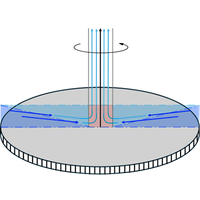
How is the boundary layer structured beneath a tornado, the surface flow that feeds the vortex above it? Because field observations are challenging, much of what is known rests on theory. A classical asymptotic analysis predicts a composite layer: a thin viscous layer carrying the shear stress, capped by a thicker layer carrying the inward mass flux. We test this quantitatively using particle image velocimetry of a tornado-like vortex in a water tank. The measurements support the two-layer structure and expose a surprising feature within it: fluid is entrained downward at all radii, yet the inner layer still detrains mass into the outer layer.

Bayesian experimental design for nonequilibrium gas phase chemistry models

Agnivo Ghosh and Anabel del Val

Phys. Rev. Fluids 11, 094903 (2026) - Published 21 September, 2026

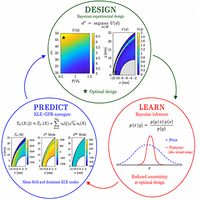
Experimental validation of hypersonic chemistry models is costly, making it important to extract as much information as possible from each test. We develop a Bayesian experimental design framework that identifies the conditions and measurement locations expected to most effectively reduce uncertainty in model parameters. Coupled with reduced-order surrogates for high-dimensional flow data, the approach provides a systematic way to plan targeted, information-rich validation experiments for thermochemical nonequilibrium models.

Dynamics of periodic red blood cell suspensions in confined Poiseuille flows

Zhe Gou, Hengdi Zhang, Alexander Farutin, and Chaouqi Misbah

Phys. Rev. Fluids 11, 093603 (2026) - Published 18 September, 2026

Red blood cells in microcirculation migrate toward the vessel center to reduce blood dissipation, yet their collective dynamics remain elusive. Using periodic boundary conditions, we uncover a concentration-driven symmetry-breaking bifurcation from centered parachutes to off-centered slippers and identify a scaling law for migration velocity. Remarkably, intrinsic viscosity collapses onto a universal curve set by cellular organization. The periodic suspension captures non-periodic behavior at a very low computational cost, providing an efficient framework for studying concentrated blood flow and confined rheology.

Mixing, anisotropy, and Lagrangian dispersion in Rayleigh-Taylor turbulence under variable acceleration

Dongxiao Zhao and Gaojin Li

Phys. Rev. Fluids 11, 093903 (2026) - Published 18 September, 2026

Rayleigh-Taylor turbulence is well understood under steady acceleration, but many high-energy-density and astrophysical flows experience accelerations that vanish or reverse. Simulations with Lagrangian particle tracking show that gravity removal preserves vertical velocity memory and drives inertial coasting, whereas reversal creates a stably stratified, Brunt-Väisälä-oscillating state. The flow state at switching controls both the subsequent mixing dynamics and the suppression of absolute and relative particle transport.

Peristaltic pumping under poroelastic confinement

Avery Trevino, Roberto Zenit, and Mauro Rodriguez, Jr.

Phys. Rev. Fluids 11, 094003 (2026) - Published 18 September, 2026

This study presents an analytical model of peristalsis within poroelastic confinement which occurs in engineered and biological contexts, such as microfluidic devices and the flow of cerebrospinal fluid in the brain. We describe the poroelastic boundary deformation and both Lagrangian and Eulerian flow behavior, relating each to poroelastic material properties. There are regimes of forward and reverse flow relative to the peristaltic wave direction depending on permeability and interfacial slip between the Stokes and Darcy regions. We show a framework for directed fluid pumping near and through soft, porous materials.

Tuning cross-stream lift in viscoelastic shear: Distinct hydrodynamic signatures of force-bearing and force-free mechanisms

Soumyodeep Chowdhury, Kushagra Tiwari, Jitendra Dhakar, and Akash Choudhary

Phys. Rev. Fluids 11, 094203 (2026) - Published 18 September, 2026

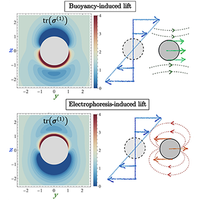
We show that a particle translating relative to a weakly viscoelastic shear flow can experience fundamentally different lift and drag corrections, depending on whether its relative motion is driven by an external force (such as buoyancy) or by a force-free mechanism (electrophoresis, microswimming). The analytical results show that these two modes of motion generate lift forces in opposite directions because they produce fundamentally different flow signatures and polymeric stress fields. In addition to the explicit derivation of first-order fields in the Weissenberg number, we ascertain these results via the reciprocal theorem.

Sign In to Your Journals Account

Filter

Recent Issues

Vol. 11, Iss. 10
October 2026
Vol. 11, Iss. 9
September 2026
Vol. 11, Iss. 8
August 2026
Vol. 11, Iss. 7
July 2026
Category
Article Type
Section

Filter

Article Lookup

Enter a citation