Recent Articles

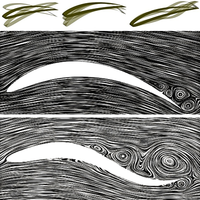
Sequential estimation of disturbed aerodynamic flows from sparse measurements via a reduced latent space

Hanieh Mousavi, Anya Jones, and Jeff Eldredge

Phys. Rev. Fluids 11, 104702 (2026) - Published 7 October, 2026

Unexpected gusts can cause rapid changes in aerodynamic flows that are difficult to detect and reconstruct in real time. We combine sparse surface-pressure measurements with ensemble Kalman filtering in a learned low-dimensional space to detect disturbances and reconstruct the evolving flow field and aerodynamic loads. The framework provides fast, uncertainty-aware estimates and remains effective for unseen gust conditions and degraded sensor configurations.

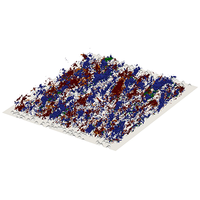
Data-driven oscillator model for turbulent flows with multiple dominant frequencies

Youngjae Kim, Koichiro Yawata, Hiroya Nakao, and Kunihiko Taira

Phys. Rev. Fluids 11, 104901 (2026) - Published 7 October, 2026

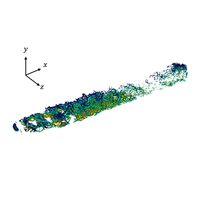
We develop a data-driven framework to model the dynamics of turbulent flows with multiple dominant frequencies based on a set of oscillators. The framework extracts oscillators that capture the dominant dynamics from the flow field data using autoencoders arranged in parallel. The dynamics of coupled oscillators are modeled by leveraging a neural ordinary differential equation, which enables accurate prediction of the multi-frequency oscillatory behavior of turbulent flows assisted by observation-based correction. We demonstrate the capability of this oscillator-based model for a three-dimensional supersonic turbulent flow over a cavity.

Erratum: Edge-wave phase shifts versus normal-mode phase-tilts in an Eady problem with a sloping boundary [Phys. Rev. Fluids 9, 083905 (2024)]

J. Mak, N. Harnik, E. Heifetz, G. Kumar, and E. Q. Y. Ong

Phys. Rev. Fluids 11, 109901 (2026) - Published 7 October, 2026

How phase separation reshapes the jetting dynamics in multicomponent droplet impacts

Mingbo Li, Junhao Cai, Tong Sun, Xiaofeng Wei, Yuhan Li, and Fangye Lin

Phys. Rev. Fluids 11, 103601 (2026) - Published 6 October, 2026

This manuscript presents fully developed and experimentally validated research on a ternary multicomponent droplet system, revealing how interfacial transport, phase separation, and Marangoni effects fundamentally alter cavity collapse and jet formation. By establishing new scaling laws incorporating interfacial roughness and compositional heterogeneity, it provides significant fluid mechanical insight beyond classical single-component frameworks, substantially advancing the understanding of inertial-capillary singularities in complex fluids.

Diffuse-interface model for N-phase flows with liquid-solid phase change

Jiangxu Huang, Chengjie Zhan, Zhenhua Chai, Changsheng Huang, and Xi Liu

Phys. Rev. Fluids 11, 104301 (2026) - Published 6 October, 2026

Freezing becomes more complex when several immiscible fluids coexist and change volume as they solidify. We develop a reduction-consistent diffuse-interface model that couples phase-field and enthalpy formulations for N-phase flows with liquid-solid phase change. The model captures solidification-induced expansion and shrinkage while accounting for the interplay between fluid flow, heat transfer, and evolving interfaces. Simulations reveal how interfacial interactions and thermal diffusivity contrasts shape freezing fronts and solidified morphologies in compound droplets and impurity-laden systems.

Reconstruction of Reynolds-averaged Navier-Stokes solutions from boundary data with partial Reynolds stress transport constraints

Jincheng Zhang

Phys. Rev. Fluids 11, 104602 (2026) - Published 6 October, 2026

This article proposes the Reynolds stress transport nets (RSTnets) for reconstructing RANS solutions from the boundary data through embedding the Reynolds stress transport formulation via physics-informed neural networks. Different from previous works which either rely on the empirical modeling of all the unclosed terms or leave the Reynolds stress completely unmodeled, the proposed RSTnets are developed to reconstruct the flow fields in the domain based on the first- and second-order flow quantities at the domain boundary through incorporating as much physical information as possible while avoiding empirical modeling of the unclosed terms.

Pilot-guided deep reinforcement learning for navigation of a jellyfish-like swimmer in flows with obstacles

Yihao Chen and Yue Yang

Phys. Rev. Fluids 11, 104701 (2026) - Published 6 October, 2026

Navigating near obstacles is challenging for soft swimmers because walls reshape the surrounding flow. In two-dimensional simulations, a jellyfish-like swimmer combines local path guidance with deep reinforcement learning that uses hydrodynamic force and torque feedback. These mechanical cues enable the swimmer to exploit wall-induced flows for faster, more efficient maneuvers than a controller without this feedback. The framework also supports navigation among multiple obstacles and exploration of a model underwater cave.

Influence of plate size on air cushioning during water entry: From two-dimensional mechanistic insights to three-dimensional effects

Xiaohang Shi, Qiulin Qu, Peiqing Liu, Yunlong Zheng, and Ling Li

Phys. Rev. Fluids 11, 104801 (2026) - Published 6 October, 2026

In air-cushioned flat-plate water entry, the effect of plate size on peak impact load remains unresolved. A prevailing view holds that smaller plates entrap less air, thereby weakening the buffering effect and increasing the peak load. This work numerically investigates the plate-size effect in both two and three dimensions and finds, contrary to conventional expectations, that smaller plates entrap less air yet experience lower peak loads. Further analysis reveals that the load variation is dictated by the compression dynamics of the entrapped air layer, with air-layer compression weakening as plate size decreases.

Beyond capillarity: Extended interfacial energy transfer in bubble-laden turbulence

Andrea Montessori

Phys. Rev. Fluids 11, L102601 (2026) - Published 6 October, 2026

Capillary forces are usually viewed as a closed pathway that redistributes kinetic energy across scales in multiphase turbulence. We show that this picture breaks down in bubble-laden turbulence when short-range near-contact interactions become active. These interactions open an additional small-scale energy-transfer channel that compensates the residual capillary work, identifying an extended interfacial transfer as the proper energetic description.

Free-stream conicity effects on hypersonic laminar flow over a slender sharp cone

Yongshuo Yu and Sangdi Gu

Phys. Rev. Fluids 11, 103401 (2026) - Published 5 October, 2026

The effects of free-stream conicity on flow over a sharp cone are investigated using theoretical methods and numerical simulations. The results show that the flow is significantly influenced by conicity. Free-stream conicity essentially rescales the nondimensional distributions of the flow properties, while strong viscous interaction modifies this behavior and reduces the accuracy of analytical predictions. The proposed framework can be qualitatively extended to other divergent free-streams by characterizing non-uniformity through the Mach number gradient.

Self-similar profiles of velocity moments in turbulent round jets: A symmetry approach

Nils Benedikt, Nrupa Chandra Girish Chandra, and Martin Oberlack

Phys. Rev. Fluids 11, 104601 (2026) - Published 5 October, 2026

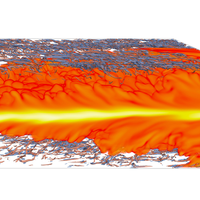
We describe a new idea for determining the self-similar profiles of the mean velocity and the second-order velocity moment profiles in a turbulent round jet. For this we use a Lie-symmetry theory inspired scheme to derive highly accurate approximations. In fact, most research about the turbulent round jets to date focused on the streamwise scaling of turbulent quantities. As part of the new analysis, we provide the first rigorous derivation of the Gaussian profile of the mean axial velocity. We validate the findings against high quality DNS data.

Primary instability of a two-dimensional freely falling circular cylinder

Yue-Hao Sun, Wei-Xi Huang, Zheng-Wei He, and Zhen Chen

Phys. Rev. Fluids 11, L101901 (2026) - Published 5 October, 2026

Although the onset of vortex shedding behind a fixed circular cylinder has been well established, free fall can change the threshold. This article demonstrates that the critical Reynolds number drops from 46.1 for a stationary circular cylinder to 42.3 for a freely falling cylinder slightly denser than the fluid. Transverse motion promotes instability, while rotation partly counteracts this effect. Across the motion constraints and density ratios studied, the maximum perturbation energy scales approximately linearly with the deviation from the instability threshold.

Dynamical comparison and superimposition of morphing submodes in biological wing motion

Zhi Cheng, Zixiao Wei, and Grace X. Gu

Phys. Rev. Fluids 11, 093104 (2026) - Published 29 September, 2026

Biological wings achieve remarkable maneuverability through coordinated deformation, yet the distinct fluid-dynamic roles of their fundamental morphing motions remain poorly understood. We systematically compare five representative sub-modes: pitching, bending, extending, flapping, and twisting. The results reveal frequency-dependent dynamic benefits and a flow-locking regime in which morphing regularizes vortex shedding and homogenizes aerodynamic forces. Combining selected sub-modes further increases lift with minimal drag penalty, offering new principles for actively morphing wings.

Turbulent boundary layers over high-skewness surfaces

Ioannis K. Kaminaris, Elias Balaras, and Michael P. Schultz

Phys. Rev. Fluids 11, 094608 (2026) - Published 29 September, 2026

Understanding turbulence structure over irregular, highly skewed topographies and its impact on drag is among the biggest challenges in hydrodynamics. Direct numerical simulations of zero-pressure-gradient boundary layers up to 135δ long and Reτ ≈ 4,500 over biofouling surfaces show that the boundary layer evolution and the total drag scale with the mean roughness height across multiple surfaces. Outer-layer similarity, assessed against two scalings and various blockage ratios, holds to second order. Quadrant analysis unveils similarities between smooth- and rough-wall turbulence structure, while a height-based occupancy ratio extends Schlichting’s boundary layer equations to rough walls.

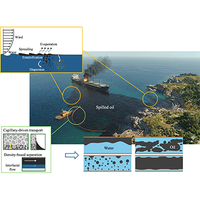
Challenges of fluid mechanics in dealing with marine oil spills

Hyungmin Park, Jaebeen Lee, and Linfeng Piao

Phys. Rev. Fluids 11, 090505 (2026) - Published 28 September, 2026

Marine oil-spill response remains largely field-driven, only loosely related to advances in multiphase-flow and interfacial physics. The IMO 2020 sulfur cap has signified this situation by introducing low-sulfur fuel oils (LSFOs), whose wax-driven, temperature-sensitive rheology and strong adhesion violate assumptions of classical spreading, recovery, and transport models. Using fluid mechanics we synthesize how LSFO’s compositional differences from conventional heavy fuel oils affect spreading, capillary- and density-based recovery, and pipeline fouling, and outlines how multiphase-flow and data-driven strategies could improve recovery robustness and transport efficiency for these fuels.

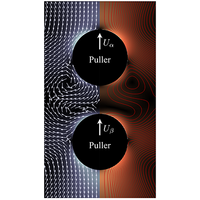
Collinear swimming of a squirmer pair in Newtonian and shear-thinning fluids

Chih-Tang Liao, Ali Gürbüz, Victor Bueno Garcia, Yuan-Nan Young, Devanayagam Palaniappan, and On Shun Pak

Phys. Rev. Fluids 11, 093103 (2026) - Published 28 September, 2026

Pairwise hydrodynamic interactions between microswimmers are fundamental building blocks for understanding their more complex collective behaviors. Here, we revisit the canonical problem of two squirmers swimming along their common line of centers in both Newtonian and shear-thinning fluids. Our results reveal how different system parameters shape the dynamics and energetics of pairwise swimmer interactions. The study establishes quantitative benchmarks for future investigations of more complex and realistic swimmer configurations.

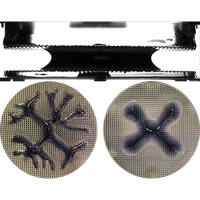
Patterning surface textured plates with a viscoplastic fluid

Vanessa R. Kern, Marcel Moura, Pål E. S. Olsen, and Andreas Carlson

Phys. Rev. Fluids 11, 093301 (2026) - Published 28 September, 2026

Viscoplastic fluids can retain complex shapes after deposition, but controlling these shapes through interfacial instabilities remains challenging. Experiments with simultaneous side and bottom imaging in a lifted Hele-Shaw cell shows that submillimetric substrate structures can direct the fingering dynamics and determine the symmetry and morphology of the deposited fluid. The adhesive force decay as the plate is lifting is an interplay between capillary, yield-stress, and viscous forces, where a dynamic permeability links the preferred invasion directions to the anisotropy introduced by the substrate texture.

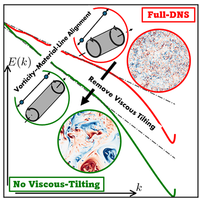
Turbulence without the viscous tilting of vorticity

Amr Emam, Mostafa Kamal, and Perry L. Johnson

Phys. Rev. Fluids 11, 094607 (2026) - Published 28 September, 2026

While vortex stretching in turbulence is commonly understood in analogy to material line stretching, the viscous tilting of vorticity prevents sustained alignment with material lines. In this paper, it is shown via numerical simulation that the surgical removal of viscous tilting from the vorticity evolution equations in isotropic turbulence results in dramatic deviations from basic turbulence scaling laws. These observations demonstrate that the viscous tilting of vorticity, and thus the difference between vorticity stretching and that of material lines, is an essential characteristic of turbulence.

Influence of turbulent entrainment on the mean flow dynamics of unsteady continuous gravity currents

M. Harrouk, B. Arcen, R. Mehaddi, and Y. Dossmann

Phys. Rev. Fluids 11, 094606 (2026) - Published 25 September, 2026

Not all parts of an unsteady continuous gravity current entrain fluid the same way. Using DNS data, we decompose the length of the current into three regions of varying entrainment dynamics, namely the hydraulic jump, the body, and the head. Therefore, the outer geometry, vertical profiles, and mean flow quantities are assessed depending on the state at the source. Ultimately, an entrainment law based on the theory of Morton, Taylor, and Turner (MTT) successfully models turbulent entrainment at the hydraulic jump.

Direct numerical simulation of premixed hydrogen-air flames subject to thermodiffusive effects in a fully developed turbulent channel flow at Reτ=530

Felix Rong, Max Schneider, Hendrik Nicolai, Christian Hasse, and Andrea Gruber

Phys. Rev. Fluids 11, 093202 (2026) - Published 24 September, 2026

Direct numerical simulations reveal how thermo-diffusive instabilities interact with wall-bounded shear-driven turbulence in fuel-lean premixed hydrogen-air flames. As the flame approaches the wall, the stretch factor increases with the local Karlovitz number and reaches its maximum in the buffer layer, co-located with the peak Reynolds stresses. This reveals a pronounced synergistic interaction between thermo-diffusive phenomena and wall turbulence, resulting in enhanced reactivity and increased local flame propagation speeds.

Sign In to Your Journals Account

Filter

Recent Issues

Vol. 11, Iss. 10
October 2026
Vol. 11, Iss. 9
September 2026
Vol. 11, Iss. 8
August 2026
Vol. 11, Iss. 7
July 2026
Category
Article Type
Section

Filter

Article Lookup

Enter a citation