Highlights

Forced three-wave interactions of capillary-gravity surface waves

Annette Cazaubiel, Florence Haudin, Eric Falcon, and Michael Berhanu

Phys. Rev. Fluids 4, 074803 (2019) - Published 9 July, 2019

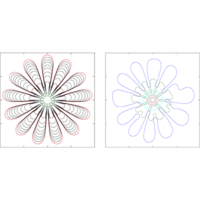
Two surface waves are forced in a cylindrical tank. Their nonlinear interaction generates a third wave not obeying the dispersion relation, whose presence is shown using a laser vibrometer or a three-dimensional free-surface reconstruction. We explain this result as a forced three-wave interaction.

Role of surrounding gas in the outcome of droplet splashing

David A. Burzynski and Stephan E. Bansmer

Phys. Rev. Fluids 4, 073601 (2019) - Published 3 July, 2019

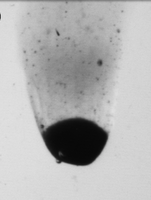
An experimental study demonstrates how surrounding gas affects secondary droplets ejected during splashing at high Weber and Reynolds numbers. It provides evidence that splashing is influenced primarily by the density, followed by the viscosity, and finally by the mean-free path of the gas.

Diffusion characteristics of air pockets on hydrophobic surfaces in channel flow: Three-dimensional measurement of air-water interface

Hyunseok Kim and Hyungmin Park

Phys. Rev. Fluids 4, 074001 (2019) - Published 3 July, 2019

Temporal variations of the three-dimensional air-water interface shape of trapped air pockets on hydrophobic surfaces in turbulent flows are directly measured. Depending on the shape regimes, the corresponding diffusion rate of air pockets is modeled as a function of flow and geometric parameters.

Rate of decay of turbulent kinetic energy in abruptly stabilized Ekman boundary layers

Stimit Shah and Elie Bou-Zeid

Phys. Rev. Fluids 4, 074602 (2019) - Published 3 July, 2019

In the late afternoon, the surface temperature drops below air temperature and the lower atmosphere’s density stratification becomes stable. A simple model that predicts the rate at which turbulence kinetic energy and mixing decrease after the onset of stable stratification is presented.

Flow dynamics of a dandelion pappus: A linear stability approach

P. G. Ledda, L. Siconolfi, F. Viola, S. Camarri, and F. Gallaire

Phys. Rev. Fluids 4, 071901(R) (2019) - Published 2 July, 2019

A dandelion pappus is modelled as a porous disk. A stability analysis finds that if the disk is sufficiently porous the steady wake is stable and consists in a separated recirculating vortex ring, which allows a long-distance dispersal of the dandelion seeds.

Pancake making and surface coating: Optimal control of a gravity-driven liquid film

E. Boujo and M. Sellier

Phys. Rev. Fluids 4, 064802 (2019) - Published 11 June, 2019

Imagine a thin liquid film that must cover the substrate it spreads over before solidifying: tilting the substrate is useful to get a little push from gravity, but obtaining a uniform film thickness is challenging. Here, an adjoint method finds time-dependent motions that improve uniformity.

Salt comets in hand sanitizer: A simple probe of microgel collapse dynamics

Arash Nowbahar, Art O'Connor, Vincent Mansard, Patrick Spicer, and Todd M. Squires

Phys. Rev. Fluids 4, 061301(R) (2019) - Published 6 June, 2019

A single grain of salt, placed on the surface of everyday hand sanitizer, slowly bores a hole through it, leaving a milky “comet trail” in its wake. The fall speed does not depend on the size of the salt grain, but does depend on salt type, and reveals subtle aspects of collapsing microgels.

Regularized Stokeslet rings: An efficient method for axisymmetric Stokes flow with application to the growing pollen tube

J. Tyrrell, D. J. Smith, and R. J. Dyson

Phys. Rev. Fluids 4, 063102 (2019) - Published 6 June, 2019

The “regularized ringlet,” which is the fundamental solution to axisymmetric Stokes flow driven by a ring of smoothed point forces, is derived and used to model cytosolic flow in the growing pollen tube.

Resolvent-based modeling of coherent wave packets in a turbulent jet

Lutz Lesshafft, Onofrio Semeraro, Vincent Jaunet, André V. G. Cavalieri, and Peter Jordan

Phys. Rev. Fluids 4, 063901 (2019) - Published 6 June, 2019

Linear instability analysis, performed on the mean flow of a fully turbulent jet, provides quantitatively correct predictions of the energetic coherent turbulent structures found in experiments. It is concluded that the most energetic structures in jet turbulence are governed by linear dynamics.

Self-similar and disordered front propagation in a radial Hele-Shaw channel with time-varying cell depth

C. Vaquero-Stainer, M. Heil, A. Juel, and D. Pihler-Puzović

Phys. Rev. Fluids 4, 064002 (2019) - Published 6 June, 2019

An air bubble expanding into a viscous liquid in the small gap between parallel plates deforms into highly branched, continuously evolving interfacial fingering patterns. By separating the plates following a power law in time, it is found that the interface can also form self-similar fingering patterns.

Stabilization of unsteady flows by reduced-order control with optimally time-dependent modes

Antoine Blanchard and Themistoklis P. Sapsis

Phys. Rev. Fluids 4, 053902 (2019) - Published 20 May, 2019

The Optimally Time-Dependent (OTD) modes, a set of deformable orthonormal modes that track transient instabilities, are incorporated into a robust, inexpensive control algorithm that can steer any trajectory of a high-dimensional nonlinear system toward a fixed point of the governing equations.

Why capillary flows in slender triangular grooves are so stable against disturbances

Nicholas C. White and Sandra M. Troian

Phys. Rev. Fluids 4, 054003 (2019) - Published 15 May, 2019

Lyapunov and non-modal stability analysis reveal why stationary and self-similar capillary flows in slender open triangular channels are so stable to disturbances. This robust feature allows superior flow management for applications ranging from space micropropulsion to microfluidic diagnostics.

Passive directors in turbulence

L. Zhao, K. Gustavsson, R. Ni, S. Kramel, G. A. Voth, H. I. Andersson, and B. Mehlig

Phys. Rev. Fluids 4, 054602 (2019) - Published 10 May, 2019

With experiments and direct numerical simulations we study the angular distribution of symmetry axes of nearby small spheroids in a turbulent flow when inertial effects are negligible. We find the angles to be unexpectedly large with a fractal attractor and a distribution with power law tails.

Deformation and stability of a viscous electrolyte drop in a uniform electric field

Qiming Wang, Manman Ma, and Michael Siegel

Phys. Rev. Fluids 4, 053702 (2019) - Published 8 May, 2019

The deformation and breakup of an axisymmetric electrolyte drop in a dielectric medium stretched by an electric field is studied. An accurate and efficient boundary integral method is developed to solve the time-dependent Stokes flow problem in the case of arbitrary Debye layer thickness.

Influence of Reynolds number on the motion of settling, bidisperse inertial particles in turbulence

Mohammadreza Momenifar, Rohit Dhariwal, and Andrew D. Bragg

Phys. Rev. Fluids 4, 054301 (2019) - Published 8 May, 2019

Using direct numerical simulation it is shown that even when bidisperse particles are settling rapidly, intermittent fluctuations allow turbulence to continue to play a key role in their relative motion, an effect increasing with Re. Low-order statistics relevant to collision rates are found to depend only weakly on Re.

Dynamics of potential vorticity staircase evolution and step mergers in a reduced model of beta-plane turbulence

M. A. Malkov and P. H. Diamond

Phys. Rev. Fluids 4, 044503 (2019) - Published 22 April, 2019

Quasigeostrophic turbulence can self-organize into “staircases”—periodic arrays of turbulence separated by layers of potential vorticity (PV) gradients. These patterns are recovered from a reduced model that couples mean PV and potential enstrophy. Sharpening occurs due to bistable mixing of mean PV.

Generation of high-intensity ultrasound through shock propagation in liquid jets

Gabriel Blaj, Mengning Liang, Andrew L. Aquila, Philip R. Willmott, Jason E. Koglin, Raymond G. Sierra, Joseph S. Robinson, Sébastien Boutet, and Claudiu A. Stan

Phys. Rev. Fluids 4, 043401 (2019) - Published 10 April, 2019

An investigation shows how single shock waves, produced in water jets by x-ray laser pulses, propagate and become ultrasonic shock trains through oblique shock reflections and cavitation. These trains are one of the loudest sounds ever made in liquid water and may damage samples studied with x-ray lasers.

Eigenvector perturbation methodology for uncertainty quantification of turbulence models

Roney L. Thompson, Aashwin Ananda Mishra, Gianluca Iaccarino, Wouter Edeling, and Luiz Sampaio

Phys. Rev. Fluids 4, 044603 (2019) - Published 9 April, 2019

Establishing turbulence models as reliable tools for aerospace design requires quantification of uncertainties in model predictions. A methodology for turbulence model uncertainty estimation in complex flows using physics-based perturbation is introduce and validated.

Mathematical framework for analysis of internal energy dynamics and spectral distribution in compressible turbulent flows

Ankita Mittal and Sharath S. Girimaji

Phys. Rev. Fluids 4, 042601(R) (2019) - Published 5 April, 2019

A new variable φ ∼ √p is introduced to examine the dynamics of the internal energy, its mean and fluctuations, and then represent the exchange between kinetic and internal energy.

Fluctuating hydrodynamics of electrolytes at electroneutral scales

Aleksandar Donev, Andrew J. Nonaka, Changho Kim, Alejandro L. Garcia, and John B. Bell

Phys. Rev. Fluids 4, 043701 (2019) - Published 5 April, 2019

Electrolytes are effectively electroneutral at mesoscopic scales and the stochastic Poisson-Nernst-Planck equations are too stiff to solve numerically. We formulate theory and algorithms for the fluctuating hydrodynamics equations of charged, reactive mixtures with an electroneutral constraint.

Sign In to Your Journals Account

Filter

Section

Filter

Article Lookup

Enter a citation