Highlights

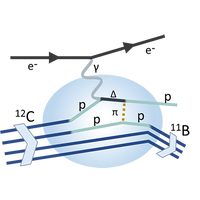
nnn and ppp correlation functions

A. Kievsky, E. Garrido, M. Viviani, L. E. Marcucci, L. Šerkšnytė, and R. Del Grande

Phys. Rev. C 109, 034006 (2024) - Published 29 March, 2024

A new theoretical analysis connects the results of high-energy particle experiments at the Large Hadron Collider with three-proton correlations inside nuclei.

Mass measurements of neutron-rich nuclei near N=70

K.-L. Wang, A. Estrade, M. Famiano, H. Schatz, M. Barber, T. Baumann, D. Bazin, K. Bhatt, T. Chapman, J. Dopfer, B. Famiano, S. George, M. Giles, T. Ginter, J. Jenkins, S. Jin, L. Klankowski, S. Liddick, Z. Meisel, N. Nepal, J. Pereira, N. Rijal, A. M. Rogers, O. B. Tarasov, and G. Zimba

Phys. Rev. C 109, 035806 (2024) - Published 28 March, 2024

The astrophysical origin for the chemical elements between the first and second r-process peaks is a matter of intense debate, with a number of nucleosynthesis processes at explosive stellar environments possibly contributing to their production. Modeling neutron-capture processes that would produce these elements requires reliable data on the trends of neutron separation energies of neutron-rich isotopes which are highly unstable and not readily accessible by experiment. This work describes the first application of an experimental technique, time-of-flight-magnetic-rigidity (ToF-Bρ), that is well-suited to measure masses of nuclei with very short half-lives in beams with relatively low intensities. The two-neutron separation energy deduced from the measured masses exhibits a smooth trend consistent with theoretical predictions within the range of experimental uncertainty, indicating that there is no sudden shape transition in these isotopes as hinted at by previous data. The successful application of the ToF-Bρ technique to isotopes with Z>28 at the NSCL S800 spectrograph gives hope for a comprehensive program of mass measurements for isotopes relevant to r-process models with the same device at FRIB.

Cyclotron radiation emission spectroscopy of electrons from tritium β decay and Kr83m internal conversion

A. Ashtari Esfahani et al. (Project 8 Collaboration)

Phys. Rev. C 109, 035503 (2024) - Published 25 March, 2024

Neutrino mass is a key parameter in nuclear and particle physics and in cosmology. The Project 8 Collaboration developed an innovative method with potential to improve the current mass limits by more than an order of magnitude. Announced in a paper published last September (PRL 131, 102502; see also the Synopsis at https://physics.aps.org/articles/v16/s121), the method measures the frequency of radiation from tritium β-decay electrons spiraling in a magnetic field. In the current paper the authors provide the details of this unique measurement technique including the hardware and the role of simulations and precision spectroscopy that enabled their new direct mass measurement. This first, small-volume demonstration, along with the precision reached, shows a clear path to improve in future experiments on the conservative upper limit for the neutrino mass obtained here.

Microscopic optical potentials for medium-mass isotopes derived at the first order of Watson multiple-scattering theory

M. Vorabbi, C. Barbieri, V. Somà, P. Finelli, and C. Giusti

Phys. Rev. C 109, 034613 (2024) - Published 15 March, 2024

Optical potentials, either phenomenological or microscopic, are used in nuclear reactions to reduce the complexity of the quantum many-body scattering to a tractable one-body problem. In this work the authors extend to heavier nuclei a highly predictive microscopic approach based on ab-initio self-consistent Green’s function (SCGF) calculations that use NN and 3N chiral interactions as the only input. The computed elastic proton scattering off Ca and Ni isotope chains demonstrate the stability of the SCGF input, a method that requires only polynomial scaling of computational resources and reaches masses up to 140 nucleons or more. The predictive power of their optical potential promises interesting implications for studying nuclei away from stability, a frontier in nuclear science including nuclear astrophysics in the coming years.

Quantitative feasibility study of sequential neutron captures using intense lasers

Vojtěch Horný, Sophia N. Chen, Xavier Davoine, Laurent Gremillet, and Julien Fuchs

Phys. Rev. C 109, 025802 (2024) - Published 14 February, 2024

Laser-generated nucleosynthesis remains out of reach of present-day technology—but more powerful lasers could eventually make it possible.

Eigenvector continuation for the pairing Hamiltonian

M. Companys Franzke, A. Tichai, K. Hebeler, and A. Schwenk

Phys. Rev. C 109, 024311 (2024) - Published 13 February, 2024

This work reports on an emulator for the evaluation of many-body observables based on an eigenvector continuation (EC) framework as an example of a reduced-basis method for a detailed study of the exactly solvable pairing Hamiltonian that serves as a model for nuclear superfluidity. EC is established as a robust resummation tool for many-body perturbation theory even though the bare perturbative expansion breaks down. The authors obtain a reliable, computation-saving, description of the exact solution with a small number of training points, provided these are taken from both sides of the pairing phase transition.

Ternary quasifission in collisions of actinide nuclei

D. D. Zhang, B. Li, D. Vretenar, T. Nikšić, Z. X. Ren, P. W. Zhao, and J. Meng

Phys. Rev. C 109, 024316 (2024) - Published 13 February, 2024

Far away from the heaviest known nuclei, an island of relatively stable nuclei should exist in the nuclear chart. Reaching that island of stability requires a nuclear reaction that will transfer a large number of nucleons from one nucleus to another, such as in the collision of two actinide nuclei, which are heavy and already neutron-rich. In one particular collision scenario, ternary quasifission, the composite system formed by the two colliding nuclei is not in equilibrium, splitting into three fragments, instead of the more commonly observed binary fission process. The authors report a systematic study of ternary quasifission in 238U + 238U collisions in a microscopic framework that has been successfully applied to various nuclear phenomena. They find that including octupole deformation has a pronounced effect on the formation of the middle fragment. For tail-to-tail and tail-to-side collisions, the model calculations predict the formation of very heavy neutron-rich systems in certain energy intervals, a result that is potentially interesting for the synthesis of superheavy elements.

Atomic corrections for the unique first-forbidden β transition of Re187

O. Niţescu, R. Dvornický, and F. Šimkovic

Phys. Rev. C 109, 025501 (2024) - Published 13 February, 2024

The shape of the spectrum of electrons emitted in β decay near the highest (endpoint) energy offers a direct way to determine the absolute values of neutrino masses. The authors reexamine one of the most promising candidates for determining the neutrino mass scale, the unique first-forbidden β transition from 187Re(5/2+) to 187Os(1/2−). Their results show that exchange effects between the emitted electrons and the atomic bound electrons can considerably impact the shape of the electron spectrum near the endpoint. The authors conclude that atomic effects, especially the exchange effect, should be considered in current and future investigations of the neutrino mass scale from β decays.

Radiative decay branching ratio of the Hoyle state

Zifeng Luo (罗梓锋), M. Barbui, J. Bishop, G. Chubarian, V. Z. Goldberg, E. Harris, E. Koshchiy, C. E. Parker, M. Roosa, A. Saastamoinen, D. P. Scriven, and G. V. Rogachev

Phys. Rev. C 109, 025801 (2024) - Published 13 February, 2024

In 1954 Fred Hoyle postulated that a 7.65 MeV excited state in 12C had to exist for carbon-based life to develop on Earth. During stellar helium burning, such a state allows a short-lived 8Be, formed from two α particles, to resonantly react with a third α particle to form this state which can decay to the 12C ground state via γ or electron-positron pair emission. The branching fraction for this radiative decay determines the amount of 12C produced in stars. A recent experiment suggested that the decay was significantly different from previous results from the 1960’s and 1970’s, adding considerable uncertainty to this important reaction. This paper uses modern detection technology to remeasure the branching ratio with reduced uncertainties compared with the new result and confirms that the earlier results were correct, thus significantly reducing the uncertainty in stellar 12C production.

Elastic electron scattering from deformed and oriented odd-A nuclei

P. Sarriguren

Phys. Rev. C 109, 024312 (2024) - Published 12 February, 2024

Deformation is a common property of nuclei, typically deduced from excitation spectra and γ-transition rates. Such deduction is more difficult for odd-A nuclei. In this paper, Sarriguren shows how one can use the interference between monopole and quadrupole Coulomb form factors in electron scattering off polarized odd-A nuclei to obtain detailed information on the quadrupole deformation, including its sign.

Recombination of Bc mesons in ultrarelativistic heavy-ion collisions

Biaogang Wu, Zhanduo Tang, Min He, and Ralf Rapp

Phys. Rev. C 109, 014906 (2024) - Published 18 January, 2024

The large production of the heavy charm and bottom quarks in heavy-ion collisions over that in pp collisions provides key signatures of the formation of the hot and strongly interacting phase known as the quark-gluon plasma. This paper reports on calculations of yields of Bc+ mesons, consisting of a bottom and a charm quark, in Pb + Pb collisions at 5.02 TeV/nucleon at the LHC. The authors compare the results of their transport model with recent CMS data and attribute the observed enhancement to recombination processes of heavy quarks with large phase-space densities in a quark-gluon plasma.

Optimized nuclear energy density functionals including long-range pion contributions

L. Zurek, S. K. Bogner, R. J. Furnstahl, R. Navarro Pérez, N. Schunck, and A. Schwenk

Phys. Rev. C 109, 014319 (2024) - Published 17 January, 2024

Nuclear energy-density functionals successfully reproduce properties of nuclei across almost the entire nuclear chart. However, nearly all available functionals are phenomenological in nature. Here, a step toward connecting the functionals to realistic underlying nuclear forces is made by taking the long-range contributions from chiral effective field theory along with a phenomenological Skyrme part. This involves no new parameters and results in a significant improvement in the description of nuclear data.

Relativistic two-body currents for one-nucleon knockout in electron-nucleus scattering

T. Franco-Munoz, J. García-Marcos, R. González-Jiménez, and J. M. Udías

Phys. Rev. C 108, 064608 (2023) - Published 22 December, 2023

Electron scattering is currently the subject of renewed interest, also by virtue of its connections with the neutrino-nucleus interaction. This work represents a step forward for the description of the quasielastic region, through the introduction of two-body meson-exchange currents in a fully relativistic approach. The good agreement with the experimental response of 12C opens up interesting perspectives of applications of the same model to neutrino scattering of heavier nuclei, of great interest for neutrino oscillation experiments, in particular for the new generation of experiments that require an unprecedented level of accuracy.

Comprehensive revision of the summation method for the prediction of reactor ν¯e fluxes and spectra

Lorenzo Périssé, Anthony Onillon, Xavier Mougeot, Matthieu Vivier, Thierry Lasserre, Alain Letourneau, David Lhuillier, and Guillaume Mention

Phys. Rev. C 108, 055501 (2023) - Published 27 November, 2023

Nuclear reactors are the most copious human-made source of electron antineutrinos (ν¯e) on Earth; yet, determining their flux and spectrum with accuracy remains a considerable challenge. In fact, measurements of the antineutrino flux from reactors have shown a deficit with respect to predictions, which has become known as the reactor antineutrino anomaly. This work combines a careful analysis of up-to-date nuclear decay data with advanced theoretical corrections to the V-A theory of β decay to produce, for the first time, a flux prediction with a comprehensive uncertainty budget. This new prediction achieves a better agreement with existing experimental neutrino data and methodically pins down points for improvements. It will likely stimulate targeted research to check and improve the experimental inputs, with potentially wide-ranging impact, from weak-interaction physics to many aspects of nuclear reactor science and technology.

Modeling backward-angle (u−channel) virtual Compton scattering at the future Electron-Ion Collider

Zachary Sweger, Saeahram Yoo, Ziyuan Zeng, Daniel Cebra, Spencer R. Klein, Yuanjing Ji, Xin Dong, and Minjung Kim

Phys. Rev. C 108, 055205 (2023) - Published 21 November, 2023

High-energy backward scattering of photons can involve very large momentum transfers to the target baryons. This is in stark contrast to the more common forward scattering process which dominates the Compton scattering cross section and is widely recognized as one of the most important measurements in the quest to understand and image the proton and nuclei. The authors present a detailed study of such high-energy virtual Compton back scattering at the future Electron-Ion Collider (EIC). The paper describes new opportunities for obtaining relevant physics information from this particular scattering scenario and highlights the physics potential at the EIC.

Role of isospin composition in low-energy nuclear fusion

Richard Gumbel, Christian Ross, and A. S. Umar

Phys. Rev. C 108, L051602 (2023) - Published 14 November, 2023

Heavy-ion fusion is a major research area, and practical approaches to describe the evolution of the nucleon movement across the barrier between the two nuclei are highly relevant for elucidating the essential dynamics of the fusion process. When two nuclei approach each other to distances where the nuclear force becomes active, neutrons and protons could move from one nucleus to the other. This movement could open and facilitate the pathway to fusion. The authors employ a microscopic many-body approach based on the density-constrained time-dependent Hartree-Fock calculations to study the impact of isospin (i.e., proton versus neutron) dynamics on low-energy nuclear fusion along an isotope chain and its dependence on the deformation of the colliding nuclei. In asymmetric systems, iso-vector dynamics plays a significant role. Its typical effect is a reduction in the potential barrier, which turns into enhancement for neutron-rich systems. These effects could be studied at facilities that provide beams of exotic, unstable nuclei.

Invariant-mass spectroscopy in projectile fragmentation reactions

R. J. Charity and L. G. Sobotka

Phys. Rev. C 108, 044318 (2023) - Published 27 October, 2023

A highly unstable nucleus that decays by emitting five protons has been observed, offering an extreme case for testing nuclear models.

Gallium neutrino absorption cross section and its uncertainty

S. R. Elliott, V. N. Gavrin, W. C. Haxton, T. V. Ibragimova, and E. J. Rule

Phys. Rev. C 108, 035502 (2023) - Published 25 September, 2023

The 71Ga radiochemical experiments provided the first constraint on the flux of low-energy electron neutrinos coming from the Sun. Crucial neutrino calibration experiments, however, using intense β-decay sources, yielded rates below that predicted by theory. A recent effort to check the “gallium anomaly” using a more intense source exacerbated the discrepancy. This paper carefully reexamines the nuclear physics of neutrino absorption on 71Ga, slightly reducing but not eliminating the puzzling anomaly.

Hexadecapole axial collectivity in the rare earth region: A beyond-mean-field study

C. V. Nithish Kumar and L. M. Robledo

Phys. Rev. C 108, 034312 (2023) - Published 22 September, 2023

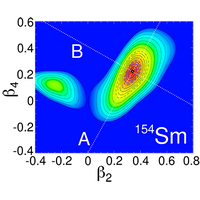
Understanding the interplay between the intrinsic shape of nuclei and the dynamics of their low-lying collective states is one of the most pressing challenges in contemporary nuclear structure physics. Within the framework of the generator coordinate method with a Gogny interaction, this paper highlights the important role of hexadecapole deformation in several isotopes of the rare earth region. These features could also have an impact on the evaluation of neutrinoless double-β decay nuclear matrix elements and on heavy ion collision dynamics. The study highlights that the physics touched by considering the hexadecapole degree of freedom is not trivial, and its study is worth further consideration.

Analysis of a Skyrme energy density functional with deep learning

N. Hizawa, K. Hagino, and K. Yoshida

Phys. Rev. C 108, 034311 (2023) - Published 21 September, 2023

Adapting a technique recently developed in atomic electron systems to nuclear physics, the authors employ a deep-learning method to analyze a Skyrme energy density functional (Skyrme-EDF) with the goal to construct an orbital-free functional that depends only on the particle density distribution. In a first step they compute the energy and particle densities of a nucleus using the Skyrme Kohn-Sham + Bardeen-Cooper-Schrieffer method. With those sets of data and a deep-learning approach they then train an orbital-free functional. When applied to the 24Mg nucleus, the newly constructed functional successfully reproduces the binding energy of the original Skyrme-EDF, with an accuracy of about 40 keV. The significant computational advantage compared to traditional EDF approaches promises useful alternatives for future applications such as for calculating more complex nuclear shapes in heavy and superheavy nuclei.

Sign In to Your Journals Account

Filter

Section

Filter

Article Lookup

Enter a citation