Recent Articles

Mode engineering in reconfigurable fractal topological circuits

Jiajun He, Hao Jia, Haoxiang Chen, Tao Wang, Shuo Liu, Jianjun Cao, Zhen Gao, Ce Shang, and Tie Jun Cui

Phys. Rev. B 109, 235406 (2024) - Published 6 June, 2024

Confinement in (1+1)-dimensional Z2 lattice gauge theories at finite temperature

Matjaž Kebrič, Jad C. Halimeh, Ulrich Schollwöck, and Fabian Grusdt

Phys. Rev. B 109, 245110 (2024) - Published 6 June, 2024

Stability of fractional Chern insulators with a non-Landau level continuum limit

Bartholomew Andrews, Mathi Raja, Nimit Mishra, Michael P. Zaletel, and Rahul Roy

Phys. Rev. B 109, 245111 (2024) - Published 6 June, 2024

Flat-band engineering of quasi-one-dimensional systems via supersymmetric transformations

V. Jakubský and K. Zelaya

Phys. Rev. B 109, 245406 (2024) - Published 6 June, 2024

Quantum description of a charged plasmonics nanowire dimer

Dan Xiang, Hong Zhang, Lorenzo Stella, and Fan Yang

Phys. Rev. B 109, 245407 (2024) - Published 6 June, 2024

Topological spin Hall effect in antiferromagnets driven by vector Néel chirality

Kazuki Nakazawa, Koujiro Hoshi, Jotaro J. Nakane, Jun-ichiro Ohe, and Hiroshi Kohno

Phys. Rev. B 109, L241105 (2024) - Published 6 June, 2024

Topological superconductivity in LaFe2As2 and LaBaFe4As4 studied by DFT+DMFT first-principles calculations

Pengyu Zheng, Guangwei Wang, Rui Liu, Zhihong Yuan, Yiran Peng, Tianye Yu, and Zhiping Yin

Phys. Rev. B 109, L241106 (2024) - Published 6 June, 2024

Anomalous Fermi pockets on the Hund's metal surface of Sr2RuO4 induced by correlation-enhanced spin-orbit coupling

Takeshi Kondo, Masayuki Ochi, Shuntaro Akebi, Yuyang Dong, Haruka Taniguchi, Yoshiteru Maeno, and Shik Shin

Phys. Rev. B 109, L241107 (2024) - Published 6 June, 2024

Much attention has been given to the spin-orbit coupling (SOC) effect on strongly correlated systems. Here, the authors investigate the electronic structure of the surface layer consisting of rotated RuO6 octahedrons in strongly correlated Sr2RuO4. They demonstrate that the octahedral rotation generates small Fermi pockets. Furthermore, it enhances the strong correlation, which increases the effective SOC, causing high orbital mixing. This result reasonably explains why the orbital-selective Mott transition is not realized in perovskite oxides with crystal distortion of octahedral rotation and tilt.

Supercurrent-induced spin switching via indirect exchange interaction

Chi Sun and Jacob Linder

Phys. Rev. B 109, 214409 (2024) - Published 5 June, 2024

Tracking single charge jumping with an individual color center in diamond

C. F. Weng, S. R. Lin, J. X. Zhao, Y. J. Yang, M. Y. Cai, Y. H. Guo, L. R. Lou, W. Zhu, and G. Z. Wang

Phys. Rev. B 109, 224104 (2024) - Published 5 June, 2024

Coherent longitudinal acoustic phonon dynamics in antimony sulfide under hydrostatic pressure

Bowen Guan, Ruiqi Wu, Fuxiang Ma, Runxing Hao, Xinzhao Wu, Yuanfei Jiang, Mingxing Jin, and Qingyi Li

Phys. Rev. B 109, 224303 (2024) - Published 5 June, 2024

Doping-induced singlet-to-triplet superconducting transition in Ba2CuO3+δ

Priyo Adhikary, Mayank Gupta, B. R. K. Nanda, and Shantanu Mukherjee

Phys. Rev. B 109, 224503 (2024) - Published 5 June, 2024

Meissner hole in pristine and proton-irradiated Ba1−xRbxFe2As2

Tong Ren, Sunseng Pyon, and Tsuyoshi Tamegai

Phys. Rev. B 109, 224504 (2024) - Published 5 June, 2024

Dynamical correlation functions from complex time evolution

Xiaodong Cao, Yi Lu, E. Miles Stoudenmire, and Olivier Parcollet

Phys. Rev. B 109, 235110 (2024) - Published 5 June, 2024

As quantum systems evolve in time, their entanglement usually grows quickly, making tensor network methods inefficient. “Imaginary time” evolution is efficient, but extrapolating back to the real axis is ill-conditioned. Here, the authors show that complex time, a mixture of the two, remains efficient while allowing a controlled reconstruction technique. Therefore, one can reach significantly longer times, which they demonstrate by obtaining high-accuracy results for impurity models at low energies.

de Haas–van Alphen effect and quantum oscillations as a function of temperature in correlated insulators

Vladimir A. Zyuzin

Phys. Rev. B 109, 235111 (2024) - Published 5 June, 2024

Marginal Fermi liquid behavior at the onset of 2kF density wave order in two-dimensional metals with flat hot spots

Lukas Debbeler and Walter Metzner

Phys. Rev. B 109, 235112 (2024) - Published 5 June, 2024

Band-gap discontinuity in semiconductor alloys with dissimilar wavefunction characters at the band edges

Xuefen Cai, Su-Huai Wei, Peter Deák, Jingxiu Yang, Chen Zhang, Bin Wang, Shu-Shen Li, and Hui-Xiong Deng

Phys. Rev. B 109, 235205 (2024) - Published 5 June, 2024

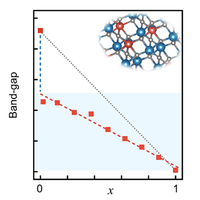
The authors clarify here the cause behind the discontinuous bandgap behavior in certain isovalent alloys by studying α-(Rh,Ga)2O3 alloys using first-principles calculations. This challenges the applicability of conventional empirical continuous rules. They demonstrate that this unusual behavior is due to the unconventional evolution of the wavefunction character at the band edges. This work emphasizes the importance of considering specific band-edge wavefunction character differences in endpoint materials for more accurate predictions of semiconductor alloy properties, which will help in designing better materials for electronics and optoelectronics.

Electric field controlled valley-polarized photocurrent switch based on the circular bulk photovoltaic effect

Yaqing Yang, Xiaoyu Cheng, Liantuan Xiao, Suotang Jia, Jun Chen, Lei Zhang, and Jian Wang

Phys. Rev. B 109, 235403 (2024) - Published 5 June, 2024

Gapless symmetry-protected topological phases and generalized deconfined critical points from gauging a finite subgroup

Lei Su and Meng Zeng

Phys. Rev. B 109, 245108 (2024) - Published 5 June, 2024

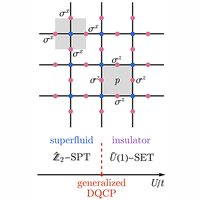
This work taps into the idea of gauging finite subgroups of global symmetries in conventional systems to obtain unconventional phases and phase transitions, greatly expanding the conventional Landau paradigm. Assisted by analytical anomaly computations and numerical density-matrix renormalization group calculations, the authors map the ordinary superfluid-insulator transition of the Bose-Hubbard model to novel phase transitions between exotic topological and/or symmetry-breaking phases. The general framework has potential applications in cold atom experiments and digital quantum simulators.

Efficient preparation of non-Abelian topological orders in the doubled Hilbert space

Shang Liu

Phys. Rev. B 109, 245109 (2024) - Published 5 June, 2024

Sign In to Your Journals Account

Filter

Recent Issues

Vol. 114, Iss. 24
15 October 2026
Vol. 114, Iss. 23
15 October 2026
Vol. 114, Iss. 22
15 October 2026
Vol. 114, Iss. 21
1 October 2026
Category
Article Type
Section

Filter

Article Lookup

Enter a citation