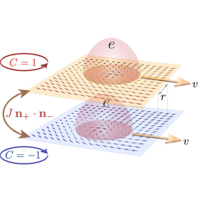
Quantum phases of dipolar bosons in one-dimensional optical lattices
Rebecca Kraus, Titas Chanda, Jakub Zakrzewski, and Giovanna Morigi
Phys. Rev. B 106, 035144 (2022) - Published 25 July, 2022

Rebecca Kraus, Titas Chanda, Jakub Zakrzewski, and Giovanna Morigi
Phys. Rev. B 106, 035144 (2022) - Published 25 July, 2022
B. D. E. McNiven, Hanna Terletska, G. T. Andrews, and J. P. F. LeBlanc
Phys. Rev. B 106, 035145 (2022) - Published 25 July, 2022
Jonah R. Adelman, Derek Fujimoto, Martin H. Dehn, Sarah R. Dunsiger, Victoria L. Karner, C. D. Philip Levy, Ruohong Li, Iain McKenzie, Ryan M. L. McFadden, Gerald D. Morris, Matthew R. Pearson, Monika Stachura, Edward Thoeng, John O. Ticknor, Naoki Ohashi, Kenji M. Kojima, and W. Andrew MacFarlane
Phys. Rev. B 106, 035205 (2022) - Published 25 July, 2022
Xingen Zheng, Tian Chen, and Xiangdong Zhang
Phys. Rev. B 106, 035308 (2022) - Published 25 July, 2022
Shubhayu Chatterjee, Matteo Ippoliti, and Michael P. Zaletel
Phys. Rev. B 106, 035421 (2022) - Published 25 July, 2022
Branko Gumhalter, Dino Novko, and Hrvoje Petek
Phys. Rev. B 106, 035422 (2022) - Published 25 July, 2022
B. Zager, J. R. Chamorro, L. Ge, F. Bahrami, V. Bisogni, J. Pelliciari, J. Li, G. Fabbris, T. M. McQueen, M. Mourigal, and K. W. Plumb
Phys. Rev. B 106, 045134 (2022) - Published 25 July, 2022
Frank Freimuth, Stefan Blügel, and Yuriy Mokrousov
Phys. Rev. B 106, 045135 (2022) - Published 25 July, 2022
Shunsuke Yamamoto, Yukinori Ohta, and Koudai Sugimoto
Phys. Rev. B 106, 045136 (2022) - Published 25 July, 2022
K. Yamagami, Y. Fujisawa, M. Pardo-Almanza, B. R. M. Smith, K. Sumida, Y. Takeda, and Y. Okada
Phys. Rev. B 106, 045137 (2022) - Published 25 July, 2022
S. S. Gavrilov
Phys. Rev. B 106, 045304 (2022) - Published 25 July, 2022
Chao Lei and Allan H. MacDonald
Phys. Rev. B 106, 045305 (2022) - Published 25 July, 2022
M. O. Nestoklon and S. V. Goupalov
Phys. Rev. B 106, 045306 (2022) - Published 25 July, 2022
Takeshi Koyama, Nobuki Umewaki, Kensuke Saito, Tomoki Tatsuno, Akira Fujisaki, Yasumitsu Miyata, Hiromichi Kataura, and Hideo Kishida
Phys. Rev. B 106, 045421 (2022) - Published 25 July, 2022
Jin Lan (兰金) and Jiang Xiao (萧江)
Phys. Rev. B 106, L020404 (2022) - Published 25 July, 2022
Arushi, R. K. Kushwaha, D. Singh, A. D. Hillier, M. S. Scheurer, and R. P. Singh
Phys. Rev. B 106, L020504 (2022) - Published 25 July, 2022
Takuma Ogasawara, Kim-Khuong Huynh, Stephane Yu Matsushita, Motoi Kimata, Time Tahara, Takanori Kida, Masayuki Hagiwara, Denis Arčon, and Katsumi Tanigaki
Phys. Rev. B 106, L041114 (2022) - Published 25 July, 2022
Jicheng Guo, Logan Ward, Yadu Babuji, Nathaniel Hoyt, Mark Williamson, Ian Foster, Nicholas Jackson, Chris Benmore, and Ganesh Sivaraman
Phys. Rev. B 106, 014209 (2022) - Published 22 July, 2022
T. Nathan Nunley, Side Guo, Liang-Juan Chang, David Lujan, Jeongheon Choe, Shang-Fan Lee, Fengyuan Yang, and Xiaoqin Li
Phys. Rev. B 106, 014415 (2022) - Published 22 July, 2022
V. N. Moura, Davi S. Dantas, G. A. Farias, A. Chaves, and M. V. Milošević
Phys. Rev. B 106, 014516 (2022) - Published 22 July, 2022