Browse Issues:

HIGHLIGHTED ARTICLES

Shock compression of liquid neon: Experiments, theory, and models

Chad A. McCoy, Seth Root, Kyle R. Cochrane, John H. Carpenter, Jacob T. Banasek, David E. Bliss, and Raymond W. Lemke

Phys. Rev. B 111, 184111 (2025) - Published 29 May, 2025

Comparison between experiment and theory is valuable for furthering understanding of materials at extreme conditions and providing benchmarking to support calculations of novel materials. Using a novel design that maximizes data return for laser-driven shock experiments and previously demonstrated techniques for magnetically accelerated flyer plates, the authors present here the first neon equation of state data above 120 GPa. These results enable improved modeling of other large band-gap materials.

Subballistic operator growth in spin chains with heavy-tailed random fields

Christopher L. Baldwin

Phys. Rev. B 111, 184204 (2025) - Published 28 May, 2025

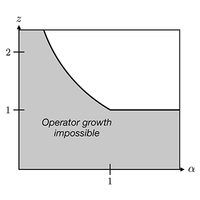
An active area of research in quantum many-body physics is the extent to which quenched disorder impedes “natural” behaviors, such as transport and thermalization. This is an inherently challenging problem to study, and thus it is particularly valuable to have rigorous results that unambiguously prove the absence of transport in certain situations. This work provides such a result: the author uses here the machinery of Lieb-Robinson bounds to prove that ballistic and even diffusive motion is indeed impossible when the distribution of on-site disorder is sufficiently heavy tailed, regardless of most other details of the Hamiltonian.

Subharmonic spin correlations and spectral pairing in Floquet time crystals

Alexander-Georg Penner, Harald Schmid, Leonid I. Glazman, and Felix von Oppen

Phys. Rev. B 111, 184308 (2025) - Published 8 May, 2025

The authors show here that the temporal spin correlations in a Floquet time crystal are asymptotically related to the statistics of eigenvalue repulsion of the defining Floquet operator. The eigenvalue statistics are found to be log-normal, which implies that apart from initial transients, the boundary spin correlations can be described analytically and are characterized by two parameters only. The relation between spectral statistics and temporal spin correlations opens new perspectives on time crystals.

Quantum master equation for many-body systems based on the Lieb-Robinson bound

Koki Shiraishi, Masaya Nakagawa, Takashi Mori, and Masahito Ueda

Phys. Rev. B 111, 184311 (2025) - Published 12 May, 2025

The authors derive here a local quantum master equation for many-body open quantum systems on the basis of the Lieb-Robinson bound, which places a fundamental upper bound on the propagation speed of correlations of observables. This approach clarifies the conditions under which local quantum master equations are valid and provides a microscopic justification for their use in strongly interacting systems. Numerical simulations on a one-dimensional fermionic chain demonstrate the accuracy of the derived equation.

Coherently coupled carrier and phonon dynamics in elemental tellurium probed by extreme ultraviolet transient absorption

Jonah R. Adelman, Hugo Laurell, Lauren B. Drescher, Han K. D. Le, Peidong Yang, and Stephen R. Leone

Phys. Rev. B 111, 184315 (2025) - Published 20 May, 2025

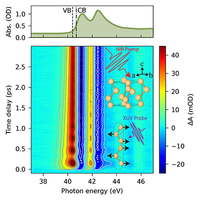
The authors utilize here a broadband extreme ultraviolet probe and a near-infrared pump to study coherent phonon and carrier dynamics in the elemental semiconductor tellurium. By measuring transitions from the tellurium 4d semicore levels to the conduction band, they find that coherent phonon motion couples coherently with the hot holes and electrons. This results in an anticorrelation between the phonon-induced displacement and the electronic temperature. These findings provide insight into the coupling between the lattice and electronic structure in tellurium.

Coexistence of antiferromagnetism and ferrimagnetism in adjacent honeycomb layers

D. Szaller, L. Prodan, K. Geirhos, V. Felea, Y. Skourski, D. Gorbunov, T. Förster, T. Helm, T. Nomura, A. Miyata, S. Zherlitsyn, J. Wosnitza, A. A. Tsirlin, V. Tsurkan, and I. Kézsmárki

Phys. Rev. B 111, 184404 (2025) - Published 2 May, 2025

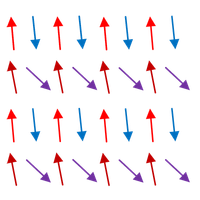
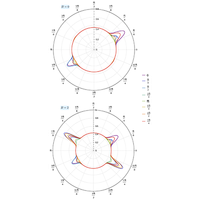
Ferromagnetic/ferrimagnetic and antiferromagnetic orders are typically mutually exclusive, coexisting only in engineered heterostructures. Challenging this paradigm, the authors report here on an atomic-scale hybrid spin state in three-dimensional crystals of the polar antiferromagnet Co2Mo3O8. The realization of layer-by-layer stacking of ferromagnetic and antiferromagnetic orders through tailored microscopic interactions opens new routes for nanoscale engineering of unconventional magnetic states.

Elasto-Hall conductivity and the anomalous Hall effect in altermagnets

Keigo Takahashi, Charles R. W. Steward, Masao Ogata, Rafael M. Fernandes, and Jörg Schmalian

Phys. Rev. B 111, 184408 (2025) - Published 5 May, 2025

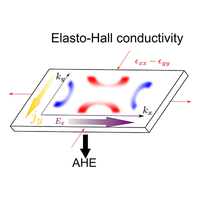
Altermagnets, in which time-reversal symmetry is broken but net magnetization is zero, have attracted much attention recently as a novel class of magnetic materials. Because the anomalous Hall effect (AHE) is only allowed for certain moment directions, it is not a generic property of altermagnets. Instead, the authors show here that a transport coefficient they call elasto-Hall conductivity, corresponding to a strain-induced AHE, can be used to directly probe the altermagnetic order parameter. Moreover, the elasto-Hall conductivity arises from the strain-induced deformation of the Berry curvature quadrupole that characterizes altermagnets.

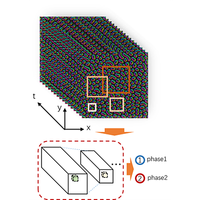
Capturing the dynamics of the phase transition of skyrmions with a nonstationary machine learning approach

Long Xiong, Neng-Ji Zhou, Shi-Qian Hu, Lei-Lei Nian, and Bo Zheng

Phys. Rev. B 111, 184415 (2025) - Published 14 May, 2025

The authors propose here a nonstationary machine learning approach specifically designed for analyzing dynamic phase transitions. By employing a subsampling technique in the short-time regime, this method overcomes the difficulty of critical slowing down. It demonstrates high effectiveness and generalization in determining critical points, and static and dynamic critical exponents in the depinning transition of skyrmions.

Chiral breakdown engineered by mesoscale Dzyaloshinskii-Moriya interaction in biaxial magnetic nanotubes

Kostiantyn V. Yershov, Svitlana Kondovych, and Denis D. Sheka

Phys. Rev. B 111, 184419 (2025) - Published 15 May, 2025

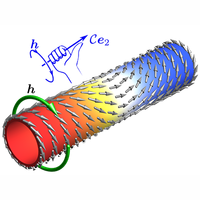
The authors analytically explore here domain wall statics and dynamics in biaxial magnetic nanotubes with intrinsic chiral Dzyaloshinskii–Moriya interaction (DMI) of different symmetries. The interplay between curvature, chiral, and dipolar interactions governs domain wall profiles and their response to external fields. While domain wall dynamics in nanotubes with bulk-type DMI is subject to chirality symmetry breaking, interfacial-type DMI primarily shifts the Walker breakdown field. These findings unlock new functionalities of chiral magnetization dynamics in curvilinear systems for advanced applications.

Fermionic entanglement in altermagnets

M. Kulig, T. Masłowski, K. A. Kouzakov, V. K. Dugaev, P. Kurashvili, S. Wolski, M. Inglot, C. Jasiukiewicz, and L. Chotorlishvili

Phys. Rev. B 111, 184427 (2025) - Published 21 May, 2025

The momentum-dependent magnetic order is the benchmark of altermagnetic materials. The authors show here that due to a unique feature, altermagnets are suitable for quantum computation and constructing quantum gates controlled via the spin-orbit interaction and external magnetic fields. The authors discuss the scattering process of the itinerant electron on the localized electron that mimics the Hadamard-CNOT gate transformation, converting the initial disentangled state into the entangled state.

Topological phase transitions in superconductors with chiral symmetry

Kristian Løvås Svalland, Maria Teresa Mercaldo, and Mario Cuoco

Phys. Rev. B 111, 184501 (2025) - Published 1 May, 2025

This study explores topological transitions in one-dimensional superconductors supporting multiple Majorana bound states, protected by chiral symmetry. It introduces the concept of “marginal topological superconductors” — gapless systems where minimal, chirality-preserving perturbations can induce a topological phase. These systems are significant because they allow for the easy creation and manipulation of Majorana states with small parameter changes, making them promising candidates for topological quantum devices requiring precise control of Majorana bound states at the edges.

Understanding and controlling dipolar Moiré pattern in ferroelectric perovskite oxide nanolayers

Sergey Prosandeev, Charles Paillard, and L. Bellaiche

Phys. Rev. B 111, L180103 (2025) - Published 22 May, 2025

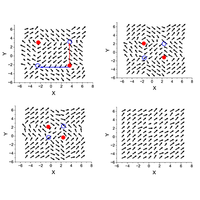
Twisted atomic bilayers of ferroelectrics show unprecedented moiré patterns hosting interpenetrating arrays of dipolar vortices and antivortices. Monte Carlo simulations confirm the critical role of the flexoelectric coupling in mediating the emergence of these polar nanotextures in response to the shear strain gradient created by the twisting angle. The authors reveal here that these polar nano-objects, of high relevance to ultra-dense memory and computing applications, can be manipulated by electric fields, in a manner reminiscent of the Berezinskii-Kosterlitz-Thouless phase transition.

Properties of two-level systems in current-carrying superconductors

T. Liu, A. V. Andreev, and B. Z. Spivak

Phys. Rev. B 111, L180502 (2025) - Published 2 May, 2025

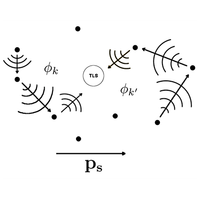
The authors show here that in disordered superconductors, the coupling of two-level systems to external AC electric fields can be dramatically enhanced by the presence of a DC supercurrent. This giant enhancement of the two-level system coupling manifests in all AC phenomena, both linear and nonlinear.

LETTERS

Structure, structural phase transitions, mechanical properties, defects

Sign of the piezoelectric response in double-path ferroelectrics

Yubo Qi, Sebastian E. Reyes-Lillo, and Karin M. Rabe

Phys. Rev. B 111, L180101 (2025) - Published 9 May, 2025

Gibbs energy approach to the thermodynamical phase diagrams of PbZrO3 and PbHfO3

Nickolay A. Arkhipov, Polina D. Shulga, and Roman G. Burkovsky

Phys. Rev. B 111, L180102 (2025) - Published 19 May, 2025

Understanding and controlling dipolar Moiré pattern in ferroelectric perovskite oxide nanolayers

Sergey Prosandeev, Charles Paillard, and L. Bellaiche

Phys. Rev. B 111, L180103 (2025) - Published 22 May, 2025

Twisted atomic bilayers of ferroelectrics show unprecedented moiré patterns hosting interpenetrating arrays of dipolar vortices and antivortices. Monte Carlo simulations confirm the critical role of the flexoelectric coupling in mediating the emergence of these polar nanotextures in response to the shear strain gradient created by the twisting angle. The authors reveal here that these polar nano-objects, of high relevance to ultra-dense memory and computing applications, can be manipulated by electric fields, in a manner reminiscent of the Berezinskii-Kosterlitz-Thouless phase transition.

Switchable skyrmion–antiskyrmion tubes in rhombohedral BaTiO3 and related materials

Fernando Gómez-Ortiz, Louis Bastogne, Sriram Anand, Miao Yu, Xu He, and Philippe Ghosez

Phys. Rev. B 111, L180104 (2025) - Published 27 May, 2025

Inhomogeneous, disordered, and partially ordered systems

Anderson localization in photonic time crystals

Karthik Subramaniam Eswaran, Ali Emami Kopaei, and Krzysztof Sacha

Phys. Rev. B 111, L180201 (2025) - Published 8 May, 2025

Anderson localization induced by structural disorder

Sourav Bhattacharjee, Piotr Sierant, Marek Dudyński, Jan Wehr, Jakub Zakrzewski, and Maciej Lewenstein

Phys. Rev. B 111, L180202 (2025) - Published 14 May, 2025

Universal spreading dynamics in quasiperiodic non-Hermitian systems

Ze-Yu Xing, Shu Chen, and Haiping Hu

Phys. Rev. B 111, L180203 (2025) - Published 29 May, 2025

Dynamics, dynamical systems, lattice effects

Measurement-invisible quantum correlations in scrambling dynamics

Alan Sherry and Sthitadhi Roy

Phys. Rev. B 111, L180301 (2025) - Published 28 May, 2025

Magnetism

Tunable enhancement of magnetization dynamics by selection of the crystallographic orientation of the hybrid interface of exchange-coupled α−Fe2O3/permalloy heterostructures

Hassan Al-Hamdo, Tobias Wagner, Philipp Schwenke, Gutenberg Kendzo, Maximilian Dausend, Laura Scheuer, Misbah Yaqoob, Vitaliy I. Vasyuchka, Philipp Pirro, Olena Gomonay, and Mathias Weiler

Phys. Rev. B 111, L180401 (2025) - Published 1 May, 2025

Slow convergence of spin-wave expansion and magnon dispersion in the 1/3 plateau of the triangular XXZ antiferromagnet

Achille Mauri and Frédéric Mila

Phys. Rev. B 111, L180402 (2025) - Published 2 May, 2025

Potentiometric detection of spin polarization expected at the surface of FeTe0.6Se0.4 in the effective p-wave superconducting state

Kosuke Ohnishi, Ryo Ohshima, Taiki Nishijima, Shinya Kawabata, Shigeru Kasahara, Yuichi Kasahara, Yuichiro Ando, Yoichi Yanase, Yuji Matsuda, and Masashi Shiraishi

Phys. Rev. B 111, L180403 (2025) - Published 9 May, 2025

Two-sublattice double exchange driven magnetism in Cr-based two-dimensional magnets

Koushik Pradhan, Dipayan Sen, Prabuddha Sanyal, and Tanusri Saha-Dasgupta

Phys. Rev. B 111, L180404 (2025) - Published 14 May, 2025

Gapless spinon excitations emerging from a multipolar transverse field in the triangular-lattice Ising antiferromagnet NaTmSe2

Zheng Zhang, Jinlong Jiao, Weizhen Zhuo, Mingtai Xie, D. T. Adroja, Toni Shiroka, Guochu Deng, Anmin Zhang, Feng Jin, Jianting Ji, Jie Ma, and Qingming Zhang

Phys. Rev. B 111, L180405 (2025) - Published 14 May, 2025

Braided Ising spin-tube physics in a purported kagome magnet

J. Nagl, D. Flavián, B. Duncan, S. Hayashida, O. Zaharko, E. Ressouche, J. Ollivier, Z. Yan, S. Gvasaliya, and A. Zheludev

Phys. Rev. B 111, L180406 (2025) - Published 16 May, 2025

Giant magnon-driven magnetothermal transport in magnetic multilayers

Ping Tang, Ken-ichi Uchida, and Gerrit E. W. Bauer

Phys. Rev. B 111, L180407 (2025) - Published 19 May, 2025

Orbital magnetic moment dynamics and Hanle magnetoresistance in multilayered two-dimensional materials

Hao Sun and Giovanni Vignale

Phys. Rev. B 111, L180408 (2025) - Published 21 May, 2025

Absence of exceptional points for Damon-Eshbach magnons

Tianci Gong, Huanhuan Yang, Zhejunyu Jin, Jie Liu, Yunshan Cao, and Peng Yan

Phys. Rev. B 111, L180409 (2025) - Published 22 May, 2025

Pump-induced magnon anticrossing due to three-magnon splitting and confluence

Tao Qu, Yuzan Xiong, Xufeng Zhang, Yi Li, and Wei Zhang

Phys. Rev. B 111, L180410 (2025) - Published 23 May, 2025

Fully frustrated octahedral antiferromagnets: Emergent complexity in external field

A. S. Gubina, T. Ziman, and M. E. Zhitomirsky

Phys. Rev. B 111, L180411 (2025) - Published 30 May, 2025

Superfluidity and superconductivity

Strong superconducting pairing strength and pseudogap features in a putative multiphase heavy-fermion superconductor CeRh2As2 studied by soft point contact spectroscopy

Qingxin Dong, Tong Shi, Pengtao Yang, Xinyang Liu, Xiaofan Shi, Lei Wang, Junsen Xiang, Hanming Ma, Zhaoming Tian, Jianping Sun, Yoshiya Uwatoko, Genfu Chen, Xinbo Wang, Jie Shen, Rui Wu, Xin Lu, Peijie Sun, Grzegorz Chajewski, Dariusz Kaczorowski, Bosen Wang, and Jinguang Cheng

Phys. Rev. B 111, L180501 (2025) - Published 2 May, 2025

Properties of two-level systems in current-carrying superconductors

T. Liu, A. V. Andreev, and B. Z. Spivak

Phys. Rev. B 111, L180502 (2025) - Published 2 May, 2025

The authors show here that in disordered superconductors, the coupling of two-level systems to external AC electric fields can be dramatically enhanced by the presence of a DC supercurrent. This giant enhancement of the two-level system coupling manifests in all AC phenomena, both linear and nonlinear.

Meissner effect in non-Hermitian superconductors

Shun Tamura, Helene Müller, Linus Aliani, and Viktoriia Kornich

Phys. Rev. B 111, L180503 (2025) - Published 5 May, 2025

Nonequilibrium Andreev resonances in ballistic graphene Andreev interferometers

Asmaul Smitha Rashid, Le Yi, Takashi Taniguchi, Kenji Watanabe, Nitin Samarth, Régis Mélin, and Morteza Kayyalha

Phys. Rev. B 111, L180504 (2025) - Published 7 May, 2025

Superconducting diode effect in Ising superconductors

Itai Bankier, Lotan Attias, Alex Levchenko, and Maxim Khodas

Phys. Rev. B 111, L180505 (2025) - Published 12 May, 2025

Striped excitonic (super)solid in anisotropic semiconductors with screened exciton interactions

J. F. de Oliveira Neto, F. M. A. Guimarães, Davi S. Dantas, F. M. Peeters, M. V. Milošević, and A. Chaves

Phys. Rev. B 111, L180506 (2025) - Published 15 May, 2025

Concurrence of in-plane anisotropic superconductivity and quasi-one-dimensional charge density wave in layered CuTe under high pressure

Yongji Shi, Shuyang Wang, Xuliang Chen, Chao An, Qing Wang, Yonghui Zhou, Ning Hao, and Zhaorong Yang

Phys. Rev. B 111, L180507 (2025) - Published 19 May, 2025

Numerical study of the bilayer two-orbital model for La3Ni2O7 on a plaquette ladder

Yang Shen, Jiale Huang, Xiangjian Qian, Guang-Ming Zhang, and Mingpu Qin

Phys. Rev. B 111, L180508 (2025) - Published 23 May, 2025

ARTICLES

Structure, structural phase transitions, mechanical properties, defects

Trimerization domain walls and vortices in multiferroic BaCoSiO4

Aditya Putatunda and Sergey Artyukhin

Phys. Rev. B 111, 184101 (2025) - Published 8 May, 2025

Structural characterization of the candidate Weyl semimetal CeGaGe

Liam J. Scanlon, Santosh Bhusal, Christina M. Hoffmann, Junhong He, Sean R. Parkin, Brennan J. Arnold, and William J. Gannon

Phys. Rev. B 111, 184102 (2025) - Published 12 May, 2025

Manipulating Möbius edge states in elastic wave phononic crystals

Sheng-Nan Liang, Jian-Lan Xie, Cheng He, Si-Yuan Yu, and Yan-Feng Chen

Phys. Rev. B 111, 184103 (2025) - Published 13 May, 2025

Pressures-stabilized unconventional stoichiometric electride Mg3S2

Hanyue Tang, Jiayue Liu, Yuxuan Sha, Yuelong Ding, Wenwen Cui, Jian Hao, Jingming Shi, and Yinwei Li

Phys. Rev. B 111, 184104 (2025) - Published 16 May, 2025

Prediction of local electric polarization using graph neural networks

Yuxing Ma, Yingwei Chen, Binhua Zhang, Yali Yang, Hongyu Yu, Xingao Gong, Yang Zhong, and Hongjun Xiang

Phys. Rev. B 111, 184105 (2025) - Published 16 May, 2025

High-pressure stoichiometric evolution of the As-H system: Dimerization and decomposition

Shaojie Wang, Zhongyan Wu, Zhiwei Shen, Hechong Wang, Hongkai Li, Mingyu Li, Shuai Zhang, Jing Song, Yong Liu, Guoying Gao, Lin Wang, and Yongjun Tian

Phys. Rev. B 111, 184106 (2025) - Published 19 May, 2025

Glass transition in metallic glasses facilitated by static loading

H. J. Sun, C. Chang, H. B. Zhou, H. P. Zhang, M. Q. Jiang, and W. H. Wang

Phys. Rev. B 111, 184107 (2025) - Published 22 May, 2025

Role of domain walls on imprint and fatigue in HfO2-based ferroelectrics

Muting Xie, Hongyu Yu, Binhua Zhang, Changsong Xu, and Hongjun Xiang

Phys. Rev. B 111, 184108 (2025) - Published 27 May, 2025

Investigating the impact of temperature on hydrous magnesium silicate Phase D using deep-learning-driven interatomic potentials

Xiao-Wei Sun, Jun-Li Cao, Xin-Xuan Wang, Lu-Lu Wei, Ting Song, and Zi-Jiang Liu

Phys. Rev. B 111, 184109 (2025) - Published 27 May, 2025

Pressure dependence of sound velocity, shear modulus, and yield strength of the amorphous 4:1 methanol-ethanol mixture to 78 GPa

Chen Hong, Yuanhao Deng, Feng Xu, Haijun Huang, and Andreas Zerr

Phys. Rev. B 111, 184110 (2025) - Published 28 May, 2025

Shock compression of liquid neon: Experiments, theory, and models

Chad A. McCoy, Seth Root, Kyle R. Cochrane, John H. Carpenter, Jacob T. Banasek, David E. Bliss, and Raymond W. Lemke

Phys. Rev. B 111, 184111 (2025) - Published 29 May, 2025

Comparison between experiment and theory is valuable for furthering understanding of materials at extreme conditions and providing benchmarking to support calculations of novel materials. Using a novel design that maximizes data return for laser-driven shock experiments and previously demonstrated techniques for magnetically accelerated flyer plates, the authors present here the first neon equation of state data above 120 GPa. These results enable improved modeling of other large band-gap materials.

Inhomogeneous, disordered, and partially ordered systems

Spectral multifractality and emergent energy scales across the many-body localization transition

Sthitadhi Roy

Phys. Rev. B 111, 184201 (2025) - Published 8 May, 2025

Disorder-induced delocalization and reentrance in a Hopf-Chern insulator

Soumya Bera, Ivan Dutta, Roderich Moessner, and Kush Saha

Phys. Rev. B 111, 184202 (2025) - Published 9 May, 2025

Fading ergodicity meets maximal chaos

Rafał Świȩtek, Patrycja Łydżba, and Lev Vidmar

Phys. Rev. B 111, 184203 (2025) - Published 27 May, 2025

Subballistic operator growth in spin chains with heavy-tailed random fields

Christopher L. Baldwin

Phys. Rev. B 111, 184204 (2025) - Published 28 May, 2025

An active area of research in quantum many-body physics is the extent to which quenched disorder impedes “natural” behaviors, such as transport and thermalization. This is an inherently challenging problem to study, and thus it is particularly valuable to have rigorous results that unambiguously prove the absence of transport in certain situations. This work provides such a result: the author uses here the machinery of Lieb-Robinson bounds to prove that ballistic and even diffusive motion is indeed impossible when the distribution of on-site disorder is sufficiently heavy tailed, regardless of most other details of the Hamiltonian.

Dynamics, dynamical systems, lattice effects

Operator spreading in random unitary circuits with unitary-invariant gate distributions

Zhiyang Tan (谭志阳) and Piet W. Brouwer

Phys. Rev. B 111, 184301 (2025) - Published 1 May, 2025

Quantum feedback induced entanglement relaxation and dynamical phase transition in monitored free fermion chains with a Wannier-Stark ladder

Xuyang Huang, Han-Ze Li, Yu-Jun Zhao, Shuo Liu, and Jian-Xin Zhong

Phys. Rev. B 111, 184302 (2025) - Published 5 May, 2025

Realization of broadband ultrasonic chiral Landau levels in an elastic metamaterial

Yafeng Chen, Zhihao Lan, Lei Fan, Shanjun Liang, Liang An, Jie Zhu, and Zhongqing Su

Phys. Rev. B 111, 184303 (2025) - Published 5 May, 2025

Impact of lattice distortions and overdamped vibrations on the structural properties and thermal transport of strongly anharmonic AgSnSbTe3 crystals

Feng Xiao, Qing-Yu Xie, Ru Yu, Huashan Li, Junrong Zhang, and Bao-Tian Wang

Phys. Rev. B 111, 184304 (2025) - Published 5 May, 2025

Exciton thermalization dynamics in monolayer MoS2: A first-principles Boltzmann equation study

Yang-hao Chan, Jonah B. Haber, Mit H. Naik, Steven G. Louie, Jeffrey B. Neaton, Felipe H. da Jornada, and Diana Y. Qiu

Phys. Rev. B 111, 184305 (2025) - Published 6 May, 2025

Ab initio functional-independent calculations of the clamped Pockels tensor of tetragonal barium titanate

Virginie de Mestral, Lorenzo Bastonero, Michele Kotiuga, Marko Mladenović, Nicola Marzari, and Mathieu Luisier

Phys. Rev. B 111, 184306 (2025) - Published 6 May, 2025

Speed limits and scrambling in Krylov space

Ankit Gill and Tapobrata Sarkar

Phys. Rev. B 111, 184307 (2025) - Published 6 May, 2025

Subharmonic spin correlations and spectral pairing in Floquet time crystals

Alexander-Georg Penner, Harald Schmid, Leonid I. Glazman, and Felix von Oppen

Phys. Rev. B 111, 184308 (2025) - Published 8 May, 2025

The authors show here that the temporal spin correlations in a Floquet time crystal are asymptotically related to the statistics of eigenvalue repulsion of the defining Floquet operator. The eigenvalue statistics are found to be log-normal, which implies that apart from initial transients, the boundary spin correlations can be described analytically and are characterized by two parameters only. The relation between spectral statistics and temporal spin correlations opens new perspectives on time crystals.

Explosive growth of bistability in a cavity magnonic system

Meng-Xia Bi, Huawei Fan, Wenting Wu, Jing-Jing He, Ming-Liang Hu, and Xiao-Hong Yan

Phys. Rev. B 111, 184309 (2025) - Published 8 May, 2025

Consistency between the Green-Kubo formula and the Lorentz model for predicting the infrared dielectric function of polar materials

Wei-Zhe Yuan, Yangyu Guo, and Hong-Liang Yi

Phys. Rev. B 111, 184310 (2025) - Published 9 May, 2025

Quantum master equation for many-body systems based on the Lieb-Robinson bound

Koki Shiraishi, Masaya Nakagawa, Takashi Mori, and Masahito Ueda

Phys. Rev. B 111, 184311 (2025) - Published 12 May, 2025

The authors derive here a local quantum master equation for many-body open quantum systems on the basis of the Lieb-Robinson bound, which places a fundamental upper bound on the propagation speed of correlations of observables. This approach clarifies the conditions under which local quantum master equations are valid and provides a microscopic justification for their use in strongly interacting systems. Numerical simulations on a one-dimensional fermionic chain demonstrate the accuracy of the derived equation.

Bidirectional optimization of transport properties for thermoelectric performance via hydrostatic pressure in chalcopyrite AgXTe2 (X=In, Ga)

Siqi Guo, Jincheng Yue, Jiongzhi Zheng, Hui Zhang, Ning Wang, Junda Li, Yanhui Liu, and Tian Cui

Phys. Rev. B 111, 184312 (2025) - Published 12 May, 2025

Postselection in lattice bosons undergoing continuous measurements

D. Barberena and Matthew P. A. Fisher

Phys. Rev. B 111, 184313 (2025) - Published 13 May, 2025

Theoretical investigations of high harmonic generation in the Weyl semimetal WP2

Xiulan Liu, Lei Geng, Xiao-Shuang Kong, Jianing Zhang, Yong-Kang Fang, and Liang-You Peng

Phys. Rev. B 111, 184314 (2025) - Published 19 May, 2025

Coherently coupled carrier and phonon dynamics in elemental tellurium probed by extreme ultraviolet transient absorption

Jonah R. Adelman, Hugo Laurell, Lauren B. Drescher, Han K. D. Le, Peidong Yang, and Stephen R. Leone

Phys. Rev. B 111, 184315 (2025) - Published 20 May, 2025

The authors utilize here a broadband extreme ultraviolet probe and a near-infrared pump to study coherent phonon and carrier dynamics in the elemental semiconductor tellurium. By measuring transitions from the tellurium 4d semicore levels to the conduction band, they find that coherent phonon motion couples coherently with the hot holes and electrons. This results in an anticorrelation between the phonon-induced displacement and the electronic temperature. These findings provide insight into the coupling between the lattice and electronic structure in tellurium.

Temperature-dependent lattice dynamics in polycrystalline ZrN

Shaofei Wang, Mark A. Mathis, Chris A. Marianetti, J. Matthew Mann, David B. Turner, Douglas L. Abernathy, Raphaël P. Hermann, and Michael E. Manley

Phys. Rev. B 111, 184316 (2025) - Published 20 May, 2025

Subdiffusive transport in the Fredkin dynamical universality class

Catherine McCarthy, Hansveer Singh, Sarang Gopalakrishnan, and Romain Vasseur

Phys. Rev. B 111, 184317 (2025) - Published 22 May, 2025

Floquet engineering of excitons in monolayer MoS2

Hyosub Park and J. D. Lee

Phys. Rev. B 111, 184318 (2025) - Published 27 May, 2025

Quench dynamics of an open quantum system

Chengxiang Ding and Long Zhang

Phys. Rev. B 111, 184319 (2025) - Published 29 May, 2025

First-principles theory of nonlinear long-range electron-phonon interaction

Matthew Houtput, Luigi Ranalli, Carla Verdi, Serghei Klimin, Stefano Ragni, Cesare Franchini, and Jacques Tempere

Phys. Rev. B 111, 184320 (2025) - Published 30 May, 2025

Magnetism

Spin-charge-orbital order in nickelate superconductors

Binhua Zhang, Changsong Xu, and Hongjun Xiang

Phys. Rev. B 111, 184401 (2025) - Published 1 May, 2025

Stability of chiral magnon condensates in collinear antiferromagnetic insulators

Therese Frostad, Anne Louise Kristoffersen, Verena Brehm, Roberto E. Troncoso, Arne Brataas, and Alireza Qaiumzadeh

Phys. Rev. B 111, 184402 (2025) - Published 1 May, 2025

Predicting Néel temperatures in helimagnetic materials

Varun Rajeev Pavizhakumari and Thomas Olsen

Phys. Rev. B 111, 184403 (2025) - Published 1 May, 2025

Coexistence of antiferromagnetism and ferrimagnetism in adjacent honeycomb layers

D. Szaller, L. Prodan, K. Geirhos, V. Felea, Y. Skourski, D. Gorbunov, T. Förster, T. Helm, T. Nomura, A. Miyata, S. Zherlitsyn, J. Wosnitza, A. A. Tsirlin, V. Tsurkan, and I. Kézsmárki

Phys. Rev. B 111, 184404 (2025) - Published 2 May, 2025

Ferromagnetic/ferrimagnetic and antiferromagnetic orders are typically mutually exclusive, coexisting only in engineered heterostructures. Challenging this paradigm, the authors report here on an atomic-scale hybrid spin state in three-dimensional crystals of the polar antiferromagnet Co2Mo3O8. The realization of layer-by-layer stacking of ferromagnetic and antiferromagnetic orders through tailored microscopic interactions opens new routes for nanoscale engineering of unconventional magnetic states.

Current-induced Néel order switching in a W/IrMn heterostructure

Yue Bai, Wenlong Cai, Min Wang, Daoqian Zhu, Kewen Shi, and Weisheng Zhao

Phys. Rev. B 111, 184405 (2025) - Published 2 May, 2025

Moiré-mediated phases in synthetic Kondo superlattices

Jyotirish Das and Onur Erten

Phys. Rev. B 111, 184406 (2025) - Published 2 May, 2025

Spontaneous anomalous Hall effect in two-dimensional altermagnets

Sajjan Sheoran and Pratibha Dev

Phys. Rev. B 111, 184407 (2025) - Published 5 May, 2025

Elasto-Hall conductivity and the anomalous Hall effect in altermagnets

Keigo Takahashi, Charles R. W. Steward, Masao Ogata, Rafael M. Fernandes, and Jörg Schmalian

Phys. Rev. B 111, 184408 (2025) - Published 5 May, 2025

Altermagnets, in which time-reversal symmetry is broken but net magnetization is zero, have attracted much attention recently as a novel class of magnetic materials. Because the anomalous Hall effect (AHE) is only allowed for certain moment directions, it is not a generic property of altermagnets. Instead, the authors show here that a transport coefficient they call elasto-Hall conductivity, corresponding to a strain-induced AHE, can be used to directly probe the altermagnetic order parameter. Moreover, the elasto-Hall conductivity arises from the strain-induced deformation of the Berry curvature quadrupole that characterizes altermagnets.

Sample-shape dependence of magnetic noise

Steven T. Bramwell

Phys. Rev. B 111, 184409 (2025) - Published 6 May, 2025

Quantum micromagnetic theory of magnons in finite nanostructures

Claudio Serpico, Salvatore Perna, and Massimiliano d'Aquino

Phys. Rev. B 111, 184410 (2025) - Published 9 May, 2025

Thermal and field evolution of spin dynamics in the alternating Heisenberg Jeff=12 spin chain Sr2Co(SeO3)3

Suheon Lee, Wonjun Lee, Toni Shiroka, K. Moovendaran, I. Panneer Muthuselvam, Raman Sankar, Eundeok Mun, and Kwang-Yong Choi

Phys. Rev. B 111, 184411 (2025) - Published 9 May, 2025

Terahertz excitation of exchange mode in a cavity formed by crystal interfaces

C. Reinhoffer, I. Razdolski, C. Kadlec, P. Stein, F. Kadlec, S. Germanskiy, A. Stupakiewicz, P. H. M. van Loosdrecht, and E. A. Mashkovich

Phys. Rev. B 111, 184412 (2025) - Published 13 May, 2025

Improved actions using the renormalization group

Guy Segall, Snir Gazit, and Daniel Podolsky

Phys. Rev. B 111, 184413 (2025) - Published 14 May, 2025

Defect-induced spin textures in magnetic solids

M. E. Zhitomirsky, Vijay B. Shenoy, and Roderich Moessner

Phys. Rev. B 111, 184414 (2025) - Published 14 May, 2025

Capturing the dynamics of the phase transition of skyrmions with a nonstationary machine learning approach

Long Xiong, Neng-Ji Zhou, Shi-Qian Hu, Lei-Lei Nian, and Bo Zheng

Phys. Rev. B 111, 184415 (2025) - Published 14 May, 2025

The authors propose here a nonstationary machine learning approach specifically designed for analyzing dynamic phase transitions. By employing a subsampling technique in the short-time regime, this method overcomes the difficulty of critical slowing down. It demonstrates high effectiveness and generalization in determining critical points, and static and dynamic critical exponents in the depinning transition of skyrmions.

Temperature dependence of exchange stiffness and energy barrier in compensated ferrimagnets

Roberto Moreno, Paula G. Bercoff, Unai Atxitia, Richard F. L. Evans, and Oksana Chubykalo-Fesenko

Phys. Rev. B 111, 184416 (2025) - Published 14 May, 2025

Crescent domain-wall pairs in an anisotropic two-dimensional MnOI monolayer with fast dynamics

Yijun Yang, Zhong Shen, Jun Chen, Shuai Dong, and Xiaoyan Yao

Phys. Rev. B 111, 184417 (2025) - Published 14 May, 2025

Doping dependence of the magnetic ground state in the frustrated magnets Ba2MTe1−xWxO6 (M = Mn, Co)

Chaoxin Huang, Lisi Li, Peiyue Ma, Xing Huang, Tao Xie, and Meng Wang

Phys. Rev. B 111, 184418 (2025) - Published 15 May, 2025

Chiral breakdown engineered by mesoscale Dzyaloshinskii-Moriya interaction in biaxial magnetic nanotubes

Kostiantyn V. Yershov, Svitlana Kondovych, and Denis D. Sheka

Phys. Rev. B 111, 184419 (2025) - Published 15 May, 2025

The authors analytically explore here domain wall statics and dynamics in biaxial magnetic nanotubes with intrinsic chiral Dzyaloshinskii–Moriya interaction (DMI) of different symmetries. The interplay between curvature, chiral, and dipolar interactions governs domain wall profiles and their response to external fields. While domain wall dynamics in nanotubes with bulk-type DMI is subject to chirality symmetry breaking, interfacial-type DMI primarily shifts the Walker breakdown field. These findings unlock new functionalities of chiral magnetization dynamics in curvilinear systems for advanced applications.

Nanomagnet shape effects on magnetic reversal in artificial spin ice

N. Strandqvist, G. Fitez, O. Heinonen, and P. Schiffer

Phys. Rev. B 111, 184420 (2025) - Published 16 May, 2025

Dependence of the ferromagnetic resonance of artificial spin ices on nanomagnet shape

Varun Vanga and Ezio Iacocca

Phys. Rev. B 111, 184421 (2025) - Published 16 May, 2025

Enhancement of temperature of the quantum anomalous Hall effect in two-dimensional germanene/magnetic-semiconductor heterostructures

Qing-Han Yang, Jia-Wen Li, Xin-Wei Yi, Xiang Li, Jing-Yang You, Gang Su, and Bo Gu

Phys. Rev. B 111, 184422 (2025) - Published 19 May, 2025

Asymptotically exact formulas for the stripe domain period in ultrathin ferromagnetic films with out-of-plane anisotropy

Anne Bernand-Mantel, Valeriy V. Slastikov, and Cyrill B. Muratov

Phys. Rev. B 111, 184423 (2025) - Published 19 May, 2025

Emergent inductors in nonhelical magnets

Takahiro Anan and Takahiro Morimoto

Phys. Rev. B 111, 184424 (2025) - Published 19 May, 2025

High Curie temperature in diluted magnetic semiconductors (B, Mn)X (X=N, P, As, Sb)

Xiang Li, Jia-Wen Li, Jing-Yang You, Gang Su, and Bo Gu

Phys. Rev. B 111, 184425 (2025) - Published 19 May, 2025

Growth-induced magnetic anisotropy in Co/C60 bilayers: Insights from a two-grain Stoner-Wohlfarth model

Sonia Kaushik, Rakhul Raj, Pooja Gupta, Andrei Chumakov, Matthias Schwartzkopf, V. Raghavendra Reddy, and Dileep Kumar

Phys. Rev. B 111, 184426 (2025) - Published 20 May, 2025

Fermionic entanglement in altermagnets

M. Kulig, T. Masłowski, K. A. Kouzakov, V. K. Dugaev, P. Kurashvili, S. Wolski, M. Inglot, C. Jasiukiewicz, and L. Chotorlishvili

Phys. Rev. B 111, 184427 (2025) - Published 21 May, 2025

The momentum-dependent magnetic order is the benchmark of altermagnetic materials. The authors show here that due to a unique feature, altermagnets are suitable for quantum computation and constructing quantum gates controlled via the spin-orbit interaction and external magnetic fields. The authors discuss the scattering process of the itinerant electron on the localized electron that mimics the Hadamard-CNOT gate transformation, converting the initial disentangled state into the entangled state.

Phase transition of Kitaev spin liquid described by quantum geometric tensor

Meng-Meng Lu and Zheng-Chuan Wang

Phys. Rev. B 111, 184428 (2025) - Published 21 May, 2025

Strain-induced magnetic phase transition and antiferromagnetic skyrmions of Re atoms adsorbed on a Janus MoSSe monolayer

Qingqing Yang, Guangtian Ji, Guanyu Chen, Xinwei Shi, Jueming Yang, Long Zhou, Guixian Ge, and Renchao Che

Phys. Rev. B 111, 184429 (2025) - Published 21 May, 2025

Theoretical analyses of actinide single-atom magnetic behavior: Spin-vibration coupling and spin relaxation dynamics of single uranium atom on MgO/Ag(100)

Jie Liu, Ninghan Qiao, Hong Chen, Ruizhi Qiu, and Hongkuan Yuan

Phys. Rev. B 111, 184430 (2025) - Published 22 May, 2025

Magnetic excitations and exchange parameters of the nickel-chain compound PbMn2Ni6Te3O18: Neutron scattering and density functional theory studies

S. Uthayakumar, D. T. Adroja, Amit Pokhriyal, A. K. Bera, Haranath Ghosh, Tatiana Gudi, Manh Duc Le, Christian Balz, R. A. Ewings, Minal Gupta, P. R. Sagdeo, D. Prabhakaran, and J. P. Goff

Phys. Rev. B 111, 184432 (2025) - Published 22 May, 2025

Order-by-disorder without quantum zero-point fluctuations in the pyrochlore Heisenberg ferromagnet with Dzyaloshinskii-Moriya interactions

Alexander Hickey, Daniel Lozano-Gómez, and Michel J. P. Gingras

Phys. Rev. B 111, 184434 (2025) - Published 23 May, 2025

Ground-state properties of the spin-52 frustrated triangular lattice antiferromagnet NH4Fe(PO3F)2

S. Mohanty, K. M. Ranjith, C. S. Saramgi, Y. Skourski, B. Büchner, H.-J. Grafe, and R. Nath

Phys. Rev. B 111, 184435 (2025) - Published 23 May, 2025

Direct ab initio calculation of magnons in altermagnets: Method, spin-space symmetry aspects, and application to MnTe

L. M. Sandratskii, K. Carva, and V. M. Silkin

Phys. Rev. B 111, 184436 (2025) - Published 27 May, 2025

Anomalous transport properties in the two-dimensional topological altermagnet V2Te2O

Siyuan Liu, Zeying Zhang, Ling Bai, and Wanxiang Feng

Phys. Rev. B 111, 184437 (2025) - Published 27 May, 2025

Disorder driven crossover between anomalous Hall regimes in Fe3GaTe2

Sang-Eon Lee, Minkyu Park, W. Kice Brown, Vadym Kulichenko, Yan Xin, S. H. Rhim, Chanyong Hwang, Jaeyong Kim, Gregory T. McCandless, Julia Y. Chan, and Luis Balicas

Phys. Rev. B 111, 184438 (2025) - Published 27 May, 2025

Terahertz magnon excitations and switching in noncollinear antiferromagnets

Durga Prasad Goli and Se Kwon Kim

Phys. Rev. B 111, 184439 (2025) - Published 27 May, 2025

Bulk excitations in ultraclean α−RuCl3: Quantitative evidence for Majorana dispersions in a Kitaev quantum spin liquid

Kumpei Imamura, Ryuichi Namba, Riku Ishioka, Kota Ishihara, Yuji Matsuda, Seunghun Lee, Eun-Gook Moon, Kenichiro Hashimoto, and Takasada Shibauchi

Phys. Rev. B 111, 184440 (2025) - Published 28 May, 2025

Structural design and multiple magnetic orderings of the intergrowth compound Eu2CuMn2P3

Xiyu Chen, Ziwen Wang, Wuzhang Yang, Jia-Yi Lu, Zhiyu Zhou, Zhi Ren, Guang-Han Cao, Shuai Dong, and Zhi-Cheng Wang

Phys. Rev. B 111, 184441 (2025) - Published 30 May, 2025

Easy-cone state mediating the spin reorientation in the topological kagome magnet Fe3Sn2

L. Prodan, D. M. Evans, A. S. Sukhanov, S. E. Nikitin, A. A. Tsirlin, L. Puntigam, M. C. Rahn, L. Chioncel, V. Tsurkan, and I. Kézsmárki

Phys. Rev. B 111, 184442 (2025) - Published 30 May, 2025

Superfluidity and superconductivity

Topological phase transitions in superconductors with chiral symmetry

Kristian Løvås Svalland, Maria Teresa Mercaldo, and Mario Cuoco

Phys. Rev. B 111, 184501 (2025) - Published 1 May, 2025

This study explores topological transitions in one-dimensional superconductors supporting multiple Majorana bound states, protected by chiral symmetry. It introduces the concept of “marginal topological superconductors” — gapless systems where minimal, chirality-preserving perturbations can induce a topological phase. These systems are significant because they allow for the easy creation and manipulation of Majorana states with small parameter changes, making them promising candidates for topological quantum devices requiring precise control of Majorana bound states at the edges.

High-Tc and three-gap two-dimensional superconductors with electronic and phononic topology: KB2C2

Hao-Dong Liu, Xin-Peng Fu, Zhen-Guo Fu, Hong-Yan Lu, and Ping Zhang

Phys. Rev. B 111, 184502 (2025) - Published 1 May, 2025

Two-dimensional superconductivity of epitaxial tantalum films

Xiaoxiang Chen, Chenjia Tang, Lifang Yao, Zongzheng Cao, Yuying Zhu, Ding Zhang, and Xufeng Kou

Phys. Rev. B 111, 184503 (2025) - Published 1 May, 2025

Long-range spin-triplet supercurrents in antiferromagnetic Josephson junctions

Lu Ming Cai and Zhi Ping Niu

Phys. Rev. B 111, 184504 (2025) - Published 7 May, 2025

Designing edge currents using mesoscopic patterning in chiral d-wave superconductors

Patric Holmvall and Annica M. Black-Schaffer

Phys. Rev. B 111, 184505 (2025) - Published 8 May, 2025

Large critical fields in superconducting Ti4Ir2O from spin-orbit coupling

Hao Wu, Tatsuya Shishidou, Michael Weinert, and Daniel F. Agterberg

Phys. Rev. B 111, 184506 (2025) - Published 8 May, 2025

Possibilities for enhanced electron-phonon interactions and high-Tc superconductivity in engineered bimetallic nanostructured superlattices

Shinjan Mandal, Shri Hari Soundararaj, Manish Jain, and H. R. Krishnamurthy

Phys. Rev. B 111, 184507 (2025) - Published 9 May, 2025

Electride states and superconductivity in unconventional stoichiometric aluminum borides

Jiahui Wei, Ting Zhong, Jiance Sun, Hanyu Liu, Li Zhu, and Shoutao Zhang

Phys. Rev. B 111, 184508 (2025) - Published 12 May, 2025

Cu NMR study of lightly doped La2−xSrxCuO4

Marija Vučković, Ana Najev, Biqiong Yu, Takao Sasagawa, Nina Bielinski, Neven Barišić, Martin Greven, Damjan Pelc, and Miroslav Požek

Phys. Rev. B 111, 184509 (2025) - Published 12 May, 2025

Maximal critical temperature dependence on the number of layers in hole-doped cuprates due to phonon d-wave pairing

Baruch Rosenstein, B. Ya. Shapiro, and Guy Leshem

Phys. Rev. B 111, 184511 (2025) - Published 14 May, 2025

Substitution of Y, Ce, and Th for La in LaBeH8 as a path towards lower synthesis pressures of superconducting hydrides

Yuan Ma, Jie Luo, Sheng Meng, Xin Zhong, Guangtao Liu, Hanyu Liu, and Yanming Ma

Phys. Rev. B 111, 184512 (2025) - Published 15 May, 2025

Effects of phonon dispersion on bond-bipolaron superconductivity

Chao Zhang, Nikolay Prokof'ev, and Boris Svistunov

Phys. Rev. B 111, 184513 (2025) - Published 16 May, 2025

Spatial correlations in disorder: Impact on the superconducting critical temperature

Vyacheslav D. Neverov, Alexander E. Lukyanov, Andrey V. Krasavin, Alexei Vagov, and Mihail D. Croitoru

Phys. Rev. B 111, 184514 (2025) - Published 16 May, 2025

Orientation-dependent transport in junctions formed by d-wave altermagnets and d-wave superconductors

Wenjun Zhao, Yuri Fukaya, Pablo Burset, Jorge Cayao, Yukio Tanaka, and Bo Lu

Phys. Rev. B 111, 184515 (2025) - Published 16 May, 2025

Characterization of higher-order topological superconductors using Bott indices

Xun-Jiang Luo, Jia-Zheng Li, Meng Xiao, and Fengcheng Wu

Phys. Rev. B 111, 184516 (2025) - Published 16 May, 2025

Anisotropic superconductivity in the topological semimetal SrSn3 with layered Sn kagome network

Yang Yang, Jiayang Li, Majeed Ur Rehman, Wei Ning, Ning Hao, Xiangde Zhu, and Mingliang Tian

Phys. Rev. B 111, 184517 (2025) - Published 21 May, 2025

Transport signatures of inverted Andreev bands in topological Josephson junctions

Jonathan Sturm, Raffael L. Klees, Ewelina M. Hankiewicz, and Daniel Gresta

Phys. Rev. B 111, 184518 (2025) - Published 21 May, 2025

Quantum microwaves: Stabilizing squeezed light by phase locking

Lukas Danner, Florian Höhe, Ciprian Padurariu, Joachim Ankerhold, and Björn Kubala

Phys. Rev. B 111, 184519 (2025) - Published 30 May, 2025

Sign In to Your Journals Account

Filter

Filter

Article Lookup

Enter a citation