Highlights

Magnon trap by chiral spin pumping

Tao Yu, Hanchen Wang, Michael A. Sentef, Haiming Yu, and Gerrit E. W. Bauer

Phys. Rev. B 102, 054429 (2020) - Published 20 August, 2020

Chiral spin pumping is the generation of unidirectional spin current in half of ferromagnetic films, conductors, or microwave waveguides by dynamic dipolar stray fields from close-by nanomagnets. Here, the authors predict that a second nanomagnet on the same film can perfectly absorb the spin and energy emitted by the first magnet, leading to unique functionalities, such as trapping, amplification, and valve/transistor action. They show the perfect energy transfer is universal for chirally coupled system including, e.g., magnons and microwave photons.

Emergent Fermi surface in a many-body non-Hermitian fermionic chain

Sen Mu, Ching Hua Lee, Linhu Li, and Jiangbin Gong

Phys. Rev. B 102, 081115(R) (2020) - Published 19 August, 2020

Fermion accumulation due to asymmetric pumping in a one-dimensional chain is found not only to resemble a Fermi surface in real space, but also to behave like a genuine Fermi surface in its entropy scaling behavior. Nearest-neighbor repulsion is also found to induce competing charge density waves that may erode the real-space Fermi surface. The underlying physics surrounding criticality and localization is further analyzed with complex spectral flows, highlighting the interplay between quantum degenerate pressure, non-Hermitian pumping, and many-body effects.

Experimental probes of Stark many-body localization

S. R. Taylor, M. Schulz, F. Pollmann, and R. Moessner

Phys. Rev. B 102, 054206 (2020) - Published 14 August, 2020

Many-body localization (MBL), a transportless phase in disordered interacting quantum systems, has recently been observed in systems without disorder but instead with a strong linear potential, a phenomenon known as Stark MBL. Here, the authors show how several experimental setups devised to study conventional MBL can also be used for Stark MBL, due to their almost identical phenomenologies. They then discuss Stark MBL as a possible experimental setting to explore Hilbert space fragmentation in systems with conserved dipole moment.

The Mott transition as a topological phase transition

Sudeshna Sen, Patrick J. Wong, and Andrew K. Mitchell

Phys. Rev. B 102, 081110(R) (2020) - Published 14 August, 2020

The Mott transition is a classic paradigm in quantum many-body physics, in which electronic interactions can produce an insulating state. By contrast, a nontrivial band-structure topology in condensed matter systems leads to a topological insulator. Here, the authors make a connection between the seemingly disparate physics of these systems, showing that the Mott transition can be understood as a topological transition, and the Mott insulating state manifests a hitherto hidden topology in the interaction self-energy.

Origin of the large ferroelectric polarization enhancement under high pressure for multiferroic DyMnO3 studied by polarized and unpolarized neutron diffraction

Noriki Terada, Navid Qureshi, Anne Stunault, Mechthild Enderle, Bachir Ouladdiaf, Claire V. Colin, Dmitry D. Khalyavin, Pascal Manuel, Fabio Orlandi, Shin Miyahara, Dharmalingam Prabhakaran, and Toyotaka Osakabe

Phys. Rev. B 102, 085131 (2020) - Published 14 August, 2020

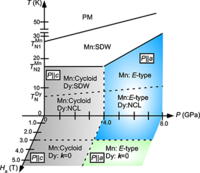
Using unique experimental setups allowing spherical neutron polarimetry (SNP) and unpolarized neutron diffraction at pressure up to 8 GPa, this collaboration of authors from Japan, France, and the UK investigates pressure- and magnetic field induced gigantic ferroelectricity in multiferroic DyMnO3. This work reveals that the exchange striction for rare-earth and Mn bonds is strongly related to the ferroelectric polarization enhancement in DyMnO3. It also proves the feasibility of the SNP experiment under high pressure, which will encourage researchers to investigate pressure-induced magnetic ordering.

Enhancing robustness and efficiency of density matrix embedding theory via semidefinite programming and local correlation potential fitting

Xiaojie Wu, Michael Lindsey, Tiangang Zhou, Yu Tong, and Lin Lin

Phys. Rev. B 102, 085123 (2020) - Published 12 August, 2020

Density matrix embedding theory (DMET) is a powerful method for treating strongly correlated systems. In order to apply DMET to large-scale systems, the correlation potential fitting procedure often becomes a crucial computational bottleneck. This paper proposes the L-DMET method to simultaneously improve the robustness and efficiency of correlation potential fitting, via a semidefinite programming reformulation and a local correlation potential fitting procedure. The performance of L-DMET is demonstrated using the 2D Hubbard model and the hydrogen chain.

Metastable skyrmion lattices governed by magnetic disorder and anisotropy in β-Mn-type chiral magnets

K. Karube, J. S. White, V. Ukleev, C. D. Dewhurst, R. Cubitt, A. Kikkawa, Y. Tokunaga, H. M. Rønnow, Y. Tokura, and Y. Taguchi

Phys. Rev. B 102, 064408 (2020) - Published 11 August, 2020

Co-Zn-Mn alloys with a β-Mn-type chiral structure host magnetic skyrmions - vortexlike topological spin textures - above room temperature. Here, the authors present a perspective view on robust metastable skyrmions and their lattice transformation, based on comprehensive studies of a series of the alloys in question including the Mn-free end member Co10Zn10. The lattice form of the skyrmions dramatically changes with temperature and Mn concentration. This is attributed to the cooperative interplay between magnetocrystalline anisotropy and magnetic disorder due to frustrated Mn spins.

Large classes of quantum scarred Hamiltonians from matrix product states

Sanjay Moudgalya, Edward O'Brien, B. Andrei Bernevig, Paul Fendley, and Nicolas Regnault

Phys. Rev. B 102, 085120 (2020) - Published 11 August, 2020

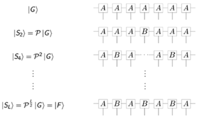
The authors develop a general formalism to systematically construct parent Hamiltonians with quasiparticle excited states starting from a matrix product state (MPS) wave function. The resulting parent Hamiltonians are generically nonintegrable, and the quasiparticle excited states are thus examples of quantum many-body scars of the Hamiltonian. This method is used to recover well-known quantum scarred models, such as the AKLT spin chain, as well as to construct many new families of models, thus illustrating the close connection between parent Hamiltonians of MPS and quantum scarred models.

Einstein–de Haas effect at radio frequencies in and near magnetic equilibrium

K. Mori, M. G. Dunsmore, J. E. Losby, D. M. Jenson, M. Belov, and M. R. Freeman

Phys. Rev. B 102, 054415 (2020) - Published 10 August, 2020

Einstein–de Haas (EdH) experiments, originally for measuring the ratio of magnetic moment to intrinsic angular momentum in magnetic materials, enjoy distinct benefits stemming from miniaturization. EdH torques increase linearly with frequency (while magnetic equilibrium is maintained), such that EdH and cross-product torques are comparable in nanoscale torque studies at radio frequencies. The authors also demonstrate EdH torque phase to be a crucial observable, enabling clean separation of EdH and cross-product contributions and heralding the onset of departures from equilibrium.

Entropy-controlled fully reversible nanostructure formation of Ge on miscut vicinal Si(001) surfaces

Christian Grossauer, Vaclav Holy, and Gunther Springholz

Phys. Rev. B 102, 075420 (2020) - Published 10 August, 2020

In vivo high-temperature scanning tunneling microscopy reveals that entropy effects substantially modify the growth of self-assembled Ge nanostructures on vicinal Si (001) surfaces. Due to the resulting free surface energy renormalization, the resulting 1D nanowire structures can be completely erased and reformed without changes in size and composition. The critical temperature for this transition scales with the Ge thickness and provides a deterministic control of sizes and shapes. Thus, highly reproducible nanostructures with tunable geometries and dimensions are obtained.

Landau level spectroscopy of Bi2Te3

I. Mohelský, A. Dubroka, J. Wyzula, A. Slobodeniuk, G. Martinez, Y. Krupko, B. A. Piot, O. Caha, J. Humlíček, G. Bauer, G. Springholz, and M. Orlita

Phys. Rev. B 102, 085201 (2020) - Published 7 August, 2020

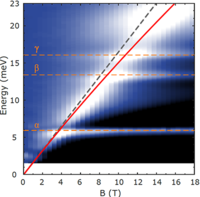
Bismuth telluride is a widely explored material in the condensed matter community and one of the first experimentally identified as a topological insulator. Nevertheless, despite considerable effort, the bulk electronic band structure of Bi2Te3 is known only partially. Here, the authors present a magneto-optical study of Bi2Te3, which provides one with compelling evidence that bismuth telluride is a direct-gap semiconductor, with a multiple valley degeneracy and charge carriers that closely resemble massive Dirac electrons.

Domain switching and exchange bias control by electric field in the multiferroic conical magnet Mn2GeO4

J. K. H. Fischer, H. Ueda, and T. Kimura

Phys. Rev. B 102, 054412 (2020) - Published 5 August, 2020

Ferromagnetism and ferroelectricity are exceptionally strongly coupled in the conical-spiral multiferroic Mn2GeO4. In this work, the authors take advantage of this fact to control the magnetism by electric fields. Applying large positive or negative electric fields (~1.0 MV/m) during the magnetic field sweeping triggers an electrically controllable exchange bias in both the magnetization and polarization hystereses. Intriguingly, switching the polarity of the electric field is also capable of reorienting the polarization and magnetization domains.

Hydrodynamic inverse Faraday effect in a two-dimensional electron liquid

S. O. Potashin, V. Yu. Kachorovskii, and M. S. Shur

Phys. Rev. B 102, 085402 (2020) - Published 5 August, 2020

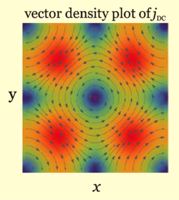
The authors consider optical stationary magnetization of a two-dimensional electron liquid by circularly polarized terahertz waves. The liquid is coupled to radiation via a periodic array of conducting nanospheres forming a resonant plasmonic coupler. The circularly polarized wave excites “twisted” plasmonic oscillations that are rectified due to hydrodynamic nonlinearity. As a result, the entire liquid turns into a vortex state with circulating dc current. The stationary magnetic field induced by this current reaches tens of gauss for a radiation field of the order of 105 V/cm.

Antichiral spin order, its soft modes, and their hybridization with phonons in the topological semimetal Mn3Ge

Y. Chen, J. Gaudet, S. Dasgupta, G. G. Marcus, J. Lin, T. Chen, T. Tomita, M. Ikhlas, Y. Zhao, W. C. Chen, M. B. Stone, O. Tchernyshyov, S. Nakatsuji, and C. Broholm

Phys. Rev. B 102, 054403 (2020) - Published 3 August, 2020

The antichiral spin structure of Mn3Ge and its low-energy excitations are determined using neutron scattering techniques. The authors use a field-theoretical approach in order to derive the relevant spin Hamiltonian, which accounts for the spin order and low-energy excitations in this material. Two magnetoelastic modes were identified, indicating an intimate relationship between strain, magnetism, and transport in Mn3Ge.

Topological superconductivity, ferromagnetism, and valley-polarized phases in moiré systems: Renormalization group analysis for twisted double bilayer graphene

Yi-Ting Hsu, Fengcheng Wu, and S. Das Sarma

Phys. Rev. B 102, 085103 (2020) - Published 3 August, 2020

Recent experiments on twisted double bilayer graphene report evidence of uniform spin and valley orders as well as spin-triplet superconductivity. Here, the authors perform perturbative renormalization group analyses for electrons near Van Hove singularities to investigate competition among all possible instabilities. Importantly, it is crucial to include not only the contribution that is second order in the logarithm, but also the logarithmically divergent contributions, in order to avoid bias towards density waves in weakly nested systems. The authors find rich phase diagrams exhibiting ferromagnetism, valley-polarized phase, and topological superconductivity, which are tunable by experimentally relevant parameters.

Gapless hinge states from adiabatic pumping of axion coupling

Thomas Olsen, Tomáš Rauch, David Vanderbilt, and Ivo Souza

Phys. Rev. B 102, 035166 (2020) - Published 31 July, 2020

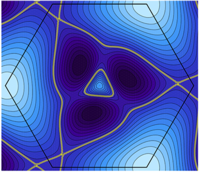
This work studies the general features of electronic states at the boundary of an insulator undergoing a cyclic evolution with a nonzero second Chern number. The figure combines two maps of Fermi surfaces, extended to 3D by including the dependence on the cyclic parameter ϕ, in the surface states of z normal (blue) and y normal (red) facets. The authors find that hinges connecting these facets necessarily carry chiral modes when ϕ lies in the gray region between tangent planes, where the surface facets are insulating.

Entanglement equipartition in critical random spin chains

Xhek Turkeshi, Paola Ruggiero, Vincenzo Alba, and Pasquale Calabrese

Phys. Rev. B 102, 014455 (2020) - Published 30 July, 2020

Quantum many-body systems naturally present intricate entanglement patterns between the extensive number of degrees of freedom. In the presence of symmetry, the entanglement contribution of each symmetry sector gives a powerful lens through which to observe these patterns, both in theory and in experiment. It has been proposed that, in clean systems, an entanglement equipartition generically emerges, meaning that the different sectors contribute equally. This work shows that such equipartition is, not obviously, robust against disorder, at least in the random singlet phase of quantum spin chains. Furthermore, the authors identify the subleading term breaking the equipartition.

Spin selectivity through time-reversal symmetric helical junctions

Yasuhiro Utsumi, Ora Entin-Wohlman, and Amnon Aharony

Phys. Rev. B 102, 035445 (2020) - Published 30 July, 2020

The observation of chiral-induced spin selectivity in biological molecules still awaits a full theoretical explanation. Many theoretical proposals were limited by Bardarson’s theorem, which forbids spin selectivity for single-channel transport between two terminals coupled by a time-reversal symmetric Hamiltonian. This paper offers a new possible explanation: spin selectivity can arise for helical molecules with only the time-reversal symmetric intra-atomic spin-orbit interaction, provided that the helical chain has two orbital states, e.g., the carbon p states.

Magnetic breakdown and charge density wave formation: A quantum oscillation study of the rare-earth tritellurides

P. Walmsley, S. Aeschlimann, J. A. W. Straquadine, P. Giraldo-Gallo, S. C. Riggs, M. K. Chan, R. D. McDonald, and I. R. Fisher

Phys. Rev. B 102, 045150 (2020) - Published 30 July, 2020

The authors explore the RTe3 family of materials as a clean model system in which to study a quantum phase transition between single and double charge density wave states. Quantum oscillation measurements reveal a significant reduction in the area of the Fermi surface across the quantum phase transition, but no obvious divergence of the electronic effective mass. Variation of the magnitude of the charge density wave gap across the rare-earth series leads to a particularly clear example of tunable magnetic breakdown.

Time- and angle-resolved photoemission spectroscopy for the saddle-point excitons in GaAs

Hiroshi Tanimura and Katsumi Tanimura

Phys. Rev. B 102, 045204 (2020) - Published 30 July, 2020

Time- and angle-resolved photoemission spectroscopy reveals the electronic structures and dynamics of saddle-point excitons formed at 2.95 eV above the valence-band maximum in GaAs. The exciton wave function is composed of electron-hole pair states with wave vectors of 0.23±0.04 Å−1 along the G-L line of the Brillouin zone. The excitons decay with a 11-fs lifetime by the autoionization into noncorrelated electron-hole pair states. Thus, the method provides far deeper insight into the nature of excitonic states in semiconductors.

Sign In to Your Journals Account

Filter

Section

Filter

Article Lookup

Enter a citation