Highlights

Magnetoelastic coupling and effects of uniaxial strain in α−RuCl3 from first principles

David A. S. Kaib, Sananda Biswas, Kira Riedl, Stephen M. Winter, and Roser Valentí

Phys. Rev. B 103, L140402 (2021) - Published 8 April, 2021

In Kitaev materials the spin-orbital entangled nature of the magnetic moments suggests an intricate magnetoelastic coupling. For the case of α-RuCl3, the authors investigate this effect via first-principles methods. Exact diagonalization studies on the calculated magnetoelastic model reproduce and explain recent magnetostriction and Grüneisen parameter measurements, validating the magnetoelastic parameters. Their structure predicts that compressive uniaxial strain between the honeycomb planes will strongly strengthen the Kitaev exchange and suppress the antiferromagnetic order.

Magnetotransport in semiconductors and two-dimensional materials from first principles

Dhruv C. Desai, Bahdan Zviazhynski, Jin-Jian Zhou, and Marco Bernardi

Phys. Rev. B 103, L161103 (2021) - Published 7 April, 2021

Studies of transport in magnetic fields are key for research in semiconductors and quantum materials. However, accurately predicting magnetotransport phenomena and the microscopic mechanisms governing them remains challenging. Here, the authors develop an approach to solve numerically the electron Boltzmann equation in a magnetic field using first-principles electron-phonon interactions. The magnetoresistance, Hall coefficient, and Hall factor of various semiconductors and two-dimensional materials are accurately predicted. These advances extend the scope of first-principles studies of transport to include applied magnetic fields.

Magnetic order of Dy3+ and Fe3+ moments in antiferromagnetic DyFeO3 probed by spin Hall magnetoresistance and spin Seebeck effect

G. R. Hoogeboom, T. Kuschel, G. E. W. Bauer, M. V. Mostovoy, A. V. Kimel, and B. J. van Wees

Phys. Rev. B 103, 134406 (2021) - Published 5 April, 2021

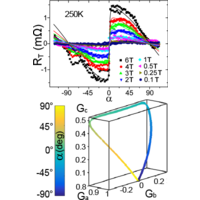
Here, the authors report temperature-dependent spin Hall magnetoresistance (SMR) of Pt on the complex antiferromagnet DyFeO3. The symmetry of the SMR as a function of in-plane magnetic field angle shows a 3D rotation of the Fe3+ Néel vector G, while the paramagnetic Dy3+ affects its magnitude. The SMR monitors the phase transition of Fe3+ spins at and below the Morin temperature of 50 K. Below 23 K, additional features emerge that persist below 4 K, the ordering temperature of the Dy3+ magnetic sublattice.

Direct evidence of ferromagnetism in MnSb2Te4

Wenbo Ge, Paul M. Sass, Jiaqiang Yan, Seng Huat Lee, Zhiqiang Mao, and Weida Wu

Phys. Rev. B 103, 134403 (2021) - Published 2 April, 2021

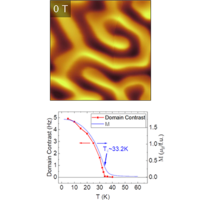
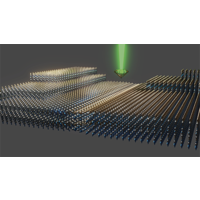
The compound MnSb2Te4 is a close relative of the intrinsic antiferromagnetic topological insulator MnBi2Te4. Density functional theory predicts that a Weyl semimetal phase exists in ferromagnetic MnBi2Te4. Here, the authors fill in gaps in the magnetic imaging of MnSb2Te4 and confirm long-range ferromagnetic order in single crystals of ferromagnetic MnSb2Te4 using cryogenic magnetic force microscopy. The direct evidence of ferromagnetism in MnSb2Te4 paves the way for realizing the ferromagnetic Weyl semimetal phase in the family of Mn(Bi, Sb)2Te4.

Inelastic neutron scattering determination of the spin Hamiltonian for BaCdVO(PO4)2

V. K. Bhartiya, S. Hayashida, K. Yu. Povarov, Z. Yan, Y. Qiu, S. Raymond, and A. Zheludev

Phys. Rev. B 103, 144402 (2021) - Published 1 April, 2021

No material perfectly realizes the frustrated quantum ferro-antiferromagnetic Heisenberg model on a square lattice, but BaCdVO(PO4)2 comes close. Here, the authors perform neutron spectroscopy measurements in high magnetic fields to determine an appropriate spin Hamiltonian for this system. They overcome numerous technical difficulties, such as the required 114Cd enrichment for neutron experiments and the complex sample mosaic. The results will help understand the previously discovered presaturation phase in this compound. Could it be the elusive spin nematic state?

Thermopower across the phase diagram of the cuprate La1.6−xNd0.4SrxCuO4: Signatures of the pseudogap and charge density wave phases

C. Collignon, A. Ataei, A. Gourgout, S. Badoux, M. Lizaire, A. Legros, S. Licciardello, S. Wiedmann, J.-Q. Yan, J.-S. Zhou, Q. Ma, B. D. Gaulin, Nicolas Doiron-Leyraud, and Louis Taillefer

Phys. Rev. B 103, 155102 (2021) - Published 1 April, 2021

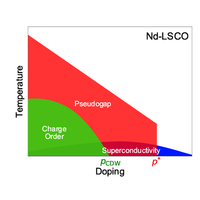
Cuprate high-temperature superconductors universally exhibit a phase of charge order and a mysterious pseudogap phase. Using thermopower measurements, the authors explore here how the cuprate La1.6−xNd0.4SrxCuO4 (Nd-LSCO) evolves across these phases. They find that the thermopower displays a large increase below the pseudogap critical doping point p* and becomes negative in the charge order phase below that critical doping point pCDW. This evolution hints at profound changes in the electronic structure at p* and pCDW. They observe that these two critical dopings are well separated, implying that the two phases are clearly distinct.

Topological anomalous skin effect in Weyl superconductors

Tsz Chun Wu, Hridis K. Pal, and Matthew S. Foster

Phys. Rev. B 103, 104517 (2021) - Published 30 March, 2021

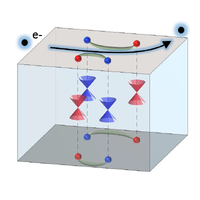
Superconductors absorb light despite having infinite dc conductivity. In a topologically trivial superconductor, such absorption is typically facilitated by disorder, giving rise to the anomalous skin effect. Here, the authors demonstrate that topology can mediate a new mechanism of optical absorption, dubbed the “topological anomalous skin effect”. In clean topological superconductors, the presence of surface states allow surface-to-bulk optical transitions. Specifically, for Weyl superconductors, the authors predict a characteristic absorption peak, which also survives in the presence of weak disorder.

Topological and symmetry-enriched random quantum critical points

Carlos M. Duque, Hong-Ye Hu, Yi-Zhuang You, Vedika Khemani, Ruben Verresen, and Romain Vasseur

Phys. Rev. B 103, L100207 (2021) - Published 30 March, 2021

Topological phases represent a pillar of modern condensed matter physics. While gapped topological systems have been studied extensively, gapless topological materials represent an exciting, largely unexplored area. Here, the authors show that symmetry can enrich random quantum critical points and phases. They uncover a class of gapless topological phases, protected by symmetry and robust to strong randomness. Some of these phases can be realized in nonequilibrium states stabilized by many-body localization. They also appear naturally in periodically driven (Floquet) systems.

Dispersion relation of Landau elementary excitations and thermodynamic properties of superfluid He4

H. Godfrin, K. Beauvois, A. Sultan, E. Krotscheck, J. Dawidowski, B. Fåk, and J. Ollivier

Phys. Rev. B 103, 104516 (2021) - Published 29 March, 2021

Superfluid 4He, a strongly correlated Bose-Einstein condensed many-body system, displays sharp phonon-roton quantized excitations. Here, the authors report a complete determination of the dispersion relation of these excitations, using the most advanced inelastic neutron scattering methods as well as detailed dynamic many-body theory calculations. From the measured dispersion, the authors obtain, analytically as well as numerically, accurate tables of the thermodynamic properties. These highly precise results provide indispensable reference for a large variety of fundamental experimental and theoretical studies.

Statistical mechanics of quantum error correcting codes

Yaodong Li and Matthew P. A. Fisher

Phys. Rev. B 103, 104306 (2021) - Published 24 March, 2021

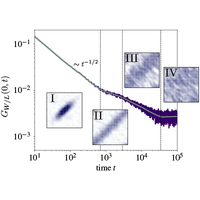
Random quantum dynamics generates quantum error correcting codes that are robust against observers and errors. Here, the authors describe a simple physical picture of such codes, mapping characteristic code properties to the statistical mechanics of fluctuating “entanglement domain walls”. The error correcting criterion is understood as a decoupling condition of domain walls, which leads to a universal scaling law of the “code distance”.

Noncollinear ferromagnetic Weyl semimetal with anisotropic anomalous Hall effect

Hung-Yu Yang, Bahadur Singh, Jonathan Gaudet, Baozhu Lu, Cheng-Yi Huang, Wei-Chi Chiu, Shin-Ming Huang, Baokai Wang, Faranak Bahrami, Bochao Xu, Jacob Franklin, Ilya Sochnikov, David E. Graf, Guangyong Xu, Yang Zhao, Christina M. Hoffman, Hsin Lin, Darius H. Torchinsky, Collin L. Broholm, Arun Bansil, and Fazel Tafti

Phys. Rev. B 103, 115143 (2021) - Published 24 March, 2021

The connection of novel electromagnetic responses to Weyl nodes in topological semimetals is intriguing but difficult to establish in experiments. Here, the authors discover CeAlSi to be a new ferromagnetic Weyl semimetal by combining first-principles calculations with various experimental techniques. These reveal a new loop Hall effect that is induced purely by the proximity of the material’s Fermi level to its Weyl nodes. The loop Hall effect can potentially result from topological Fermi arcs located on magnetic domain walls.

Time-dependent self-consistent harmonic approximation: Anharmonic nuclear quantum dynamics and time correlation functions

Lorenzo Monacelli and Francesco Mauri

Phys. Rev. B 103, 104305 (2021) - Published 23 March, 2021

Simulating nuclear quantum dynamics in strongly anharmonic materials is an open challenge where state-of-the-art techniques fail. This is relevant in ferroelectrics, charge density waves, and crystals encapsulating light atoms, such as superconductive high-pressure hydrides. Here, the authors develop a theory to compute dynamical properties and predict experimental Raman and IR spectroscopy, neutron scattering, and x-ray scattering of any material, accounting for the nuclear quantum and anharmonic dynamics.The method is efficient and can be applied to systems with hundreds of atoms even when treating electrons ab initio within density functional theory.

Emergent fracton dynamics in a nonplanar dimer model

Johannes Feldmeier, Frank Pollmann, and Michael Knap

Phys. Rev. B 103, 094303 (2021) - Published 18 March, 2021

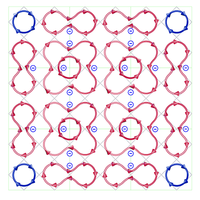
Lattice gauge theories describe strongly interacting quantum many-body systems whose nonequilibrium properties in more than one dimension provide a challenge to current numerical methods. Here, the authors study a dimer model as an example of a U(1) gauge theory whose universal transport properties can be extracted using classically simulable methods. This is achieved by exploiting a surprising connection to topological solitons, enabling a venue of analysis that demonstrates how gauge constraints induce fractonic mobility, slow subdiffusive transport, and nonergodic dynamics.

High magnetic field ultrasound study of spin freezing in La1.88Sr0.12CuO4

M. Frachet, S. Benhabib, I. Vinograd, S.-F. Wu, B. Vignolle, H. Mayaffre, S. Krämer, T. Kurosawa, N. Momono, M. Oda, J. Chang, C. Proust, M.-H. Julien, and D. LeBoeuf

Phys. Rev. B 103, 115133 (2021) - Published 18 March, 2021

Lanthanum-based high-temperature superconductors have long been known for featuring intriguing elastic anomalies, especially close to the notorious p = 0.12 doping. Here, using ultrasound, very high magnetic fields, and nuclear magnetic resonance, the authors show that these anomalies originate from the coupling of the crystal lattice to slow spin fluctuations. Moreover, a symmetry analysis reveals the predominant B1g nematic character of the spin fluctuations, which are reinforced up to unexpectedly high magnetic fields.

Theory of relaxation time of stochastic nanomagnets

Shun Kanai, Keisuke Hayakawa, Hideo Ohno, and Shunsuke Fukami

Phys. Rev. B 103, 094423 (2021) - Published 17 March, 2021

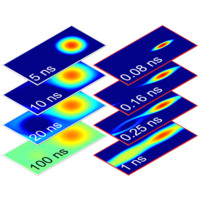
Reducing the relaxation time between binary spin states is crucial to enhance the speed and accuracy of a spintronics-based approach for a probabilistic computer, as envisioned by R.P. Feynman. Contrary to previous perception that the reduction of the energy barrier between the states is the most efficient way, the authors discover here that the relaxation time in in-plane easy-axis nanomagnets is widely controllable by changing the effective perpendicular anisotropy field, even though it has nothing to do with the energy barrier.

Coexistence of Bloch and Néel walls in a collinear antiferromagnet

M. S. Wörnle, P. Welter, M. Giraldo, T. Lottermoser, M. Fiebig, P. Gambardella, and C. L. Degen

Phys. Rev. B 103, 094426 (2021) - Published 17 March, 2021

In an antiferromagnet, domain walls separate regions with different orientations of the order parameter. Except for a few specific systems, little is known about the internal structure of these domain walls. In this study, the authors image the domain wall structure of the archetypical antiferromagnet Cr2O3 by means of novel quantum sensing techniques. The results are intriguing, as the twist angles are not arbitrary, but vary between Bloch and Néel due to a delicate interplay between residual demagnetization and anisotropy energies.

Network model for higher-order topological phases

Hui Liu, Selma Franca, Ali G. Moghaddam, Fabian Hassler, and Ion Cosma Fulga

Phys. Rev. B 103, 115428 (2021) - Published 17 March, 2021

The network model is a powerful tool in the study of localization-delocalization transitions and has been used to describe a variety of topological systems without crystalline symmetry. Here, the authors show that network models can also realize topological phases protected by point-group symmetries. The latter lead to the formation of a higher-order topological phase characterized by midgap modes present at the corners of the system.

Realization of a tunable surface Dirac gap in Sb-doped MnBi2Te4

Xiao-Ming Ma et al.

Phys. Rev. B 103, L121112 (2021) - Published 17 March, 2021

Intrinsic magnetic topological insulators, exemplified by MnBi2Te4, receive considerable research interest, due to the potential quantum anomalous Hall state and axion insulator phase at higher temperatures. Opening up an energy gap at the topological surface state is crucial for the realization of these effects. Here, the authors utilize systematic ARPES data to show that a gapped Dirac cone can be realized in Sb-doped MnBi2Te4. This gap remains immune regardless of the magnetic phase of the bulk system, while it increases monotonically with the density of Sb dopants.

Electronic structure of the metallic oxide ReO3

J. Falke, C. F. Chang, C. E. Liu, D. Takegami, A. Melendez-Sans, C.-S. Chen, L. Zhao, A. C. Komarek, C.-Y. Kuo, C. T. Chen, and L. H. Tjeng

Phys. Rev. B 103, 115125 (2021) - Published 15 March, 2021

ReO3 is a remarkable transition metal oxide in that it has the highest conductivity of all oxides, comparable even with that of silver. Using state of the art bulk-sensitive angle-resolved photoelectron spectroscopy, the authors are able to observe clear dispersions of the Re 5d and O 2p derived bands as well as the momentum splitting of the Fermi surface due to the Re 5d spin-orbit interaction. The experimental results are compared quantitatively to density functional theory band structure calculations, thereby providing a deeper understanding of the material class of the 5d oxides.

Visualizing the Kondo lattice crossover in YbRh2Si2 with Compton scattering

M. Güttler, K. Kummer, K. Kliemt, C. Krellner, S. Seiro, C. Geibel, C. Laubschat, Y. Kubo, Y. Sakurai, D. V. Vyalikh, and A. Koizumi

Phys. Rev. B 103, 115126 (2021) - Published 15 March, 2021

In a Kondo lattice, the Luttinger theorem requires the f electron degree of freedom to enter the Fermi volume in the strong-coupling regime, while the f electron remains nearly localized. A common hypothesis assumes that the Fermi volume shrinks with increasing temperature when the f electron decouples from the Fermi surface with the breakdown of the Kondo lattice effect. However, experimental evidence for this phenomen is still very scarce. Here, the authors demonstrate the reconstruction of the Fermi surface between 14 and 300 K from large to small in the prototypical Kondo lattice YbRh2Si2 by Compton scattering.

Sign In to Your Journals Account

Filter

Section

Filter

Article Lookup

Enter a citation