Highlights

Tilted optical lattices with defects as realizations of PT symmetry in Bose-Einstein condensates

Manuel Kreibich, Jörg Main, Holger Cartarius, and Günter Wunner

Phys. Rev. A 93, 023624 (2016) - Published 16 February, 2016

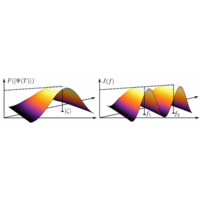
An experimental scheme of realizing PT-symmetric Bose-Einstein condensates is proposed with tilted optical lattices, where the generalization of a previous study allows an arbitrary number of potential wells and reservoir particles for realizing the PT-symmetric system.

Atomic loss and gain as a resource for nonequilibrium phase transitions in optical lattices

B. Everest, M. Marcuzzi, and I. Lesanovsky

Phys. Rev. A 93, 023409 (2016) - Published 9 February, 2016

Directed-percolation-like phase transitions are proposed and analyzed in out-of-equilibrium atomic gases with locally excited Rydberg atoms, which illuminates the emergence of unexpected, soft-matter-like universal behavior in such open quantum systems.

Lifetimes of ultra-long-range strontium Rydberg molecules

F. Camargo, J. D. Whalen, R. Ding, H. R. Sadeghpour, S. Yoshida, J. Burgdörfer, F. B. Dunning, and T. C. Killian

Phys. Rev. A 93, 022702 (2016) - Published 4 February, 2016

The lifetime of ultra-long-range strontium Rydberg molecules is measured in the low-lying vibrational states, where its resemblance to the lifetime of the parent Rydberg atoms demonstrates that a p-wave resonance, which is absent in the present case but prevalent in Rydberg molecules comprised of alkali-metal atoms, plays an important role in determining the lifetime of such molecules.

Supraclassical measurement using single-atom control of an atomic ensemble

Calum MacCormick, Silvia Bergamini, Chris Mansell, Hugo Cable, and Kavan Modi

Phys. Rev. A 93, 023805 (2016) - Published 3 February, 2016

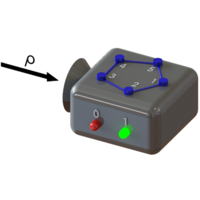
A concrete mixed-state model for quantum metrology is proposed. The scheme can achieve quantum-enhanced precision scaling with the size of the used atomic ensemble.

Precision measurement of the ionization energy of Cs i

Johannes Deiglmayr, Holger Herburger, Heiner Saßmannshausen, Paul Jansen, Hansjürg Schmutz, and Frédéric Merkt

Phys. Rev. A 93, 013424 (2016) - Published 28 January, 2016

Precision measurements of Cs ionization energies are performed at the frontier of atomic and laser science by employing cutting-edge technologies such as ultracold atoms and frequency-comb-based laser calibration, with the value of the first ionization energy now determined with 100 times more accuracy than the best previous measurement.

Closing a quantum feedback loop inside a cryostat: Autonomous state preparation and long-time memory of a superconducting qubit

Christian Kraglund Andersen, Joseph Kerckhoff, Konrad W. Lehnert, Benjamin J. Chapman, and Klaus Mølmer

Phys. Rev. A 93, 012346 (2016) - Published 27 January, 2016

A strategy based on Kerr nonlinearity is devised that allows one to perform many of the  operations of a quantum-information processor at cryogenic temperatures, solving inefficiencies in the two-way communication between quantum and classical hardware. The approach is a promising route for processing information beyond the few-qubit regime on superconducting platforms. 

Maximally entangled set of tripartite qutrit states and pure state separable transformations which are not possible via local operations and classical communication

M. Hebenstreit, C. Spee, and B. Kraus

Phys. Rev. A 93, 012339 (2016) - Published 25 January, 2016

The structure of multipartite quantum states can be very complex. Here the authors analyze a pure entangled 3-qutrit system, and show that a given convertibility property is fulfilled by separable operations (SEP) but not by local operations and classical communications (LOCC), a result that was previously proved to hold true for mixed states only.

Experimental demonstration of kilometer-range quantum digital signatures

Ross J. Donaldson, Robert J. Collins, Klaudia Kleczkowska, Ryan Amiri, Petros Wallden, Vedran Dunjko, John Jeffers, Erika Andersson, and Gerald S. Buller

Phys. Rev. A 93, 012329 (2016) - Published 19 January, 2016

A quantum scheme to guarantee the authenticity and transferability of messages is demonstrated. The optical implementation, built on previous theoretical proposals by some of the authors, is a step forward to the development of practical signature protocols in the field of quantum cryptography.

Quantum optimal control of photoelectron spectra and angular distributions

R. Esteban Goetz, Antonia Karamatskou, Robin Santra, and Christiane P. Koch

Phys. Rev. A 93, 013413 (2016) - Published 14 January, 2016

Krotov’s optimal control method is adapted to studies of multiphoton ionization by strong XUV fields; it is demonstrated that fine-grained control of photoelectron distributions with laser pulse shaping can be achieved systematically by applying the proposed algorithm.

Dressing the chopped-random-basis optimization: A bandwidth-limited access to the trap-free landscape

N. Rach, M. M. Müller, T. Calarco, and S. Montangero

Phys. Rev. A 92, 062343 (2015) - Published 30 December, 2015

The convergence of quantum control strategies can be undermined by the presence of local minima in the optimization landscape. In this work, a bandwidth-limited optimal control algorithm is shown to offer a way to tailor this landscape, thus circumventing the problem.

Polaronic effects in one- and two-band quantum systems

Tao Yin, Daniel Cocks, and Walter Hofstetter

Phys. Rev. A 92, 063635 (2015) - Published 29 December, 2015

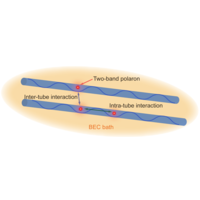
Two-band polaronic physics is modeled and studied for a system with lattice-confined impurity atoms immersed in a Bose-Einstein condensate, where detailed analyses including interactions between impurities and finite temperature effects start providing insights into relevant ultracold experiments with multiple bands.

Quantum theory allows for absolute maximal contextuality

Barbara Amaral, Marcelo Terra Cunha, and Adán Cabello

Phys. Rev. A 92, 062125 (2015) - Published 16 December, 2015

Contextuality is believed to be a fundamental property of quantum theory. On investigating how large it can be, instances are shown wherein quantum theory achieves the maximum conceivable value of a certain contextuality quantifier.

Underlying conservation and stability laws in nonlinear propagation of axicon-generated Bessel beams

Miguel A. Porras, Carlos Ruiz-Jiménez, and Juan Carlos Losada

Phys. Rev. A 92, 063826 (2015) - Published 15 December, 2015

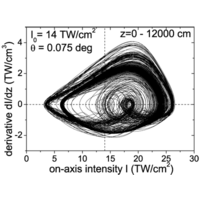
The propagation dynamics of Bessel beams, nondiffracting light beams that play an important role in the creation of plasma channels, is unraveled. This study shows a unifying picture in which different dynamical regimes are explained by the properties of an attractor.

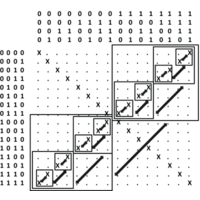
Solving strongly correlated electron models on a quantum computer

Dave Wecker, Matthew B. Hastings, Nathan Wiebe, Bryan K. Clark, Chetan Nayak, and Matthias Troyer

Phys. Rev. A 92, 062318 (2015) - Published 10 December, 2015

Researchers propose a step-by-step quantum recipe to find the ground state of models of strongly interacting electrons.

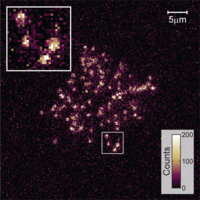
Imaging and addressing of individual fermionic atoms in an optical lattice

G. J. A. Edge, R. Anderson, D. Jervis, D. C. McKay, R. Day, S. Trotzky, and J. H. Thywissen

Phys. Rev. A 92, 063406 (2015) - Published 8 December, 2015

High-resolution in situ imaging and manipulation of ultracold fermionic atoms in optical lattices are achieved experimentally for 40K with single-atom sensitivity. The tomographic imaging technique provides a promising tool to explore the physics of intriguing quantum many-body quantum phenomena in fermionic systems, such as unconventional superfluidity, transport and nonequilibrium dynamics, and the formation of magnetic domains.

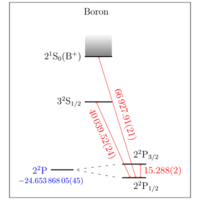
Explicitly correlated wave function for a boron atom

Mariusz Puchalski, Jacek Komasa, and Krzysztof Pachucki

Phys. Rev. A 92, 062501 (2015) - Published 4 December, 2015

Relativistically corrected energies and other atomic properties are calculated for B and B+ to very high precision by employing the explicitly correlated Gaussian basis, where the orders-of-magnitude improvement in the accuracy paves the way for unveiling more of the nuclear structural information.

Quantum metrology: Heisenberg limit with bound entanglement

Ł. Czekaj, A. Przysiężna, M. Horodecki, and P. Horodecki

Phys. Rev. A 92, 062303 (2015) - Published 1 December, 2015

Which general properties of entangled quantum states are relevant for quantum metrology? As well as showing that enhanced accuracy is not fundamentally related to nonlocality and distillability, the authors are able to demonstrate that tools from quantum metrology may serve as a powerful witness of entanglement.

Experimental quantum key distribution with simulated ground-to-satellite photon losses and processing limitations

Jean-Philippe Bourgoin, Nikolay Gigov, Brendon L. Higgins, Zhizhong Yan, Evan Meyer-Scott, Amir K. Khandani, Norbert Lütkenhaus, and Thomas Jennewein

Phys. Rev. A 92, 052339 (2015) - Published 30 November, 2015

Significant challenges for secure data transmission at a global scale are addressed in an experiment that emulates quantum cryptography over satellite links. Feasible key-exchange rates are quantified in a realistic implementation which includes all steps of a decoy-based protocol.

PT-symmetric currents of a Bose-Einstein condensate in a triple well

Daniel Haag, Dennis Dast, Holger Cartarius, and Günter Wunner

Phys. Rev. A 92, 053627 (2015) - Published 25 November, 2015

Conditions for stationary currents in a PT-symmetric, non-Hermitian system are studied in the presence of degeneracy, where it is found that the general absence of such currents can be reverted by having a nonlinear interaction in systems such as Bose-Einstein condensates.

Phase diagram of the three-dimensional Anderson model for short-range speckle potentials

M. Pasek, Z. Zhao, D. Delande, and G. Orso

Phys. Rev. A 92, 053618 (2015) - Published 18 November, 2015

A discrepancy between existing theories and essentially exact numerical results on the asymmetry of the mobility edge for Anderson localization is now resolved, where an improved single-particle Green’s function — a crucial component that could be used in existing theories for other relevant studies — is found to bridge the gap.

Sign In to Your Journals Account

Filter

Section

Filter

Article Lookup

Enter a citation