Highlights

Breakdown of atomic hyperfine coupling in a deep optical-dipole trap

Andreas Neuzner, Matthias Körber, Stephan Dürr, Gerhard Rempe, and Stephan Ritter

Phys. Rev. A 92, 053842 (2015) - Published 18 November, 2015

A breakdown of the hyperfine coupling in a deep optical-dipole trap is observed for single 87Rb atoms, an effect which has implications for future experiments with atomic clocks, in quantum information processing, and quantum many-body physics.

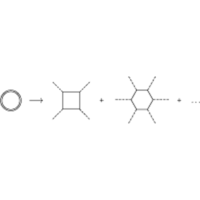
Multiphoton-scattering theory and generalized master equations

Tao Shi, Darrick E. Chang, and J. Ignacio Cirac

Phys. Rev. A 92, 053834 (2015) - Published 16 November, 2015

The analysis of photon scattering is a major challenge in the multiphoton regime. A framework based on a path-integral formalism provides a route to explore such dynamics, helping to investigate the quantum statistics of photons interacting with complex structures.

Photon-momentum transfer in multiphoton ionization and in time-resolved holography with photoelectrons

Szczepan Chelkowski, André D. Bandrauk, and Paul B. Corkum

Phys. Rev. A 92, 051401(R) (2015) - Published 11 November, 2015

Counterintuitive momentum transfers from photons to an electron are found in atomic ionization by intense infrared laser pulses, where the indicated breakdown of the widely used dipole approximation calls for future improvement of molecular imaging and other techniques that depend on analysis of ionization signals.

High-precision measurements of the Rb87 D-line tune-out wavelength

R. H. Leonard, A. J. Fallon, C. A. Sackett, and M. S. Safronova

Phys. Rev. A 92, 052501 (2015) - Published 2 November, 2015

An atom interferometry experiment using a Bose-Einstein condensate reveals information about atomic dipole matrix elements with very high precision. The result provides a challenge for atomic theory calculations, and might lead to improvements in many applications involving optical manipulations.

Modeling magneto-optical trapping of CaF molecules

M. R. Tarbutt and T. C. Steimle

Phys. Rev. A 92, 053401 (2015) - Published 2 November, 2015

A mechanism of magneto-optical trapping is revealed when the polarizations and detunings of the two components of a trapping laser are specially chosen, which provides a convenient means to capture and trap cold CaF or some other molecules that can be used in precise measurements to tackle many fundamental physics questions.

Measurement of the van der Waals interaction by atom trajectory imaging

N. Thaicharoen, A. Schwarzkopf, and G. Raithel

Phys. Rev. A 92, 040701(R) (2015) - Published 19 October, 2015

A sophisticated, high-resolution detection method is used to measure the position changes of cold Rb Rydberg atoms and thereby the strength of the repulsive van der Waals interaction between them; the measurements imply that these atoms interact as individual entities rather than as “superatoms” that share the same Rydberg excitation.

Atom-based coherent quantum-noise cancellation in optomechanics

F. Bariani, H. Seok, S. Singh, M. Vengalattore, and P. Meystre

Phys. Rev. A 92, 043817 (2015) - Published 14 October, 2015

A design of a quantum force sensor is proposed to achieve coherent quantum noise cancellation (CQNC) by optically coupling a mesoscopic mechanical resonator to an ensemble of ultracold atoms, which has the specific advantage of allowing easy experimental realization of CQNC to reduce quantum noises below the standard quantum limit.

Conversion of recoilless γ radiation into a periodic sequence of short intense pulses in a set of several sequentially placed resonant absorbers

Y. V. Radeonychev, V. A. Antonov, F. G. Vagizov, R. N. Shakhmuratov, and Olga Kocharovskaya

Phys. Rev. A 92, 043808 (2015) - Published 8 October, 2015

An extension to a powerful technique for generating a sequence of short γ-ray pulses is proposed, where a set of several sequentially placed absorbers modulate the amplitudes and initial phases of the spectral components in the γ ray with the resonant interaction between the light and the Doppler-shifted nuclear transitions.

Polarization measurement of dielectronic recombination transitions in highly charged krypton ions

Chintan Shah, Holger Jörg, Sven Bernitt, Stepan Dobrodey, René Steinbrügge, Christian Beilmann, Pedro Amaro, Zhimin Hu, Sebastian Weber, Stephan Fritzsche, Andrey Surzhykov, José R. Crespo López-Urrutia, and Stanislav Tashenov

Phys. Rev. A 92, 042702 (2015) - Published 7 October, 2015

The linear polarization of x rays generated during a dielectronic recombination — an electron recombines with an ion and simultaneously excites a bound electron — is measured in good agreement with theoretical predictions, leading to a refined technique to diagnose the electron currents and magnetic fields in both high-temperature astrophysical and laboratory plasmas.

Many-body localization and thermalization in disordered Hubbard chains

Rubem Mondaini and Marcos Rigol

Phys. Rev. A 92, 041601(R) (2015) - Published 6 October, 2015

Ergodicity, an essential property of a dynamical system for thermalization to occur, is found to be remarkably robust against disorder, which ultimately leads to many-body localization, and this robustness is predicted to be more significant in real-life-scale systems than in ultracold lattice experiments due to their limited size.

Demonstration of open-quantum-system optimal control in dynamic nuclear polarization

S. Sheldon and D. G. Cory

Phys. Rev. A 92, 042102 (2015) - Published 6 October, 2015

Optimal control theory is applied in the modern open-quantum-system framework to design systematically a sequence of microwave pulses that optimize the dynamic nuclear polarization, gaining an order-of-magnitude improvement in enhancing the nuclear polarization and consequently increasing the signal-to-noise ratio dramatically in the widely used technique of nuclear magnetic resonance (NMR) for detecting and/or imaging microstructures and biotissue.

Degenerate Bose-Fermi mixtures of rubidium and ytterbium

V. D. Vaidya, J. Tiamsuphat, S. L. Rolston, and J. V. Porto

Phys. Rev. A 92, 043604 (2015) - Published 5 October, 2015

An admixture of 87Rb and 171Yb atoms is prepared and cooled down to quantum degeneracy in a hybrid optical dipole trap independently tunable for both atomic species, which makes experimentalists ready to explore intriguing quantum phenomena such as the behavior of polarons on a lattice with alkali-metal–alkaline-earth-metal mixtures.

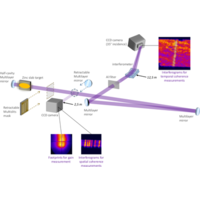
Measurement of a subpicosecond coherence time in a quasi-steady-state XUV laser

Andréa Le Marec, Limin Meng, Annie Klisnick, Michaela Kozlova, Jaroslav Nejdl, Fabien Tissandier, Olivier Guilbaud, and Annette Calisti

Phys. Rev. A 92, 033852 (2015) - Published 28 September, 2015

A plasma-based extreme ultraviolet (XUV) laser is experimentally characterized to have a record-short coherence time of ~500 femtoseconds, which paves the way to amplify weak high-harmonic-generation (HHG) radiation sources without losing their ultrashort, femtosecond characteristics.

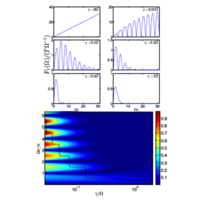
Quantum Zeno effect in parameter estimation

Alexander Holm Kiilerich and Klaus Mølmer

Phys. Rev. A 92, 032124 (2015) - Published 21 September, 2015

An analysis of the Fisher information is performed in the estimation of the Rabi frequency of a two-level system under frequent measurements, and it is found that the quantum Zeno paradox — a quantum phenomenon where the evolution of a quantum system can be frozen by constant measurements — installs a limit on the ultimate precision we could obtain from measurements.

Reservoir interactions during Bose-Einstein condensation: Modified critical scaling in the Kibble-Zurek mechanism of defect formation

R. G. McDonald and A. S. Bradley

Phys. Rev. A 92, 033616 (2015) - Published 18 September, 2015

Defect formation in Bose-Einstein condensation is studied numerically by solving the stochastic projected Gross-Pitaevskii equation, where a departure from the known universality classes for this second-order phase transition emerges in the presence of energy-damping reservoir interactions.

Vacuum high-harmonic generation in the shock regime

P. Böhl, B. King, and H. Ruhl

Phys. Rev. A 92, 032115 (2015) - Published 11 September, 2015

The response of a vacuum to a probe light in the presence of a strong electromagnetic field is studied by including the effect of virtual-electron-positron-pair creation, where numerical simulations suggest that shock waves can arise from vacuum high-harmonic generation — a process that is potentially important in studies of x-ray pulsars and highly magnetized neutron stars.

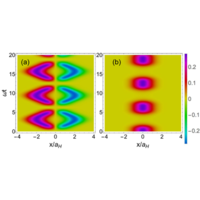
Demagnetization dynamics of noninteracting trapped fermions

Andrew P. Koller, Joshua Mundinger, Michael L. Wall, and Ana Maria Rey

Phys. Rev. A 92, 033608 (2015) - Published 10 September, 2015

Motional effects on the demagnetization of trapped, noninteracting fermions are investigated, with dephasing time scales found to be faster than those observed in ultracold experiments for interacting cases; counterintuitively, spin-echo pulses — a technique widely used to regain magnetization — are found here to instead deteriorate the situation.

Lattice topology and spontaneous parametric down-conversion in quadratic nonlinear waveguide arrays

Daniel Leykam, Alexander S. Solntsev, Andrey A. Sukhorukov, and Anton S. Desyatnikov

Phys. Rev. A 92, 033815 (2015) - Published 10 September, 2015

Control on biphoton correlations is explored with different lattice topologies of 1D quadratic nonlinear waveguide arrays, where topology-associated selection rules for generating biphotons, which could potentially facilitate designs of integrated optical devices for quantum cryptography and information processing, are discovered.

Using laser-induced Coulomb explosion of aligned chiral molecules to determine their absolute configuration

Lauge Christensen, Jens H. Nielsen, Craig S. Slater, Alexandra Lauer, Mark Brouard, and Henrik Stapelfeldt

Phys. Rev. A 92, 033411 (2015) - Published 9 September, 2015

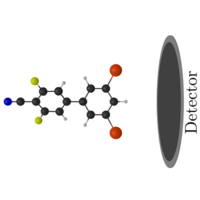
Large chiral molecules are aligned and subsequently “imaged” after Coulomb explosions by intense, femtosecond laser pulses, unveiling their chirality, which is usually difficult to detect but often leads to quite different chemical properties of the molecules.

Simple conditions constraining the set of quantum correlations

Julio I. de Vicente

Phys. Rev. A 92, 032103 (2015) - Published 4 September, 2015

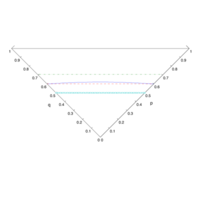
Simple, analytical conditions for constraining the set of bipartite correlations allowed by quantum mechanics are proposed and exemplified, with applications in building Bell inequalities that can test violations of local reality in quantum-mechanical systems.

Sign In to Your Journals Account

Filter

Section

Filter

Article Lookup

Enter a citation