Highlights

Distributions of noisy expectation values over sets of measurement operators

Matthew Duschenes, Roger G. Melko, Juan Carrasquilla, and Raymond Laflamme

Phys. Rev. A 114, 022434 (2026) - Published 17 August, 2026

The authors extend analytical derivations for expectation value distributions to random mixed quantum states and general measurement operator sets, using a combinatorics framework to calculate their moments. Using simulated noisy brickwork circuits, they introduce an effective global depolarizing model that accounts for empirical peak behaviors and reveal that non-symmetric measurement sets yield distinct multimodal distributions.

Optimal absorption and emission of itinerant fields into a spin-ensemble memory

Linda Greggio, Tristan Lorriaux, Alexandru Petrescu, Mazyar Mirrahimi, and Audrey Bienfait

Phys. Rev. A 114, 022615 (2026) - Published 14 August, 2026

The authors calculate quantum memory efficiency in a cavity-coupled ensemble of spins by examining absorption and emission efficiency. Based on this they design a method for storage and retrieval that involves modulating the coupling strength between the cavity and the ensemble.

Theory of the collective many-body subradiance in waveguide QED

Xin Wang, Junjun He, and Zeyang Liao

Phys. Rev. A 114, 023711 (2026) - Published 12 August, 2026

The authors develop an analytical theory for the complex subradiant eigenvalues of a finite one-dimensional emitter array coupled to an ideal or nonideal waveguide. They demonstrate that while Bragg-edge destructive interference drives an N−3 linewidth scaling with deep-subwavelength parity oscillations, near-field dipole-dipole interactions dominate the collective energy shift, which exhibits a distinct N−2 finite-size correction.

Soliton turbulence of a strongly driven one-dimensional Bose gas

Manon Ballu, Romain Dubessy, Aurélien Perrin, Hélène Perrin, and Anna Minguzzi

Phys. Rev. A 114, 023310 (2026) - Published 10 August, 2026

The authors investigate the out-of-equilibrium dynamics of a periodically driven one-dimensional Bose gas in a box trap, demonstrating a transition from a dilute soliton gas to a regime of soliton turbulence with strongly intertwined defects as the drive strength increases. Using an inverse scattering transform analysis, they identify distinct power-law decays in the momentum distribution that characterize each regime and discuss their feasibility for experimental observation.

Robust device-independent characterization of sharpness and incompatibility of unsharp instruments

Qian Zhang, Kai-Yu Yuan, Yan-Xin Rong, Zhen Shang, Yong-Jian Gu, and Ya Xiao

Phys. Rev. A 114, 022411 (2026) - Published 6 August, 2026

The authors present a device-independent protocol for characterizing unsharp quantum instruments using an entanglement‑assisted code with restricted classical communication between two parties. They experimentally demonstrate the predicted enhancement in decoding probability by implementing tunable unsharp measurements with a Mach-Zehnder interferometer.

Estimating the performance boundary of Gottesman-Kitaev-Preskill codes and number-phase codes

Kai-Xuan Wen, Dong-Long Hu, Shengyong Li, and Ze-Liang Xiang

Phys. Rev. A 114, 012450 (2026) - Published 21 July, 2026

Errors in continuous-variable quantum information processing can be corrected with bosonic codes. However, most studies into the capabilities of these codes ignore the effect of dephasing errors. Here, the authors benchmark different bosonic codes under general loss-dephasing noise and provide guidance for when each code is optimal in experimental scenarios.

Efficient three-dimensional sub-Doppler cooling of Ca+40 in a Penning trap

Brian J. McMahon and Brian C. Sawyer

Phys. Rev. A 114, 013119 (2026) - Published 20 July, 2026

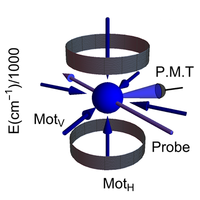
The authors demonstrate three-dimensional sub-Doppler cooling of a single 40Ca+ ion confined within a compact Penning trap by exploiting a two-photon dark resonance. By incorporating a parametric drive to the trap electrodes that coherently exchanges motional occupations between the axial and radial modes, they achieve sub-Doppler cooling across all degrees of freedom using only axially propagating laser beams.

Low-frequency electric field sensing with a Rydberg beam

Jeremy Glick, John R. Dickson, Josie Wood, and Paul Kunz

Phys. Rev. A 114, 012608 (2026) - Published 7 July, 2026

The authors perform low-frequency electric field sensing using ionization detection on a collimated beam of Rydberg atoms. This reduces challenges associated with electric field screening effects present in warm vapor cells containing alkali-metal atoms.

Photoelectron spectroscopy of 3s3p doubly excited helium dressed with strong near-infrared laser fields

Mizuho Fushitani, Chien-Nan Liu, Yuki Ono, Shunsuke Amaike, Wataru Yamazaki, Keiko Kato, Akitaka Matsuda, Shigeki Owada, Makina Yabashi, Yasumasa Hikosaka, Toru Morishita, and Akiyoshi Hishikawa

Phys. Rev. A 114, 013105 (2026) - Published 7 July, 2026

The authors present a combined experimental and theoretical study of short-lived, laser-dressed doubly excited resonances in helium near the N=3 ionization threshold. The results establish a quantitative approach by channel-resolved photoelectron spectroscopy to characterize and control correlated two-electron resonances in strong laser fields.

Exponentially accelerated relaxation and quantum Mpemba effect in open quantum systems

Emerson Lima Caldas and Diego Paiva Pires

Phys. Rev. A 114, 012418 (2026) - Published 6 July, 2026

The Mpemba effect happens when a system initially further from equilibrium relaxes faster than a system closer to equilibrium. The authors study the relaxation of systems whose effective dynamics are described by Davies maps, providing a framework to engineer the quantum Mpemba effect in Markovian open quantum systems.

Subradiant collective states for precision sensing via transmission spectra

Diego Zafra-Bono, Oriol Rubies-Bigorda, and Susanne F. Yelin

Phys. Rev. A 114, 013704 (2026) - Published 6 July, 2026

The authors propose a quantum metrology framework that harnesses the narrow linewidths of subradiant collective states in subwavelength emitter arrays. By introducing spatially varying control detunings to couple dark and bright modes, they show that the resulting sharp features in the transmission spectrum enable the precise detection of both global and local perturbations under realistic experimental imperfections.

Quantitative and optimal device-independent lower bounds on detection efficiency

Arkaprabha Ghosal, Soumyadip Patra, and Peter Bierhorst

Phys. Rev. A 114, 012404 (2026) - Published 1 July, 2026

The authors establish a quantitative and optimal lower bound on detector efficiency in a (2,2,2) Bell experiment within a device-independent framework. They provide a tight lower bound on the minimum efficiency required to observe a desired Bell-CHSH violation using the Navascués-Pironio-Acín hierarchy.

Efficient local discrimination of minimal nonlocal sets in multipartite systems using entanglement resources

Ting-Ting Xu, Tian-Qing Cao, and Qiao-Ling Xin

Phys. Rev. A 113, 062465 (2026) - Published 26 June, 2026

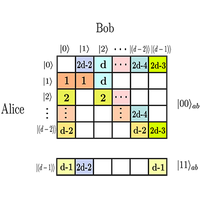
The authors propose entanglement-assisted discrimination protocols for sets of multipartite minimal nonlocal orthogonal product states. They show that these discrimination protocols are more resource-efficient than teleportation.

Geometric representation of higher-order optical modes

Claire Cisowski

Phys. Rev. A 113, 063530 (2026) - Published 26 June, 2026

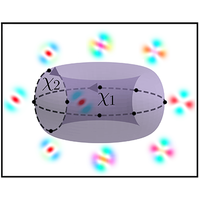
The author presents an octant geometric framework that maps higher-order, three-state optical modes onto the positive surface of a sphere spanned by a torus. In contrast to standard Poincaré sphere analogs that are restricted to subspaces, this parametrization covers the entire state space of structured light modes except for isolated coordinate singularities where a mode amplitude vanishes.

Enhanced performance of sudden-quench quantum Otto cycles via multiparameter control

R. S. Watson and K. V. Kheruntsyan

Phys. Rev. A 113, 063319 (2026) - Published 18 June, 2026

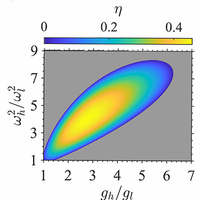
The authors present a theoretical framework to investigate quantum thermodynamic Otto cycles operating under the simultaneous sudden quench of multiple externally tunable control parameters. Applying this formalism to both a harmonically trapped one-dimensional Bose gas and the transverse-field Ising model, they demonstrate that multiparameter control yields a significant cooperative enhancement to net work and efficiency, dramatically outperforming the combined output of individual single-parameter cycles.

Dual-state control of lasing and absorption via conjugate exceptional points

Arnab Laha, Somnath Ghosh, Adam Miranowicz, and Lin Wu

Phys. Rev. A 113, 063521 (2026) - Published 18 June, 2026

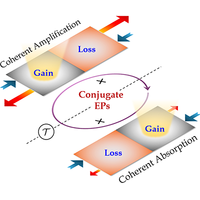
The authors demonstrate a unified scattering framework for coordinated control of lasing and absorption based on a gain-loss-engineered Fabry–Pérot microcavity supporting a pair of conjugate exceptional points. Through tailored state switching enabled by non-Hermitian topology, the system exhibits a frequency-matched dual-state coexistence of amplification and absorption, opening new opportunities for multifunctional photonic devices.

High-resolution spectroscopy of Dy162 Rydberg levels

G. Ferioli, P. Lombardi, P. Sekhar, E. Solé Cardona, N. Preti, C. Drevon, N. Antolini, L. Tanzi, G. Modugno, C. Gabbanini, F. Robicheaux, and A. Fioretti

Phys. Rev. A 113, 062807 (2026) - Published 15 June, 2026

The authors report on the high-resolution spectroscopy of over 700 Rydberg states in 162Dy using two-color trap depletion spectroscopy in a magneto-optical trap. They apply a multichannel quantum defect theory approach to benchmark and refine the assignments and to characterize six observed perturbing states belonging to higher ionization limits.

Probe of generic quantum contextuality and nonlocality resources for qubits

Wei Li, Min-Xuan Zhou, Yun-Hao Shi, Z. D. Wang, Heng Fan, and Yan-Kui Bai

Phys. Rev. A 113, L060405 (2026) - Published 8 June, 2026

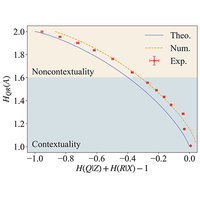
The authors prove that the entropic uncertainty relation with a quantum memory intrinsically connects local preparation contextuality with bipartite entanglement or Bell-CHSH nonlocality, which is captured by two quantitative trade-off relations via a faithful criterion for the contextuality detection. They further verify the theoretical results on solid-state superconducting systems through two independent demonstrations on the Quafu quantum cloud platform.

Probing time-reversal-symmetry breaking using a nonlinear superconducting ring resonator

Nicolas Dirnegger, Marie Wesson, Arpit Arora, Ioannis Petrides, Jonathan B. Curtis, Emily M. Been, Amir Yacoby, and Prineha Narang

Phys. Rev. A 113, 062402 (2026) - Published 1 June, 2026

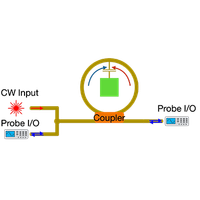
The authors suggest a way to detect time-reversal-symmetry breaking using a driven-dissipative superconducting ring resonator. In particular, nonlinear interactions can enforce symmetric steady-state photon populations, which become asymmetric when even weak symmetry breaking is present, allowing for a sensitive probe of time-reversal-symmetry-breaking effects in quantum materials and providing an interesting use case for superconducting microwave resonators outside of quantum information processing.

Fractal structure of multipartite entanglement in monitored quantum circuits

Vaibhav Sharma and Erich J. Mueller

Phys. Rev. A 113, L060402 (2026) - Published 1 June, 2026

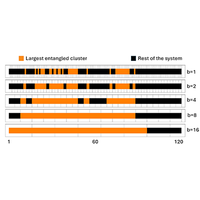
The authors show that quantum entanglement can organize into fractal geometric patterns due to repeated random measurements. They mapped the geometry of clusters of entangled qubits, finding that the largest cluster is riddled with holes at different scales, like the irregular self-repeating structure of coastlines or snowflakes.

Sign In to Your Journals Account

Filter

Section

Filter

Article Lookup

Enter a citation