Highlights

Confinement-induced resonances for the creation of quasi-one-dimensional ultracold gases of alkali–alkaline-earth dimers

Lorenzo Oghittu, Premjith Thekkeppatt, Nirav P. Mehta, Seth T. Rittenhouse, Klaasjan van Druten, Florian Schreck, and Arghavan Safavi-Naini

Phys. Rev. A 112, 043313 (2025) - Published 14 October, 2025

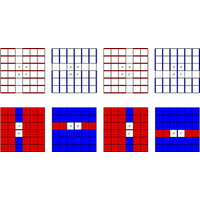
The authors investigate the role of confinement-induced resonances in low-dimensional ultracold atomic mixtures for the formation of weakly bound dimers. They identify viable pathways for creating RbSr molecules, which could open the door to producing other molecules made up of alkali- and alkaline-earth-metal atoms.

Echoes in a parametrically perturbed Kerr-nonlinear oscillator

Yun-Wen Mao, Ilia Tutunnikov, Roman V. Krems, and Ilya Sh. Averbukh

Phys. Rev. A 112, L040601 (2025) - Published 8 October, 2025

Parametric perturbations of a Kerr oscillator are shown to induce persistent classical and quantum echoes in the dynamics of both coherent states and Schrödinger cat states. Quantum echoes are highly sensitive to the parameters of the cat states and can be recovered even when dissipation suppresses quantum revivals.

Two-photon resonance fluorescence in a three-level ladder-type atom

Jacob Ngaha, Scott Parkins, and Howard J. Carmichael

Phys. Rev. A 112, 043701 (2025) - Published 2 October, 2025

Two-photon transitions in ladder systems have been well-studied for decades, but the field is experiencing a resurgence due to interest in quantum dots and artificial atoms. Here, the authors study the experimentally relevant case of atoms with a three-level ladder structure driven by a coherent field close to two-photon resonance.

Quantum trajectory method for highly excited environments in non-Markovian open quantum dynamics

Kai Müller and Walter T. Strunz

Phys. Rev. A 112, 033719 (2025) - Published 19 September, 2025

In this manuscript, along with its PRL counterpart, the authors describe a method for quantum trajectory simulations of non-Markovian open quantum systems. They show how the efficiency can be increased with a simple transformation that renders the evolution near unitary. They demonstrate the method using an example problem, the decay of emitters in a cavity, and show that they can achieve exact numerical solutions for system sizes an order of magnitude larger than what was previously possible.

Bounding the sample fluctuation for pure-state certification with local random measurement

Langxuan Chen and Pengfei Zhang

Phys. Rev. A 112, 032217 (2025) - Published 18 September, 2025

The authors derive lower bounds on sample complexity for quantum state certification, related to the size of measurement operators. These bounds assess protocol efficiency and show that local Haar measurement protocols cannot be efficient for all states.

Precision spectroscopy of the fine structure in the a3Σu+(ν=0) and c3Σg+(ν=4) states of the helium dimer

V. Wirth, M. Holdener, and F. Merkt

Phys. Rev. A 112, 032807 (2025) - Published 15 September, 2025

The authors present frequency-comb-referenced spectra of the c-a system in He2 with full resolution of the rotational, spin-spin, and spin-rotational fine structure. Combining the new data with earlier measurements, they determine transition frequencies, term values, and spectroscopic constants of the constituent states with greatly improved precision, providing benchmark data for comparisons with high-level ab initio theory.

Robust strong-field theory model for ultrafast electron transport through metal-insulator-metal tunneling nanojunctions

Boyang Ma and Michael Krüger

Phys. Rev. A 112, 033104 (2025) - Published 11 September, 2025

The authors establish a strong-field theory for ultrafast electron transport in ultrathin metal-insulator-metal nanojunctions, accounting for the image potential inside the gap and boundary effects. They find that the Keldysh parameter alone is insufficient for describing the physics in these systems, introduce an additional parameter that accounts for the effects of the limited size of the junction, and provide several interpretations of the parameter that shed new light on the complex physics in the light-driven junction.

Orbital distortion and parabolic channel effects transforming minima in molecular ionization probabilities into maxima

Imam S. Wahyutama, Denawakage D. Jayasinghe, François Mauger, Kenneth Lopata, and Kenneth J. Schafer

Phys. Rev. A 112, 033103 (2025) - Published 10 September, 2025

The fact that the shape of orientation-dependent molecular ionization rate curves can deviate from the shape of the ionized orbital at higher field strengths is often attributed to the increasing contribution of excited states in the process. In this work, the authors uncover a different mechanism, and show that orbital distortion and parabolic channel effects, which are independent of excited-state effects, can significantly modify the angular dependence of ionization yields as well.

Towards trapping of hydrogen atoms for computable optical clock applications

O. Amit, D. Taray, V. Wirthl, V. Weis, M. W. Syed, A. Ozawa, J. Weitenberg, S. G. Karshenboim, J. T. M. Walraven, L. Maisenbacher, R. Pohl, Z. Burkley, F. Schmid, T. W. Hänsch, D. C. Yost, and Th. Udem

Phys. Rev. A 112, 033101 (2025) - Published 2 September, 2025

The authors propose a method for trapping atomic hydrogen in a magic-wavelength dipole trap using a combination of magnetic deceleration, velocity-selective deflection, and photon-recoil-assisted loading. The proposal could potentially lead to the development of a hydrogen optical atomic clock, the transition frequency of which can be linked to fundamental constants.

Observation of self-oscillating supersonic flow across an acoustic horizon in two dimensions

Hikaru Tamura, Sergei Khlebnikov, Cheng-An Chen, and Chen-Lung Hung

Phys. Rev. A 112, L031301 (2025) - Published 2 September, 2025

The authors create a spatially bounded supersonic region in a two-dimensional atomic superfluid, forming an acoustic analogue of a black-hole horizon. The observed superflow appears to be modulated by quasi-periodic bursts of superluminal signals. By measuring their frequencies, the authors find agreement with numerical simulations of soliton oscillation frequencies within the black-hole horizon, where solitons are emitted due to the Landau instability.

Dynamical logical qubits in the Bacon-Shor code

M. Sohaib Alam and Eleanor Rieffel

Phys. Rev. A 112, 022436 (2025) - Published 29 August, 2025

Floquet error-correcting codes usually involve non-trivial geometries and encode a small number of logical qubits, but here the authors introduce a Floquet code construction based on the simple Bacon-Shor code, defined on a square lattice, encoding many more logical qubits than previously thought. This opens a new door for dynamical code design.

Local information flow in quantum quench dynamics

Nicolas P. Bauer, Björn Trauzettel, Thomas Klein Kvorning, Jens H. Bardarson, and Claudia Artiaco

Phys. Rev. A 112, 022221 (2025) - Published 27 August, 2025

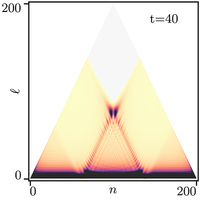
The “information lattice” framework provides a scale- and space-resolved decomposition of quantum correlations in a state, enabling a hydrodynamic description of information flow. Using this approach, the authors reveal how quantum information spreads in quenched one-dimensional fermionic systems, uncovering signatures such as information interfaces and transport from topological edge modes.

Valence (S1) and nonvalence (dipole-bound) spectroscopy of chromophore models of the photoactive yellow protein probed by cryogenic action spectroscopy

L. H. Andersen, A. P. Rasmussen, H. B. Pedersen, and N. Klinkby

Phys. Rev. A 112, 022821 (2025) - Published 27 August, 2025

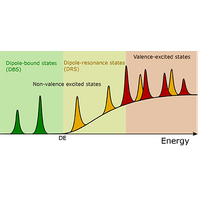
The authors present a high-resolution spectroscopic characterization of deprotonated para-coumaric acids, probing specifically electronic excitations near threshold. The results provide insight into the dynamics of electron capture and release in dipole-bound systems, relevant for modeling processes in both interstellar environments and biological systems.

How to use arbitrary measuring devices to perform almost-perfect measurements

Noah Linden and Paul Skrzypczyk

Phys. Rev. A 112, 022405 (2025) - Published 1 August, 2025

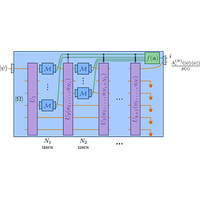
The authors find that if sufficiently many uses are made of any quantum measurement, except a trivial one, it can reproduce any other quantum measurement arbitrarily well. That is, all measurements are asymptotically equivalent to each other. Furthermore, the error drops off exponentially fast with the number of uses, meaning their result could have practical applications.

Nuclear clock based on the Th v ion

V. V. Flambaum, V. A. Dzuba, and E. Peik

Phys. Rev. A 112, 023103 (2025) - Published 1 August, 2025

The authors discuss benefits of using Th4+ ions for nuclear clocks, consider the effect of electrons on the nuclear transition frequency, and expand on previous work to calculate the relevant energy levels. They show that the use of the Th4+ ion could substantially increase nuclear clock accuracy beyond the 19th decimal place.

Dissipative quantum phase transitions monitored by current fluctuations

Masataka Matsumoto, Zi Cai, and Matteo Baggioli

Phys. Rev. A 112, 012226 (2025) - Published 30 July, 2025

The authors probe current correlations in open quantum systems as effective signatures for the onset of driven-dissipative phase transitions. They observe characteristics of critical slowing down in two system models, and show how this method could be implemented in experimental optical systems to detect criticality.

Nondemolition fluorescence readout and high-fidelity unconditional reset of a fluxonium qubit via dissipation engineering

Shu Watanabe, Kotaro Hida, Kohei Matsuura, and Yasunobu Nakamura

Phys. Rev. A 112, 012624 (2025) - Published 28 July, 2025

The authors experimentally demonstrate nondemolition fluorescence readout and high-fidelity unconditional reset of a superconducting fluxonium qubit via on-chip dissipation engineering. The results highlight the potential of superconducting quantum computing architectures without relying on dispersive interaction between qubits and resonators. 

Gain-modified emission dynamics between two quantum emitters in a plasmonic gain cavity system

Becca VanDrunen, Juanjuan Ren, Sebastian Franke, and Stephen Hughes

Phys. Rev. A 112, 013532 (2025) - Published 28 July, 2025

The authors derive a master equation governing emission from pairs of quantum emitters, focusing on the effect of gain on the emission dynamics and inter-emitter coupling. The general theory is then applied to a model of a plasmonic resonator to calculate decay and field-mediated coupling rates.

Narrowline cooling of dysprosium atoms in an optical tweezer array

Giulio Biagioni, Britton Hofer, Nathan Bonvalet, Damien Bloch, Antoine Browaeys, and Igor Ferrier-Barbut

Phys. Rev. A 112, 013316 (2025) - Published 25 July, 2025

The authors report narrowline cooling of single dysprosium atoms trapped in a one-dimensional optical tweezer array close to the motional ground state in the radial direction of the tweezers. They demonstrate the possibility to manipulate the motional degree of freedom of dysprosium in optical tweezer arrays, a key ingredient to exploit the potential of lanthanide-based tweezer platforms for quantum science.

Electromagnetic helicity in twisted cavity resonators

E. C. I. Paterson, J. Bourhill, M. E. Tobar, and M. Goryachev

Phys. Rev. A 112, 013530 (2025) - Published 24 July, 2025

The authors study how a twist in geometrical boundary conditions of a resonator results in helicity of the corresponding electromagnetic field. This work introduces a new source of helicity that can be used for both engineering and sensing of electromagnetic fields. 

Sign In to Your Journals Account

Filter

Section

Filter

Article Lookup

Enter a citation