Highlights

Discrete Fourier-transform-based quantum circuit for modular multiplication in Shor's algorithm

Abu Musa Patoary, Amit Vikram, and Victor Galitski

Phys. Rev. A 113, 052448 (2026) - Published 22 May, 2026

The modular exponentiation operation has long limited the practical applications of Shor’s algorithm, and has often had to be tailored to the number being factorized. Here, the authors present a modular exponentiation circuit using generalized discrete Fourier transforms, achieving a desirable gate complexity.

High-order harmonic generation with beyond-semiclassical emitter dynamics: A strong-field quantum-optical Heisenberg-picture approach

Christian Saugbjerg Lange, Ella Elisabeth Lassen, Rasmus Vesterager Gothelf, and Lars Bojer Madsen

Phys. Rev. A 113, 053115 (2026) - Published 22 May, 2026

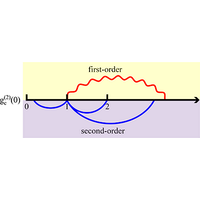
The authors develop a theoretical framework for strong-field quantum optics based on the Heisenberg picture, and derive beyond-semiclassical corrections to the emitter dynamics due to the coupling to the quantized electromagnetic field. Closed-form expressions for spectra, squeezing, and photon statistics are derived and applied to both atomic ensembles and correlated systems.

High-flux cold Li6 and Rb87 atoms from compact two-dimensional magneto-optical traps

Yun-Xuan Lu, An-Wei Zhu, Christine E. Frank, Xin-Yi Huang, and Xin-Yu Luo

Phys. Rev. A 113, 053309 (2026) - Published 11 May, 2026

The authors experimentally demonstrate a compact dual-species cold-atom setup capable of simultaneous high-flux loading of lithium-6 and rubidium-87 atoms. It represents a major step towards miniaturized systems for dual-species cold-atom experiments and ultracold polar molecule production.

Universal quantum melting of quasiperiodic attractors in driven-dissipative cavities

Caroline Nowoczyn, Ludwig Mathey, and Kilian Seibold

Phys. Rev. A 113, 052208 (2026) - Published 8 May, 2026

Tying together classical attractor dynamics and dissipative quantum systems, the authors investigate the quantum-to-classical crossover of quasiperiodic attractors, specifically limit tori in coupled Kerr cavities. They identify a universal “quantum melting” process driven by dephasing.

Optically trapped Feshbach molecules of fermionic Dy161 and K40: Role of light-induced and collisional losses

Alberto Canali, Chun-Kit Wong, Luc Absil, Zhu-Xiong Ye, Marian Kreyer, Emil Kirilov, and Rudolf Grimm

Phys. Rev. A 113, 053306 (2026) - Published 8 May, 2026

The authors experimentally study the decay of a dense, ultracold sample of weakly bound DyK dimers stored in an optical dipole trap. They identify trap-light-induced and collisional processes as the two main sources of losses, and demonstrate ways to reduce these losses substantially.

Quasinormal modes in dispersive photonic time crystals

Calvin M. Hooper, Ian R. Hooper, and Simon A. R. Horsley

Phys. Rev. A 113, 043526 (2026) - Published 29 April, 2026

The authors introduce a Floquet quasinormal mode formalism for describing the transient response of time crystals. They analyze the emergence of exceptional points and non-perturbative phenomena relevant to recent experiments.

Simulated laser cooling and magneto-optical trapping of group-IV atoms

Geoffrey Zheng, Jianwei Wang, Mohit Verma, Qian Wang, Thomas K. Langin, and David DeMille

Phys. Rev. A 113, 043115 (2026) - Published 13 April, 2026

The authors introduce a scheme for laser cooling and magneto-optical trapping of the group-IV atoms, including silicon, germanium, tin, and lead, with a much more challenging structure than the usual alkali-metal and alkaline-earth-metal atoms. They propose an experimental setup for realizing a magneto-optical trap for tin and discuss a wide variety of potential applications.

Directional quantum scattering transducer in cooperative Rydberg metasurfaces

Jonas von Milczewski, Kelly Werker Smith, and Susanne F. Yelin

Phys. Rev. A 113, 043716 (2026) - Published 8 April, 2026

The authors introduce a single-photon transduction scheme based on two-dimensional arrays of Rydberg atoms using four-wave mixing and quantum scattering. It may allow for efficient and mode-selective terahertz-to-optical transduction.

Auger-electron–ion coincidence experiment on the N2 molecule following K-shell ionization by electron impact

Tuo Liu, Liren Zhou, Enliang Wang, Chunkai Xu, Xu Shan, and Xiangjun Chen

Phys. Rev. A 113, 032818 (2026) - Published 26 March, 2026

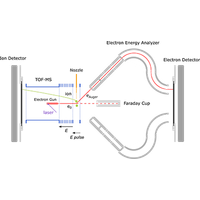
The authors report on final-state-resolved Auger decay of 1s vacancies in N2 using a newly developed apparatus combining a double toroidal electron analyzer with pulsed fragment-ion mass and momentum detection. The setup allows them to resolve the binding energy of the Auger final state, the kinetic energy of the fragment ion, and Auger-electron angular distributions in the molecular frame of reference, ultimately enabling assignment of state-to-state dissociation channels.

Reconstructing quantum states and expectations via dynamical tomography

Marco Peruzzo, Tommaso Grigoletto, and Francesco Ticozzi

Phys. Rev. A 113, 032435 (2026) - Published 17 March, 2026

The authors present a framework for dynamical quantum tomography, in which a system is allowed to evolve before performing tomographic measurements, thus providing data on new parts of the system’s state space. They illustrate their framework with applications to a spin chain and an electron-nuclear system.

Confinement-induced resonances in Rabi-coupled bosonic mixtures

A. Tononi and P. Massignan

Phys. Rev. A 113, L031302 (2026) - Published 13 March, 2026

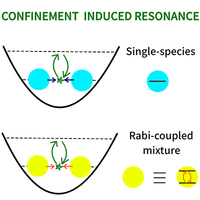
The authors solve the two-body scattering problem in confined Rabi-coupled bosonic mixtures analytically. They show that coherent driving shifts the confinement-induced resonance to much smaller scattering lengths than in the uncoupled case.

Characterizing translation-invariant Bell inequalities using tropical algebra and graph polytopes

Mengyao Hu, Eloïc Vallée, Tim Seynnaeve, Patrick Emonts, Fatemeh Mohammadi, and Jordi Tura

Phys. Rev. A 113, 032421 (2026) - Published 12 March, 2026

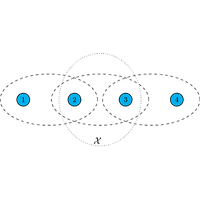
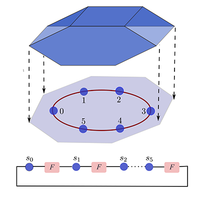
In this work, which has been published jointly with a PRL paper, the authors present a method using tropical algebra and graph theory to understand translation-invariant Bell inequalities, which are crucial for detecting quantum nonlocality in large systems. Specifically, they show that determining the classical bounds of Bell inequalities can be effectively formulated as the contraction of an associated tensor network in tropical algebra.

Dissipation engineering of quantum phase transitions in a Jaynes-Cummings tunneling junction

Yi-Cheng Wang, Jin-Yi Wang, Zheng-Wang Wang, Xiang-You Chen, Long Xiong, and Lei-Lei Nian

Phys. Rev. A 113, 033708 (2026) - Published 9 March, 2026

The authors demonstrate that in a tunneling-driven two-photon Jaynes-Cummings junction, dissipation engineering can steer quantum phase transitions: single-photon loss triggers a first-order transition, while two-photon loss stabilizes it as a continuous second-order transition; introducing electronic dissipation can further switch the transition order across different photon statistics. This transforms dissipation from a detriment into a resource for sculpting quantum criticality in open quantum systems.

Rotational splittings in diatomic molecules of interest to searches for new physics

Ayaki Sunaga and Timo Fleig

Phys. Rev. A 113, 032809 (2026) - Published 5 March, 2026

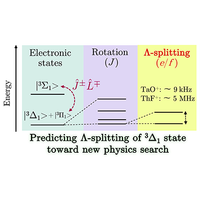
The authors present a theoretical model for calculating the rotational-coupling effects on diatomic open-shell systems based on the four-component multireference wave function. The calculated splittings could contribute to ongoing experimental efforts to measure the electric dipole moment of the electron, and to probe for nuclear charge-parity violation through the nuclear magnetic quadrupole moment.

Spatially localized optical excitations in a doped solid using robust broadband composite pulses

Niels Joseph, Nikolay V. Vitanov, and Thomas Halfmann

Phys. Rev. A 113, 023117 (2026) - Published 23 February, 2026

The authors experimentally demonstrate strong spatial confinement of optical excitations by broadband composite pulse sequences in a rare-earth-ion–doped crystal, which provides significant improvements in localization and robustness against disorder compared to previous experiments.

Persistent subradiant correlations in a disordered ensemble of collectively driven quantum emitters

Nikita Leppenen and Alexander N. Poddubny

Phys. Rev. A 113, 023709 (2026) - Published 12 February, 2026

The authors explore a strongly driven disordered ensemble of emitters coupled to a single photonic mode. They find that long-lived subradiant correlations persist even in the presence of inhomogeneous broadening, which generally destroys correlations.

Vortex comb: Eliminating vortices from Bose-Einstein condensates using optical lattices

Shrohan Mohapatra, Andrew J. Schaffer, P. G. Kevrekidis, R. Carretero-González, and B. P. Anderson

Phys. Rev. A 113, 023305 (2026) - Published 4 February, 2026

The authors report on a combing technique to remove vortices from a quasi-two-dimensional Bose-Einstein condensate through the application and subsequent removal of a one-dimensional optical lattice. The study includes experimental results on a rubidium BEC and numerical simulations based on the Gross-Pitaevskii equation.

Investigating roles of triple excitations for high-precision determination of clock properties of alkaline-earth-metal singly charged ions

A. Chakraborty, Vaibhav Katyal, and B. K. Sahoo

Phys. Rev. A 113, L011101 (2026) - Published 23 January, 2026

The authors employ relativistic coupled-cluster theory to calculate the electric dipole polarizabilities, electric quadrupole moments, atomic lifetimes, and hyperfine structure constants of clock states in singly charged calcium, strontium, and barium ions. By incorporating triple excitations, the authors achieve sub-one-percent accuracy across several spectroscopic properties, providing a rigorous comparison with experimental data and previous calculations.

Electron quiver amplitude in one-dimensional disordered systems

Jia-Xiang Chen and Xue-Bin Bian

Phys. Rev. A 113, 013115 (2026) - Published 13 January, 2026

The authors investigate the behavior of the electron quiver amplitude in a disordered Su-Schrieffer-Heeger-chain model using high-order harmonic generation (HHG) as a probe. Comparing chains with and without long-range order, they find that, under certain conditions (low disorder and similar nearest-neighbor distributions), they exhibit nearly identical HHG spectra.

Control of valence-electron motion in Xe cations using the stimulated-Raman-adiabatic-passage technique

Miguel A. Alarcón, Karl Hauser, and Nikolay V. Golubev

Phys. Rev. A 113, 013112 (2026) - Published 9 January, 2026

The authors theoretically investigate the possibilities of using the stimulated Raman adiabatic passage (STIRAP) and its variants to control a coherent superposition of quantum states. They present a generalization of the so-called fractional STIRAP, demonstrating precise control over the mixing ratio of quantum states in the wave packet.

Sign In to Your Journals Account

Filter

Section

Filter

Article Lookup

Enter a citation