Highlights

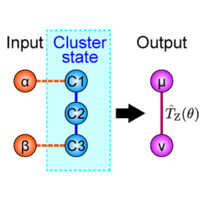
Demonstration of a fully tunable entangling gate for continuous-variable one-way quantum computation

Shota Yokoyama, Ryuji Ukai, Seiji C. Armstrong, Jun-ichi Yoshikawa, Peter van Loock, and Akira Furusawa

Phys. Rev. A 92, 032304 (2015) - Published 3 September, 2015

A fully tunable entangling gate for continuous-variable one-way quantum computation is proposed and experimentally demonstrated, which is expected to have the advantage of being directly incorporated into large-scale quantum computation schemes and overcomes the inefficiency in other techniques.

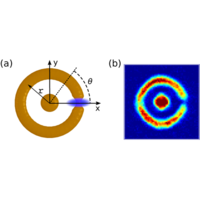
Self-heterodyne detection of the in situ phase of an atomic superconducting quantum interference device

R. Mathew, A. Kumar, S. Eckel, F. Jendrzejewski, G. K. Campbell, Mark Edwards, and E. Tiesinga

Phys. Rev. A 92, 033602 (2015) - Published 3 September, 2015

The current-phase relationship in an atomic version of SQUID — a quantum interference device for building quantum circuits — is studied in detail in a toroidal Bose-Einstein condensate, where comparisons between the experiment and the theoretical models reveal the origin of spiral structures and also explain the relevant time scales.

No-signaling bounds for quantum cloning and metrology

P. Sekatski, M. Skotiniotis, and W. Dür

Phys. Rev. A 92, 022355 (2015) - Published 28 August, 2015

The no-signaling principle arising from the finite speed of light is considered, and it is shown how this simple principle directly leads to tight bounds for various quantum communication tasks.

Revealing the origin of super Efimov states in the hyperspherical formalism

Chao Gao, Jia Wang, and Zhenhua Yu

Phys. Rev. A 92, 020504(R) (2015) - Published 27 August, 2015

The universal three-fermion bound states arising at a p-wave Feshbach resonance when the three particles are confined in two dimensions are studied, and a universal effective potential that is responsible for the scaling of these states is identified.

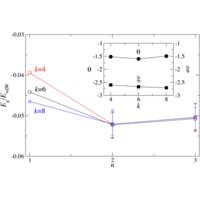
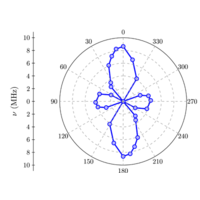
Measurement of the angular dependence of the dipole-dipole interaction between two individual Rydberg atoms at a Förster resonance

Sylvain Ravets, Henning Labuhn, Daniel Barredo, Thierry Lahaye, and Antoine Browaeys

Phys. Rev. A 92, 020701(R) (2015) - Published 25 August, 2015

Anisotropy of the dipolar interaction between Rydberg atoms near a resonance is experimentally mapped out and controllability is demonstrated, opening up many possibilities in the implementation of quantum information protocols and the quantum simulation of many-body spin systems.

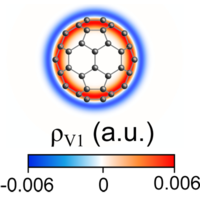
Disentangling multipole contributions to collective excitations in fullerenes

M. Schüler, J. Berakdar, and Y. Pavlyukh

Phys. Rev. A 92, 021403(R) (2015) - Published 24 August, 2015

Information of plasmonic modes in the Buckminster fullerene C60 is extracted from ab initio time-dependent density-functional-theory calculations with excellent agreement with experimental results, which underlines the importance of multipole (high angular momentum) contributions to the collective excitations well beyond what has been understood by previous models.

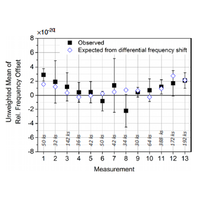
Brillouin amplification supports 1×10⁻²⁰ uncertainty in optical frequency transfer over 1400 km of underground fiber

Sebastian M. F. Raupach, Andreas Koczwara, and Gesine Grosche

Phys. Rev. A 92, 021801(R) (2015) - Published 24 August, 2015

Optical frequency transfer with record-high accuracy (1×10-20 uncertainty) is realized over a 1400km loop of underground fiber between Braunschweig and Strasbourg, which enables reliable comparison of state-of-the-art atomic clocks that are accurate enough to detect changes in the fabric of space-time.

Contagious error sources would need time travel to prevent quantum computation

Gil Kalai and Greg Kuperberg

Phys. Rev. A 92, 022345 (2015) - Published 20 August, 2015

“Contagious quantum germs”, a type of error in quantum computing that can continue to cause error for every infected qubit with arbitrary quantum entanglement and correlation, is proposed, analyzed, and with a “cure” found to reduce the error to a milder, quasi-independent error by teleportation.

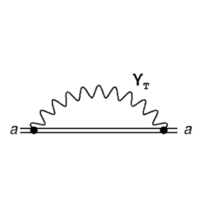
QED derivation of the Stark shift and line broadening induced by blackbody radiation

D. Solovyev, L. Labzowsky, and G. Plunien

Phys. Rev. A 92, 022508 (2015) - Published 20 August, 2015

A first-principles, QED derivation reveals a different type of line broadening of atomic levels induced by blackbody radiation, which is expected to help in the understanding of the evolution of the early universe when hydrogen atoms were first formed.

Nonlinear Gamow vectors, shock waves, and irreversibility in optically nonlocal media

Silvia Gentilini, Maria Chiara Braidotti, Giulia Marcucci, Eugenio DelRe, and Claudio Conti

Phys. Rev. A 92, 023801 (2015) - Published 3 August, 2015

Gamow vectors are used to study nonlinear wave dynamics, and it is found that the quantization of the decay rates described by these vectors successfully explains the irreversibility of dispersive shock waves.

Einstein-Podolsky-Rosen–entangled motion of two massive objects

Roman Schnabel

Phys. Rev. A 92, 012126 (2015) - Published 28 July, 2015

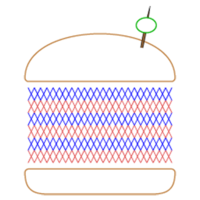
A proposed interferometry experiment could test quantum gravity theories by entangling two mirrors weighing as much as apples.

Photon-correlation measurements of atomic-cloud temperature using an optical nanofiber

J. A. Grover, P. Solano, L. A. Orozco, and S. L. Rolston

Phys. Rev. A 92, 013850 (2015) - Published 28 July, 2015

A method to measure the temperature of a cold atomic cloud is developed by relating atoms’ motion to fluorescence photons emitted into an optical nanofiber, where the temperature readout from the temporal correlations of the photons agrees well with standard time-of-flight measurements.

Near-field speckle-scanning-based x-ray imaging

Sebastien Berujon and Eric Ziegler

Phys. Rev. A 92, 013837 (2015) - Published 22 July, 2015

A method capable of accessing the ultra-small-angle x-ray-scattering distribution of a sample from two-dimensional raster scans is developed, which promises to have applications in various fields of material science as well as biological imaging.

Spin separations in the spin Hall effect of light

Jin-Li Ren, Bo Wang, Meng-Meng Pan, Yun-Feng Xiao, Qihuang Gong, and Yan Li

Phys. Rev. A 92, 013839 (2015) - Published 22 July, 2015

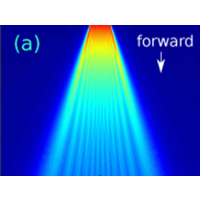
The so-called spin Hall effect of light, the transverse splitting of the left circularly polarized and right circularly polarized components of light with initially linear polarization, is investigated, and the coherent superposition of two sub-components with different shifts in each component that leads to the observed phenomena is elucidated.

Compatibility of state assignments and pooling of information

Todd A. Brun, Min-Hsiu Hsieh, and Christopher Perry

Phys. Rev. A 92, 012107 (2015) - Published 13 July, 2015

A measure for the compatibility of state assignments of independent observers of the same quantum system is proposed, and the possibility of arriving at a unique state assignment by pooling of information is investigated.

Spectrum of quasistable states in a strong infrared field

Changchun Zhong and F. Robicheaux

Phys. Rev. A 92, 013406 (2015) - Published 13 July, 2015

The stability of highly excited hydrogen and helium atoms subject to an intense infrared laser field is studied, and similarities to the case of microwave driving are discussed.

Phase shift due to atom-atom interactions in a light-pulse atom interferometer

Raphaël Jannin, Pierre Cladé, and Saïda Guellati-Khélifa

Phys. Rev. A 92, 013616 (2015) - Published 13 July, 2015

A procedure for determining the phase shift induced by atom-atom interactions in a light-pulse atom interferometer is described, and it is shown that this shift can have substantial effects on the precision of the measurements and the applicability of certain types of interferometer set-ups to particular types of measurements.

Stability of a trapped-atom clock on a chip

R. Szmuk, V. Dugrain, W. Maineult, J. Reichel, and P. Rosenbusch

Phys. Rev. A 92, 012106 (2015) - Published 10 July, 2015

The design of a compact and portable atomic clock based on ultracold atoms on an atom chip is presented, and its stability, outperforming commercial compact clocks, is analyzed.

Effective many-body parameters for atoms in nonseparable Gaussian optical potentials

Michael L. Wall, Kaden R. A. Hazzard, and Ana Maria Rey

Phys. Rev. A 92, 013610 (2015) - Published 8 July, 2015

An approach to calculating eigenfunctions of particles in nonseparable optical potentials is presented, and it is shown that parameters such as tunneling and interaction matrix elements can be significantly different from their separable counterparts.

Phase-selective quantum eraser

A. Heuer, G. Pieplow, and R. Menzel

Phys. Rev. A 92, 013803 (2015) - Published 2 July, 2015

A quantum-eraser experiment with photon pairs coupled via induced coherence is reported, and the complementarity between which-source information and two-photon-interference-fringe visibility is demonstrated.

Sign In to Your Journals Account

Filter

Section

Filter

Article Lookup

Enter a citation