Highlights

Universal control induced by noise

Christian Arenz, Daniel Burgarth, Paolo Facchi, Vittorio Giovannetti, Hiromichi Nakazato, Saverio Pascazio, and Kazuya Yuasa

Phys. Rev. A 93, 062308 (2016) - Published 6 June, 2016

It is known that noise can sometimes be beneficial for quantum information processing. This idea is now further explored as it is shown that strong dissipation can be used to project a quantum system in a subspace free of decoherence, allowing one to achieve universal controllability and to raise the fidelity of quantum gates.

Impact of many-body correlations on the dynamics of an ion-controlled bosonic Josephson junction

J. M. Schurer, R. Gerritsma, P. Schmelcher, and A. Negretti

Phys. Rev. A 93, 063602 (2016) - Published 1 June, 2016

The dynamics of a bosonic Josephson junction in the presence of a trapped ion is studied with different computational techniques, where the control of the many-body physics in the self-trapped regime and the tunneling regime is validated and described.

Necessity of an energy barrier for self-correction of Abelian quantum doubles

Anna Kómár, Olivier Landon-Cardinal, and Kristan Temme

Phys. Rev. A 93, 052337 (2016) - Published 31 May, 2016

Quantum systems capable of preserving quantum information over an extended period of time without the need for external intervention are called self-correcting. The relation between the concept of “energy barrier” and self-correction is formally established here, an effort that will probably guide future developments in the design of self-correcting quantum memories.

Quantum speed limits, coherence, and asymmetry

Iman Marvian, Robert W. Spekkens, and Paolo Zanardi

Phys. Rev. A 93, 052331 (2016) - Published 24 May, 2016

Speed is a notion that formally sets bounds on the time that a quantum system takes to evolve. Here it is shown that speed is related to the notion of asymmetry, a result that provides direct connection with the problem of quantifying the coherence of quantum states.

Incompatible quantum measurements admitting a local-hidden-variable model

Marco Túlio Quintino, Joseph Bowles, Flavien Hirsch, and Nicolas Brunner

Phys. Rev. A 93, 052115 (2016) - Published 23 May, 2016

The relation between the incompatibility of general quantum measurements and quantum nonlocality is investigated, where it is shown that measurement incompatibility does not imply Bell nonlocality.

Three-photon process for producing a degenerate gas of metastable alkaline-earth-metal atoms

D. S. Barker, N. C. Pisenti, B. J. Reschovsky, and G. K. Campbell

Phys. Rev. A 93, 053417 (2016) - Published 18 May, 2016

An excitation scheme for transferring alkaline-earth-metal atoms from their ground state to metastable states is proposed, where the employed three-photon process is demonstrated to have transfer efficiencies as high as about 90% and can be managed to avoid momentum transfer to the degenerate gas during the excitation.

Stimulated Raman adiabatic passage preparation of a coherent superposition of ThO H3Δ1 states for an improved electron electric-dipole-moment measurement

C. D. Panda, B. R. O'Leary, A. D. West, J. Baron, P. W. Hess, C. Hoffman, E. Kirilov, C. B. Overstreet, E. P. West, D. DeMille, J. M. Doyle, and G. Gabrielse

Phys. Rev. A 93, 052110 (2016) - Published 16 May, 2016

A quantum-state preparation scheme is demonstrated for the next generation ACME experiment searching for the electron electric dipole moment in ThO molecules, where the stimulated Raman adiabatic passage technique, together with other experimental improvements, brings in at least a 75 times increase in combined preparation and detection efficiency of the molecules in the target state.

Ionization and electron-capture cross sections for single- and multiple-electron removal from H2O by Li3+ impact

H. Luna, W. Wolff, E. C. Montenegro, André C. Tavares, H. J. Lüdde, G. Schenk, M. Horbatsch, and T. Kirchner

Phys. Rev. A 93, 052705 (2016) - Published 13 May, 2016

Collisions of water molecules with Li3+ ions are studied in the MeV range to provide a basis for the future understanding of the penetration of, and damage by, heavy ions in water-based environments. Good agreement in the ionization and electron-capture cross sections between experiment and calculation validates the current collision model and emphasizes the role of an Auger process during such collisions.

Dynamics of dissociative electron attachment to ammonia

T. N. Rescigno, C. S. Trevisan, A. E. Orel, D. S. Slaughter, H. Adaniya, A. Belkacem, Marvin Weyland, Alexander Dorn, and C. W. McCurdy

Phys. Rev. A 93, 052704 (2016) - Published 12 May, 2016

A joint experimental and theoretical study on dissociative electron attachment to ammonia molecules has identified Feshbach states responsible for the two principal breakup channels observed decades ago. The insight obtained reveals rich collisional dynamics that lead to a breakdown of the axial recoil approximation and to mirror images of the angular distributions in the breakup channels.

Field-free long-lived alignment of molecules with a two-dimensional optical centrifuge

A. A. Milner, A. Korobenko, and V. Milner

Phys. Rev. A 93, 053408 (2016) - Published 11 May, 2016

The optical centrifuge technique that spins up molecules is modified to align molecules into highly excited rotational states, where it is demonstrated that the created alignment has a long lifetime against collisions with other molecules.

Enhanced sensitivity to a possible variation of the proton-to-electron mass ratio in ammonia

A. Owens, S. N. Yurchenko, W. Thiel, and V. Špirko

Phys. Rev. A 93, 052506 (2016) - Published 9 May, 2016

Rovibration transitions in one of the isotopic ammonia molecules are calculated with high accuracy, where the orders-of-magnitude increase in the sensitivity to the constant of the proton-to-electron mass ratio revives the prospect of using this molecule to measure astronomical variations of this fundamental constant.

Controlling electron-ion rescattering in two-color circularly polarized femtosecond laser fields

Christopher A. Mancuso, Daniel D. Hickstein, Kevin M. Dorney, Jennifer L. Ellis, Elvedin Hasović, Ronny Knut, Patrik Grychtol, Christian Gentry, Maithreyi Gopalakrishnan, Dmitriy Zusin, Franklin J. Dollar, Xiao-Min Tong, Dejan B. Milošević, Wilhelm Becker, Henry C. Kapteyn, and Margaret M. Murnane

Phys. Rev. A 93, 053406 (2016) - Published 9 May, 2016

Strong-field ionization in two-color circularly polarized fields is studied, where both experimental measurements and theoretical analyses suggest that the production of high-energy electrons from electron-ion rescattering is optimized in counterrotating fields, and when the ponderomotive energies of the two laser fields are equal.

Models of reduced-noise, probabilistic linear amplifiers

Joshua Combes, Nathan Walk, A. P. Lund, T. C. Ralph, and Carlton M. Caves

Phys. Rev. A 93, 052310 (2016) - Published 5 May, 2016

A comprehensive view of quantum amplifiers is presented. In particular, it is shown how to construct a quantum amplifier with properties in-between an ideal linear amplifier and a nondeterministic noiseless one.

Nonlinear single Compton scattering of an electron wave packet

A. Angioi, F. Mackenroth, and A. Di Piazza

Phys. Rev. A 93, 052102 (2016) - Published 2 May, 2016

Nonlinear Compton scattering is investigated with the electron’s initial state being a superposition of different momenta, where an absence of interference is found between pathways involving different initial momenta of the electron.

Schemes for generation of isolated attosecond pulses of pure circular polarization

C. Hernández-García, C. G. Durfee, D. D. Hickstein, T. Popmintchev, A. Meier, M. M. Murnane, H. C. Kapteyn, I. J. Sola, A. Jaron-Becker, and A. Becker

Phys. Rev. A 93, 043855 (2016) - Published 28 April, 2016

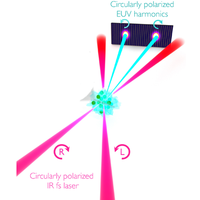
Recently, different proposals for generating isolated attosecond pulses with elliptical polarization have emerged. In this comprehensive study, two schemes based on the noncollinear interaction of two counter-rotating circularly polarized lasers beams are analyzed, showing a mechanism to produce isolated pulses of pure circular polarization.

Devising local protocols for multipartite quantum measurements

Scott M. Cohen

Phys. Rev. A 93, 042334 (2016) - Published 22 April, 2016

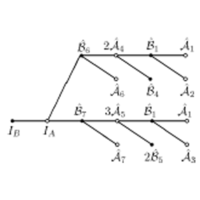
A general method is devised to determine if any given measurement can be implemented by “local operations and classical communication” (LOCC) alone, leading to fundamental results in quantum measurement theory. The procedure proves the impossibility of a measurement by LOCC even when an infinite number of rounds of communication are allowed.

Precision optical displacement measurements using biphotons

Kevin Lyons, Shengshi Pang, Paul G. Kwiat, and Andrew N. Jordan

Phys. Rev. A 93, 043841 (2016) - Published 22 April, 2016

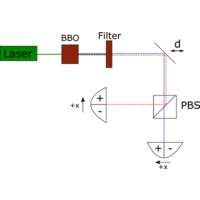
Due to the existence of quantum correlations between photon pairs, their average position can be determined more precisely than the individual position of each photon. This effect is exploited to enhance the precision and the resolution of measuring optical displacements.

Slow-light-based optical frequency shifter

Qian Li, Yupan Bao, Axel Thuresson, Adam N. Nilsson, Lars Rippe, and Stefan Kröll

Phys. Rev. A 93, 043832 (2016) - Published 19 April, 2016

A new design for an optical frequency shifter combines a tunable filter and slow-light techniques.

Frequency-comb formation in doubly resonant second-harmonic generation

F. Leo, T. Hansson, I. Ricciardi, M. De Rosa, S. Coen, S. Wabnitz, and M. Erkintalo

Phys. Rev. A 93, 043831 (2016) - Published 18 April, 2016

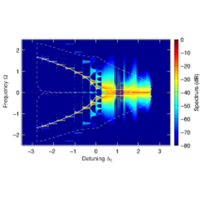
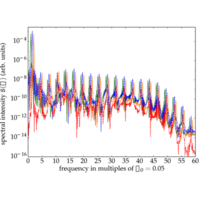
The study presents a theoretical modeling to examine the full temporal and spectral dynamics of intracavity second-harmonic generation, with special attention to the role of temporal walk-off and the generation of frequency combs. The investigation provides physical insight into the nonlinear behavior of the system, being particularly relevant to new developments based on integrated microresonators.

Rotating-frame perspective on high-order-harmonic generation of circularly polarized light

Daniel M. Reich and Lars Bojer Madsen

Phys. Rev. A 93, 043411 (2016) - Published 14 April, 2016

Generation of circularly polarized high-order-harmonic light fields is studied in a rotating frame, where a simple picture is provided for optimizing the outputs of the harmonics and for simulating strong-field dynamics in the presence of a static electric or magnetic field.

Sign In to Your Journals Account

Filter

Section

Filter

Article Lookup

Enter a citation