Highlights

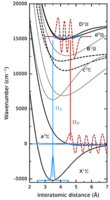
High-resolution internal state control of ultracold Na23Rb87 molecules

Mingyang Guo, Xin Ye, Junyu He, Goulven Quéméner, and Dajun Wang

Phys. Rev. A 97, 020501(R) (2018) - Published 26 February, 2018

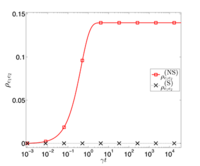
Ultracold 23Na87Rb molecules are produced with experimental control over the vibrational, rotational, and hyperfine degrees of freedom. This capability brings broad possibilities for investigating ultracold polar molecules with different chemical reactivities and interactions with a single molecular species.

Information-reality complementarity: The role of measurements and quantum reference frames

P. R. Dieguez and R. M. Angelo

Phys. Rev. A 97, 022107 (2018) - Published 16 February, 2018

Relations among the concepts of measurement, information, and physical reality are established with the quantification of the degree of reality of an observable for a given preparation. It is found that for pure states the entanglement with the apparatus precisely determines the amount by which the reality of the monitored observable increases.

Fingering instabilities and pattern formation in a two-component dipolar Bose-Einstein condensate

Kui-Tian Xi, Tim Byrnes, and Hiroki Saito

Phys. Rev. A 97, 023625 (2018) - Published 16 February, 2018

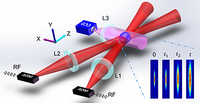
Fingering instabilities and pattern formation are studied at the interface of an oppositely polarized two-component Bose-Einstein condensate with strong dipole-dipole interactions in three dimensions. It is shown that the rotational symmetry is spontaneously broken by fingering instability when the dipole-dipole interactions are strengthened.

Distance scaling of electric-field noise in a surface-electrode ion trap

J. A. Sedlacek, A. Greene, J. Stuart, R. McConnell, C. D. Bruzewicz, J. M. Sage, and J. Chiaverini

Phys. Rev. A 97, 020302(R) (2018) - Published 15 February, 2018

The electric-field noise affecting quantum logic gates in surface-electrode ion traps is studied as a function of trapping frequency, electrode temperature, and distance d between ion and surface. The finding that the noise scales as 1/d4 eliminates various surface-noise models that have been proposed to explain the anomalous ion heating observed in this type of trap.

Optimal discrimination of optical coherent states cannot always be realized by interfering with coherent light, photon counting, and feedback

Kenji Nakahira, Kentaro Kato, and Tsuyoshi Sasaki Usuda

Phys. Rev. A 97, 022320 (2018) - Published 14 February, 2018

A method is developed to analyze the performance of sequential measurements, thus providing a way to benchmark various optical receivers. In particular, it is proved that a Dolinar-like receiver cannot realize a “minimum error quantum measurement” when dealing with ternary coherent states.

Analysis of electron-correlation effects in strongly correlated systems (N2 and N2+) by applying the density-matrix renormalization-group method and quantum information theory

Christian Stemmle, Beate Paulus, and Örs Legeza

Phys. Rev. A 97, 022505 (2018) - Published 13 February, 2018

Quantum information theory is employed in quantum chemical computations of molecular potentials to analyze the effects of electron correlation. This study may pave the way to techniques that may help find active Hilbert space in such computations more efficiently.

Correlated-photon-pair emission from a cw-pumped Fabry-Perot microcavity

Thorsten F. Langerfeld, Hendrik M. Meyer, and Michael Köhl

Phys. Rev. A 97, 023822 (2018) - Published 13 February, 2018

Kerr nonlinearity in an optical coating is explored to generate photon pairs within a high-finesse Fabry-Perot resonator. The scheme, based on a continuous-wave diode laser, provides a robust and frequency-tunable quantum source.

State-dependent fluorescence of neutral atoms in optical potentials

M. Martinez-Dorantes, W. Alt, J. Gallego, S. Ghosh, L. Ratschbacher, and D. Meschede

Phys. Rev. A 97, 023410 (2018) - Published 9 February, 2018

Experimental procedures for overcoming heating-induced trap losses and state leakage in scalable, nondestructive, and high-fidelity detection of the internal state of 87Rb atoms in optical dipole traps are presented. It is shown that off-resonant light is preferable for state detection in tightly confining optical potentials.

Geometry of the set of quantum correlations

Koon Tong Goh, Jędrzej Kaniewski, Elie Wolfe, Tamás Vértesi, Xingyao Wu, Yu Cai, Yeong-Cherng Liang, and Valerio Scarani

Phys. Rev. A 97, 022104 (2018) - Published 7 February, 2018

The geometry of the quantum set of correlations is studied with standard tools from the convex geometry. Examples of counterintuitive features are found in the simplest nontrivial Bell scenario, and more complex features are shown to persist in more sophisticated Bell scenarios.

Information measures for a local quantum phase transition: Lattice fermions in a one-dimensional harmonic trap

Yicheng Zhang, Lev Vidmar, and Marcos Rigol

Phys. Rev. A 97, 023605 (2018) - Published 5 February, 2018

A local quantum phase transition is studied with quantum information measures for trapped spinless fermions in one-dimensional lattices. It is found that ground-state bipartite entanglement entropies, as well as the low-temperature mutual information, are excellent order parameters for describing the characteristic-density-driven local quantum phase transition.

Lamb shift and fine structure at n=2 in a hydrogenlike muonic atom with the nuclear spin I=0

Evgeny Yu. Korzinin, Valery A. Shelyuto, Vladimir G. Ivanov, and Savely G. Karshenboim

Phys. Rev. A 97, 012514 (2018) - Published 26 January, 2018

The theory of muonic atoms is revisited for the hydrogenlike muonic ions, where the Lamb shift between the 2s1/2 and 2p1/2 levels is analyzed by including the contributions from the pure quantum electrodynamics effect, the finite nuclear size, and nuclear-structure corrections.

Secular versus nonsecular Redfield dynamics and Fano coherences in incoherent excitation: An experimental proposal

Amro Dodin, Timur Tscherbul, Robert Alicki, Amar Vutha, and Paul Brumer

Phys. Rev. A 97, 013421 (2018) - Published 26 January, 2018

Open quantum systems interacting with a thermal environment are formally treated by secular or nonsecular master equations, with the nonsecular equation predicting distinct dynamics with unobserved noise-induced Fano coherences. The authors propose an experimental test to examine the master-equation applicability and the existence of Fano coherences in an atomic system excited by an incoherent light.

Shortcuts to adiabaticity in the strongly coupled regime: Nonadiabatic control of a unitary Fermi gas

Shujin Deng, Pengpeng Diao, Qianli Yu, Adolfo del Campo, and Haibin Wu

Phys. Rev. A 97, 013628 (2018) - Published 24 January, 2018

Shortcuts to adiabaticity in a strongly coupled system are experimentally demonstrated with a three-dimensional unitary Fermi gas confined by a time-dependent anisotropic trap. This study shows the possibility of controlling quantum matter at strong coupling and far away from equilibrium.

Parametric amplification and bidirectional invisibility in PT-symmetric time-Floquet systems

Theodoros T. Koutserimpas, Andrea Alù, and Romain Fleury

Phys. Rev. A 97, 013839 (2018) - Published 24 January, 2018

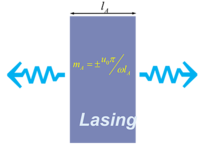
A generalization of PT-scattering theory to nonstatic systems is developed, unveiling characteristics such as CPA-laser operation and bidirectional invisibility. The results may lead to the creation of novel non-Hermitian devices that exploit the tunability and reconfigurability of time-Floquet systems.

Protecting the entanglement of twisted photons by adaptive optics

Nina Leonhard, Giacomo Sorelli, Vyacheslav N. Shatokhin, Claudia Reinlein, and Andreas Buchleitner

Phys. Rev. A 97, 012321 (2018) - Published 19 January, 2018

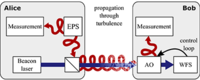
Entanglement degradation of orbital-angular-momentum modes can be prevented using adaptive optics. The results prove the possibility of significantly reducing the crosstalk of modes, thereby making entanglement available even under moderate atmospheric turbulence conditions.

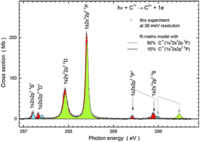
Near-K-edge single, double, and triple photoionization of C+ ions

A. Müller, A. Borovik, Jr., T. Buhr, J. Hellhund, K. Holste, A. L. D. Kilcoyne, S. Klumpp, M. Martins, S. Ricz, J. Viefhaus, and S. Schippers

Phys. Rev. A 97, 013409 (2018) - Published 16 January, 2018

Absolute cross-section measurements for photoionization of C+ near the K edge are reported with high energy resolution. The transition parameters derived for the 1s-2p excitations may open a window into the important field of many-electron processes in atomic systems.

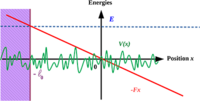
Expansion of a quantum wave packet in a one-dimensional disordered potential in the presence of a uniform bias force

C. Crosnier de Bellaistre, C. Trefzger, A. Aspect, A. Georges, and L. Sanchez-Palencia

Phys. Rev. A 97, 013613 (2018) - Published 16 January, 2018

The expansion dynamics of an initially confined wave packet is numerically studied in the presence of a disordered potential and a uniform bias force. Stationary profiles of the wave packet are found for a white-noise disorder when the ratio of the force and the disorder is below a critical value, whereas delocalization is found to always occur when the disorder is correlated.

Modeling the adiabatic creation of ultracold polar 23Na40K molecules

Frauke Seeßelberg, Nikolaus Buchheim, Zhen-Kai Lu, Tobias Schneider, Xin-Yu Luo, Eberhard Tiemann, Immanuel Bloch, and Christoph Gohle

Phys. Rev. A 97, 013405 (2018) - Published 12 January, 2018

Ultracold fermionic 23Na40K polar molecules are produced in their ground rovibrational state. A multilevel stimulated Raman adiabatic passage (STIRAP) state-transfer process is employed with an intermediate state having an unresolved hyperfine structure, which can be a situation commonly encountered in performing the state transfer.

Photons and polaritons in a broken-time-reversal nonplanar resonator

Ningyuan Jia, Nathan Schine, Alexandros Georgakopoulos, Albert Ryou, Ariel Sommer, and Jonathan Simon

Phys. Rev. A 97, 013802 (2018) - Published 3 January, 2018

The combination of twisted resonators with Rydberg polaritons is experimentally explored to simultaneously break inversion and time-reversal symmetries. Besides showing how to design a low-loss optical isolator, the work provides tools for the exploration of topological many-body physics from light.

Precision mass ratio of He+3 to HD+

S. Hamzeloui, J. A. Smith, D. J. Fink, and E. G. Myers

Phys. Rev. A 96, 060501(R) (2017) - Published 27 December, 2017

A precision measurement of the mass ratio of 3He+ and HD+ shows a discrepancy of more than 4 standard deviations with respect to the current literature values of the masses of the proton, deuteron, and nucleus of 3He.

Sign In to Your Journals Account

Filter

Section

Filter

Article Lookup

Enter a citation