Highlights

Deep learning and the Schrödinger equation

Kyle Mills, Michael Spanner, and Isaac Tamblyn

Phys. Rev. A 96, 042113 (2017) - Published 18 October, 2017

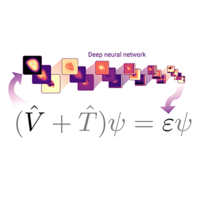
A deep (convolutional) neural network is trained to predict the ground-state energy of an electron in two-dimensional potentials. The machinery of deep learning is developed to learn the mapping between potential and energy, which bypasses the need to numerically solve the Schrödinger equation and the need for computing wave functions.

Dimensional crossover in a strongly interacting ultracold atomic Fermi gas

Umberto Toniolo, Brendan C. Mulkerin, Chris J. Vale, Xia-Ji Liu, and Hui Hu

Phys. Rev. A 96, 041604(R) (2017) - Published 12 October, 2017

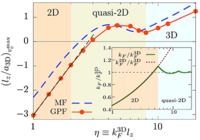
The crossover from two to three spatial dimensions is explored for a strongly interacting atomic Fermi superfluid. It is found that the location of the maximum critical velocity in the quasi-two-dimensional regime behaves differently from its two- and three-dimensional asymptotic scalings, and this behavior may be experimentally probed using Bragg spectroscopy.

High-fidelity Rydberg quantum gate via a two-atom dark state

David Petrosyan, Felix Motzoi, Mark Saffman, and Klaus Mølmer

Phys. Rev. A 96, 042306 (2017) - Published 9 October, 2017

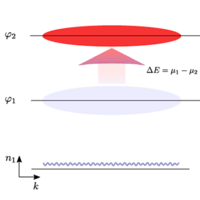
A modified Rydberg blockade gate that employs adiabatic following of a two-atom dark state is proposed. The scheme is resilient to the uncertainty in the interaction strength and can be employed to achieve fault-tolerant quantum computation with neutral atoms.

Observation of the motional Stark shift in low magnetic fields

Manuel Kaiser, Jens Grimmel, Lara Torralbo-Campo, Markus Mack, Florian Karlewski, Florian Jessen, Nils Schopohl, and József Fortágh

Phys. Rev. A 96, 043401 (2017) - Published 2 October, 2017

The Stark effect of Rb Rydberg atoms due to their center-of-mass motion in a weak homogeneous magnetic field is measured with a high-precision spectroscopic method. The knowledge of this effect can find a wide range of applications such as measuring magnetic fields in fusion plasma diagnostics, evaluating the hydrogen spectra in the vicinity of neutron stars, and exploring the magneto-Stark effect of excitons in solids.

Spectroscopic measurement of the softness of ultracold atomic collisions

Jonathan Coslovsky, Gadi Afek, Alexander Mil, Ido Almog, and Nir Davidson

Phys. Rev. A 96, 032713 (2017) - Published 19 September, 2017

The softness of collisions, or the average number of collisions each atom undergoes until its energy decorrelates significantly, is measured spectroscopically for ultracold atoms. The knowledge obtained is important for improving various technologies involving ultracold atoms, such as atomic clocks, quantum metrology, and the realization of quantum information systems.

Radiation damping of a polarizable particle

Lukas Novotny

Phys. Rev. A 96, 032108 (2017) - Published 7 September, 2017

Laser cooling of a particle is analyzed in detail, providing expressions that elucidate the balance between damping and heating.

All entangled pure quantum states violate the bilocality inequality

Nicolas Gisin, Quanxin Mei, Armin Tavakoli, Marc Olivier Renou, and Nicolas Brunner

Phys. Rev. A 96, 020304(R) (2017) - Published 22 August, 2017

A thorough characterization of bilocality in quantum networks is set forward, providing important results for the development of device-independent quantum information processing.

Quantum walk of a Bose-Einstein condensate in the Brillouin zone

Andrea Alberti and Sandro Wimberger

Phys. Rev. A 96, 023620 (2017) - Published 22 August, 2017

An experimental scheme for discrete-time quantum walks is proposed for a spinor Bose-Einstein condensate to steer through the Brillouin zone, where the position of the walker is encoded in the quasimomentum.

Ground-state ionization energies of boronlike ions

A. V. Malyshev, D. A. Glazov, A. V. Volotka, I. I. Tupitsyn, V. M. Shabaev, G. Plunien, and Th. Stöhlker

Phys. Rev. A 96, 022512 (2017) - Published 17 August, 2017

High-precision calculations of the ground-state ionization energies that include QED effects are performed for five-electron, boronlike ions with the nuclear charge numbers between 16 and 96. The inclusion of nuclear recoil and nuclear polarization effects further allows for a meaningful comparison to future experimental measurements.

ac Stark effect in ultracold polar Rb87Cs133 molecules

Philip D. Gregory, Jacob A. Blackmore, Jesus Aldegunde, Jeremy M. Hutson, and Simon L. Cornish

Phys. Rev. A 96, 021402(R) (2017) - Published 11 August, 2017

ac Stark shifts of ultracold polar RbCs molecules are measured with hyperfine resolution. Due to coupling from the anisotropic component of the polarizability, the hyperfine levels of the first excited rotational state show an intricate pattern of avoided crossings as a function of laser intensity.

Generation of high-purity low-temperature samples of K39 for applications in metrology

L. Antoni-Micollier, B. Barrett, L. Chichet, G. Condon, B. Battelier, A. Landragin, and P. Bouyer

Phys. Rev. A 96, 023608 (2017) - Published 4 August, 2017

A methodology for producing high-purity samples of laser-cooled 39K is presented. It is demonstrated that the accuracy of a gravimeter measurement with such a sample can be improved by an order of magnitude in comparison to the previous measurements.

Time-resolved measurement of internal conversion dynamics in strong-field molecular ionization

Vincent Tagliamonti, Brian Kaufman, Arthur Zhao, Tamás Rozgonyi, Philipp Marquetand, and Thomas Weinacht

Phys. Rev. A 96, 021401(R) (2017) - Published 2 August, 2017

Time-resolved measurements of strong-field molecular ionization are performed to measure the photoelectron spectrum as a function of pump-probe delay. The measurements allow one to follow the ionization dynamics and break them down into three steps, which include electronic excitation, internal conversion, and coupling to the continuum.

Magnetoassociation of a Feshbach molecule and spin-orbit interaction between the ground and electronically excited states

Yosuke Takasu, Yoshiaki Fukushima, Yusuke Nakamura, and Yoshiro Takahashi

Phys. Rev. A 96, 023602 (2017) - Published 1 August, 2017

Ultracold Feshbach molecules are produced by magnetoassociation of fermionic Yb atoms in the ground state and an electronically excited, metastable state. A spin-orbit coupling is engineered for exploring a topological superfluidity and is demonstrated by a spin-momentum locking behavior at a large Rabi frequency.

Simulation of an optomechanical quantum memory in the nonlinear regime

R. Y. Teh, S. Kiesewetter, M. D. Reid, and P. D. Drummond

Phys. Rev. A 96, 013854 (2017) - Published 27 July, 2017

A full quantum simulation of the photon-phonon interaction in an optomechanical system is developed. The implications for the quantum storage of coherent states are discussed, showing that even with current experimental parameters, unexpectedly strong nonlinear effects can dominate spectral features and reduce the quantum memory fidelity.

How to observe the giant thermal effect in the Casimir force for graphene systems

G. Bimonte, G. L. Klimchitskaya, and V. M. Mostepanenko

Phys. Rev. A 96, 012517 (2017) - Published 26 July, 2017

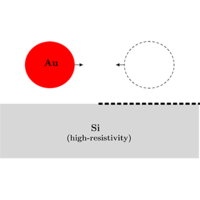
The giant thermal effect in the Casimir force is proposed to be measured between an Au-coated sphere and a graphene-coated Si substrate made of dielectric Si. It is found that the thermal effect is observable when the sphere and the substrate are separated by a distance from 0.1 to 1.5 μm.

Attosecond delays in laser-assisted photodetachment from closed-shell negative ions

Eva Lindroth and Jan Marcus Dahlström

Phys. Rev. A 96, 013420 (2017) - Published 20 July, 2017

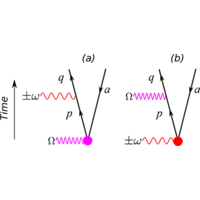
Attosecond time delays in laser-assisted photoionization are studied for closed-shell negative ions. At low photoelectron energies, it is found that the Wigner-like delay cannot be simply extracted experimentally due to the nonuniversal form that the continuum-continuum delay takes.

Efficient production of long-lived ultracold Sr2 molecules

Alessio Ciamei, Alex Bayerle, Chun-Chia Chen, Benjamin Pasquiou, and Florian Schreck

Phys. Rev. A 96, 013406 (2017) - Published 7 July, 2017

Ultracold ground-state diatomic molecules are produced from pairs of 84Sr atoms in a Mott insulator. Even in the absence of a Feshbach resonance, the improved stimulated Raman adiabatic passage (STIRAP) technique used in the state-transferring process leads to a production efficiency above 80%.

Extraction of the electron mass from g-factor measurements on light hydrogenlike ions

J. Zatorski, B. Sikora, S. G. Karshenboim, S. Sturm, F. Köhler-Langes, K. Blaum, C. H. Keitel, and Z. Harman

Phys. Rev. A 96, 012502 (2017) - Published 5 July, 2017

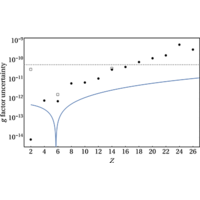
The mass of the electron is determined to its 12th digit in a high-precision experiment with 12C5+ ions, where the dependent theoretical value of the g factor is accurately calculated by including high-order QED corrections.

Inflationary preheating dynamics with two-species condensates

T. V. Zache, V. Kasper, and J. Berges

Phys. Rev. A 95, 063629 (2017) - Published 30 June, 2017

A two-component bosonic cold-atom system in one spatial dimension is employed to study the nonequilibrium dynamics of tachyonic instabilities that occur in the evolution of the early universe. It is found that some of the features of the nonequilibrium dynamics can be captured by a simple four-mode model.

Quantum error-correction failure distributions: Comparison of coherent and stochastic error models

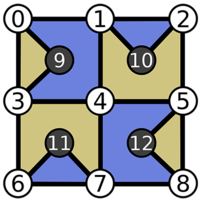
Jeff P. Barnes, Colin J. Trout, Dennis Lucarelli, and B. D. Clader

Phys. Rev. A 95, 062338 (2017) - Published 29 June, 2017
A comparison between different types of error models is performed. The investigation highlights the need for extra caution when choosing an adequate quantum error-correction routine, which is an essential step for fault-tolerant quantum computation.

Sign In to Your Journals Account

Filter

Section

Filter

Article Lookup

Enter a citation