Highlights

Paschen-Back effects and Rydberg-state diamagnetism in vapor-cell electromagnetically induced transparency

L. Ma, D. A. Anderson, and G. Raithel

Phys. Rev. A 95, 061804(R) (2017) - Published 27 June, 2017

Magnetic-field strengths are measured with high precision. The results indicate the possibility of using Rydberg atoms for sensing strong magnetic fields.

Genuine N-partite entanglement without N-partite correlation functions

Minh Cong Tran, Margherita Zuppardo, Anna de Rosier, Lukas Knips, Wiesław Laskowski, Tomasz Paterek, and Harald Weinfurter

Phys. Rev. A 95, 062331 (2017) - Published 26 June, 2017

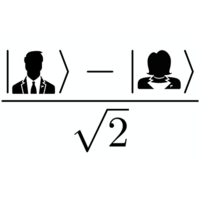
A generalized and thorough investigation of entanglement without correlations is presented. The study sheds light on the different properties of systems composed of an even or odd number of qubits, and might help to construct computable measures of multipartite correlation.

Optical properties of honeycomb photonic structures

Artem D. Sinelnik, Mikhail V. Rybin, Stanislav Y. Lukashenko, Mikhail F. Limonov, and Kirill B. Samusev

Phys. Rev. A 95, 063837 (2017) - Published 23 June, 2017

Predictions of diffraction patterns for honeycomb photonic crystals were part of a comprehensive study of these structures that may be useful in nanoscale photonic devices.

Condensation versus long-range interaction: Competing quantum phases in bosonic optical lattice systems at near-resonant Rydberg dressing

Andreas Geißler, Ivana Vasić, and Walter Hofstetter

Phys. Rev. A 95, 063608 (2017) - Published 15 June, 2017

Two distinct regimes of supersolid order are found in the ground-state phase diagram of a two-dimensional Rydberg lattice gas, where the regimes are dominated by either weak or strong dressing, reminiscent of the bistable behavior in nonitinerant dissipative systems.

Controlling the net charge on a nanoparticle optically levitated in vacuum

Martin Frimmer, Karol Luszcz, Sandra Ferreiro, Vijay Jain, Erik Hebestreit, and Lukas Novotny

Phys. Rev. A 95, 061801(R) (2017) - Published 6 June, 2017

A method to charge and discharge levitated nanoparticles is demonstrated, allowing one to enhance the control of its motion by the interaction with electric fields. The nanoparticles might be used as a tool for force sensing in microscopic scales.

Criteria for universality of quantum gates

Adam Sawicki and Katarzyna Karnas

Phys. Rev. A 95, 062303 (2017) - Published 5 June, 2017

Compact-form criteria are provided for deciding universality of a given set of gates in a finite number of steps. The criteria may also indicate what types of gates can be added to a set of nonuniversal gates to turn it into a universal set.

Quantum voting and violation of Arrow's impossibility theorem

Ning Bao and Nicole Yunger Halpern

Phys. Rev. A 95, 062306 (2017) - Published 5 June, 2017

A quantum voting system is proposed in the tradition of quantum game theory. It is shown that this system violates the quantum analogy of Arrow’s impossibility theorem, which makes claims about dictatorship in a classical electoral system.

Non-Gaussian operations on bosonic modes of light: Photon-added Gaussian channels

Krishna Kumar Sabapathy and Andreas Winter

Phys. Rev. A 95, 062309 (2017) - Published 5 June, 2017

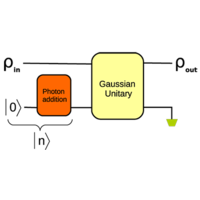
A systematic framework to study linear bosonic non-Gaussian channels of continuous-variable systems is presented. The non-Gaussian channels investigated are realized by extending quantum-limited Gaussian channels with photon addition applied to the environment state in the Stinespring dilation of these channels.

Absorption and photoluminescence in organic cavity QED

Felipe Herrera and Frank C. Spano

Phys. Rev. A 95, 053867 (2017) - Published 30 May, 2017

Organic microcavities are an attractive platform for achieving ultrastrong-coupling regimes in cavity QED. Their main drawback, the complex nature of the spectral response, is a decade-old problem that is here solved by introducing a theoretical framework in which the dynamics of dark vibronic polaritons is accounted for.

Relativistic corrections for the ground electronic state of molecular hydrogen

Mariusz Puchalski, Jacek Komasa, and Krzysztof Pachucki

Phys. Rev. A 95, 052506 (2017) - Published 25 May, 2017

A calculation of the ground-state energy of the hydrogen molecule with significantly improved numerical accuracy reveals an unexpected discrepancy between the energies predicted by the theory and those measured in experiments. This finding suggests that the yet unknown relativistic recoil corrections might be larger than the magnitudes anticipated previously.

Experimental demonstration of a Rydberg-atom beam splitter

J. Palmer and S. D. Hogan

Phys. Rev. A 95, 053413 (2017) - Published 22 May, 2017

A beam splitter with a two-dimensional electrode array is developed for spatially separating Rydberg helium atoms with high principal quantum numbers, which may find broad applications in atomic and molecular interactions and in quantum information processing.

Quantum dark solitons as qubits in Bose-Einstein condensates

M. I. Shaukat, E. V. Castro, and H. Terças

Phys. Rev. A 95, 053618 (2017) - Published 18 May, 2017

Dark solitons in a Bose-Einstein condensate could, according to calculations, function as qubits with long lifetimes.

One-body density matrix and momentum distribution of strongly interacting one-dimensional spinor quantum gases

Li Yang and Han Pu

Phys. Rev. A 95, 051602(R) (2017) - Published 12 May, 2017

An efficient theoretical technique for calculating the one-body density matrix and momentum distributions is developed for general one-dimensional spinor quantum gases in the strong-interaction regime by exploring the connection between the density matrix and one-dimensional spinless hard-core anyon gases. The technique is expected to provide significant new insights into the properties of the one-dimensional spinor gases.

Electron-impact dissociation and ionization of CN+ ions

D. S. Belic, X. Urbain, H. Cherkani-Hassani, and P. Defrance

Phys. Rev. A 95, 052702 (2017) - Published 10 May, 2017

Absolute cross sections for various pathways of electron-impact ionization and dissociation of CN+ ions are measured, which provides strong support for more accurate modeling of relevant processes in astrophysical plasma environments.

Giant acoustic atom: A single quantum system with a deterministic time delay

Lingzhen Guo, Arne Grimsmo, Anton Frisk Kockum, Mikhail Pletyukhov, and Göran Johansson

Phys. Rev. A 95, 053821 (2017) - Published 8 May, 2017

The dynamics of a 100-meter-long artificial atom is theoretically investigated. The system could be implemented using superconductor devices coupled to surface acoustic waves.

Internal structure and stability of vortices in a dipolar spinor Bose-Einstein condensate

Magnus O. Borgh, Justin Lovegrove, and Janne Ruostekoski

Phys. Rev. A 95, 053601 (2017) - Published 1 May, 2017

Effects of diplolar interactions on the structure of vortices are studied theoretically for spinor Bose-Einstein condensates of Cr atoms, where experimentally observable non-Abelian vortices, thanks to a ground-state order parameter that exhibits a hexagonal point-group symmetry, are predicted.

Measuring the Berry phase in a superconducting phase qubit by a shortcut to adiabaticity

Zhenxing Zhang, Tenghui Wang, Liang Xiang, Jiadong Yao, Jianlan Wu, and Yi Yin

Phys. Rev. A 95, 042345 (2017) - Published 28 April, 2017

A scheme for fast measurements of geometrical phases in a superconducting qubit platform is demonstrated. The result might boost developments in quantum computation.

Quantum correlation measurements in interferometric gravitational-wave detectors

D. V. Martynov et al. (LSC Instrument Authors)

Phys. Rev. A 95, 043831 (2017) - Published 21 April, 2017

A detailed experimental investigation of classical and quantum noises in the LIGO gravitational-wave detector is performed. As a result, an estimate of the quantum radiation pressure noise is given and the sensitivity for the next run of astrophysical experiments is established.

Controlling electron spin dynamics in bichromatic Kapitza-Dirac scattering by the laser field polarization

Matthias M. Dellweg and Carsten Müller

Phys. Rev. A 95, 042124 (2017) - Published 20 April, 2017

Electron spin dynamics in counterpropagating, bichromatic laser fields are studied by solving the Dirac equation with different laser polarization configurations. It is found that the spin-dependent Kapitza-Dirac effect in the dynamical processes may be used to design spin filters for free electrons.

Low-energy E0 transition between the components of the ground-state doublet in the muonic atom Th229

E. V. Tkalya

Phys. Rev. A 95, 042512 (2017) - Published 20 April, 2017

The probability of the E0 transition between the ground state and the unusually low-lying 3/2+ state of the thorium nucleus is calculated, and the mean-square charge radius of the latter state is estimated. Possible applications include a high-precision nuclear clock that is highly insensitive to its environment, and a nuclear laser.

Sign In to Your Journals Account

Filter

Section

Filter

Article Lookup

Enter a citation