Highlights

Creation of two-photon states via interactions between Rydberg atoms during light storage

J. Ruseckas, I. A. Yu, and G. Juzeliūnas

Phys. Rev. A 95, 023807 (2017) - Published 3 February, 2017

A scheme for photon pair generation based on the storage and retrieval of slow light in an atomic medium is proposed. The second-order correlation function, determined by the atom-atom interaction and the storage time, is shown to be a sensitive optical tool for probing the atomic interaction potential.

Higher-order recoil corrections for singlet states of the helium atom

Vojtěch Patkóš, Vladimir A. Yerokhin, and Krzysztof Pachucki

Phys. Rev. A 95, 012508 (2017) - Published 27 January, 2017

A nuclear-charge-radius “puzzle” is raised by this study on the difference of the nuclear charge radii — derived from high-precision atomic spectra — between 4He and 3He, where it is shown that the last previously unknown nuclear mass correction to the atomic transitions is insufficient in explaining the discrepancy.

Bounds on the speedup in quantum signaling

Pablo Arrighi, Vincent Nesme, and Reinhard F. Werner

Phys. Rev. A 95, 012331 (2017) - Published 26 January, 2017

The notion of quantum signaling speedup is thoroughly analyzed by using cellular automata to set up equivalent quantum and classical systems. It is shown that, in the long term, quantum information cannot flow asymptotically faster than classical information.

Small sets of complementary observables

M. Grassl, D. McNulty, L. Mišta, Jr., and T. Paterek

Phys. Rev. A 95, 012118 (2017) - Published 17 January, 2017

The eigenstates of complementary observables play an elementary role in quantum physics. Here the concept of unextendible sets of complementary observables is analyzed and a practical application in witnessing physical properties, such as the degree of purity of a state, is described.

Experimental observation of the Poincaré-Birkhoff scenario in a driven many-body quantum system

J. Tomkovič, W. Muessel, H. Strobel, S. Löck, P. Schlagheck, R. Ketzmerick, and M. K. Oberthaler

Phys. Rev. A 95, 011602(R) (2017) - Published 12 January, 2017

A driven anharmonic quantum oscillator is experimentally realized with collective superposition states of an interacting two-component Bose-Einstein condensate. Probing delicate quantum fluctuations during the dynamics of the system allowed the researchers to observe the emergence of stable and unstable fixed points as predicted by the Poincare-Birkhoff theorem.

Photonic crystals composed of Eaton lenses and invisible lenses

M. R. Forouzeshfard and Tomáš Tyc

Phys. Rev. A 95, 013822 (2017) - Published 11 January, 2017

A densely arranged grid of absolute optical instruments, namely Eaton and invisible lenses, provides a photonic crystal with properties that are the opposite of its tiny constituents. The band structure of the photonic crystal dictates the wavelengths that are reflected or transmitted.

Spin-orbit delays in photoemission

I. Jordan, M. Huppert, S. Pabst, A. S. Kheifets, D. Baykusheva, and H. J. Wörner

Phys. Rev. A 95, 013404 (2017) - Published 10 January, 2017

Attosceond time delays of photoelectrons released from different fine-structure states are measured experimentally, which provides fine-grained information that may help to reveal the electronic structure of atoms in greater detail.

Creation and transfer of nonclassical states of motion using Rydberg dressing of atoms in a lattice

L. F. Buchmann, K. Mølmer, and D. Petrosyan

Phys. Rev. A 95, 013403 (2017) - Published 6 January, 2017

An experimental scheme is proposed to manipulate the motional states of an array of trapped neutral atoms by Rydberg dressing, which allows squeezing and entanglement creation in the relative or center-of-mass motions of atoms in a chain.

Rate-distance tradeoff and resource costs for all-optical quantum repeaters

Mihir Pant, Hari Krovi, Dirk Englund, and Saikat Guha

Phys. Rev. A 95, 012304 (2017) - Published 4 January, 2017

A detailed analysis of the performance and required resources for an all-photonic quantum repeater architecture is presented. It is shown how to significantly outperform the bit rate achievable by any repeaterless direct-transmission protocol despite various device losses, and also dramatically decrease the number of required photon sources.

Fictitious magnetic-field gradients in optical microtraps as an experimental tool for interrogating and manipulating cold atoms

B. Albrecht, Y. Meng, C. Clausen, A. Dareau, P. Schneeweiss, and A. Rauschenbeutel

Phys. Rev. A 94, 061401(R) (2016) - Published 30 December, 2016

A technique of trapping and cooling atoms is experimentally demonstrated with an optical microtrap created in the near field of optical nanofibers, which makes an important step forward in the development of nanostructure-based interfaces for interrogating and manipulating cold atoms.

Quantum dynamics of a driven two-level molecule with variable dephasing

Samuele Grandi, Kyle D. Major, Claudio Polisseni, Sebastien Boissier, Alex S. Clark, and E. A. Hinds

Phys. Rev. A 94, 063839 (2016) - Published 19 December, 2016

Emission properties of an organic molecule are experimentally investigated, in which the capability to control dephasing rates is demonstrated. The molecule is proven to work as an ideal two-level system, thus suitable to operate as a photon source in integrated photonic circuits.

Light-by-light scattering in the Lamb shift and the bound electron g factor

Andrzej Czarnecki and Robert Szafron

Phys. Rev. A 94, 060501(R) (2016) - Published 15 December, 2016

Previously overlooked contributions to the Lamb shift are identified for the hydrogen spectrum. The resulting theoretical correction to the 1S-2S energy splitting is 28 times greater than the current experimental error, which calls physicists to scrutinize the precisely known hydrogen spectrum that was previously considered as being fully understood.

Excitation with quantum light. I. Exciting a harmonic oscillator

J. C. López Carreño and F. P. Laussy

Phys. Rev. A 94, 063825 (2016) - Published 13 December, 2016

A theoretical analysis of the interaction between quantum light and matter shows that quantum light can offer advantages over its classical analog.

Excitation with quantum light. II. Exciting a two-level system

J. C. López Carreño, C. Sánchez Muñoz, E. del Valle, and F. P. Laussy

Phys. Rev. A 94, 063826 (2016) - Published 13 December, 2016

A theoretical analysis of the interaction between quantum light and matter shows that quantum light can offer advantages over its classical analog.

Observation of broad p-wave Feshbach resonances in ultracold Rb85−Rb87 mixtures

Shen Dong, Yue Cui, Chuyang Shen, Yewei Wu, Meng Khoon Tey, Li You, and Bo Gao

Phys. Rev. A 94, 062702 (2016) - Published 6 December, 2016

Broad entrance-channel p-wave magnetic Feshbach resonances with widths up to about 140 G are observed in ultracold admixtures of 85Rb and 87Rb atoms. The broadness of the resonances is expected to significantly facilitate experimental studies of a variety of intriguing quantum few-/many-body phenomena near p-wave Feshbach resonances.

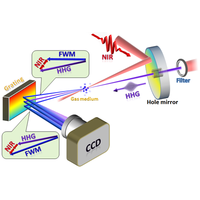
Complex structure of spatially resolved high-order-harmonic spectra

F. Catoire, A. Ferré, O. Hort, A. Dubrouil, L. Quintard, D. Descamps, S. Petit, F. Burgy, E. Mével, Y. Mairesse, and E. Constant

Phys. Rev. A 94, 063401 (2016) - Published 2 December, 2016

The origin of the characteristic features in the spatial distribution of high-order harmonic spectra is explored in a joint experiment-theory study. It is found that the spatio-spectral ring structures in the spectra can be well explained by the space- and time-dependent phase modulations of the long-trajectory contributions to the harmonic emission.

Single-mode instability in standing-wave lasers: The quantum cascade laser as a self-pumped parametric oscillator

Tobias S. Mansuripur, Camille Vernet, Paul Chevalier, Guillaume Aoust, Benedikt Schwarz, Feng Xie, Catherine Caneau, Kevin Lascola, Chung-en Zah, David P. Caffey, Timothy Day, Leo J. Missaggia, Michael K. Connors, Christine A. Wang, Alexey Belyanin, and Federico Capasso

Phys. Rev. A 94, 063807 (2016) - Published 2 December, 2016

A comprehensive theory to investigate laser instabilities is developed. It is shown that quantum cascade lasers can display both amplitude- and phase-modulated emission, opening a promising route to ultrashort-pulse generation in the midinfrared, as well as the development of compact frequency-comb sources for spectroscopy.

Noncollinear wave mixing of attosecond XUV and few-cycle optical laser pulses in gas-phase atoms: Toward multidimensional spectroscopy involving XUV excitations

Wei Cao, Erika R. Warrick, Ashley Fidler, Daniel M. Neumark, and Stephen R. Leone

Phys. Rev. A 94, 053846 (2016) - Published 23 November, 2016

A method to realize table-top attosecond spectroscopy is demonstrated in which a link is provided between background-free nonlinear signals and the time evolution of individual quantum  pathways. 

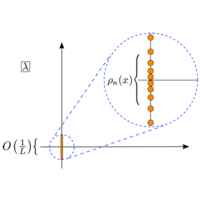
Local correlations in the attractive one-dimensional Bose gas: From Bethe ansatz to the Gross-Pitaevskii equation

Lorenzo Piroli and Pasquale Calabrese

Phys. Rev. A 94, 053620 (2016) - Published 21 November, 2016

The ground-state properties of a one-dimentional, attractively interacting Bose gas are studied at a fixed density. The exact solution obtained shows that an interesting phase transition can occur as the interaction strength is reduced to a vanishingly small value and the size of the system grows to the thermodynamic limit.

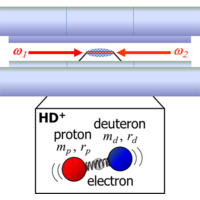
Hydrogen molecular ions for improved determination of fundamental constants

J.-Ph. Karr, L. Hilico, J. C. J. Koelemeij, and V. I. Korobov

Phys. Rev. A 94, 050501(R) (2016) - Published 18 November, 2016

An experimental scheme is proposed to help resolve the proton- (deuteron-) radius puzzle with rovibrational two-photon spectroscopy of hydrogen molecular ions measured at high precision. The technique is also expected to measure other fundamental constants, such as the Rydberg constant and the electron-proton mass ratio, at a competitive level of precision compared to the existing schemes.

Sign In to Your Journals Account

Filter

Section

Filter

Article Lookup

Enter a citation