Highlights

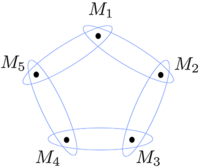
Universal bound states of one-dimensional bosons with two- and three-body attractions

Yusuke Nishida

Phys. Rev. A 97, 061603(R) (2018) - Published 14 June, 2018

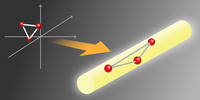
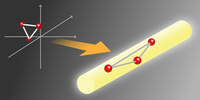
Three research groups have solved the three-body problem for bosons confined in a one-dimensional system.

Pure confinement-induced trimer in one-dimensional atomic waveguides

Ludovic Pricoupenko

Phys. Rev. A 97, 061604(R) (2018) - Published 14 June, 2018

Three research groups have solved the three-body problem for bosons confined in a one-dimensional system.

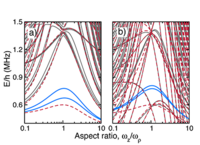
One-dimensional three-boson problem with two- and three-body interactions

G. Guijarro, A. Pricoupenko, G. E. Astrakharchik, J. Boronat, and D. S. Petrov

Phys. Rev. A 97, 061605(R) (2018) - Published 14 June, 2018

Three research groups have solved the three-body problem for bosons confined in a one-dimensional system.

Phonon interferometry for measuring quantum decoherence

M. J. Weaver, D. Newsom, F. Luna, W. Löffler, and D. Bouwmeester

Phys. Rev. A 97, 063832 (2018) - Published 14 June, 2018

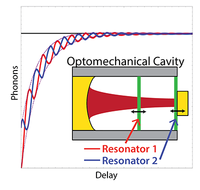
A method to measure decoherence in an optomechanical system is developed. The scheme overcomes previous limitations, promising a route to observe the quantum to classical transition in macroscopic systems.

Relativistic corrections to the ground state of H2 calculated without using the Born-Oppenheimer approximation

L. M. Wang and Z.-C. Yan

Phys. Rev. A 97, 060501(R) (2018) - Published 8 June, 2018

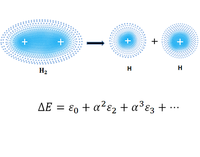
The dissociation energy of the hydrogen molecule is calculated by an accurate four-body treatment and with leading-order relativistic corrections included, which removes the dominant source of the theoretical uncertainty.

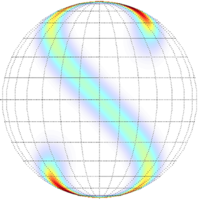
Optical rotation of levitated spheres in high vacuum

Fernando Monteiro, Sumita Ghosh, Elizabeth C. van Assendelft, and David C. Moore

Phys. Rev. A 97, 051802(R) (2018) - Published 31 May, 2018

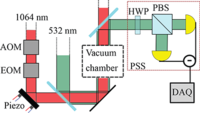
Optical levitation and controlled rotation of dielectric spheres may be applied in tiny precision sensors. In addition to demonstrating rotation at a MHz rate, the system developed in this work displays extremely low dissipation, a prerequisite to building microscopic gyroscopes.

Orbital quantum magnetism in spin dynamics of strongly interacting magnetic lanthanide atoms

Ming Li, Eite Tiesinga, and Svetlana Kotochigova

Phys. Rev. A 97, 053627 (2018) - Published 31 May, 2018

Dynamic quantum magnetism is simulated for pairs of ultracold spin-6 erbium atoms placed in a deep optical lattice. It is found that molecular spin evolution for erbium is governed by orbital anisotropy, in sharp contrast to that for magnetic chromium atoms.

PT-symmetric circuit QED

Fernando Quijandría, Uta Naether, Sahin K. Özdemir, Franco Nori, and David Zueco

Phys. Rev. A 97, 053846 (2018) - Published 30 May, 2018

A circuit-QED architecture is proposed to study PT symmetry and its breaking. In addition to being scalable, the platform is shown to be flexible and versatile concerning the engineering of Hamiltonians and corresponding fabrication on real physical systems.

Robustifying twist-and-turn entanglement with interaction-based readout

Safoura S. Mirkhalaf, Samuel P. Nolan, and Simon A. Haine

Phys. Rev. A 97, 053618 (2018) - Published 25 May, 2018

Interaction-based readout protocols that may provide rapid, quantum-enhanced metrology are studied by employing twist-and-turn dynamics. Such metrology is expected to be robust to detection noise and may optimally utilize the entanglement of a quantum state.

Two-loop self-energy in the Lamb shift of the ground and excited states of hydrogenlike ions

V. A. Yerokhin

Phys. Rev. A 97, 052509 (2018) - Published 23 May, 2018

Corrections to the Lamb shift are calculated for hydrogenlike ions to all orders in the nuclear binding-strength parameter, where the numerical accuracy is improved by one order of magnitude over previous calculations.

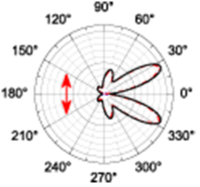
Resonant interatomic Coulombic decay in HeNe: Electron angular emission distributions

A. Mhamdi, F. Trinter, C. Rauch, M. Weller, J. Rist, M. Waitz, J. Siebert, D. Metz, C. Janke, G. Kastirke, F. Wiegandt, T. Bauer, M. Tia, B. Cunha de Miranda, M. Pitzer, H. Sann, G. Schiwietz, M. Schöffler, M. Simon, K. Gokhberg, R. Dörner, T. Jahnke, and Ph. V. Demekhin

Phys. Rev. A 97, 053407 (2018) - Published 16 May, 2018

Resonant interatomic Coulombic decay (RICD) has been studied with HeNe dimers, where two decay channels are identified by bound HeNe+ states and low-energetic He+Ne+ fragments, and the state-resolved angular emission distributions of respective RICD electrons are examined in detail.

Physics of frequency-modulated comb generation in quantum-well diode lasers

Mark Dong, Steven T. Cundiff, and Herbert G. Winful

Phys. Rev. A 97, 053822 (2018) - Published 16 May, 2018

Frequency combs are valuable metrological tools that have found several applications in spectroscopy and telecommunications. This work elucidates the physics behind their formation in diode lasers, which may spur further activities on the generation of frequency combs from chip-scale lasers.

Probing the exchange statistics of one-dimensional anyon models

Sebastian Greschner, Lorenzo Cardarelli, and Luis Santos

Phys. Rev. A 97, 053605 (2018) - Published 11 May, 2018

Experimental schemes are proposed to engineer different types of anyon Hubbard models with ultracold two-component Fermi gases in an optical lattice, which may allow for the probing of fractional statistics of quasiparticles in one-dimensional anyonic models.

From statistical proofs of the Kochen-Specker theorem to noise-robust noncontextuality inequalities

Ravi Kunjwal and Robert W. Spekkens

Phys. Rev. A 97, 052110 (2018) - Published 10 May, 2018

A generalized principle of noncontextuality applicable to noisy experimental data is discussed. An approach to obtaining noise-robust noncontextuality inequalities starting from arbitrary statistical proofs of the Kochen-Specker theorem is presented.

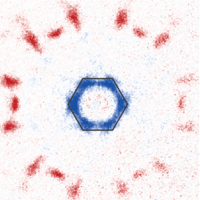
High-precision multiband spectroscopy of ultracold fermions in a nonseparable optical lattice

Nick Fläschner, Matthias Tarnowski, Benno S. Rem, Dominik Vogel, Klaus Sengstock, and Christof Weitenberg

Phys. Rev. A 97, 051601(R) (2018) - Published 3 May, 2018

Cold atoms in optical lattices offer a controlled way to study quantum many-body systems, but harnessing their potential depends on knowing the band structure of the lattice. A momentum-resolved multiband spectroscopy method is experimentally demonstrated, providing high-precision results for a graphenelike lattice.

Laser cooling at resonance

Yaakov Yudkin and Lev Khaykovich

Phys. Rev. A 97, 053403 (2018) - Published 3 May, 2018

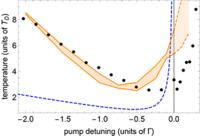
A combined experimental and theoretical study shows that laser cooling of Li atoms results in a steady-state temperature when the laser is tuned exactly on resonance with the dominant (lowest) atomic transition. This unexpected result may be of particular interest in situations that require both efficient cooling and a high photon-scattering rate.

Analysis of imperfections in the coherent optical excitation of single atoms to Rydberg states

Sylvain de Léséleuc, Daniel Barredo, Vincent Lienhard, Antoine Browaeys, and Thierry Lahaye

Phys. Rev. A 97, 053803 (2018) - Published 3 May, 2018

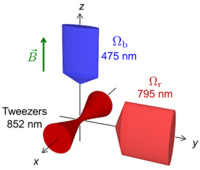
Arrays of single atoms promoted to Rydberg states offer a versatile platform for quantum simulation and implementation of two-qubit gates. A comprehensive account of the limiting factors and sources of errors in their experimental preparation is presented.

Detecting dark-matter waves with a network of precision-measurement tools

Andrei Derevianko

Phys. Rev. A 97, 042506 (2018) - Published 26 April, 2018

A method is proposed to detect some candidates of dark matter with a network of precision-measurement devices such as atomic clocks. Spatiotemporal correlation functions of the ultralight dark-matter fields are derived for formalizing the proposed scheme.

Astronomical random numbers for quantum foundations experiments

Calvin Leung, Amy Brown, Hien Nguyen, Andrew S. Friedman, David I. Kaiser, and Jason Gallicchio

Phys. Rev. A 97, 042120 (2018) - Published 24 April, 2018

To help test quantum physics, a new method generates random numbers using light from distant stars and quasars that presumably have no correlation with experiments on Earth.

Optical binding with cold atoms

C. E. Máximo, R. Bachelard, and R. Kaiser

Phys. Rev. A 97, 043845 (2018) - Published 18 April, 2018
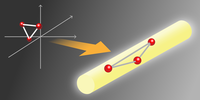
Dielectric spheres moving in a dissipative medium are subjected to the effects of optical binding, i.e., a net force resulting from the collective scattering of light. Optical binding is now shown to exist with frictionless cold atoms, bringing as an additional feature the existence of rotating bound states.

Sign In to Your Journals Account

Filter

Section

Filter

Article Lookup

Enter a citation