Recent Articles

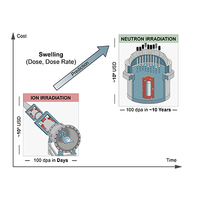
Bridging Ion and Neutron Irradiation: A Predictive Framework for Swelling in Structural Alloys

Denghuang Chen, Wei Ge, Fengping Luo, Jia Huang, Guo Li, Zhiying Gao, Jin Wang, Bowen Zhang, Yuxing Liu, Shijun Zhao, Haocheng Liu, Steven J. Zinkle, Yugang Wang, and Chenxu Wang

PRX Energy 5, 033002 (2026) - Published 7 July, 2026

This study establishes a physically grounded relationship to predict neutron swelling from ion-irradiation data, providing a practical tool to evaluate alloy performance for nuclear energy systems.

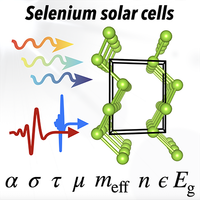
The Reemergence of Selenium Solar Cells

Rasmus S. Nielsen

PRX Energy 5, 037001 (2026) - Published 1 July, 2026

This Review contextualizes the modern revival of selenium photovoltaics by bridging historical milestones with state-of-the-art performance. By analyzing remaining efficiency bottlenecks, it offers a definitive outlook for the future development of high-efficiency selenium solar cells.

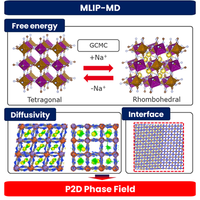
Upscaling from Ab Initio Atomistic Simulations to Electrode Scale: The Case of Manganese Hexacyanoferrate, a Cathode Material for Na-Ion Batteries

Yuan-Chi Yang, Eric Woillez, Quentin Jacquet, and Ambroise Van Roekeghem

PRX Energy 5, 033001 (2026) - Published 1 July, 2026

This work introduces a multiscale computational framework that bridges atomistic and device scales to model atomic insertion materials, including biphasic transitions. Applied to a promising sodium-ion cathode, this framework provides a comprehensive tool for designing battery materials.

Performance Modeling of Tandem Photovoltaics: A Yearlong Outdoor Degradation Analysis of a GaAs//Si Minimodule

Martin Springer, Robert Witteck, Timothy J. Silverman, John F. Geisz, William E. McMahon, and Emily L. Warren

PRX Energy 5, 023014 (2026) - Published 18 June, 2026

This work presents a method for modeling multijunction solar cell performance under realistic conditions, validated by a year of field data from a GaAs/Si tandem module.

Microscopic Mechanisms of Low Lattice Thermal Conductivity in AlxGa1−xN Alloys Revealed by Neuroevolution Machine-Learning Potential

Yuwen Zhang, Tao Ouyang, Zheyong Fan, and Wu Li

PRX Energy 5, 023013 (2026) - Published 18 June, 2026

Advanced computational insights reveal how disorder dictates the low thermal conductivity of (Al,Ga)N, a key factor for thermal management in high-power electronics

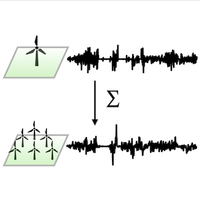
Modeling Multiscale Atmospheric Interactions in Wind-Farm Power Spectra

Yang Liu and Richard J.A.M. Stevens

PRX Energy 5, 023012 (2026) - Published 17 June, 2026

This work introduces a model that quantifies how wind speed variations across different scales dictate the power output of wind farms. Validated against numerical simulations and field measurements, this predictive framework provides a robust tool for optimizing next-generation wind farm designs.

Optimal Control of Bit Erasure in Stochastic Random Access Memory

Songela W. Chen and David T. Limmer

PRX Energy 5, 023011 (2026) - Published 16 June, 2026

This work models the thermodynamic costs of memory storage in realistic circuits, offering an optimization scheme to enable energy-efficient computation.

Rational Design Principles for Na- and Li-Ion Carbon Anodes from Interlayer Spacing Control

Ihor Radchenko and Oleksandr I. Malyi

PRX Energy 5, 023010 (2026) - Published 11 June, 2026

Advanced computational modeling reveals that optimal carbon anodes for lithium-ion and sodium-ion batteries require distinct interlayer spacings, driven by unique ion intercalation behaviors in layered carbon materials.

Local Structural Coherence and Interfacial Charge Transfer in Cu2S/MoS2 Heterostructure

Ankita Kumari, S. Avery Vigil, Konstantina G. Mason, Saurabh Sivakumar, Ahmed H. Biby, Pranay Ninawe, Charles B. Musgrave, Ambarish R. Kulkarni, Ivan A. Moreno-Hernandez, and Jesús M. Velázquez

PRX Energy 5, 023009 (2026) - Published 9 June, 2026

This study shows how locally coherent Cu2S/MoS2 interfaces alter interfacial charge transfer and electronic structure, providing a design principle for tuning catatlytic reactivity in heterostructured materials.

Balanced Intra- and Interchain Exciton Delocalization Enables Efficient All-Polymer Solar Cells

Yu Guo, Yuang Fu, Xianzhao Liu, Youcai Liang, Fei Huang, Xinhui Lu, and Philip C.Y. Chow

PRX Energy 5, 023008 (2026) - Published 8 June, 2026

A combined spectroscopic and structural analysis identifies structural impacts on carrier transport in polymeric nonfullerene acceptors. The findings establish a framework for the rational design of high-efficiency organic solar cells.

Collective and Nonlinear Structure of Wind-Power Correlations

Samy E. Lakhal, J.E. Sardonia, and M.M. Bandi

PRX Energy 5, 023007 (2026) - Published 28 May, 2026

Analysis of five years of wind farm data uncovers correlated fluctuations in wind speed across scales and provides the foundation needed to optimize wind power forecasting and control strategies.

Upper Bounds on Broadband Absorption and Application to Solar Cells

Stéphane Collin and Maxime Giteau

PRX Energy 5, 023006 (2026) - Published 26 May, 2026

A universal model for multiresonant absorption identifies the upper bounds on broadband absorption and provides a tool to to determine the optimal light trapping strategy for solar cells.

Bayesian Methods for the Investigation of Temperature Dependence in Conductivity

Andrew R. McCluskey, Samuel W. Coles, and Benjamin J. Morgan

PRX Energy 5, 022001 (2026) - Published 21 May, 2026

This Tutorial demonstrates how Bayesian methods can be applied to analyze temperature-dependent transport data, offering practical workflows to model ionic conductivity in energy materials.

Comparative Study of Anisole and 4-Vinylanisole Pyrolysis: Insight into Char, Tar, and Particle Formation During Lignin Pyrolysis

Jas Shahanand, Surjendu Bhattacharyya, Alexander K. Lemmens, Nureshan Dias, Musahid Ahmed, Thomas J. A. Wolf, Ray P. Bambha, and Hope A. Michelsen

PRX Energy 5, 023005 (2026) - Published 15 May, 2026

Detailed mass spectrometry reveals the chemical transformation pathways during pyrolysis of the model lignin compounds anisole and 4-vinylanisole, offering key insights for sustainable biomass conversion and the formation of particulates in wildfires.

Charge-Preserving Operations in Quantum Batteries

André H.A. Malavazi, Borhan Ahmadi, Paweł Horodecki, and Pedro R. Dieguez

PRX Energy 5, 023004 (2026) - Published 28 April, 2026

This work formalizes operations that preserve ergotropy, or extractable work, while redistributing its internal structure during quantum state transformations, with implications for quantum battery charging and storage.

Quantum Batteries: A Nonreciprocal Thermal Edge

Niaz Ali Khan and Dahai He

PRX Energy 5, 023003 (2026) - Published 23 April, 2026

Thermal-reservoir-driven nonreciprocal quantum batteries provide thermally shielded extractable work, offering a pathway to practical, high-performance energy storage.

Emerging Developments of Inorganic Magnesium Solid-State Electrolytes

Anik Brinckerhoff and Hong Fang

PRX Energy 5, 027001 (2026) - Published 16 April, 2026

This Review summarizes recent progress in the search for high-performance solid-state electrolytes for magnesium-based batteries.

Four-Dimensional Quasielastic Neutron Scattering (4D-QENS) Analysis of Correlated Ionic Conduction in SrCl2

Jared Coles, Omar Chmaissem, Matthew Krogstad, Daniel M. Pajerowski, Feng Ye, Duck Young Chung, Mercouri G. Kanatzidis, Stephan Rosenkranz, and Raymond Osborn

PRX Energy 5, 023002 (2026) - Published 14 April, 2026

An advanced neutron scattering technique reveals the complex ionic conduction mechanism of the superionic phase of SrCl2. This approach will enable insight into solid ionic conductors for energy generation and storage.

Halocarbon Thermochemistry: A Challenge for Density Functional Theory

Dorian Armando Acevedo-Castro, Jhon Faber Zapata, Ricardo Urrego-Ortiz, Santiago Builes, and Federico Calle-Vallejo

PRX Energy 5, 023001 (2026) - Published 9 April, 2026

This work introduces corrections that significantly improve the accuracy of models for halocarbon chemistry, making computational approaches to understand catalytic reactions and environmental chemistry more reliable.

Elastic Constants and Bending Rigidities from Long-Wavelength Perturbation Expansions

Changpeng Lin, Samuel Poncé, Francesco Macheda, Francesco Mauri, and Nicola Marzari

PRX Energy 5, 013012 (2026) - Published 19 March, 2026

An advanced framework simultaneously models elastic constants and bending rigidities of materials, showing good agreement with experimental precedent. This improved modeling of mechanical properties has implications for the development of new materials for solid-state batteries and other energy technologies.

Sign In to Your Journals Account

Filter

Recent Issues

Vol. 5, Iss. 4
October - December 2026
Vol. 5, Iss. 3
July - September 2026
Vol. 5, Iss. 2
April - June 2026
Vol. 5, Iss. 1
January - March 2026
Category
Article Type

Filter

Article Lookup

Enter a citation