Browse by Subject

Geometric Speed Limit of Accessible Many-Body State Preparation

Marin Bukov, Dries Sels, and Anatoli Polkovnikov

Phys. Rev. X 9, 011034 (2019) - Published 20 February, 2019

A mathematical analysis reveals a lower bound for the quantum speed limit—the speed required to prepare a quantum state from some initial state.

Quantum Anomalous Vortex and Majorana Zero Mode in Iron-Based Superconductor Fe(Te,Se)

Kun Jiang, Xi Dai, and Ziqiang Wang

Phys. Rev. X 9, 011033 (2019) - Published 19 February, 2019

In superconductors with strong spin-orbit coupling, magnetic ions could produce vortices that support robust Majorana zero modes without the need for an external magnetic field, a potentially powerful advantage for quantum computing.

Molecular Topology and the Surface Chemical Bond: Alternant Versus Nonalternant Aromatic Systems as Functional Structural Elements

Benedikt P. Klein, Nadine J. van der Heijden, Stefan R. Kachel, Markus Franke, Claudio K. Krug, Katharina K. Greulich, Lukas Ruppenthal, Philipp Müller, Phil Rosenow, Shayan Parhizkar, François C. Bocquet, Martin Schmid, Wolfgang Hieringer, Reinhard J. Maurer, Ralf Tonner, Christian Kumpf, Ingmar Swart, and J. Michael Gottfried

Phys. Rev. X 9, 011030 (2019) - Published 13 February, 2019

The nonalternant aromatic hydrocarbon azulene bonds much more strongly to copper than its alternant isomer naphthalene, illustrating the critical role of molecular topology in controlling metal-organic interfaces in electronic devices.

Ferromagnetism and Conductivity in Atomically Thin SrRuO3

H. Boschker, T. Harada, T. Asaba, R. Ashoori, A. V. Boris, H. Hilgenkamp, C. R. Hughes, M. E. Holtz, L. Li, D. A. Muller, H. Nair, P. Reith, X. Renshaw Wang, D. G. Schlom, A. Soukiassian, and J. Mannhart

Phys. Rev. X 9, 011027 (2019) - Published 8 February, 2019

A single layer of the transition-metal oxide SrRuO3 remains magnetic and conductive when embedded in a lattice of SrTiO3, showing that SrRuO3 could be a promising material for spintronics applications.

Magnon Transport in Quasi-Two-Dimensional van der Waals Antiferromagnets

Wenyu Xing, Luyi Qiu, Xirui Wang, Yunyan Yao, Yang Ma, Ranran Cai, Shuang Jia, X. C. Xie, and Wei Han

Phys. Rev. X 9, 011026 (2019) - Published 7 February, 2019

Observations of long-distance magnon transport—the propagation of quantized spin waves—demonstrate that 2D van der Waals magnets could provide a platform for information and computing applications based on magnonics.

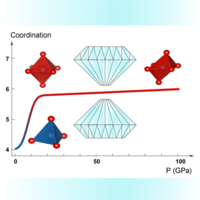
Persistent Octahedral Coordination in Amorphous GeO2 Up to 100 GPa by Kβ′′ X-Ray Emission Spectroscopy

G. Spiekermann, M. Harder, K. Gilmore, P. Zalden, Ch. J. Sahle, S. Petitgirard, M. Wilke, N. Biedermann, C. Weis, W. Morgenroth, J. S. Tse, E. Kulik, N. Nishiyama, H. Yavaş, and C. Sternemann

Phys. Rev. X 9, 011025 (2019) - Published 6 February, 2019

X-ray emission spectra reveal that under pressure conditions of Earth’s lower mantle, the compaction mechanism in amorphous germanium dioxide on the atomic scale is similar to that of its crystalline form.

Many-Body Quantum Monte Carlo Study of 2D Materials: Cohesion and Band Gap in Single-Layer Phosphorene

T. Frank, R. Derian, K. Tokár, L. Mitas, J. Fabian, and I. Štich

Phys. Rev. X 9, 011018 (2019) - Published 30 January, 2019

Quantum Monte Carlo methods provide the first reliable prediction for the fundamental electronic band gap in phosphorene, a material with invaluable optical and electronic properties.

Disentangling Interacting Symmetry-Protected Phases of Fermions in Two Dimensions

Tyler D. Ellison and Lukasz Fidkowski

Phys. Rev. X 9, 011016 (2019) - Published 29 January, 2019

A new quantum-circuit-based approach to studying fermionic symmetry-protected topological phases could help researchers understand the classification and characterization of these exotic states of matter.

Transforming Mesoscale Granular Plasticity Through Particle Shape

Kieran A. Murphy, Karin A. Dahmen, and Heinrich M. Jaeger

Phys. Rev. X 9, 011014 (2019) - Published 24 January, 2019

Experiments show that plastic deformation in stressed amorphous materials exhibits a characteristic magnitude that depends on particle shape, an insight that could help prevent catastrophic failure.

Higher-Order Bulk-Boundary Correspondence for Topological Crystalline Phases

Luka Trifunovic and Piet W. Brouwer

Phys. Rev. X 9, 011012 (2019) - Published 22 January, 2019

A new complete classification of the bulk-boundary correspondence for topological crystalline phases relates the bulk material properties to the dimensionality and conductance of topologically protected boundary states.

Search for the Magnetic Monopole at a Magnetoelectric Surface

Q. N. Meier, M. Fechner, T. Nozaki, M. Sahashi, Z. Salman, T. Prokscha, A. Suter, P. Schoenherr, M. Lilienblum, P. Borisov, I. E. Dzyaloshinskii, M. Fiebig, H. Luetkens, and N. A. Spaldin

Phys. Rev. X 9, 011011 (2019) - Published 18 January, 2019

Magnetic monopole behavior may arise in a magnetoelectric material when an electric charge is brought near the surface, according to an analysis of Maxwell’s equations and experiments using muon-spin spectroscopy.

p-Band Engineering in Artificial Electronic Lattices

M. R. Slot, S. N. Kempkes, E. J. Knol, W. M. J. van Weerdenburg, J. J. van den Broeke, D. Wegner, D. Vanmaekelbergh, A. A. Khajetoorians, C. Morais Smith, and I. Swart

Phys. Rev. X 9, 011009 (2019) - Published 16 January, 2019

A new type of artificial electronic lattice provides a means to control coupling among p-type orbitals, paving the way for electronic devices that manipulate orbital degrees of freedom in addition to charge and spin.

Quantum and Classical Phases of the Pyrochlore Heisenberg Model with Competing Interactions

Yasir Iqbal, Tobias Müller, Pratyay Ghosh, Michel J. P. Gingras, Harald O. Jeschke, Stephan Rachel, Johannes Reuther, and Ronny Thomale

Phys. Rev. X 9, 011005 (2019) - Published 8 January, 2019

A new theoretical framework for studying frustrated quantum magnets reveals the effects of quantum fluctuations as the system becomes more quantum in nature.

High-Efficiency Measurement of an Artificial Atom Embedded in a Parametric Amplifier

A. Eddins, J. M. Kreikebaum, D. M. Toyli, E. M. Levenson-Falk, A. Dove, W. P. Livingston, B. A. Levitan, L. C. G. Govia, A. A. Clerk, and I. Siddiqi

Phys. Rev. X 9, 011004 (2019) - Published 7 January, 2019

A new device circumvents a crucial limit to measurement efficiencies of superconducting circuits, providing a route for investigations of fundamental quantum effects and quantum control protocols.

Robust and Clean Majorana Zero Mode in the Vortex Core of High-Temperature Superconductor (Li0.84Fe0.16)OHFeSe

Qin Liu, Chen Chen, Tong Zhang, Rui Peng, Ya-Jun Yan, Chen-Hao-Ping Wen, Xia Lou, Yu-Long Huang, Jin-Peng Tian, Xiao-Li Dong, Guang-Wei Wang, Wei-Cheng Bao, Qiang-Hua Wang, Zhi-Ping Yin, Zhong-Xian Zhao, and Dong-Lai Feng

Phys. Rev. X 8, 041056 (2018) - Published 28 December, 2018

New experiments find that Majorana zero modes—quasiparticles with potential quantum computing applications—can persist in topological superconductors, despite previous difficulties in doing so.

Depolarization of Electronic Spin Qubits Confined in Semiconductor Quantum Dots

Dan Cogan, Oded Kenneth, Netanel H. Lindner, Giora Peniakov, Caspar Hopfmann, Dan Dalacu, Philip J. Poole, Pawel Hawrylak, and David Gershoni

Phys. Rev. X 8, 041050 (2018) - Published 18 December, 2018

It may be possible to create a confined electronic spin qubit with a long coherence time in a semiconductor quantum dot, greatly increasing the utility of quantum dots as light-matter interfaces in quantum information processing applications.

Machine Learning a General-Purpose Interatomic Potential for Silicon

Albert P. Bartók, James Kermode, Noam Bernstein, and Gábor Csányi

Phys. Rev. X 8, 041048 (2018) - Published 14 December, 2018

A machine-learning based approach to computing the energy and forces of silicon atoms circumvents the need for complex electronic structure calculations, offering an efficient method for predicting material properties that can be extended to other materials.

Anomalous Metamagnetism in the Low Carrier Density Kondo Lattice YbRh3Si7

Binod K. Rai et al.

Phys. Rev. X 8, 041047 (2018) - Published 13 December, 2018

New experiments reveal anomalous metamagnetic transitions in single crystals of YbRh3Si7, likely arising from competition between the crystal’s highly anisotropic electric field and magnetic exchange interactions.

From Colossal to Zero: Controlling the Anomalous Hall Effect in Magnetic Heusler Compounds via Berry Curvature Design

Kaustuv Manna, Lukas Muechler, Ting-Hui Kao, Rolf Stinshoff, Yang Zhang, Johannes Gooth, Nitesh Kumar, Guido Kreiner, Klaus Koepernik, Roberto Car, Jürgen Kübler, Gerhard H. Fecher, Chandra Shekhar, Yan Sun, and Claudia Felser

Phys. Rev. X 8, 041045 (2018) - Published 11 December, 2018

By engineering the Berry curvature in a Heusler magnet, it is possible to tune the anomalous Hall conductivity without affecting the material’s magnetization.

Unconventional Superconductivity and Density Waves in Twisted Bilayer Graphene

Hiroki Isobe, Noah F. Q. Yuan, and Liang Fu

Phys. Rev. X 8, 041041 (2018) - Published 5 December, 2018

A new theoretical analysis explores the nature and origin of the superconducting and insulating phases recently seen in twisted bilayer graphene.

Sign In to Your Journals Account

Filter

Subject

Filter

Article Lookup

Enter a citation