Browse by Subject

Emergent Dark States from Superradiant Dynamics in Multilevel Atoms in a Cavity

A. Piñeiro Orioli, J. K. Thompson, and A. M. Rey

Phys. Rev. X 12, 011054 (2022) - Published 21 March, 2022

Interactions between light and multilevel atoms in a cavity can lead to dark subradiant states, which suppress emission into the cavity—a useful behavior for many quantum technologies.

Detection of Long-Lived Complexes in Ultracold Atom-Molecule Collisions

Matthew A. Nichols, Yi-Xiang Liu, Lingbang Zhu, Ming-Guang Hu, Yu Liu, and Kang-Kuen Ni

Phys. Rev. X 12, 011049 (2022) - Published 15 March, 2022

Intermediate, nonreactive atom-molecule complexes last for a surprisingly long time.

Absence of Heating in a Uniform Fermi Gas Created by Periodic Driving

Constantine Shkedrov, Meny Menashes, Gal Ness, Anastasiya Vainbaum, Ehud Altman, and Yoav Sagi

Phys. Rev. X 12, 011041 (2022) - Published 3 March, 2022

Experiments show that rapidly modulating the potential of a trapped quantum gas—a promising technique for quantum technologies—generates little heat, permitting collective behavior among the atoms.

Dual-Element, Two-Dimensional Atom Array with Continuous-Mode Operation

Kevin Singh, Shraddha Anand, Andrew Pocklington, Jordan T. Kemp, and Hannes Bernien

Phys. Rev. X 12, 011040 (2022) - Published 2 March, 2022

Two research teams have created arrays containing two different neutral atoms, a promising platform for quantum computing.

Observation of the Quantum Boomerang Effect

Roshan Sajjad, Jeremy L. Tanlimco, Hector Mas, Alec Cao, Eber Nolasco-Martinez, Ethan Q. Simmons, Flávio L. N. Santos, Patrizia Vignolo, Tommaso Macrì, and David M. Weld

Phys. Rev. X 12, 011035 (2022) - Published 23 February, 2022

After being pushed in one direction, the average momentum of a Bose-Einstein condensate is seen to slow and return to its original value.

Coherent Feedback Cooling of a Nanomechanical Membrane with Atomic Spins

Gian-Luca Schmid, Chun Tat Ngai, Maryse Ernzer, Manel Bosch Aguilera, Thomas M. Karg, and Philipp Treutlein

Phys. Rev. X 12, 011020 (2022) - Published 31 January, 2022

A cloud of cold atoms can coherently control the vibrations of a millimeter-scale membrane.

Asymmetric Attosecond Photoionization in Molecular Shape Resonance

Xiaochun Gong, Wenyu Jiang, Jihong Tong, Junjie Qiang, Peifen Lu, Hongcheng Ni, Robert Lucchese, Kiyoshi Ueda, and Jian Wu

Phys. Rev. X 12, 011002 (2022) - Published 4 January, 2022

A technique for timing the photoemission from a molecule shows an attosecond-scale delay of the electron wave packet from opposite ends of the molecule, thus demonstrating a new tool for exploring photoelectron dynamics.

Revealing the Influence of Molecular Chirality on Tunnel-Ionization Dynamics

E. Bloch, S. Larroque, S. Rozen, S. Beaulieu, A. Comby, S. Beauvarlet, D. Descamps, B. Fabre, S. Petit, R. Taïeb, A. J. Uzan, V. Blanchet, N. Dudovich, B. Pons, and Y. Mairesse

Phys. Rev. X 11, 041056 (2021) - Published 21 December, 2021

When tunneling through a rotating chiral barrier, electron wave packets retain a signature of the barrier dynamics in both their amplitude and phase.

Transverse Spin Dynamics in the Anisotropic Heisenberg Model Realized with Ultracold Atoms

Paul Niklas Jepsen, Wen Wei Ho, Jesse Amato-Grill, Ivana Dimitrova, Eugene Demler, and Wolfgang Ketterle

Phys. Rev. X 11, 041054 (2021) - Published 17 December, 2021

Experiments with chains of ultracold trapped atoms realize an idealized model to describe spin physics and probe how the dynamics of wavelike spin patterns depends on how the spins interact.

Algorithmic Ground-State Cooling of Weakly Coupled Oscillators Using Quantum Logic

Steven A. King, Lukas J. Spieß, Peter Micke, Alexander Wilzewski, Tobias Leopold, José R. Crespo López-Urrutia, and Piet O. Schmidt

Phys. Rev. X 11, 041049 (2021) - Published 10 December, 2021

A new approach to laser cooling vastly extends this technique to many more species and even macroscopic objects, as demonstrated by cooling a highly charged ion to under 200 μK—close to the quantum-mechanical ground state.

Inner-Shell-Ionization-Induced Femtosecond Structural Dynamics of Water Molecules Imaged at an X-Ray Free-Electron Laser

T. Jahnke et al.

Phys. Rev. X 11, 041044 (2021) - Published 3 December, 2021

X-ray experiments and theoretical modeling provide a movie of how a water molecule responds to ionizing radiation, setting the stage for further studies of radiation chemistry in aqueous environments.

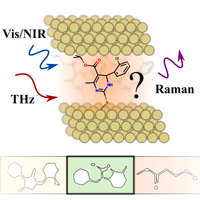
Molecular Screening for Terahertz Detection with Machine-Learning-Based Methods

Zsuzsanna Koczor-Benda, Alexandra L. Boehmke, Angelos Xomalis, Rakesh Arul, Charlie Readman, Jeremy J. Baumberg, and Edina Rosta

Phys. Rev. X 11, 041035 (2021) - Published 18 November, 2021

A detailed computational study of millions of molecules identifies a number of candidates whose properties make them ideal for converting terahertz radiation to visible light.

Integrated Optical Addressing of a Trapped Ytterbium Ion

M. Ivory, W. J. Setzer, N. Karl, H. McGuinness, C. DeRose, M. Blain, D. Stick, M. Gehl, and L. P. Parazzoli

Phys. Rev. X 11, 041033 (2021) - Published 16 November, 2021

A surface ion trap with integrated waveguides produces no additional heating and modest frequency shifts due to photoinduced charging when uv light is delivered to an ion, thus providing the stability needed for compact quantum timekeeping devices.

Ideal-Gas Approach to Hydrodynamics

Zhe-Yu Shi, Chao Gao, and Hui Zhai

Phys. Rev. X 11, 041031 (2021) - Published 12 November, 2021

Solutions to hydrodynamic equations can be constructed from solutions to certain ideal gas equations, revealing an unexpected connection between two disparate regimes of matter transport.

Tracking Evaporative Cooling of a Mesoscopic Atomic Quantum Gas in Real Time

Johannes Zeiher, Julian Wolf, Joshua A. Isaacs, Jonathan Kohler, and Dan M. Stamper-Kurn

Phys. Rev. X 11, 041017 (2021) - Published 25 October, 2021

Continuously tracking the number of atoms in an evaporating ultracold quantum gas uncovers stochastic fluctuations, providing a platform for exploring the interplay between randomness and nonlinear dynamics.

Universal Limitations on Quantum Key Distribution over a Network

Siddhartha Das, Stefan Bäuml, Marek Winczewski, and Karol Horodecki

Phys. Rev. X 11, 041016 (2021) - Published 22 October, 2021

A universal framework for assessing the security of quantum-based communication describes bounds for generating secure keys and requirements for any entanglement-based protocol that distributes those keys among trusted users.

Emergence of a Sharp Quantum Collective Mode in a One-Dimensional Fermi Polaron

Pavel E. Dolgirev, Yi-Fan Qu, Mikhail B. Zvonarev, Tao Shi, and Eugene Demler

Phys. Rev. X 11, 041015 (2021) - Published 21 October, 2021

Under certain conditions, the components of a polaron quasiparticle—an impurity plus a cloud of atoms—can form a long-lived collective excitation that may help explain recent studies of far-from-equilibrium impurity dynamics.

Ultrafast Vibrational Relaxation Dynamics in XUV-Excited Polycyclic Aromatic Hydrocarbon Molecules

A. Boyer, M. Hervé, V. Despré, P. Castellanos Nash, V. Loriot, A. Marciniak, A. G. G. M. Tielens, A. I. Kuleff, and F. Lépine

Phys. Rev. X 11, 041012 (2021) - Published 18 October, 2021

An investigation of how polycyclic aromatic hydrocarbons respond to extreme ultraviolet radiation provides insight into internal molecular dynamics that can help improve models of interstellar chemistry.

Coherent Optical Creation of a Single Molecule

Yichao Yu, Kenneth Wang, Jonathan D. Hood, Lewis R. B. Picard, Jessie T. Zhang, William B. Cairncross, Jeremy M. Hutson, Rosario Gonzalez-Ferez, Till Rosenband, and Kang-Kuen Ni

Phys. Rev. X 11, 031061 (2021) - Published 17 September, 2021

The use of optical tweezers to create an NaCs molecule from its constituent atoms demonstrates a flexible platform for building molecular species one atom at a time.

Enantiomer Superpositions from Matter-Wave Interference of Chiral Molecules

Benjamin A. Stickler, Mira Diekmann, Robert Berger, and Daqing Wang

Phys. Rev. X 11, 031056 (2021) - Published 14 September, 2021

Matter-wave diffraction can put chiral molecules into superpositions of left- and right-handed forms, enabling new studies of how the two states interact with their environment

Sign In to Your Journals Account

Filter

Filter

Article Lookup

Enter a citation