Recent Articles

Spectral Dimension Reduction of Complex Dynamical Networks

Edward Laurence, Nicolas Doyon, Louis J. Dubé, and Patrick Desrosiers

Phys. Rev. X 9, 011042 (2019) - Published 4 March, 2019

A new mathematical framework for describing large complex networks simplifies predictions of failure in the network, providing clear and concise insight into how catastrophic breakdowns occur.

Direct Imaging of the Energy-Transfer Enhancement between Two Dipoles in a Photonic Cavity

Kaizad Rustomji, Marc Dubois, Boris Kuhlmey, C. Martijn de Sterke, Stefan Enoch, Redha Abdeddaim, and Jérôme Wenger

Phys. Rev. X 9, 011041 (2019) - Published 1 March, 2019

Photonic cavities provide a way to enhance interactions between dipoles. A new theoretical and experimental analysis provides design rules for optimizing this enhancement at microwave frequencies.

Willis Metamaterial on a Structured Beam

Yongquan Liu, Zixian Liang, Jian Zhu, Lingbo Xia, Olivier Mondain-Monval, Thomas Brunet, Andrea Alù, and Jensen Li

Phys. Rev. X 9, 011040 (2019) - Published 28 February, 2019

A tailored metamaterial—which promises material properties beyond what nature can give us—exhibits a long-sought connection between some elastic-wave parameters, providing a new path to controlling wave propagation in artificial structures.

From Dirac Semimetals to Topological Phases in Three Dimensions: A Coupled-Wire Construction

Syed Raza, Alexander Sirota, and Jeffrey C. Y. Teo

Phys. Rev. X 9, 011039 (2019) - Published 27 February, 2019

A new theoretical framework shows how electron interactions can lead to the emergence of exotic pointlike and looplike quasiparticles in 3D materials.

Exotic Magnetic Field-Induced Spin-Superstructures in a Mixed Honeycomb-Triangular Lattice System

V. Ovidiu Garlea, Liurukara D. Sanjeewa, Michael A. McGuire, Cristian D. Batista, Anjana M. Samarakoon, David Graf, Barry Winn, Feng Ye, Christina Hoffmann, and Joseph W. Kolis

Phys. Rev. X 9, 011038 (2019) - Published 26 February, 2019

New magnetic “superstructures” appear in an antiferromagnet with alternating atomic layers of triangular and honeycomb lattices, showcasing the role of spin fluctuations in determining novel magnetic properties.

Proof of the Bulk-Edge Correspondence through a Link between Topological Photonics and Fluctuation-Electrodynamics

Mário G. Silveirinha

Phys. Rev. X 9, 011037 (2019) - Published 25 February, 2019

A relation between unidirectional waves in topological photonic materials and the underlying topology has deep roots to the thermally induced angular momentum of light, implying that the fluctuation-induced angular momentum density in a topological cavity is precisely quantized. 

Tunable Metasurfaces: A Polarization Rotator Design

Zhanni Wu, Younes Ra’di, and Anthony Grbic

Phys. Rev. X 9, 011036 (2019) - Published 22 February, 2019

An electronically tunable metasurface can rotate the polarization angle of an incident polarized electromagnetic wave, showing promise for a new paradigm of real-time wave manipulation.

Frustrated Magnetism in Mott Insulating (V1−xCrx)2O3

J. C. Leiner, H. O. Jeschke, R. Valentí, S. Zhang, A. T. Savici, J. Y. Y. Lin, M. B. Stone, M. D. Lumsden, Jiawang Hong, O. Delaire, Wei Bao, and C. L. Broholm

Phys. Rev. X 9, 011035 (2019) - Published 21 February, 2019

Neutron scattering experiments reveal evidence of magnetic frustration as electrons gridlock in chromium-doped V2O3.

Geometric Speed Limit of Accessible Many-Body State Preparation

Marin Bukov, Dries Sels, and Anatoli Polkovnikov

Phys. Rev. X 9, 011034 (2019) - Published 20 February, 2019

A mathematical analysis reveals a lower bound for the quantum speed limit—the speed required to prepare a quantum state from some initial state.

Quantum Anomalous Vortex and Majorana Zero Mode in Iron-Based Superconductor Fe(Te,Se)

Kun Jiang, Xi Dai, and Ziqiang Wang

Phys. Rev. X 9, 011033 (2019) - Published 19 February, 2019

In superconductors with strong spin-orbit coupling, magnetic ions could produce vortices that support robust Majorana zero modes without the need for an external magnetic field, a potentially powerful advantage for quantum computing.

Nano-Resolved Current-Induced Insulator-Metal Transition in the Mott Insulator Ca2RuO4

Jiawei Zhang, Alexander S. McLeod, Qiang Han, Xinzhong Chen, Hans A. Bechtel, Ziheng Yao, S. N. Gilbert Corder, Thomas Ciavatti, Tiger H. Tao, Meigan Aronson, G. L. Carr, Michael C. Martin, Chanchal Sow, Shingo Yonezawa, Fumihiko Nakamura, Ichiro Terasaki, D. N. Basov, Andrew J. Millis, Yoshiteru Maeno, and Mengkun Liu

Phys. Rev. X 9, 011032 (2019) - Published 15 February, 2019

Infrared near-field imaging experiments reveal mesoscopic changes during an insulator-to-metal transition of a Mott insulator subject to a direct current, providing insight into how the electronic behavior of these materials can be electrically tuned.

Quantifying Hidden Order out of Equilibrium

Stefano Martiniani, Paul M. Chaikin, and Dov Levine

Phys. Rev. X 9, 011031 (2019) - Published 14 February, 2019

Lossless data compression provides a way to quantify the amount of order in equilibrium and nonequilibrium many-body systems, identifying and characterizing phase transitions even when the nature of the underlying order is unknown.

Molecular Topology and the Surface Chemical Bond: Alternant Versus Nonalternant Aromatic Systems as Functional Structural Elements

Benedikt P. Klein, Nadine J. van der Heijden, Stefan R. Kachel, Markus Franke, Claudio K. Krug, Katharina K. Greulich, Lukas Ruppenthal, Philipp Müller, Phil Rosenow, Shayan Parhizkar, François C. Bocquet, Martin Schmid, Wolfgang Hieringer, Reinhard J. Maurer, Ralf Tonner, Christian Kumpf, Ingmar Swart, and J. Michael Gottfried

Phys. Rev. X 9, 011030 (2019) - Published 13 February, 2019

The nonalternant aromatic hydrocarbon azulene bonds much more strongly to copper than its alternant isomer naphthalene, illustrating the critical role of molecular topology in controlling metal-organic interfaces in electronic devices.

Multicellular Rosettes Drive Fluid-solid Transition in Epithelial Tissues

Le Yan and Dapeng Bi

Phys. Rev. X 9, 011029 (2019) - Published 12 February, 2019

A new model explains the origin and nature of the solid-fluid phase transition in biological tissues by taking into account the presence of five-cell junctions known as rosettes.

Coherent Manipulation of Orbital Feshbach Molecules of Two-Electron Atoms

G. Cappellini, L. F. Livi, L. Franchi, D. Tusi, D. Benedicto Orenes, M. Inguscio, J. Catani, and L. Fallani

Phys. Rev. X 9, 011028 (2019) - Published 11 February, 2019

By demonstrating precise control of the internal states of diatomic ytterbium molecules, new experiments demonstrate the potential for using ultracold molecules in a wide range of future quantum technologies.

Ferromagnetism and Conductivity in Atomically Thin SrRuO3

H. Boschker, T. Harada, T. Asaba, R. Ashoori, A. V. Boris, H. Hilgenkamp, C. R. Hughes, M. E. Holtz, L. Li, D. A. Muller, H. Nair, P. Reith, X. Renshaw Wang, D. G. Schlom, A. Soukiassian, and J. Mannhart

Phys. Rev. X 9, 011027 (2019) - Published 8 February, 2019

A single layer of the transition-metal oxide SrRuO3 remains magnetic and conductive when embedded in a lattice of SrTiO3, showing that SrRuO3 could be a promising material for spintronics applications.

Magnon Transport in Quasi-Two-Dimensional van der Waals Antiferromagnets

Wenyu Xing, Luyi Qiu, Xirui Wang, Yunyan Yao, Yang Ma, Ranran Cai, Shuang Jia, X. C. Xie, and Wei Han

Phys. Rev. X 9, 011026 (2019) - Published 7 February, 2019

Observations of long-distance magnon transport—the propagation of quantized spin waves—demonstrate that 2D van der Waals magnets could provide a platform for information and computing applications based on magnonics.

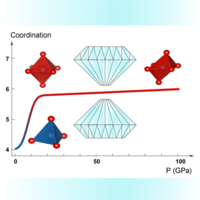
Persistent Octahedral Coordination in Amorphous GeO2 Up to 100 GPa by Kβ′′ X-Ray Emission Spectroscopy

G. Spiekermann, M. Harder, K. Gilmore, P. Zalden, Ch. J. Sahle, S. Petitgirard, M. Wilke, N. Biedermann, C. Weis, W. Morgenroth, J. S. Tse, E. Kulik, N. Nishiyama, H. Yavaş, and C. Sternemann

Phys. Rev. X 9, 011025 (2019) - Published 6 February, 2019

X-ray emission spectra reveal that under pressure conditions of Earth’s lower mantle, the compaction mechanism in amorphous germanium dioxide on the atomic scale is similar to that of its crystalline form.

First Observation of Optical Activity in Hyper-Rayleigh Scattering

J. T. Collins, K. R. Rusimova, D. C. Hooper, H.-H. Jeong, L. Ohnoutek, F. Pradaux-Caggiano, T. Verbiest, D. R. Carbery, P. Fischer, and V. K. Valev

Phys. Rev. X 9, 011024 (2019) - Published 6 February, 2019

Characterizing chirality in nanodevices is often plagued by measurement ambiguities. New experiments demonstrate a breakthrough that improves sensitivity of such characterization by 5 orders of magnitude.

Percolation and the Effective Structure of Complex Networks

Antoine Allard and Laurent Hébert-Dufresne

Phys. Rev. X 9, 011023 (2019) - Published 5 February, 2019

A new approach to modeling complex networks relies on simple statistics to describe long-range correlations that accurately capture the underlying network structure.

Sign In to Your Journals Account

Filter

Recent Issues

Vol. 16, Iss. 4
October - December 2026
Vol. 16, Iss. 3
July - September 2026
Vol. 16, Iss. 2
April - June 2026
Vol. 16, Iss. 1
January - March 2026
Category
Article Type

Filter

Article Lookup

Enter a citation