Recent Articles

Virtual Distillation for Quantum Error Mitigation

William J. Huggins, Sam McArdle, Thomas E. O’Brien, Joonho Lee, Nicholas C. Rubin, Sergio Boixo, K. Birgitta Whaley, Ryan Babbush, and Jarrod R. McClean

Phys. Rev. X 11, 041036 (2021) - Published 19 November, 2021

A new approach for suppressing noise in quantum computation uses multiple copies of a quantum state to cancel out certain kinds of noise, using much less overhead than traditional techniques.

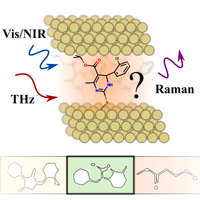
Molecular Screening for Terahertz Detection with Machine-Learning-Based Methods

Zsuzsanna Koczor-Benda, Alexandra L. Boehmke, Angelos Xomalis, Rakesh Arul, Charlie Readman, Jeremy J. Baumberg, and Edina Rosta

Phys. Rev. X 11, 041035 (2021) - Published 18 November, 2021

A detailed computational study of millions of molecules identifies a number of candidates whose properties make them ideal for converting terahertz radiation to visible light.

Determination of the Spin Axis in Quantum Spin Hall Insulator Candidate Monolayer WTe2

Wenjin Zhao, Elliott Runburg, Zaiyao Fei, Joshua Mutch, Paul Malinowski, Bosong Sun, Xiong Huang, Dmytro Pesin, Yong-Tao Cui, Xiaodong Xu, Jiun-Haw Chu, and David H. Cobden

Phys. Rev. X 11, 041034 (2021) - Published 17 November, 2021

Experiments with monolayer WTe2 show clear evidence of helicity in currents flowing around its edge, all but confirming that this system is a quantum spin Hall insulator.

Integrated Optical Addressing of a Trapped Ytterbium Ion

M. Ivory, W. J. Setzer, N. Karl, H. McGuinness, C. DeRose, M. Blain, D. Stick, M. Gehl, and L. P. Parazzoli

Phys. Rev. X 11, 041033 (2021) - Published 16 November, 2021

A surface ion trap with integrated waveguides produces no additional heating and modest frequency shifts due to photoinduced charging when uv light is delivered to an ion, thus providing the stability needed for compact quantum timekeeping devices.

Characterization and Tomography of a Hidden Qubit

M. Pechal, G. Salis, M. Ganzhorn, D. J. Egger, M. Werninghaus, and S. Filipp

Phys. Rev. X 11, 041032 (2021) - Published 15 November, 2021

A demonstration of full control over a two-qubit system with only one qubit directly addressable shows that “hidden qubit” architectures with reduced control electronics may soon be practical.

Ideal-Gas Approach to Hydrodynamics

Zhe-Yu Shi, Chao Gao, and Hui Zhai

Phys. Rev. X 11, 041031 (2021) - Published 12 November, 2021

Solutions to hydrodynamic equations can be constructed from solutions to certain ideal gas equations, revealing an unexpected connection between two disparate regimes of matter transport.

Fermi Surface Mapping and the Nature of Charge-Density-Wave Order in the Kagome Superconductor CsV3Sb5

Brenden R. Ortiz, Samuel M. L. Teicher, Linus Kautzsch, Paul M. Sarte, Noah Ratcliff, John Harter, Jacob P. C. Ruff, Ram Seshadri, and Stephen D. Wilson

Phys. Rev. X 11, 041030 (2021) - Published 11 November, 2021

A new class of kagome compounds exhibits several intriguing properties, including a novel charge-density-wave state. Quantum oscillation experiments reveal the origin of this state.

Extended Kohler’s Rule of Magnetoresistance

Jing Xu, Fei Han, Ting-Ting Wang, Laxman R. Thoutam, Samuel E. Pate, Mingda Li, Xufeng Zhang, Yong-Lei Wang, Roxanna Fotovat, Ulrich Welp, Xiuquan Zhou, Wai-Kwong Kwok, Duck Young Chung, Mercouri G. Kanatzidis, and Zhi-Li Xiao

Phys. Rev. X 11, 041029 (2021) - Published 10 November, 2021

Magnetic-induced changes in resistance often—but not always—follow a scaling law known as Kohler’s rule. New experimental work reveals why some materials violate this law.

Fluctuating Nature of Light-Enhanced d-Wave Superconductivity: A Time-Dependent Variational Non-Gaussian Exact Diagonalization Study

Yao Wang, Tao Shi, and Cheng-Chien Chen

Phys. Rev. X 11, 041028 (2021) - Published 9 November, 2021

Laser pulses can trigger transient superconductivity in cuprates above their critical temperatures. A new computational method provides a look at the mechanism underlying this behavior.

Exact Long-Range Dielectric Screening and Interatomic Force Constants in Quasi-Two-Dimensional Crystals

Miquel Royo and Massimiliano Stengel

Phys. Rev. X 11, 041027 (2021) - Published 8 November, 2021

A fundamental theory of dielectric screening in quasi-2D materials provides an exact treatment of long-range electrostatic forces in real, nonidealized 2D crystals.

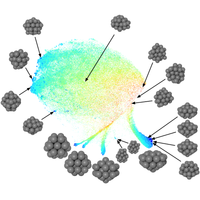
Visualizing Energy Landscapes through Manifold Learning

Benjamin W. B. Shires and Chris J. Pickard

Phys. Rev. X 11, 041026 (2021) - Published 5 November, 2021

A machine-learning approach to visualizing high-dimensional energy landscapes provides a powerful tool for identifying stable arrangements of atoms that, in turn, can drive the discovery of new materials.

Quantum Simulation of Antiferromagnetic Heisenberg Chain with Gate-Defined Quantum Dots

C. J. van Diepen, T.-K. Hsiao, U. Mukhopadhyay, C. Reichl, W. Wegscheider, and L. M. K. Vandersypen

Phys. Rev. X 11, 041025 (2021) - Published 4 November, 2021

Researchers successfully use an array of quantum dots to create and study a Heisenberg spin chain.

Work, Entropy Production, and Thermodynamics of Information under Protocol Constraints

Artemy Kolchinsky and David H. Wolpert

Phys. Rev. X 11, 041024 (2021) - Published 3 November, 2021

A thermodynamic framework provides new bounds on how much work can be extracted from a system under nonidealized, real-world conditions.

Single-Laser-Pulse-Driven Thermal Limit of the Quasi-Two-Dimensional Magnetic Ordering in Sr2IrO4

R. Wang, J. Sun, D. Meyers, J. Q. Lin, J. Yang, G. Li, H. Ding, Anthony D. DiChiara, Y. Cao, J. Liu, M. P. M. Dean, Haidan Wen, and X. Liu

Phys. Rev. X 11, 041023 (2021) - Published 2 November, 2021

Ultrafast laser stimulation of 3D magnetic order in a layered material produces a well-ordered magnetic state in two dimensions that is fractured into thin domains in the third dimension.

Chiral Thermodynamics in Tailored Chiral Optical Environments

Gabriel Schnoering, Samuel Albert, Antoine Canaguier-Durand, and Cyriaque Genet

Phys. Rev. X 11, 041022 (2021) - Published 1 November, 2021

The coupling between a chiral nanoparticle and a chiral optical field transforms chirality into a thermodynamic control parameter, which offers a new approach to nanoscale chiral sensing and recognition.

Broken-Symmetry Ground States of the Heisenberg Model on the Pyrochlore Lattice

Nikita Astrakhantsev, Tom Westerhout, Apoorv Tiwari, Kenny Choo, Ao Chen, Mark H. Fischer, Giuseppe Carleo, and Titus Neupert

Phys. Rev. X 11, 041021 (2021) - Published 29 October, 2021

Novel numerical simulations suggest that the frustrated Heisenberg regime of a pyrochlore lattice cannot host a quantum spin liquid, contrary to many expectations.

Quasinormal Modes, Local Density of States, and Classical Purcell Factors for Coupled Loss-Gain Resonators

Juanjuan Ren, Sebastian Franke, and Stephen Hughes

Phys. Rev. X 11, 041020 (2021) - Published 28 October, 2021

A new theory for coupled loss-gain structures, used to improve optical resonators, explains many behaviors of such systems and paves the way to a fully quantum description of active cavity resonators.

Interplay of Rearrangements, Strain, and Local Structure during Avalanche Propagation

Ge Zhang, Sean A. Ridout, and Andrea J. Liu

Phys. Rev. X 11, 041019 (2021) - Published 27 October, 2021

A simplified model of plasticity exploits machine-learning techniques to connect particle-level behavior in deformed, disordered solids to observable, emergent behavior.

Determination of Dynamical Quantum Phase Transitions in Strongly Correlated Many-Body Systems Using Loschmidt Cumulants

Sebastiano Peotta, Fredrik Brange, Aydin Deger, Teemu Ojanen, and Christian Flindt

Phys. Rev. X 11, 041018 (2021) - Published 26 October, 2021

A new method of studying dynamical phase transitions in strongly correlated quantum systems can predict transitions based on energy fluctuations in the system, paving the way for new studies of far-from-equilibrium dynamics.

Tracking Evaporative Cooling of a Mesoscopic Atomic Quantum Gas in Real Time

Johannes Zeiher, Julian Wolf, Joshua A. Isaacs, Jonathan Kohler, and Dan M. Stamper-Kurn

Phys. Rev. X 11, 041017 (2021) - Published 25 October, 2021

Continuously tracking the number of atoms in an evaporating ultracold quantum gas uncovers stochastic fluctuations, providing a platform for exploring the interplay between randomness and nonlinear dynamics.

Sign In to Your Journals Account

Filter

Recent Issues

Vol. 16, Iss. 4
October - December 2026
Vol. 16, Iss. 3
July - September 2026
Vol. 16, Iss. 2
April - June 2026
Vol. 16, Iss. 1
January - March 2026
Category
Article Type

Filter

Article Lookup

Enter a citation