Recent Articles

Independent Manipulation of Heat and Electrical Current via Bifunctional Metamaterials

Massimo Moccia, Giuseppe Castaldi, Salvatore Savo, Yuki Sato, and Vincenzo Galdi

Phys. Rev. X 4, 021025 (2014) - Published 12 May, 2014

Artificially engineered materials—metamaterials—typically alter only one heat or electromagnetic parameter at once. Researchers test a metamaterial that behaves simultaneously like a thermal concentrator and an electrical invisibility cloak.

Containing Epidemic Outbreaks by Message-Passing Techniques

F. Altarelli, A. Braunstein, L. Dall’Asta, J. R. Wakeling, and R. Zecchina

Phys. Rev. X 4, 021024 (2014) - Published 8 May, 2014

Computational epidemiology uses algorithms to identify and eradicate viruses. Researchers investigate targeted immunization as an optimization problem for a given choice of parameters and costs.

Signature of a Nonharmonic Potential as Revealed from a Consistent Shape and Fluctuation Analysis of an Adherent Membrane

Daniel Schmidt, Cornelia Monzel, Timo Bihr, Rudolf Merkel, Udo Seifert, Kheya Sengupta, and Ana-Sunčana Smith

Phys. Rev. X 4, 021023 (2014) - Published 5 May, 2014

Cell-cell or cell-substrate adhesion was long thought to be controlled only by protein molecules embedded in the cell membrane, but more recently, the little-understood membrane-membrane or membrane-substrate interaction has been added to the mix. Scientists deploy a combination of state-of-the-art experimental tools and theoretical modeling to gain valuable knowledge of this interaction.

Observation of Optical Undular Bores in Multiple Four-Wave Mixing

J. Fatome, C. Finot, G. Millot, A. Armaroli, and S. Trillo

Phys. Rev. X 4, 021022 (2014) - Published 5 May, 2014

Undular bores, e.g., large tidal waves that travel upstream in river estuaries, are a fascinating nonlinear wave phenomenon. The conditions needed to create them also occur in optical systems. A new experiment using four-wave mixing to generate multiple undular bores and their interactions in optical fibers provides an opportunity to study them in a laboratory setting.

Three-Dimensional Fluid Motion in Faraday Waves: Creation of Vorticity and Generation of Two-Dimensional Turbulence

N. Francois, H. Xia, H. Punzmann, S. Ramsden, and M. Shats

Phys. Rev. X 4, 021021 (2014) - Published 2 May, 2014

Faraday waves—nonlinear standing waves that appear on the surface of a vibrated liquid—can self-organize into a regular lattice of oscillating solitons (oscillons), which then “melts” into a disordered array as the driving amplitude increases. In a new experiment, tracer particles in a vibrated liquid reveal that the oscillon lattice generates two-dimensional turbulence that leads to its own melting.

Hall Effect Gyrators and Circulators

Giovanni Viola and David P. DiVincenzo

Phys. Rev. X 4, 021019 (2014) - Published 2 May, 2014

Microwave circulators, which perform one-way routing of microwave signals in ultralow-temperature devices, are essential in quantum technology; but currently used circulators are too bulky for future quantum computer applications. A fundamentally different approach based on an innovative use of the Hall effect promises excellent performance at much smaller scales.

Non-Abelian Majorana Doublets in Time-Reversal-Invariant Topological Superconductors

Xiong-Jun Liu, Chris L. M. Wong, and K. T. Law

Phys. Rev. X 4, 021018 (2014) - Published 29 April, 2014

Isolated Majorana fermions have been known to obey non-Abelian particle statistics. Pairs of bound Majorana fermions are now predicted to exist in topological superconductors with time-reversal symmetry. What type of statistics do such pairs obey? Theorists show for the first time that, “protected” by time-reversal symmetry, they obey a new type of non-Abelian statistics.

Surface Impedance and Bulk Band Geometric Phases in One-Dimensional Systems

Meng Xiao, Z. Q. Zhang, and C. T. Chan

Phys. Rev. X 4, 021017 (2014) - Published 25 April, 2014

Surface impedance of a photonic material governs how an impinging light wave behaves at its surface, whereas its bulk “band structure” determines what wave modes can propagate in it. Is there a surface-to-bulk correspondence? A new study of one-dimensional photonic crystals indeed uncovers a rigorous fundamental relationship between the two.

Discriminatory Proofreading Regimes in Nonequilibrium Systems

Arvind Murugan, David A Huse, and Stanislas Leibler

Phys. Rev. X 4, 021016 (2014) - Published 25 April, 2014

Cellular biochemical machines such as the ribosome distinguish the right molecules from the wrong ones with similar chemical structures with an astonishing level of accuracy. How do they do that? Theorists now show that a nonequilibrium biochemical system can indeed use external energy to perform accurate molecular “proofreading.”

Electrodynamical Light Trapping Using Whispering-Gallery Resonances in Hyperbolic Cavities

Chihhui Wu, Alessandro Salandrino, Xingjie Ni, and Xiang Zhang

Phys. Rev. X 4, 021015 (2014) - Published 22 April, 2014

Optical cavities are used to amplify light-matter interactions that are essential to many quantum technologies, but the ideal characteristics of a high quality factor and a low mode volume are difficult to achieve simultaneously. Now, a theoretical study shows that subwavelength spherical cavities composed of multiple concentric metal-dielectric bilayers can meet this challenge.

Driving Interconnected Networks to Supercriticality

Filippo Radicchi

Phys. Rev. X 4, 021014 (2014) - Published 22 April, 2014

“Going viral” is a familiar phrase in the world of social media, but fundamental scientific understanding of the mechanism(s) of “viral” spreading in interconnected multilayer networks is very limited. A new statistical-physics study reveals when and how fast spreading results from correlation between lateral (intralayer) and vertical (interlayer) spreading.

Classical and Quantum Shortcuts to Adiabaticity for Scale-Invariant Driving

Sebastian Deffner, Christopher Jarzynski, and Adolfo del Campo

Phys. Rev. X 4, 021013 (2014) - Published 22 April, 2014

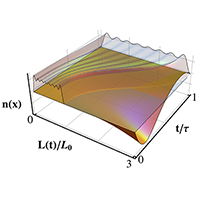
A natural nonequilibrium process that takes a system from one equilibrium state to another in a short time always involves dissipation. But, it’s actually possible in quantum control to design and implement dissipationless “shortcuts” for quantum systems. Scientists add a few concrete practical tools for achieving this goal.

Fluctuations of Imbalanced Fermionic Superfluids in Two Dimensions Induce Continuous Quantum Phase Transitions and Non-Fermi-Liquid Behavior

Philipp Strack and Pawel Jakubczyk

Phys. Rev. X 4, 021012 (2014) - Published 18 April, 2014

An ultracold mixture of two different species of fermionic atoms can turn into a quantum coherent “superfluid” at certain mixing ratios as the fermions overcome their natural repulsion to pair up. Tuning the mixing can destroy the superfluid. A theoretical study shows that the breakdown of the superfluid corresponds to a new type of quantum critical point that is experimentally accessible.

Relaxation Dynamics of an Isolated Large-Spin Fermi Gas Far from Equilibrium

Ulrich Ebling, Jasper Simon Krauser, Nick Fläschner, Klaus Sengstock, Christoph Becker, Maciej Lewenstein, and André Eckardt

Phys. Rev. X 4, 021011 (2014) - Published 16 April, 2014

How do closed quantum systems reach equilibrium? By knocking an ultracold atomic gas out of its spin-state equilibrium and imaging its approach to equilibrium, scientists bring this process to light.

Perturbative Field-Theoretical Renormalization Group Approach to Driven-Dissipative Bose-Einstein Criticality

Uwe C. Täuber and Sebastian Diehl

Phys. Rev. X 4, 021010 (2014) - Published 16 April, 2014

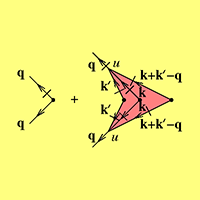
Fundamental understanding of nonequilibrium phase transitions in quantum many-body systems is still in its infancy but is urgently needed given the recent surge in exploration of light-matter interactions in a variety of quantum systems. A field-theoretical renormalization group study of a light-driven, dissipative model system of bosons contributes an important piece.

Terahertz Stimulated Emission from Silicon Doped by Hydrogenlike Acceptors

S. G. Pavlov, N. Deßmann, V. N. Shastin, R. Kh. Zhukavin, B. Redlich, A. F. G. van der Meer, M. Mittendorff, S. Winnerl, N. V. Abrosimov, H. Riemann, and H.-W. Hübers

Phys. Rev. X 4, 021009 (2014) - Published 10 April, 2014

Silicon-based laser sources could bring tremendous advances to science and technology. But, laser generation in pure silicon is fundamentally forbidden. Now scientists demonstrate experimentally the feasibility of laser generation in boron-doped silicon.

Glassy Chimeras Could Be Blind to Quantum Speedup: Designing Better Benchmarks for Quantum Annealing Machines

Helmut G. Katzgraber, Firas Hamze, and Ruben S. Andrist

Phys. Rev. X 4, 021008 (2014) - Published 10 April, 2014

Recent benchmarking of the computational speedup of quantum “annealing” machines of the D-Wave-2 type shows that they do not perform faster than a standard desktop computer. A timely theoretical study of the computational tests used in the benchmarking explains why that may be the case.

Dynamical Conductivity across the Disorder-Tuned Superconductor-Insulator Transition

Mason Swanson, Yen Lee Loh, Mohit Randeria, and Nandini Trivedi

Phys. Rev. X 4, 021007 (2014) - Published 9 April, 2014

State-of-the-art quantum Monte Carlo simulations of the electrodynamic properties of disordered superconductors lead to many new insights about the disorder-driven superconductor-insulator transition.

Frequency-Comb-Assisted Terahertz Quantum Cascade Laser Spectroscopy

S. Bartalini, L. Consolino, P. Cancio, P. De Natale, P. Bartolini, A. Taschin, M. De Pas, H. Beere, D. Ritchie, M. S. Vitiello, and R. Torre

Phys. Rev. X 4, 021006 (2014) - Published 9 April, 2014

The spectral purity of quantum cascade lasers (QCL) suggests their use in high-precision metrology applications at terahertz wavelengths. By combining a QCL with a THz frequency comb, scientists have been able to measure the frequency of a rotational transition of a gas (methanol) with a record-breaking precision of four parts in one billion.

Electronic Predetermination of Ethylene Fragmentation Dynamics

Xinhua Xie, Stefan Roither, Markus Schöffler, Erik Lötstedt, Daniil Kartashov, Li Zhang, Gerhard G. Paulus, Atsushi Iwasaki, Andrius Baltuška, Kaoru Yamanouchi, and Markus Kitzler

Phys. Rev. X 4, 021005 (2014) - Published 7 April, 2014

Removing electrons in a polyatomic molecule from their orbitals can split the molecule into two ionic fragments. The precise fragmentation pathway taken depends on the molecular orbitals. Scientists show that selective fragmentation can be achieved by controlling the intensity and duration of the laser pulses used to remove the electrons.

Sign In to Your Journals Account

Filter

Recent Issues

Vol. 16, Iss. 4
October - December 2026
Vol. 16, Iss. 3
July - September 2026
Vol. 16, Iss. 2
April - June 2026
Vol. 16, Iss. 1
January - March 2026
Category
Article Type

Filter

Article Lookup

Enter a citation