Recent Articles

Vibrational Surface Electron-Energy-Loss Spectroscopy Probes Confined Surface-Phonon Modes

Hugo Lourenço-Martins and Mathieu Kociak

Phys. Rev. X 7, 041059 (2017) - Published 7 December, 2017

The study of surface phonons, collective atomic vibrations localized on the surface of solids, has long been helped by insights from experiments on surface plasmons, their electronic counterparts. A new analysis takes these analogies in the opposite direction, using modern concepts for plasmons to explain current phonon experiments.

Polarization-Based Tests of Gravity with the Stochastic Gravitational-Wave Background

Thomas Callister, A. Sylvia Biscoveanu, Nelson Christensen, Maximiliano Isi, Andrew Matas, Olivier Minazzoli, Tania Regimbau, Mairi Sakellariadou, Jay Tasson, and Eric Thrane

Phys. Rev. X 7, 041058 (2017) - Published 7 December, 2017

Now that gravitational-wave detection is a reality, measurements of gravitational-wave polarization could provide crucial tests of alternatives to the general theory of relativity. A new analysis provides a way to extract polarizations from the stochastic gravitational-wave background and investigates how additional detectors could provide constraints on theories of gravity.

Competing Spin Liquids and Hidden Spin-Nematic Order in Spin Ice with Frustrated Transverse Exchange

Mathieu Taillefumier, Owen Benton, Han Yan, L. D. C. Jaubert, and Nic Shannon

Phys. Rev. X 7, 041057 (2017) - Published 6 December, 2017

Spin ice is an exotic phase of low-temperature magnetic material in which the atoms behave like a liquid no matter how cold it becomes. New computer simulations look at how spin ice behaves near absolute zero and find surprisingly rich behavior.

Angle-Multiplexed Metasurfaces: Encoding Independent Wavefronts in a Single Metasurface under Different Illumination Angles

Seyedeh Mahsa Kamali, Ehsan Arbabi, Amir Arbabi, Yu Horie, MohammadSadegh Faraji-Dana, and Andrei Faraon

Phys. Rev. X 7, 041056 (2017) - Published 6 December, 2017

Researchers have demonstrated a device that can project two distinct holographic images when illuminated at different angles.

Intermode Breather Solitons in Optical Microresonators

Hairun Guo, Erwan Lucas, Martin H. P. Pfeiffer, Maxim Karpov, Miles Anderson, Junqiu Liu, Michael Geiselmann, John D. Jost, and Tobias J. Kippenberg

Phys. Rev. X 7, 041055 (2017) - Published 6 December, 2017

Optical frequency combs, which constitute equally spaced frequency lines, can be generated using temporal dissipative Kerr solitons—stable laser pulses generated in a laser-driven nonlinear microresonator—but these solitons can destabilize and oscillate. A new analysis reveals a novel mechanism that can trigger “soliton breathing,” highlighting the rich nonlinear dynamics of dissipative temporal structures in microresonators and identifying a regime that has to be avoided in applications.

Mottness Collapse in 1T−TaS2−xSex Transition-Metal Dichalcogenide: An Interplay between Localized and Itinerant Orbitals

Shuang Qiao, Xintong Li, Naizhou Wang, Wei Ruan, Cun Ye, Peng Cai, Zhenqi Hao, Hong Yao, Xianhui Chen, Jian Wu, Yayu Wang, and Zheng Liu

Phys. Rev. X 7, 041054 (2017) - Published 1 December, 2017

Recent experiments have shown that the transition-metal dichalcogenide 1T-TaS2-xSex can transition from a Mott insulator to a superconductor by varying the S/Se ratio. New measurements with a scanning tunneling microscope along with first-principles calculations reveal the mechanism underlying this transition.

Super- and Anti-Principal-Modes in Multimode Waveguides

Philipp Ambichl, Wen Xiong, Yaron Bromberg, Brandon Redding, Hui Cao, and Stefan Rotter

Phys. Rev. X 7, 041053 (2017) - Published 30 November, 2017

Multimode optical fibers offer more transmission capacity by supporting multiple transverse modes, but crosstalk between these channels remains a vexing problem. New experiments and theoretical analysis reveal unique light states in multimode fibers that are strongly protected against this crosstalk.

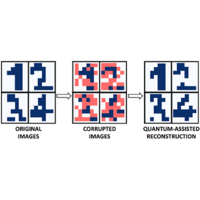
Quantum-Assisted Learning of Hardware-Embedded Probabilistic Graphical Models

Marcello Benedetti, John Realpe-Gómez, Rupak Biswas, and Alejandro Perdomo-Ortiz

Phys. Rev. X 7, 041052 (2017) - Published 30 November, 2017

Quantum computing could greatly speed up machine learning techniques that rely on sampling complex probability distributions, but limitations prevent demonstrations of feasibility. A new technique implemented on a quantum annealer surpasses these limitations and shows how quantum computing can assist in machine learning tasks.

Three-Dimensional Spatiotemporal Pulse-Train Solitons

Oren Lahav, Ofer Kfir, Pavel Sidorenko, Maor Mutzafi, Avner Fleischer, and Oren Cohen

Phys. Rev. X 7, 041051 (2017) - Published 30 November, 2017

Self-trapped wave packets known as solitons have been observed in one and two spatiotemporal dimensions, but three-dimensional solitons have remained elusive. A new experiment demonstrates the first observation of a train of three-dimensional optical solitons, also known as light bullets.

Unbiased All-Optical Random-Number Generator

Tobias Steinle, Johannes N. Greiner, Jörg Wrachtrup, Harald Giessen, and Ilja Gerhardt

Phys. Rev. X 7, 041050 (2017) - Published 30 November, 2017

Random numbers are at the heart of secure communication protocols; unfortunately current hardware-based approaches for their generation suffer from a number of problems. A new experiment demonstrates a laser-based approach to random-number generation that circumvents technical influences that might spoil the randomness in the generated numbers.

Pseudo-Goldstone Magnons in the Frustrated S=3/2 Heisenberg Helimagnet ZnCr2Se4 with a Pyrochlore Magnetic Sublattice

Y. V. Tymoshenko, Y. A. Onykiienko, T. Müller, R. Thomale, S. Rachel, A. S. Cameron, P. Y. Portnichenko, D. V. Efremov, V. Tsurkan, D. L. Abernathy, J. Ollivier, A. Schneidewind, A. Piovano, V. Felea, A. Loidl, and D. S. Inosov

Phys. Rev. X 7, 041049 (2017) - Published 29 November, 2017

Wave excitations (magnons) along the helical arrangement of magnetic moments in helimagnets generally travel along this helix, while orthogonal magnons are thought to require much higher energy. New experiments reveal the existence of low-energy orthogonal magnons that could lead to a new understanding of a broad class of magnetic materials.

Gapless Symmetry-Protected Topological Order

Thomas Scaffidi, Daniel E. Parker, and Romain Vasseur

Phys. Rev. X 7, 041048 (2017) - Published 29 November, 2017

New theoretical constructions describe a largely unexplored phase of matter, a type of strongly interacting gapless topological quantum system. Such a framework could lead to a more thorough study of various exotic quantum materials.

Probing Slow Relaxation and Many-Body Localization in Two-Dimensional Quasiperiodic Systems

Pranjal Bordia, Henrik Lüschen, Sebastian Scherg, Sarang Gopalakrishnan, Michael Knap, Ulrich Schneider, and Immanuel Bloch

Phys. Rev. X 7, 041047 (2017) - Published 28 November, 2017

While many-body localization is well understood in one-dimensional systems, its behavior in two or more dimensions is largely unknown. New experiments hint at a many-body localized phase in a two-dimensional system and provide insight into how a system transitions between this phase and a normal thermal phase.

Efficient Basis Formulation for (1+1)-Dimensional SU(2) Lattice Gauge Theory: Spectral Calculations with Matrix Product States

Mari Carmen Bañuls, Krzysztof Cichy, J. Ignacio Cirac, Karl Jansen, and Stefan Kühn

Phys. Rev. X 7, 041046 (2017) - Published 28 November, 2017

In gauge theories with one spatial and time dimension, the gauge degrees of freedom are not independent and can be integrated out, making them simpler to work with. A new analysis extends this to an explicit formulation of the physical subspace for a (1+1)-dimensional SU(2) lattice gauge theory.

Quantum Dynamics of Skyrmions in Chiral Magnets

Christina Psaroudaki, Silas Hoffman, Jelena Klinovaja, and Daniel Loss

Phys. Rev. X 7, 041045 (2017) - Published 28 November, 2017

Magnetic Skyrmions are topologically protected spin structures that have emerged as attractive candidates for magnetic storage applications. A new analysis goes beyond the traditional classical equations that describe Skyrmion dynamics, providing a full quantum description of the propagation of Skyrmions in insulating magnetic films at zero and finite temperatures.

Sensitive Dependence of Optimal Network Dynamics on Network Structure

Takashi Nishikawa, Jie Sun, and Adilson E. Motter

Phys. Rev. X 7, 041044 (2017) - Published 28 November, 2017

The relationship between the structure and dynamics of a network is key to understanding the behavior of complex systems. A new analysis shows how network optimization, whether designed or evolved, can lead to collective dynamics that depend sensitively on the structure of the network.

Widely Tunable On-Chip Microwave Circulator for Superconducting Quantum Circuits

Benjamin J. Chapman, Eric I. Rosenthal, Joseph Kerckhoff, Bradley A. Moores, Leila R. Vale, J. A. B. Mates, Gene C. Hilton, Kevin Lalumière, Alexandre Blais, and K. W. Lehnert

Phys. Rev. X 7, 041043 (2017) - Published 22 November, 2017

A device that routes microwave signals could help researchers scale up quantum-computing architectures.

Dynamical Birefringence: Electron-Hole Recollisions as Probes of Berry Curvature

Hunter B. Banks, Qile Wu, Darren C. Valovcin, Shawn Mack, Arthur C. Gossard, Loren Pfeiffer, Ren-Bao Liu, and Mark S. Sherwin

Phys. Rev. X 7, 041042 (2017) - Published 21 November, 2017

Berry phase—a parameter that provides deep geometric insight into quantum mechanical systems—is difficult to measure in condensed-matter systems. New experiments and theoretical analyses demonstrate a path to such measurements by observing sidebands of infrared light transmitted through driven, thin layers of a semiconductor.

Trigger of the Ubiquitous Surface Band Bending in 3D Topological Insulators

E. Frantzeskakis, S. V. Ramankutty, N. de Jong, Y. K. Huang, Y. Pan, A. Tytarenko, M. Radovic, N. C. Plumb, M. Shi, A. Varykhalov, A. de Visser, E. van Heumen, and M. S. Golden

Phys. Rev. X 7, 041041 (2017) - Published 20 November, 2017

Electron spectroscopy and electron transport experiments are key techniques to probing the electronic structure of topological insulators, but results from these two methods disagree. A new analysis shows that the problem is inherent to ultraviolet light used in electron spectroscopy, and offers a solution.

Marrying Excitons and Plasmons in Monolayer Transition-Metal Dichalcogenides

Dinh Van Tuan, Benedikt Scharf, Igor Žutić, and Hanan Dery

Phys. Rev. X 7, 041040 (2017) - Published 17 November, 2017

Intervalley plasmons are a novel type of collective excitation observed in monolayer transition-metal dichalcogenides (TMDs). A new analysis reveals why a particular optical signature of these excitations shows up in certain electron-doped TMDs.

Sign In to Your Journals Account

Filter

Recent Issues

Vol. 16, Iss. 4
October - December 2026
Vol. 16, Iss. 3
July - September 2026
Vol. 16, Iss. 2
April - June 2026
Vol. 16, Iss. 1
January - March 2026
Category
Article Type

Filter

Article Lookup

Enter a citation