Recent Articles

Cascades and Dissipative Anomalies in Nearly Collisionless Plasma Turbulence

Gregory L. Eyink

Phys. Rev. X 8, 041020 (2018) - Published 8 November, 2018

A new exact theory for plasma turbulence could lead to new insights into plasma environments and simplifications of the complex equations used to describe them.

Solution of a Minimal Model for Many-Body Quantum Chaos

Amos Chan, Andrea De Luca, and J. T. Chalker

Phys. Rev. X 8, 041019 (2018) - Published 8 November, 2018

Analyses of chaotic quantum systems don’t capture spatial structure. A new model solves this problem and predicts how quantum information and entanglement entropy spread in such systems.

Microwave Photon-Mediated Interactions between Semiconductor Qubits

D. J. van Woerkom, P. Scarlino, J. H. Ungerer, C. Müller, J. V. Koski, A. J. Landig, C. Reichl, W. Wegscheider, T. Ihn, K. Ensslin, and A. Wallraff

Phys. Rev. X 8, 041018 (2018) - Published 31 October, 2018

Coupling electrons through a resonating microwave network, rather than directly, offers a robust scalable approach to designing quantum devices with electron-based qubits.

Observation of Fermi-Pasta-Ulam-Tsingou Recurrence and Its Exact Dynamics

D. Pierangeli, M. Flammini, L. Zhang, G. Marcucci, A. J. Agranat, P. G. Grinevich, P. M. Santini, C. Conti, and E. DelRe

Phys. Rev. X 8, 041017 (2018) - Published 29 October, 2018

One of the most controversial phenomena in nonlinear dynamics is the recurrence of initial conditions. New optical experiments reveal the origin of this enigma and demonstrate the ability to reconstruct the initial condition of an unstable system.

Catalytic Quantum Randomness

P. Boes, H. Wilming, R. Gallego, and J. Eisert

Phys. Rev. X 8, 041016 (2018) - Published 29 October, 2018

Quantum sources of randomness are more powerful than classical sources, a new insight that will help the design of protocols for quantum information and cryptography.

Encoding Electronic Spectra in Quantum Circuits with Linear T Complexity

Ryan Babbush, Craig Gidney, Dominic W. Berry, Nathan Wiebe, Jarrod McClean, Alexandru Paler, Austin Fowler, and Hartmut Neven

Phys. Rev. X 8, 041015 (2018) - Published 23 October, 2018

New algorithms for simulating correlated electrons on a quantum computer enable fault-tolerant computation that runs millions of times faster than state-of-the-art approaches.

Rapid Evolution of the Photosystem II Electronic Structure during Water Splitting

Katherine M. Davis, Brendan T. Sullivan, Mark C. Palenik, Lifen Yan, Vatsal Purohit, Gregory Robison, Irina Kosheleva, Robert W. Henning, Gerald T. Seidler, and Yulia Pushkar

Phys. Rev. X 8, 041014 (2018) - Published 23 October, 2018

A time-resolved x-ray study indicates that certain chemical changes of oxygen atoms during photosynthesis occur in a different order than current models predict.

Nonperturbative Quantum Electrodynamics in the Cherenkov Effect

Charles Roques-Carmes, Nicholas Rivera, John D. Joannopoulos, Marin Soljačić, and Ido Kaminer

Phys. Rev. X 8, 041013 (2018) - Published 17 October, 2018

New tools for quantum electrodynamics predict surprising new behavior in the Cherenkov effect and lay the groundwork for a better understanding of quantum electrodynamics at attosecond timescales.

Spatial Bunching of Same-Index Polarization Singularities in Two-Dimensional Random Vector Waves

L. De Angelis, F. Alpeggiani, and L. Kuipers

Phys. Rev. X 8, 041012 (2018) - Published 16 October, 2018

New experiments show that singularities known as C points in a random light field behave drastically differently in 2D confinement. Whereas points with the same “charge” normally repel, here they do not.

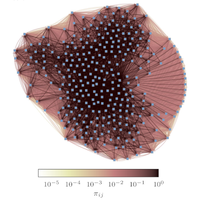
Reconstructing Networks with Unknown and Heterogeneous Errors

Tiago P. Peixoto

Phys. Rev. X 8, 041011 (2018) - Published 16 October, 2018

Most studies of large-scale networks omit measurement errors. A new method for reconstructing the underlying network from available data takes this into account, providing error estimates even when none exist.

Wiedemann-Franz Law and Abrupt Change in Conductivity across the Pseudogap Critical Point of a Cuprate Superconductor

B. Michon, A. Ataei, P. Bourgeois-Hope, C. Collignon, S. Y. Li, S. Badoux, A. Gourgout, F. Laliberté, J.-S. Zhou, Nicolas Doiron-Leyraud, and Louis Taillefer

Phys. Rev. X 8, 041010 (2018) - Published 15 October, 2018

Measurements of thermal conductivity in a cuprate reveal new details about the enigmatic pseudogap phase, demonstrating that at absolute zero this phase is metallic with a low carrier density.

General Principles for the Nonequilibrium Relaxation of Populations in Quantum Materials

A. F. Kemper, O. Abdurazakov, and J. K. Freericks

Phys. Rev. X 8, 041009 (2018) - Published 15 October, 2018

Nonequilibrium experiments often lean on intuition from equilibrium physics, but that leads to misconceptions. A new analysis using many-body theory outlines a better approach to understanding these complex systems.

Characterization of Supersonic Gas Jets for High-Resolution Laser Ionization Spectroscopy of Heavy Elements

A. Zadvornaya, P. Creemers, K. Dockx, R. Ferrer, L. P. Gaffney, W. Gins, C. Granados, M. Huyse, Yu. Kudryavtsev, M. Laatiaoui, E. Mogilevskiy, S. Raeder, S. Sels, P. Van den Bergh, P. Van Duppen, M. Verlinde, E. Verstraelen, M. Nabuurs, D. Reynaerts, and P. Papadakis

Phys. Rev. X 8, 041008 (2018) - Published 12 October, 2018

Laser spectroscopy in supersonic jets can reveal properties of short-lived nuclei. A new characterization of jet flow properties determines the final performance of a next-generation approach called the in-gas-jet method.

Certification and Quantification of Multilevel Quantum Coherence

Martin Ringbauer, Thomas R. Bromley, Marco Cianciaruso, Ludovico Lami, W. Y. Sarah Lau, Gerardo Adesso, Andrew G. White, Alessandro Fedrizzi, and Marco Piani

Phys. Rev. X 8, 041007 (2018) - Published 10 October, 2018

New theoretical and experimental groundwork for characterizing and analyzing multilevel coherence in quantum systems reveals a strict hierarchy among levels of coherence.

Deterministic and Generalized Framework for Unsupervised Learning with Restricted Boltzmann Machines

Eric W. Tramel, Marylou Gabrié, Andre Manoel, Francesco Caltagirone, and Florent Krzakala

Phys. Rev. X 8, 041006 (2018) - Published 8 October, 2018

A new framework for analyzing a common building block in artificial neural networks offers new possibilities for understanding, comparing, and using unsupervised statistical models.

High-Precision Multiphoton Ionization of Accelerated Laser-Ablated Species

R. F. Garcia Ruiz, A. R. Vernon, C. L. Binnersley, B. K. Sahoo, M. Bissell, J. Billowes, T. E. Cocolios, W. Gins, R. P. de Groote, K. T. Flanagan, A. Koszorus, K. M. Lynch, G. Neyens, C. M. Ricketts, K. D. A. Wendt, S. G. Wilkins, and X. F. Yang

Phys. Rev. X 8, 041005 (2018) - Published 8 October, 2018

A modified version of a spectroscopic technique used at large-scale radioactive-ion-beam facilities could be used in tabletop experiments.

Spectrally Resolved Specular Reflections of Thermal Phonons from Atomically Rough Surfaces

Navaneetha K. Ravichandran, Hang Zhang, and Austin J. Minnich

Phys. Rev. X 8, 041004 (2018) - Published 5 October, 2018

New experiments provide evidence that terahertz thermal phonons undergo specular surface reflections at room temperature and are sensitive to surface imperfections of just a few atoms, a key insight that is needed for novel methods of controlling heat flow.

Competing Inversion-Based Lasing and Raman Lasing in Doped Silicon

S. G. Pavlov, N. Deßmann, B. Redlich, A. F. G. van der Meer, N. V. Abrosimov, H. Riemann, R. Kh. Zhukavin, V. N. Shastin, and H.-W. Hübers

Phys. Rev. X 8, 041003 (2018) - Published 5 October, 2018

Competing lasing mechanisms—population inversion and Raman scattering—operate simultaneously at the same wavelength in an optically pumped solid-state device consisting of three electronic levels.

Nonlinear X-Wave Ultrasound Imaging of Acoustic Biomolecules

David Maresca, Daniel P. Sawyer, Guillaume Renaud, Audrey Lee-Gosselin, and Mikhail G. Shapiro

Phys. Rev. X 8, 041002 (2018) - Published 4 October, 2018

Researchers have figured out how to improve contrast and reduce background noise in ultrasound images acquired with a technique that uses air-filled protein structures.

Resonant Absorption of Bosonic Dark Matter in Molecules

Asimina Arvanitaki, Savas Dimopoulos, and Ken Van Tilburg

Phys. Rev. X 8, 041001 (2018) - Published 2 October, 2018

A proposed class of dark-matter detectors will look for fluorescent photons emitted when bosonic dark-matter particles resonantly excite gas molecules.

Sign In to Your Journals Account

Filter

Recent Issues

Vol. 16, Iss. 4
October - December 2026
Vol. 16, Iss. 3
July - September 2026
Vol. 16, Iss. 2
April - June 2026
Vol. 16, Iss. 1
January - March 2026
Category
Article Type

Filter

Article Lookup

Enter a citation