Browse by Subject

Decoding thermal transport mechanisms induced by short-range order in amorphous system

Zhongwei Zhang, Rui Ma, Shuang Lu, Sebastian Volz, and Jie Chen

Phys. Rev. Research 8, 013007 (2026) - Published 7 January, 2026

Electronic correlations and topology in Kondo insulator PuB6

K. Gofryk, S. Zhou, N. Poudel, N. Dice, D. Murray, T. Pavlov, and C. Marianetti

Phys. Rev. Research 8, L012002 (2026) - Published 5 January, 2026

Using a combination of plasma focused ion beam micromachining, low-temperature magnetotransport measurements, and first-principles calculations, this study demonstrates that PuB6 exhibits hallmark characteristics of a topological Kondo insulator, including a transition in electrical resistivity from high-temperature thermally activated behavior, indicative of a narrow gap at the Fermi level, to a distinctive low-temperature resistivity plateau. Furthermore, the observed surface-to-volume dependence of resistivity at low temperatures provides evidence for the presence of topologically protected surface states.

Quasiperiodicity-induced bulk localization with self-similarity in non-Hermitian systems

Yu-Peng Wang, Chuo-Kai Chang, Ryo Okugawa, and Chen-Hsuan Hsu

Phys. Rev. Research 7, 043353 (2025) - Published 31 December, 2025

Unified theory of strong coupling Bose polarons: From repulsive polarons to non-Gaussian many-body bound states

Nader Mostaan, Nathan Goldman, and Fabian Grusdt

Phys. Rev. Research 7, 043349 (2025) - Published 31 December, 2025

Symmetry-deformed toric codes and the quantum dimer model

Jiaxin Qiao, Yoshito Watanabe, and Simon Trebst

Phys. Rev. Research 7, 043342 (2025) - Published 30 December, 2025

First principles study of the Fermi surface topology of CeCu2Si2

Roxanne M. Tutchton, Jean-Pierre Julien, Qimiao Si, and Jian-Xin Zhu

Phys. Rev. Research 7, 043341 (2025) - Published 29 December, 2025

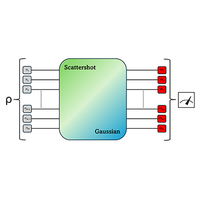
Unified boson sampling

Luca Bianchi, Carlo Marconi, Laura Ares, Davide Bacco, and Jan Sperling

Phys. Rev. Research 7, L042068 (2025) - Published 26 December, 2025

A unified framework for boson sampling is presented that merges photonic and Gaussian resources into a single protocol. The work develops an analytical toolbox, a complexity benchmark, and an entanglement certifier to characterize its performance.

Floquet non-Bloch formalism for a non-Hermitian ladder: From theoretical framework to topolectrical circuits

Koustav Roy, Dipendu Halder, Koustabh Gogoi, B. Tanatar, and Saurabh Basu

Phys. Rev. Research 7, 043331 (2025) - Published 24 December, 2025

Casimir radiation with Weyl semimetals

Yang Hu, Xiaohu Wu, Haotuo Liu, Mauro Antezza, and Xiuquan Huang

Phys. Rev. Research 7, 043328 (2025) - Published 24 December, 2025

Probing superfluidity with quantum vortex necklaces and Leggett's bounds

Andrea Richaud and Pietro Massignan

Phys. Rev. Research 7, L042065 (2025) - Published 19 December, 2025

This article shows a mechanism by which a rotating vortex necklace of the majority component creates a moving periodic landscape for the minority one on a binary Bose-Einstein condensate. The transfer of angular momentum from the majority to the minority one allows for the determination of the superfluid fraction, which can then be compared with Leggett’s bounds evaluated solely from its density profile.

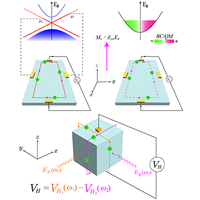
Orbital magnetization as the origin of the nonlinear Hall effect

Zesheng Zhang, Xin-Zhi Li, and Wen-Yu He

Phys. Rev. Research 7, L042064 (2025) - Published 19 December, 2025

Orbital magnetization is established as the origin of the nonlinear Hall effect by deriving an explicit formula connecting the electric-field-induced orbital magnetization to the second-order nonlinear Hall conductivity. The applied electric field is shown to play dual roles in generating the nonlinear Hall effect by first generating a nonequilibrium orbital magnetization and then perturbing the associated edge states, and a unique nonlinear Hall effect is predicted in isotropic chiral metals driven by a noncollinear bichromatic electric field.

Pseudoratchet through one-dimensional quantum Brownian motion for energy-efficient Brownian computing

Sho Nakade, Ferdinand Peper, Kazuki Kanki, and Tomio Petrosky

Phys. Rev. Research 7, 043316 (2025) - Published 19 December, 2025

Entanglement across scales: Quantics tensor trains as a natural framework for renormalization

Stefan Rohshap, Jheng-Wei Li, Alena Lorenz, Serap Hasil, Karsten Held, Anna Kauch, and Markus Wallerberger

Phys. Rev. Research 7, 043313 (2025) - Published 18 December, 2025

Polarons with arbitrary nonlinear electron-phonon interaction

Stefano Ragni, Tomislav Miškić, Thomas Hahn, Nikolay Prokof'ev, Osor S. Barišić, Naoto Nagaosa, Cesare Franchini, and Andrey S. Mishchenko

Phys. Rev. Research 7, 043304 (2025) - Published 16 December, 2025

Gauge flux generations of weakly magnetized Dirac spin liquid in a kagomé lattice

Si-Yu Pan, Jiahao Yang, and Gang v. Chen

Phys. Rev. Research 7, 043294 (2025) - Published 15 December, 2025

Many-body neural network wavefunction for a non-Hermitian Ising chain

Lavoisier Wah, Remmy Zen, and Flore K. Kunst

Phys. Rev. Research 7, 043291 (2025) - Published 15 December, 2025

Machine learning non-Markovian two-level quantum noise spectroscopy

Juan M. Scarpetta, John H. Reina, and Morten Hjorth-Jensen

Phys. Rev. Research 7, 043285 (2025) - Published 11 December, 2025

Control protocol for dynamic synthesis of qubit and qudit gates using photonic pulses and magnetic fields

A. F. Urquijo Rodríguez, Edgar A. Gómez, and H. Vinck-Posada

Phys. Rev. Research 7, 043280 (2025) - Published 10 December, 2025

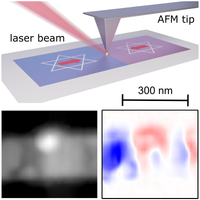
Switching of magnetic domains in a noncollinear antiferromagnet at the nanoscale

Atul Pandey, Prajwal Rigvedi, Edouard Lesne, Jitul Deka, Jiho Yoon, Wolfgang Hoppe, Chris Koerner, Banabir Pal, James M. Taylor, Stuart S. P. Parkin, and Georg Woltersdorf

Phys. Rev. Research 7, L042058 (2025) - Published 9 December, 2025

Chiral antiferromagnets like Mn3Sn are promising materials for ultrafast, low-power spintronic technologies, but they exhibit resistance to full magnetic ordering. This work shows that even in the presence of strong magnetic fields, regions of Mn3Sn thin films fail to align as they get pinned by grain boundaries.

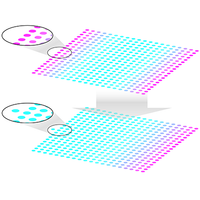
Observation of supersensitivity of non-Hermitian skin effect

Qing Wang, Zhonghao Fu, Liping Ye, Hailong He, Weiyin Deng, Jiuyang Lu, Manzhu Ke, and Zhengyou Liu

Phys. Rev. Research 7, L042057 (2025) - Published 9 December, 2025

The supersensitivity of the non-Hermitian skin effect is revealed, showing that the addition of a single unit cell at the boundary can transform the skin effect from bidirectional to unidirectional. This supersensitivity offers an approach for wave manipulation and high-sensitivity measurements based on non-Hermitian systems.

Sign In to Your Journals Account

Filter

Subject

Filter

Article Lookup

Enter a citation