Recent Articles

Coherent microwave control of coupled electron-muon centers

Andrin Doll, Chennan Wang, Thomas Prokscha, Jan Dreiser, and Zaher Salman

Phys. Rev. Research 7, 033059 (2025) - Published 14 July, 2025

Slow and fast topological dynamical phase transitions in a Duffing resonator driven by two detuned tones

Letizia Catalini, Javier del Pino, Soumya S. Kumar, Vincent Dumont, Gabriel Margiani, Oded Zilberberg, and Alexander Eichler

Phys. Rev. Research 7, 033058 (2025) - Published 14 July, 2025

Universal properties of locally generated terahertz waveforms from polarization-controlled two- and multicolor ionizing fields

H. Alirezaee, S. Skupin, V. Vaicaitis, A. Demircan, I. Babushkin, Luc Bergé, and U. Morgner

Phys. Rev. Research 7, 033057 (2025) - Published 14 July, 2025

Probing the hollowing transition of a shell-shaped Bose-Einstein condensate with collective excitation

Zerong Huang, Kai Yuen Lee, Chun Kit Wong, Liyuan Qiu, Bo Yang, Yangqian Yan, and Dajun Wang

Phys. Rev. Research 7, 033056 (2025) - Published 14 July, 2025

Quantum computing of magnetic-skyrmion-like patterns in Heisenberg ferromagnets

Matej Komelj, Vinko Sršan, Kristina Žužek, and Sašo Šturm

Phys. Rev. Research 7, 033055 (2025) - Published 14 July, 2025

Entropy and type-token ratio in gigaword corpora

Pablo Rosillo-Rodes, Maxi San Miguel, and David Sánchez

Phys. Rev. Research 7, 033054 (2025) - Published 14 July, 2025

Absorbing state phase transitions beyond directed percolation in dissipative quantum state preparation

Matthew Wampler and Nigel R. Cooper

Phys. Rev. Research 7, 033053 (2025) - Published 14 July, 2025

Generalized dynamical phase reduction for stochastic oscillators

Pierre Houzelstein, Peter J. Thomas, Benjamin Lindner, Boris Gutkin, and Alberto Pérez-Cervera

Phys. Rev. Research 7, 033052 (2025) - Published 14 July, 2025

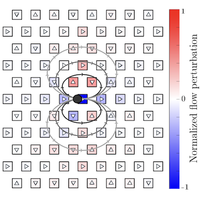
Getting out of a tight spot: Cooperative unclogging of hydrogel particles in disordered porous media

Sanjana Kamath, Laurent Talon, Meera Ramaswamy, Christopher A. Browne, and Sujit S. Datta

Phys. Rev. Research 7, L032013 (2025) - Published 11 July, 2025

Event-driven pore network modeling of hydrogel particles moving in disordered porous media helps to identify a dimensionless “squeezing parameter” that quantitatively predicts particle penetration depth across diverse conditions. It also reveals, counterintuitively, that increasing particle concentration enhances penetration through cooperative effects, where individual particles redirect fluid flow to help nearby particles squeeze through tight pores that would otherwise cause clogging.

Toward quantum advantage with photonic state injection

Léo Monbroussou, Eliott Z. Mamon, Hugo Thomas, Verena Yacoub, Ulysse Chabaud, and Elham Kashefi

Phys. Rev. Research 7, 033051 (2025) - Published 11 July, 2025

Multiobject operational tasks for measurement incompatibility

Andrés F. Ducuara, Ryo Takakura, Fernando J. Hernandez, and Cristian E. Susa

Phys. Rev. Research 7, 033050 (2025) - Published 11 July, 2025

Fast Möbius transform: An algebraic approach to information decomposition

Abel Jansma, Pedro A. M. Mediano, and Fernando E. Rosas

Phys. Rev. Research 7, 033049 (2025) - Published 11 July, 2025

VQE-generated quantum circuit dataset for machine learning

Akimoto Nakayama, Kosuke Mitarai, Leonardo Placidi, Takanori Sugimoto, and Keisuke Fujii

Phys. Rev. Research 7, 033048 (2025) - Published 11 July, 2025

Quantum magnetic skyrmions on Kondo-type lattices

Zhen Zhao, Emil Östberg, Ferdi Aryasetiawan, and Claudio Verdozzi

Phys. Rev. Research 7, L032012 (2025) - Published 10 July, 2025

A theoretical scheme is presented to describe quantum skyrmions in contact with electronic reservoirs. Calculations of the ground-state and dynamical properties of the system are performed, with the spin-electron exchange approximated at the mean-field level. The effect of itinerant electrons on the properties of quantum nanoskyrmions is demonstrated. Numerical results show that the approach has an advantage over classical or mean-field treatments of local spins in a broad range of physical parameters.

Investigating Stark many-body localization with continuous unitary transformation flows

Jan-Niklas Herre, Qiyu Liu, Roman Rausch, Christoph Karrasch, and Dante M. Kennes

Phys. Rev. Research 7, 033047 (2025) - Published 10 July, 2025

Magnetocapacitance signatures of electrons and holes in InAs/GaSb quantum wells separated by an AlSb barrier

A. S. L. Ribeiro, R. Schott, C. Reichl, W. Dietsche, and W. Wegscheider

Phys. Rev. Research 7, 033046 (2025) - Published 10 July, 2025

Hypermodularity and community detection in hypergraphs

Charo I. del Genio

Phys. Rev. Research 7, 033045 (2025) - Published 10 July, 2025

Designing complex behaviors using transition-based allosteric self-assembly

Jakob Metson

Phys. Rev. Research 7, 033044 (2025) - Published 10 July, 2025

Femtosecond laser-induced optical breakdown and cavitation dynamics in water imaged with an x-ray free-electron laser

Hannes P. Hoeppe, Juan M. Rosselló, Malte Vassholz, Johannes Hagemann, Markus Osterhoff, Thea Engler, Angel Rodriguez-Fernandez, Ulrike Boesenberg, Johannes Möller, Roman Shayduk, Jörg Hallmann, Anders Madsen, Robert Mettin, and Tim Salditt

Phys. Rev. Research 7, 033043 (2025) - Published 10 July, 2025

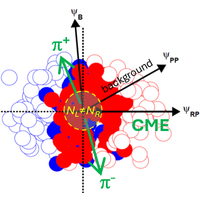
Experimental search for the chiral magnetic effect in relativistic heavy-ion collisions: A perspective

Yicheng Feng, Sergei A. Voloshin, and Fuqiang Wang

Phys. Rev. Research 7, 031001 (2025) - Published 9 July, 2025

The chiral magnetic effect is one of the most intriguing and important physics in quantum chromodynamics. This Perspective provides a comprehensive and rigorous review of the latest experimental progress in the search for the chiral magnetic effect in relativistic heavy-ion collisions.

Sign In to Your Journals Account

Filter

Recent Issues

Vol. 8, Iss. 4
October - December 2026
Vol. 8, Iss. 3
July - September 2026
Vol. 8, Iss. 2
April - June 2026
Vol. 8, Iss. 1
January - March 2026
Category
Article Type

Filter

Article Lookup

Enter a citation