Recent Articles

Real-space Mott-Anderson electron localization with long-range interactions

Antoine Marie, Derk P. Kooi, Juri Grossi, Michael Seidl, Ziad H. Musslimani, Klaas J. H. Giesbertz, and Paola Gori-Giorgi

Phys. Rev. Research 4, 043192 (2022) - Published 15 December, 2022

Electrons that are delocalized in space because of quantum effects can become localized by an external disordered potential (Anderson localization) or by their mutual Coulomb repulsion (Mott/Wigner localization). A simple model addresses what happens when both effects are present, how to quantify the degree of localization, and whether approximate methods can capture the relevant physics.

Hidden-nucleons neural-network quantum states for the nuclear many-body problem

Alessandro Lovato, Corey Adams, Giuseppe Carleo, and Noemi Rocco

Phys. Rev. Research 4, 043178 (2022) - Published 12 December, 2022

Understanding how protons and neutrons self-organize to form atomic nuclei requires solving the nuclear many-body Schrödinger equation. This work addresses this nontrivial task through a neural network quantum states ansatz that involves additional “hidden” degrees of freedom to improve the accuracy of the solution systemically. Light and medium-mass nuclei’s energy and spatial density distributions are in excellent agreement with those obtained utilizing exact-diagonalization and diffusion Monte Carlo approaches.

Persistent current oscillations in a double-ring quantum gas

T. Bland, I. V. Yatsuta, M. Edwards, Y. O. Nikolaieva, A. O. Oliinyk, A. I. Yakimenko, and N. P. Proukakis

Phys. Rev. Research 4, 043171 (2022) - Published 8 December, 2022

By introducing a repulsive barrier at the interface between two density-coupled rings of ultracold atoms, a persistent current can oscillate between the rings. The phenomenon persists indefinitely in the limit of zero temperature, but it decays at finite temperature and can even be suppressed completely in the limit of large damping.

Encoding a one-dimensional topological gauge theory in a Raman-coupled Bose-Einstein condensate

C. S. Chisholm, A. Frölian, E. Neri, R. Ramos, L. Tarruell, and A. Celi

Phys. Rev. Research 4, 043088 (2022) - Published 8 November, 2022

A Raman-coupled Bose-Einstein condensate faithfully realizes the chiral BF theory, a one-dimensional reduction of the celebrated Chern-Simons gauge theory of fractional quantum Hall systems.

Analytic approach to transport in superconducting junctions with arbitrary carrier density

F. Setiawan and Johannes Hofmann

Phys. Rev. Research 4, 043087 (2022) - Published 8 November, 2022

By developing a general framework for transport across superconducting junctions that goes beyond the standard Andreev approximation, two crucial transport signatures are proposed for s-wave Josephson junctions along the BCS-BEC crossover: negative differential conductance as a signature of unitarity and a complete suppression of multiple-Andreev-reflection-induced current as a hallmark of the splitting point.

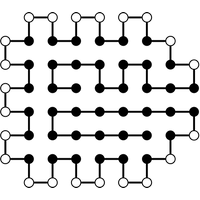
Folding lattice proteins with quantum annealing

Anders Irbäck, Lucas Knuthson, Sandipan Mohanty, and Carsten Peterson

Phys. Rev. Research 4, 043013 (2022) - Published 10 October, 2022

A lattice protein encoding is developed for finding the lowest energies on a quantum annealer. It is implemented to run on a D-Wave Advantage and yields correct results for nontrivial chain lengths.

Exploring the electric field around a loop of static charge: Rectangles, stadiums, ellipses, and knots

Max Lipton, Alex Townsend, and Steven H. Strogatz

Phys. Rev. Research 4, 033249 (2022) - Published 30 September, 2022

The electrostatic equilibrium points and equipotential surfaces around uniformly charged loops in the plane and knots in three dimensions is studied. Findings include symmetry-breaking bifurcations as well as topological transitions as the shape of the charge distribution or the level of the potential are varied.

Nonuniversality of quantum noise in optical amplifiers operating at exceptional points

L. Simonson, S. K. Ozdemir, A. Eisfeld, A. Metelmann, and R. El-Ganainy

Phys. Rev. Research 4, 033226 (2022) - Published 19 September, 2022

The quantum noise in exceptional points-based optical amplifiers does not scale universally with the order of the exceptional point but rather can vary from one implementation to another.

Massive Dirac fermions in moiré superlattices: A route towards topological flat minibands and correlated topological insulators

Ying Su, Heqiu Li, Chuanwei Zhang, Kai Sun, and Shi-Zeng Lin

Phys. Rev. Research 4, L032024 (2022) - Published 12 August, 2022

A general model to realize topological flat minibands by considering massive Dirac fermions confined in a periodic potential can be realized in various moiré systems and survive to arbitrarily large Dirac band gap.

Quasicrystal kirigami

Lucy Liu, Gary P. T. Choi, and L. Mahadevan

Phys. Rev. Research 4, 033114 (2022) - Published 10 August, 2022

Quasicrystalline patterns are used to design deployable kirigami structures, craft them with paper sheets, and study their topological, geometrical, and mechanical properties,

Direct imaging of valence orbitals using hard x-ray photoelectron spectroscopy

Daisuke Takegami, Laurent Nicolaï, Yuki Utsumi, Anna Meléndez-Sans, Daria A. Balatsky, Cariad-A. Knight, Connor Dalton, Shao-Lun Huang, Chi-Sheng Chen, Li Zhao, Alexander C. Komarek, Yen-Fa Liao, Ku-Ding Tsuei, Ján Minár, and Liu Hao Tjeng

Phys. Rev. Research 4, 033108 (2022) - Published 8 August, 2022

Orientation dependent hard x-ray photoelectron spectroscopy can make direct images of the orbitals making up the band structure. The imaging provides energy specific information in real-space and is calculation-free.

Nanofocused x-ray photon correlation spectroscopy

Sharon Berkowicz, Sudipta Das, Mario Reiser, Mariia Filianina, Maddalena Bin, Giulio Crevatin, Franz Hennies, Clemens Weninger, Alexander Björling, Paul Bell, and Fivos Perakis

Phys. Rev. Research 4, L032012 (2022) - Published 25 July, 2022

The authors show that nanofocused x-ray photon correlation spectroscopy can enhance sensitivity to nanoscale spatial fluctuations and yields a multi-fold increase in speckle contrast.

Microscopic theory of thermalization in one dimension with nonlinear bath coupling

A. Rodin, B. A. Olsen, M. Choi, and A. Tan

Phys. Rev. Research 4, 033057 (2022) - Published 18 July, 2022

Numerical simulations of classical equations of motion reveal that a single coupling to an infinite chain is sufficient to induce thermalization.

Reduced density matrix and entanglement of interacting quantum field theories with Hamiltonian truncation

Patrick Emonts and Ivan Kukuljan

Phys. Rev. Research 4, 033039 (2022) - Published 14 July, 2022

The authors develop a method to compute entanglement measures of quantum field theories directly in the continuum based on Hamiltonian truncation.

Momentum microscopy of Pb-intercalated graphene on SiC: Charge neutrality and electronic structure of interfacial Pb

Bharti Matta, Philipp Rosenzweig, Olaf Bolkenbaas, Kathrin Küster, and Ulrich Starke

Phys. Rev. Research 4, 023250 (2022) - Published 27 June, 2022

The authors show the band structure formation of a two-dimensional Pb crystal intercalated below charge-neutral quasi-freestanding graphene on SiC.

Autoresonant excitation of space-time quasicrystals in plasma

Vadim R. Munirov, Lazar Friedland, and Jonathan S. Wurtele

Phys. Rev. Research 4, 023150 (2022) - Published 25 May, 2022

The authors show that space-time quasicrystalline structures can be created in plasmas through autoresonant excitation of nonlinear ion acoustic waves.

Harnessing nonadiabatic excitations promoted by a quantum critical point: Quantum battery and spin squeezing

Obinna Abah, Gabriele De Chiara, Mauro Paternostro, and Ricardo Puebla

Phys. Rev. Research 4, L022017 (2022) - Published 22 April, 2022

The authors show that nonadiabatic excitationscan be used to increase exponentially the amount of energy stored in a quantum battery with repeating cycles.

Nonequilibrium fluctuations and nonlinear response of an active bath

Hunter Seyforth, Mauricio Gomez, W. Benjamin Rogers, Jennifer L. Ross, and Wylie W. Ahmed

Phys. Rev. Research 4, 023043 (2022) - Published 18 April, 2022

The authors study the motion of an optically-controlled particle moving through an active bath and observe several regimes on the basis of the Peclet number.

Optical N-insulators: Topological obstructions to optical Wannier functions in the atomistic susceptibility tensor

Todd Van Mechelen, Sathwik Bharadwaj, Zubin Jacob, and Robert-Jan Slager

Phys. Rev. Research 4, 023011 (2022) - Published 5 April, 2022

The authors introduce optical N-insulators, a family of topological materials with exotic electromagnetic features such as obstructions to molecular polarizabilities.

Gray molasses cooling of K39 atoms in optical tweezers

Jackson Ang'ong'a, Chenxi Huang, Jacob P. Covey, and Bryce Gadway

Phys. Rev. Research 4, 013240 (2022) - Published 29 March, 2022

The authors show an approach to trapping, cooling, and imaging neutral potassium atoms in optical tweezers using two colors of lasers.

Sign In to Your Journals Account

Filter

Recent Issues

Vol. 8, Iss. 4
October - December 2026
Vol. 8, Iss. 3
July - September 2026
Vol. 8, Iss. 2
April - June 2026
Vol. 8, Iss. 1
January - March 2026
Category
Article Type

Filter

Article Lookup

Enter a citation