Recent Articles

Unveiling van Hove singularity modulation and fluctuated charge order in kagome superconductor CsV3Sb5 via time-resolved ARPES

Yigui Zhong, Takeshi Suzuki, Hongxiong Liu, Kecheng Liu, Zhengwei Nie, Youguo Shi, Sheng Meng, Baiqing Lv, Hong Ding, Teruto Kanai, Jiro Itatani, Shik Shin, and Kozo Okazaki

Phys. Rev. Research 6, 043328 (2024) - Published 30 December, 2024

Time- and angle-resolved photoemission spectroscopy is used to explore the dynamic band structures in the kagome superconductor CsV3Sb5. Laser excitation induces a rapid shift of the van Hove singularities toward the Fermi level, followed by decay accompanied by oscillations linked to a specific phonon mode. Remarkably, this phonon mode—typically observable only in the charge-density wave (CDW) phase—persists beyond the CDW transition, revealing the potential presence of fluctuating CDW. These findings highlight strong electron-phonon couplings in CsV3Sb5 and demonstrate optical control of van Hove singularities in this system.

Random walks of intermittently self-propelled particles

Agniva Datta, Carsten Beta, and Robert Großmann

Phys. Rev. Research 6, 043281 (2024) - Published 16 December, 2024

Many living organisms, such as bacteria, cells, and sperm but also sheep and fish, intermittently switch between an active mode of locomotion, pauses, and turning maneuvers. A framework based on stochastic modeling and renewal theory enables deciphering the rules behind the seemingly random motility.

Proofreading mechanism for colloidal self-assembly

Qian-Ze Zhu, Chrisy Xiyu Du, Ella M. King, and Michael P. Brenner

Phys. Rev. Research 6, L042057 (2024) - Published 9 December, 2024

A two-stage proofreading mechanism is introduced for colloidal self-assembly with patchy particles, combining state-dependent local bond strengthening and a reverse error-correcting pathway. The scheme improves assembly yield and robustness against quenched disorder while broadening the optimal temperature range for high-yield assembly.

Probing the exciton spin-valley depolarization with spin-momentum-valley locked unbound states using tr-ARPES

Mehdi Arfaoui, Robson Ferreira, and Sihem Jaziri

Phys. Rev. Research 6, 043243 (2024) - Published 5 December, 2024

A detailed theoretical description of the high-energy states that form the escape continuum for photoejected electrons in a tr-ARPES experiment, paying particular attention to their momentum dispersions, time-reversal symmetries, and spin characteristics. The analysis of the various symmetries fulfilled by such unbound states reveals the existence of a momentum-valley locking for the unbound final electron states, sharing various features with the valley Hall effect.

Viscous tweezers: Controlling particles with viscosity

Tali Khain, Michel Fruchart, and Vincenzo Vitelli

Phys. Rev. Research 6, L042039 (2024) - Published 7 November, 2024

The control of particle motion in a fluid, a crucial problem in applications ranging from cell manipulation to drug delivery, is typically achieved by acting directly on the particle. Here, it is shown that the orientation of sinking objects can be controlled by modulating the viscosity of an anisotropic fluid.

Closing in on possible scenarios for infinite-layer nickelates: Comparison of dynamical mean-field theory with angular-resolved photoemission spectroscopy

Liang Si, Eric Jacob, Wenfeng Wu, Andreas Hausoel, Juraj Krsnik, Paul Worm, Simone Di Cataldo, Oleg Janson, and Karsten Held

Phys. Rev. Research 6, 043104 (2024) - Published 5 November, 2024

Density-functional theory plus dynamical mean-field theory correctly predicted the Fermi surface and quasiparticle renormalization in infinite-layer nickelates. There is no Ni-3dz2 Fermi surface and no Γ pocket, justifying a minimal model with correlated Ni-3dx2−y2 orbital and weakly correlated A pocket only.

Conformal field theories in a magnetic field

Rufus Boyack, Luca Delacrétaz, Éric Dupuis, and William Witczak-Krempa

Phys. Rev. Research 6, 043093 (2024) - Published 4 November, 2024

An examination of how conformal field theories respond to the presence of a magnetic field demonstrates that these systems typically transition into gapped phases but can also host metallic or non-Fermi-liquid behavior. These results offer new insights into the possible phases of quantum critical states under magnetic fields; more technically, they also characterize the spectrum of large-flux background monopole operators in conformal field theories.

Tensor product random matrix theory

Alexander Altland, Joaquim Telles de Miranda, and Tobias Micklitz

Phys. Rev. Research 6, L042029 (2024) - Published 30 October, 2024

This article analyzes and solves a minimal model showcasing the dynamics of quantum thermalization in the case where two random subsystems mutually act as “bath” for each other.

Exploring the potential of resonance islands and bent crystals for a slow extraction from circular hadron accelerators

D. E. Veres, M. Giovannozzi, and G. Franchetti

Phys. Rev. Research 6, L042018 (2024) - Published 21 October, 2024

Despite various loss-reduction techniques, slow extraction from circular particle accelerators inherently involves beam loss, posing risks to machine components and constraining the beam intensity for fixed-target experiments. By employing a simple nonlinear transverse motion model in a circular accelerator, it is shown that integrating particle trapping in resonance islands with planar channeling in a bent crystal could be a promising candidate for a low-loss or even a septumless slow-extraction method.

Long-distance photon-mediated and short-distance entangling gates in three-qubit quantum dot spin systems

Nooshin M. Estakhri, Ada Warren, Sophia E. Economou, and Edwin Barnes

Phys. Rev. Research 6, 043029 (2024) - Published 11 October, 2024

Entangling operations (short and long range) in modular three-qubit semiconductor quantum dot spin qubit systems with long-range interactions mediated by superconducting resonators are examined. The effect of the spectator qubits in reducing the gate fidelities and the impact of charge noise are also analyzed.

Pulse instabilities can shape virus-immune coevolution

David A. Kessler and Herbert Levine

Phys. Rev. Research 6, 033300 (2024) - Published 16 September, 2024

The possible dynamical behaviors of a viral population interacting with host immunity are explored. Transitions between propagating viral “pulses” and more complex behavior can readily occur, depending on population size and on memory retention in the immune response.

Quantum phase transitions and cat states in cavity-coupled quantum dots

Valerii K. Kozin, Dmitry Miserev, Daniel Loss, and Jelena Klinovaja

Phys. Rev. Research 6, 033188 (2024) - Published 20 August, 2024

The interplay between cavity-mediated and dipole-dipole interactions in double quantum dots is explored, revealing a cavity-induced ferroelectric quantum phase transition. The emergence of cat states under strong coupling conditions, with implications for semiconductor-based qubit design, is demonstrated.

Quantum and classical spin dynamics across temperature scales in the S=1/2 Heisenberg antiferromagnet

Pyeongjae Park, G. Sala, Daniel M. Pajerowski, Andrew F. May, James A. Kolopus, D. Dahlbom, Matthew B. Stone, Gábor B. Halász, and Andrew D. Christianson

Phys. Rev. Research 6, 033184 (2024) - Published 19 August, 2024

A new approach utilizing thermal fluctuations to investigate the spin dynamics of quantum magnets is introduced. It successfully identifies the spin Hamiltonian of a quantum antiferromagnet and elucidates the temperature-induced dissipation of quantum spin dynamics, which are challenging to assess using conventional spin-wave theories.

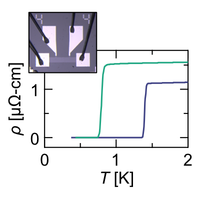
Controllable suppression of the unconventional superconductivity in bulk and thin-film Sr2RuO4 via high-energy electron irradiation

Jacob P. Ruf, Hilary M. L. Noad, Romain Grasset, Ludi Miao, Elina Zhakina, Philippa H. McGuinness, Hari P. Nair, Nathaniel J. Schreiber, Naoki Kikugawa, Dmitry Sokolov, Marcin Konczykowski, Darrell G. Schlom, Kyle M. Shen, and Andrew P. Mackenzie

Phys. Rev. Research 6, 033178 (2024) - Published 16 August, 2024

Point disorder introduced by high-energy electron irradiation suppresses the superconducting transition temperature in bulk single-crystal and thin-film Sr2RuO4 at nearly identical rates, suggesting that part of the residual resistivity in films comes from defects that do not contribute to superconducting pairbreaking

Decoherence induced by a sparse bath of two-level fluctuators: Peculiar features of 1/f noise in high-quality qubits

M. Mehmandoost and V. V. Dobrovitski

Phys. Rev. Research 6, 033175 (2024) - Published 15 August, 2024

Progress in fabrication has greatly diminished the number of fluctuating defects that produce detrimental 1/f noise in solid-state qubits. It is shown that coherence of clean qubits is controlled by only a few special defects, whose impact is determined by their fluctuation rates; removing these defects can lead to great improvements in the coherence properties of individual qubits and qubit ensembles.

Synchronization of bowhead whales

Evgeny A. Podolskiy, Jonas Teilmann, and Mads Peter Heide-Jørgensen

Phys. Rev. Research 6, 033174 (2024) - Published 15 August, 2024

In contrast to periodic oscillators, detecting chaotic biological systems’ rhythmicity and interaction is difficult. This study detects a springtime diel diving pattern and a long-distance (∼100-km) synchronization of bowhead whales via a nonlinear analysis of the largest fine-scale dive-depth dataset to date.

First-principles investigation of near-field energy transfer between localized quantum emitters in solids

Swarnabha Chattaraj, Supratik Guha, and Giulia Galli

Phys. Rev. Research 6, 033170 (2024) - Published 14 August, 2024

A theoretical framework integrating quantum electrodynamics and first-principles electronic structure calculations is used to study near-field energy transfer between localized defects in solids. The results suggest breaking of selection rules in optical absorption at near field, relevant toward a novel optical memory protocol.

Spin-S Kitaev-Heisenberg model on the honeycomb lattice: A high-order treatment via the many-body coupled cluster method

M. Georgiou, I. Rousochatzakis, D. J. J. Farnell, J. Richter, and R. F. Bishop

Phys. Rev. Research 6, 033168 (2024) - Published 13 August, 2024

A coupled cluster method technique captures strong quantum-mechanical fluctuations of generalized Kitaev models and uncovers new insights into their complex phase diagrams.

Self-heating effects and switching dynamics in graphene multiterminal Josephson junctions

Máté Kedves, Tamás Pápai, Gergő Fülöp, Kenji Watanabe, Takashi Taniguchi, Péter Makk, and Szabolcs Csonka

Phys. Rev. Research 6, 033143 (2024) - Published 6 August, 2024

Self-heating effects are experimentally investigated in a graphene multiterminal Josephson junction and simulated using a resistively shunted Josephson junction network model. Self-heating is also shown to significantly influence the switching dynamics of this multiterminal system.

Quantum logarithmic multifractality

Weitao Chen, Olivier Giraud, Jiangbin Gong, and Gabriel Lemarié

Phys. Rev. Research 6, L032024 (2024) - Published 31 July, 2024

Log multifractality, a logarithmic scale invariance that emerges at the Anderson transition in infinite dimensions, is revealed through a random matrix description of quantum dynamics and eigenstate statistics.

Sign In to Your Journals Account

Filter

Recent Issues

Vol. 8, Iss. 4
October - December 2026
Vol. 8, Iss. 3
July - September 2026
Vol. 8, Iss. 2
April - June 2026
Vol. 8, Iss. 1
January - March 2026
Category
Article Type

Filter

Article Lookup

Enter a citation